Water Economics Research Group (WERG) at CREEA 2025
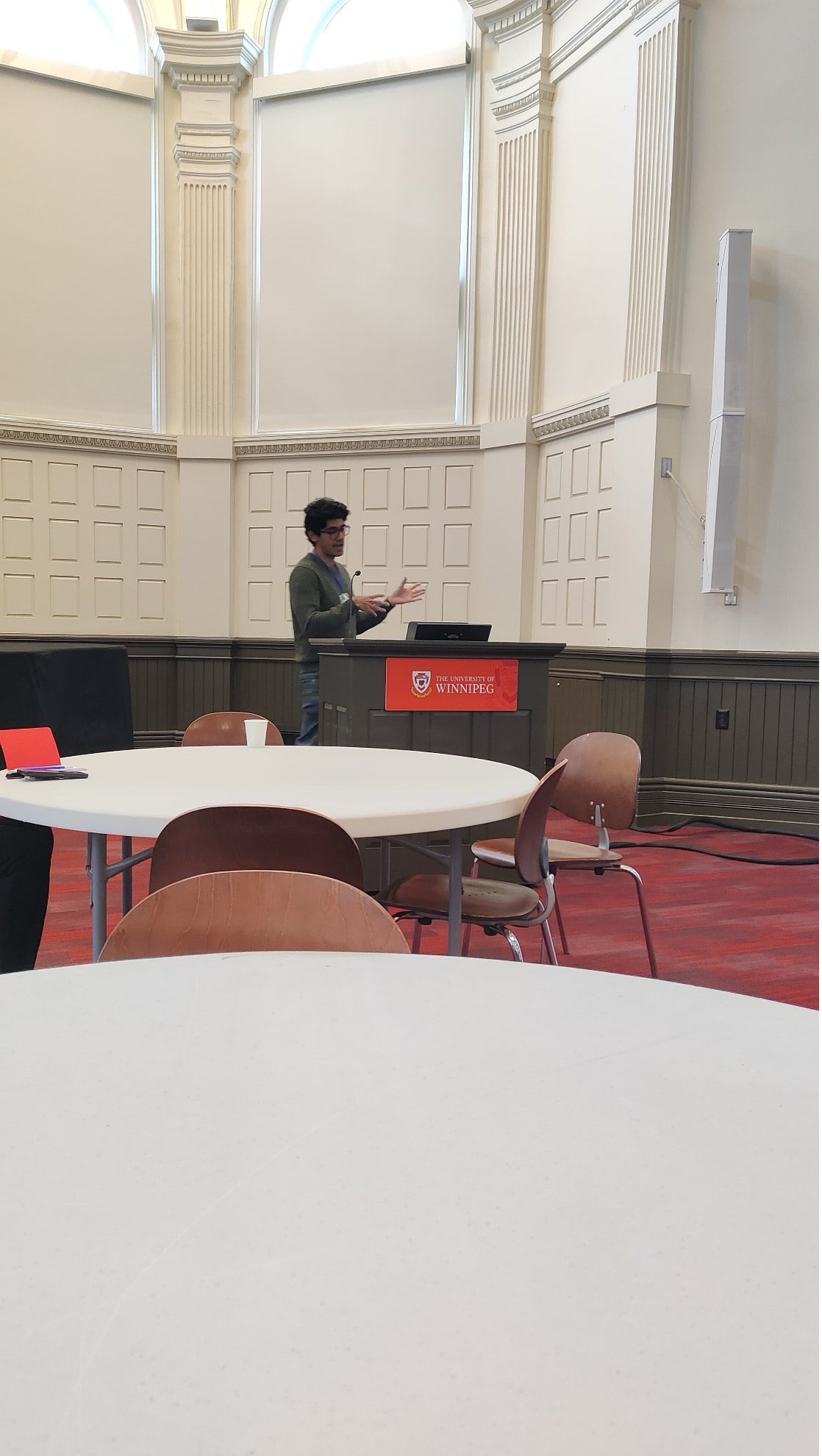
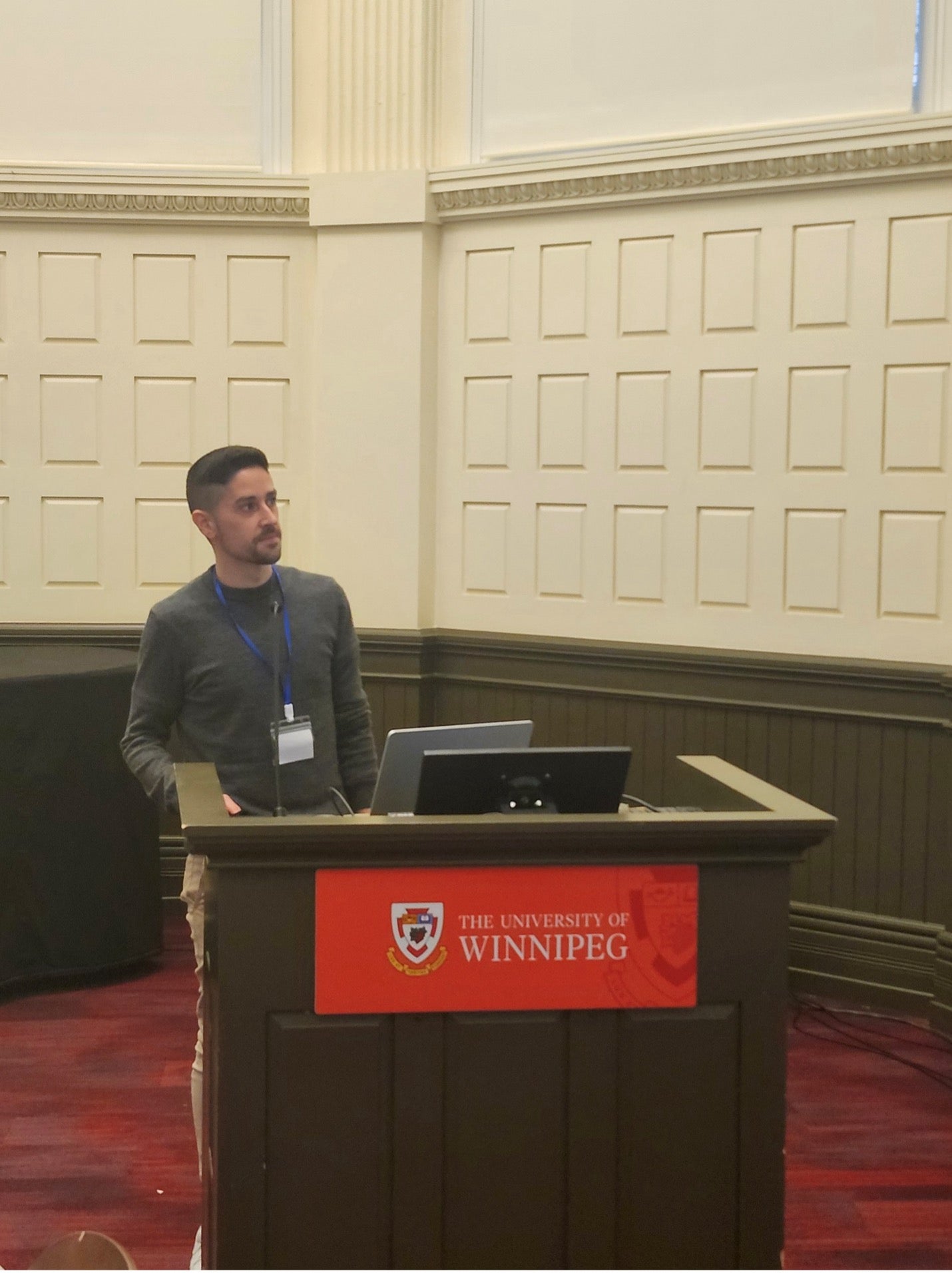
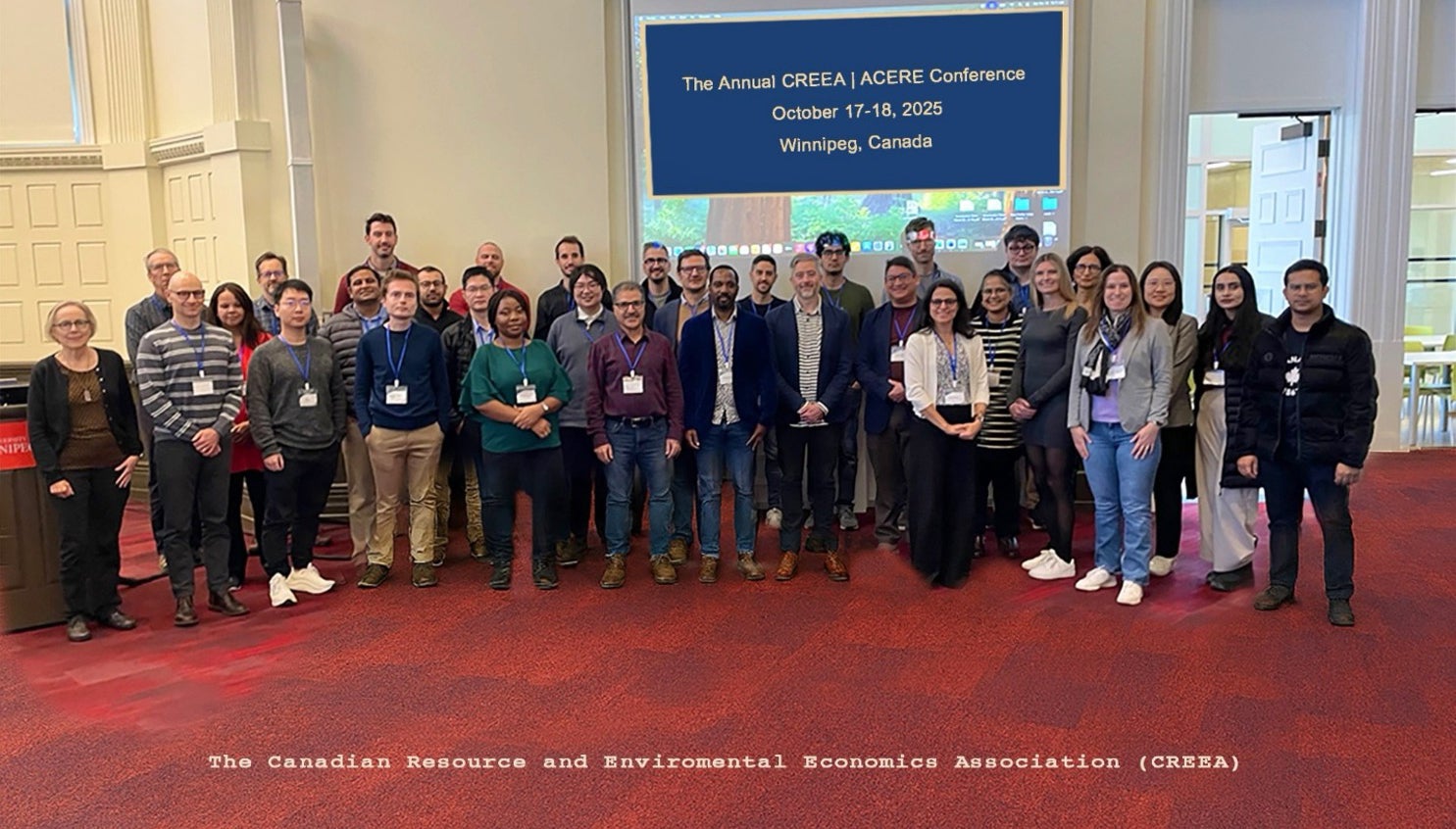
On the 17th and 18th of October, 2025, the University of Winnipeg hosted the 35th Annual Conference of the Canadian Resource and Environmental Economics Association. Two members of the Water Economics Research Group (WERG), Iban Ortuzar Fernandez and Khusro Mir presented their research addressing pressing questions in environmental economics in Canada. Also Water Institute member and Professor Emerita Margaret Insley participated. She organizes the next annual conference in Waterloo.
The conference featured 28 research presentations, with the majority delivered by graduate students alongside early-career researchers. While the topics were diverse, a strong common thread emerged around pollution control, including research on carbon taxes, air pollution, and environmental health impacts, with a highly policy-relevant keynote speech on the trade-off between economic efficiency and the political acceptance of different policy measures in Canada. WERG was there to represent another crucial field of environmental economics, with two papers highlighting the importance of linking land and water management in economic policy.
Iban presented his study "Modelling Land Use Transitions in Southern Ontario," which examines how land cover is likely to evolve in the future under alternative socioeconomic and climate assumptions. He presented early findings of a spatial transition probability model, evaluating the likelihood of shifts between wetlands, agriculture, and urban land use over time. The key insight of his work is to show how agricultural and urban expansion in the coming decades is projected to come at the expense of existing wetlands and peatlands, further weakening the critical ecosystem services they provide in Ontario.
Khusro presented his PhD chapter titled "Estimating the Value of Land-Use Choices on Drinking Water Treatment Costs." This work explores how watershed land use and forest disturbance affect turbidity and operating costs for drinking water treatment facilities in Canada. His key insight was to demonstrate the economic value of the ecosystem services forested watersheds provide as a nature-based solution to protect source waters across Canada, using data on drinking water plants, and the incremental treatment costs associated with increasing wildfires in these forested watersheds as a result of climate change. His results show that wildfires create significant downside risks when utilities depend on forested watersheds as a nature-based solution for quality maintenance, as they lead to sharp declines in water quality following fires.
The conference brought together a diverse set of perspectives in environmental economics, with sessions that combined both theoretical and empirical research on pollution control and land use change. Beyond the formal sessions, CREEA offered a much-needed platform for networking and collaboration with other economists.