Dr. David Moscovitch
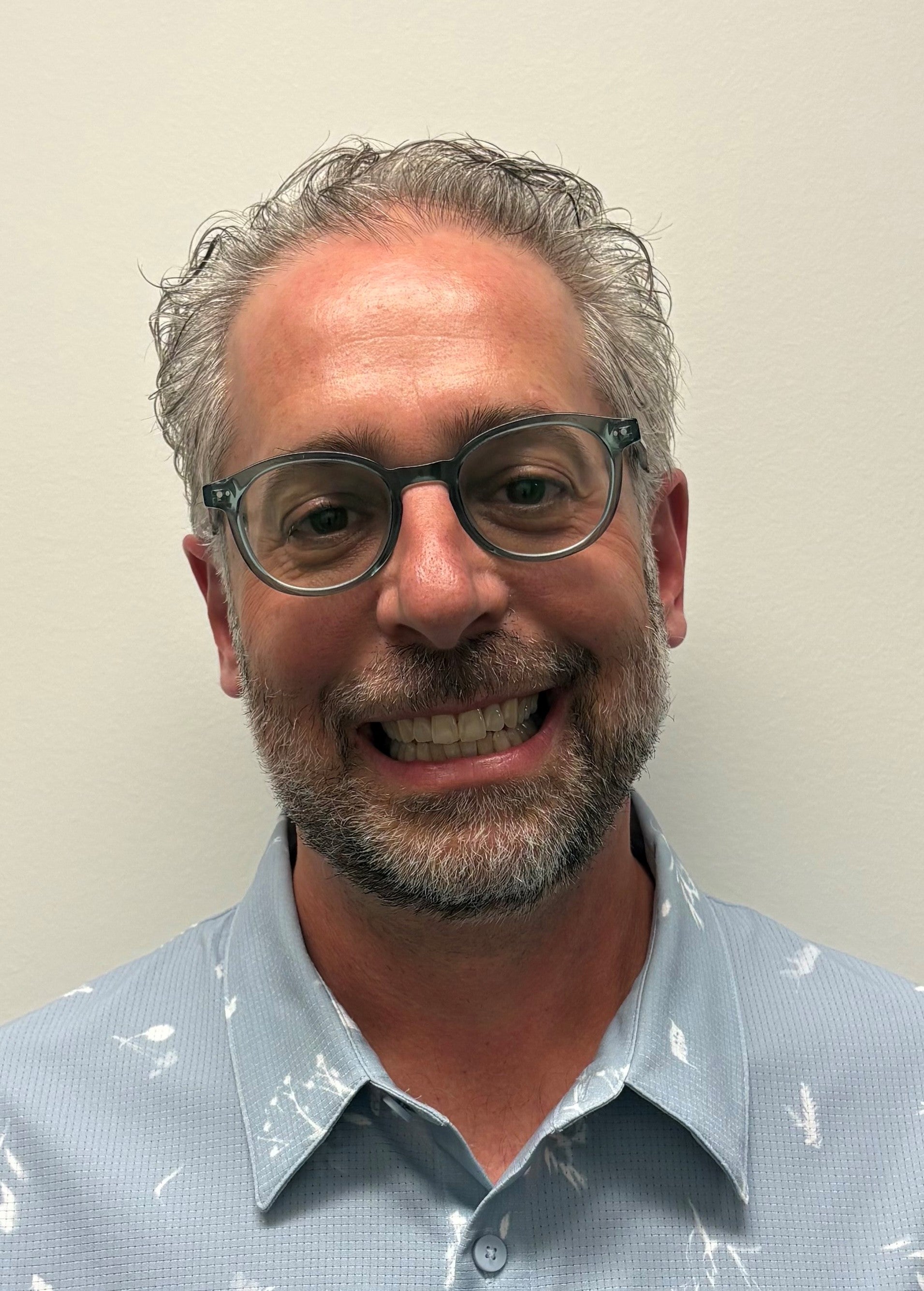
BSc (University of Toronto), MA, PhD (Boston University)
Centre for Mental Health Research and Treatment (CMHRT)
2006-2016 Canada Research Chair in Mental Health Research
Research interests
My research explores the intersection of social anxiety and the self. I investigate how social anxiety shapes people’s thoughts, emotions, and behaviours in social contexts, with particular attention to the role of autobiographical memory and self-schema processes. By integrating clinical models of social anxiety disorder with cognitive and neurocognitive approaches, my work seeks to identify the mechanisms that underlie social anxiety and to translate these insights into more effective psychological interventions. I collaborate widely on clinical research with other scientists and clinicians both within and outside UW, including at the Rotman Research Institute at Baycrest where I hold an Adjunct Scientist position.
Current projects address questions such as:
- How do people with social anxiety appraise themselves and others, and how do these appraisals influence social information processing, perceptions of threat and reward, and the quality of their relationships?
- What are the core psychological problems in social anxiety disorder, and how do individual differences shape symptom expression and treatment outcomes?
- How can advances in learning and memory science inform our understanding of self-schema development and guide strategies for updating negative self-beliefs?
Ultimately, my goal is to advance knowledge about the mechanisms of social anxiety and to leverage that knowledge to develop innovative, evidence-based interventions that improve people’s psychological health and well-being.
Publications
Here is my complete publication list (PDF), last updated in Sept 2025. Please check Google Scholar for article abstracts. You may email me at dmosco@uwaterloo.ca to request copies of any paper.
Anxiety studies
The Anxiety Studies research group was established in 2009. It consists of faculty members and graduate students in Clinical Psychology at the University of Waterloo whose research is dedicated to investigating the nature and treatment of anxiety and its disorders. The Anxiety Studies research model is detailed in the following paper:
- Moscovitch, D.A., Saughnessy, K., Waechter, S., Xu, M., Collaton, J., Nelson, A.L., Barber, K.C., Taylor, J., Chiang, B., & Purdon, (2015). A model for recruiting clinical research participants with anxiety disorders in the absence of service provision (PDF). Journal of Nervous & Mental Disease, 203, 943-957.
Please visit our website to learn more about our current initiatives and people.
Research lab
My research lab is typically comprised of several students in our clinical psychology graduate training program, one or two undergraduate honours thesis students, a number of research assistants and volunteers and, occasionally, a postdoctoral fellow. Lab research has been generously funded by the Canada Research Chairs Program, the Canadian Institutes for Health Research, the Social Sciences and Humanities Research Council, the National Medical Research Council of Australia, the Israel Science Foundation, the Templeton Foundation, the Ontario Mental Health Foundation, the Canadian Foundation for Innovation, and the Ontario Research Fund. The physical space of the lab is generous and includes an array of specialized facilities, resources, and work spaces that can be accessed by trainees engaged in research at all levels. Students are supported in their acquisition of fundamental knowledge and technical skills within a stimulating and collaborative learning environment.
Teaching
At the undergraduate level, I have most recently taught Psychopathology (Psych 257), which provides an introductory overview of mental disorders and clinical psychology, as well as Social Anxiety and the Self (Psych 457), a senior undergraduate seminar course. At the graduate level, I have most recently taught Adult Psychopathology (Psych 716), Cognitive Behavioural Therapy (Psych 725), and Ethics and Professional Issues in Clinical Psychology (Psych 719).
Clinical training
I am actively involved in the clinical supervision and training of graduate students in Clinical Psychology within our Centre for Mental Health Research and Treatment (CMHRT).
Clinical practice
I am a registered clinical psychologist with the College of Psychologists of Ontario and maintain a small private practice. My specialization is in cognitive behavioural therapy (CBT) and I am certified as such by The Canadian Association of Cognitive and Behavioural Therapies.
Dr. Christine Purdon

BA Hon (University of Western Ontario), MA, PhD (University of New Brunswick)
Co- Director, Anxiety Studies
President-Elect, President, and Past President, Canadian Association of Cognitive Behavioral Therapies (2023-2025)
Associate Editor, Clinical Psychology Review
Research interests
I am interested in how anxiety and related difficulties develop such as obsessions, intrusive thoughts, worry, rumination, doubt, compulsions, avoidance, and fight/flight responses. My students and I are extremely grateful to people from the community with and without anxiety difficulties who have assisted us with our research through Anxiety Studies.
My lab has a portable eye tracker and a lab kitchen with a working stove and sink, equipped with video feed.
If you are interested in applying to our program please see the Frequently Asked Questions section below, as well as our program information website!
Teaching interests
I typically teach our graduate program's course in Cognitive-Behaviour Therapy and have taught Abnormal Psychology, Introduction to Clinical Psychology, and an honours seminar in Anxiety Disorders.
Clinical interests and practice
I am a Registered Psychologist with the College of Psychologists of Ontario and have expertise in the assessment and treatment of mood and anxiety disorders in adults. I have practiced and taught cognitive-behaviour therapy (CBT) for over 20 years and am certified by the Canadian Association of Cognitive and Behavioural Therapies (CABCT).
Publications (student co-authors in italics)
Selected Books
- Clark, D. A., & Purdon, C. (2005). Overcoming obsessional thoughts. Oakland, CA: New Harbinger. (https://www.newharbinger.com/overcoming-obsessive-thoughts). Over 50,000 copies sold!
Selected book chapters
- Merritt, O., & Purdon, C. (2023). Assessing comorbidity, insight, family, and functioning in OCD. Invited chapter for D. Tolin (Ed.), Oxford Handbook of Obsessive-Compulsive and Related Disorders (2nd Edition) (pp. 420-450). Oxford, UK: Oxford University Press.
- Purdon, C. (2023). OCD: A case study. Invited chapter for M. Woud (Ed.), Interpretational Processing Biases in Emotional Psychopathology: Bridging Experimental Investigation and Clinical Application (pp. 281-299). Springer.
- Purdon, C. (2021). Cognitive restructuring. Invited chapter for A. Wenzel (Ed.), Handbook of Cognitive Behavioral Therapy, Volume 1 (pp. 207-234). American Psychological Association.
- Purdon, C. (2021). Obsessive compulsive disorder. Invited chapter for A. Wenzel (Ed.), Handbook of Cognitive Behavioral Therapy, Volume 2 (pp. 67-98). American Psychological
Selected peer-reviewed publications (for full list, visit ResearchGate).
- McNeil, A., & Purdon, C. (2025). A preliminary investigation of the relationships between attachment insecurity, fear of compassion, and OCD severity. The British journal of clinical psychology.
- Tandt, H. L., Leyman, L., Baeken, C., Purdon, C., & Lemmens, G. M. (2024). Multi‐family therapy for adult outpatients with obsessive‐compulsive disorder and their family members, targeting family accommodation. Journal of Family Therapy, 46(1), 70-88.
- Merritt, O. A., Rowa, K., & Purdon, C. L. (2023). Context matters: criticism and accommodation by close others associated with treatment attitudes in those with anxiety. Behavioural and Cognitive Psychotherapy, 51(1), 21-31.
- Xu, M., Rowe, K., & Purdon, C. (2023). To approach or to avoid: The role of ambivalent motivation towards high calorie food images in restrained eaters. Cognitive Therapy and Research, 47, 669-680.
- Chiang, B., & Purdon, C. (2023). A study of doubt in obsessive-compulsive disorder. Journal of Behavior Therapy and Experimental Psychiatry, 101753.
- Merritt, O. A., Rowa, K., & Purdon, C. (2023). Criticism and accommodation are predictive of negative treatment attitudes in close others to those with anxiety. British Journal of Clinical Psychology, 51, 21-31.
- Purdon, C. (2023) Dr. Jack Rachman’s contributions to our understanding and treatment of OCD. Journal of Behavior Therapy and Experimental Psychiatry, 78, 101773.
- McNeil, A., & Purdon, C. (2022). Anxiety disorders, COVID-19 fear, and vaccine hesitancy. Journal of Anxiety Disorders, 90, 102598.
- Nelson, A., Quigley, L., Carriere, J., Kalles, E., Smilek, D., & Purdon, C. (2022). Attentional biases to threat in generalized anxiety disorder (GAD): evidence that state-anxiety delays disengagement and GAD increases avoidance of mild threat images. Journal of Anxiety Disorders, 88, 102577.
- Merritt, O.A., & Purdon, C. (2021). Fear of compassion is associated with treatment ambivalence and negative expectations for treatment in people with anxiety. British Journal of Clinical Psychology, 60, 546-555. https://doi.org/10.1111/bjc.12313
- Dean, J., & Purdon, C. (2021). An experimental investigation of hand washing in people with high and normative contamination fears. Journal of Obsessive Compulsive and Related Disorders, 28, 100618.
- Xu, M., Rowe, K., & Purdon, C. (2021). To approach or to avoid: The role of ambivalent motivation in attentional biases to threat and spider fear. Cognitive Therapy and Research, 45, 767-782.
- Wahl, K., Lieb, R., Kollarit, M., & Purdon, C. (2020). The appropriateness of using a counter app in experimental studies assessing unwanted intrusive thoughts. Journal of Obsessive-Compulsive and Related Disorders, 26, 100550.
- Merritt, O. A., & Purdon, C. (2020). Scared of compassion: Fear of compassion in anxiety, mood, and non-clinical groups. British Journal of Clinical Psychology, 59, 354-368.
- Xu, M., Rowe, K., & Purdon, C. (2020). Examining the impact of a single session of mountain meditation on attentional scope. Journal of Cognitive Enhancement, 4, 155-166.
- Bouvard, M., Fournet, N., Denis, A., Achachi, O., & Purdon, C. (2020). A study of the Repeated Actions Diary in patients suffering from obsessive compulsive disorder. Clinical Psychology and Psychotherapy, 27, 228-238.
- Purdon, C. (2020). Thought suppression. In Oxford Research Encyclopedia of Psychology. Oxford University Press.
Frequently asked questions
1. Are you taking a student next year?
No, I am not taking any students for 2026.
2. Should I contact faculty in the Clinical Area to ask whether or not they are taking a student, or to alert them to my application?
No, this is not at all necessary. Our website indicates which faculty are taking students. Out of fairness we do not evaluate or “earmark” applicants outside of our admissions process, which begins after the application deadline.
3. What do we look for in a student?
We look for students who are intellectually curious, who enjoy discovery, and who love sharing their discoveries with the world.
4. How can I make my application more competitive?
We receive about 150 applications per year for 4-6 positions in our program. Our first cut is based on your marks in Psychology courses and on GRE scores, so, keep working hard!
Avoid using a generic statement. Instead, use your statement to explain how your research interests are a good match for the person at UW in whom you are interested in working. If you present a generic statement it is a lot harder for us to tell whether you are a good fit for our program and for the lab you are interested in joining.
Tell us about your honours thesis research in your statement. Don’t just tell us what you did, but let us know what question piqued your curiosity, how you studied it, and how your findings will help us better understand the phenomenon you studied.
Apply for external funding at the same time you are applying to graduate school. This will help you better identify and articulate your research interests, both for yourself and for us. If you receive funding it removes the burden of having to apply for external funding in your first weeks of a very challenging program.
5. What if the research I outline in my application for external funding doesn’t seem to fit directly into the work that you (or others at UW) are doing?
All research is informed by general underlying questions (e.g., why do unwanted thoughts persist?) even if the research questions themselves are quite specific (e.g., what is the effect of a mood manipulation on perceived self-worth?). As long as the general questions that interest you fit with the work of your potential supervisor you will be in good shape to work together.