Time to start your summer reading list! Whether you're looking for a good story or a thought-provoking read, pick up one of these titles by Arts alumni.
Fiction
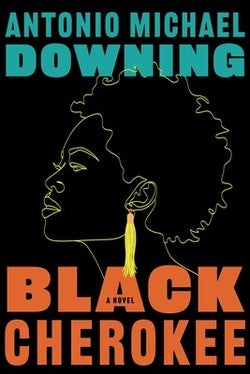
Black Cherokee (2025)
Antonio Michael Downing, BA ’25, English Language and Literature
On the rain-swollen banks of the River Etsi in South Carolina, Ophelia Blue Rivers—six years old in 1992—catches frogs and stretches to reach the swaying sunflowers. She’s an orphan raised in a rustic cabin by her Grandma Blue, a descendent of the Black Cherokee Freedmen. Caught in deep currents of history that she doesn’t understand, she is, as her grandma says: “half Black, half Cherokee, and all mixed up.”
While Ophelia may not always understand where she came from, there’s no mistaking where she’d rather be: caught in the warmth of Grandma Blue’s cabin, listening to bedtime Cherokee legends as collard greens hiss in the frying pan.
But one day, a tall stranger with a black denim jacket and a charming smile appears, and his arrival shatters Ophelia’s world. She finds herself whisked away from all she knows to live with her Auntie Oba, the boisterous woman she had only met in rumours.
So begins Ophelia’s spirited, at times harrowing, search for home and family—a journey that takes her from a majority-white high school to the inner sanctum of a Black evangelical church to the throbbing dance floors of underground Southern clubs and to a final, devastating encounter with the scion of a wealthy, white family. She must ask herself: What does it mean to belong when the terms of that belonging come at such a high price?
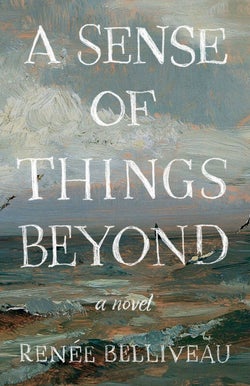
A Sense of Things Beyond (2025)
Renée Belliveau, MA ’18, English
In the aftermath of the First World War, two souls struggle to find their place in a world they no longer recognize. Rose, a nurse who tended to the wounded near the frontlines, has returned to her quiet life in Toronto to find that her family home no longer offers any comfort. Only a few years earlier, she reached France brimming with eagerness to contribute, but as she found herself healing soldiers only to send them back to the trenches, the senseless brutality of war became clear, especially once her nephew Leo enlisted.
Meanwhile, Frederick is trying to reclaim the thread of his life interrupted by war. On the verge of completing his PhD when Germany declared him an enemy alien, he spent the next four years languishing in an internment camp, where thousands of men from the British Empire crowded into unheated horse stables. But now he wonders if his anger at his unjust treatment was misdirected.
Their paths cross as each is trying to bridge the chasm between who they once were and who they have become. As Rose and Frederick navigate the fragile promises of a new world, their shared sense of disillusionment becomes a language of its own. Might they find solace in each other?
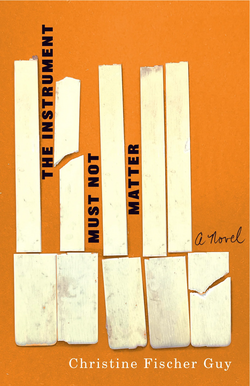
The Instrument Must Not Matter (2026)
Christine Fischer Guy, BA ’89, English Literature, MA ’90, English Language Professional Writing
In this sweeping coming-of-age novel gifted young classical pianist Lila Rys finds herself in New York City studying under famed teacher George Vrubel. The move to the American city is terrifying, but Lila is determined to bring music back to the Rys family, where the story of her grandmother refusing to play Soviet music after their tanks rolled into Prague in 1968 is family lore. Accompanied by her brother, Lucas, who is studying at NYU, Lila struggles to navigate the classical musical world and become the successful performer she’s expected to be. But in New York she has a romantic encounter with a renegade pianist and everything she knows about herself is turned upside down, until her brother discovers dissident literature that holds the stories her grandmother had not passed on, and Lila learns how to set her love for her family, and her music, free.
Children's literature
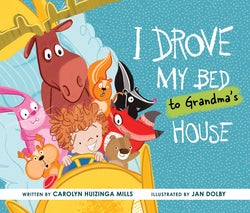
I Drove My Bed to Grandma’s House (2025)
Carolyn Huizinga Mills, BA ’00, Psychology
Lexington Samuel Forrester wants an adventure.
It’s naptime. Mom said Lex has to stay in bed, but she didn’t say anything about staying in his room …
So Lex reaches under his pillow, connects the power-steering thrusters, and drives his bed down the path to Grandma’s house. Zigzagging through the wilderness with a motley crew of forest friends, Lex sure hopes he can get to Grandma’s without getting lost, getting ticketed, or losing control of his bed!
Carolyn Huizinga Mills’s imaginative story and Jan Dolby’s playful illustrations come together in this rollicking naptime adventure.
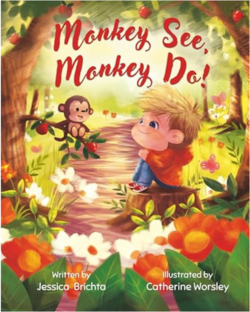
Monkey See, Monkey Do! (2025)
Jessica Brichta, MA ’06, English
Jacob has a secret—a special secret he keeps to himself. His stuffed monkey can talk! But only to Jacob and only when he needs it most.
Jacob desperately wants to prove to his older brothers (and himself) that he can climb the big apple tree, because climbing that tree means that you’re a big kid. But getting up the tree proves to be a lot harder than Jacob thought it would be. In order to do it, he needs bravery, determination, and a little motivation from a special friend.
This heartwarming story of personal growth celebrates each child’s ability to overcome any obstacle by believing in themselves and never giving up.
Non-fiction
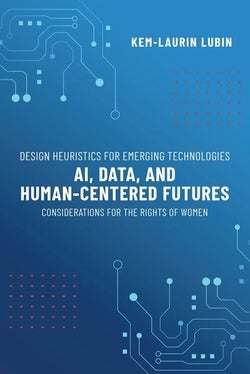
Design Heuristics for Emerging Technologies: AI, Data, & Human-Centered Futures – Considerations for the Rights of Women (2025)
Kem-Laurin Lubin, MA ’99, English
In Design Heuristics for Emerging Technologies, Kem-Laurin Lubin delivers a visionary exploration of the intersection between artificial intelligence, systemic bias, and the urgent need for equity in digital design. Grounded in feminist theory and critical data studies, this book tackles the complex ways patriarchal systems shape AI-powered technologies, with a particular focus on their impact on women’s rights and reproductive healthcare—an issue made even more pressing in the wake of the reversal of Roe v. Wade.
Through compelling case studies, such as the controversial AI project in Salta, Argentina, Lubin illustrates the tangible consequences of algorithmic design in real-world contexts. Organized under six heuristic categories, these examples provide a robust framework for practitioners and policymakers to design equitable systems. Engaging deeply with seminal works like Algorithms of Oppression by Safiya Noble and Race After Technology by Ruha Benjamin, Lubin critiques current AI frameworks and offers a path forward.
The book examines global initiatives, from Europe’s GDPR to Canada’s Artificial Intelligence and Data Act, highlighting their limitations and proposing actionable, equity-centered heuristics. With a critical lens on existing policies, Lubin integrates insights from global policy examinations and targeted case studies to propose scalable, human-centered solutions for more inclusive technologies.
Share your new book
Recently published a book? We'd love to hear about it! Submit a class note or contact Phoebe Wong.