Observatory night: Parade of planets
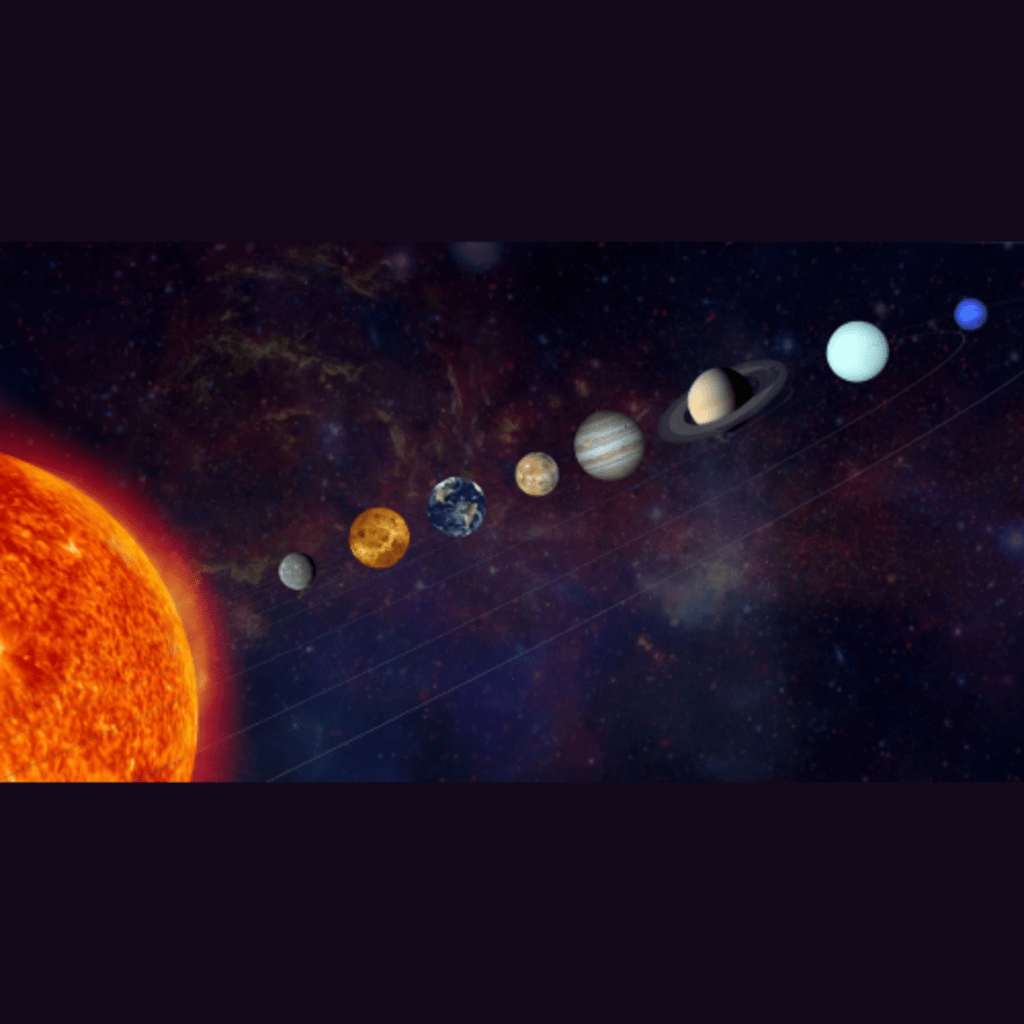
An evening at the Gustav Bakos Observatory to see the parade of planets on February 25th, 2025. All seven of the planets will be visible (weather permitting).
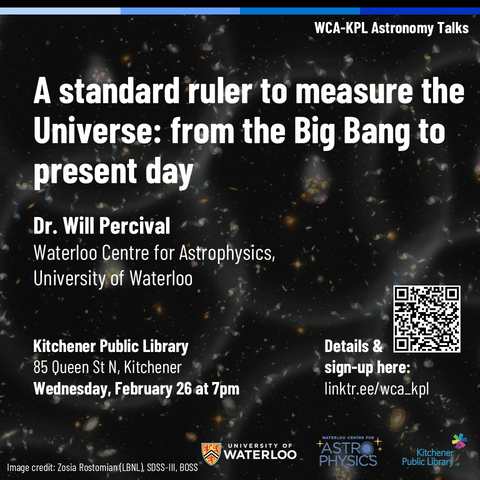
The Universe is big – so big that measuring its size is incredibly difficult. By mapping out the positions of galaxies, cosmologists can trace the structure of the Universe, observing patterns in this structure that can be used as a ruler. In this month’s KPL astronomy talk, Dr. Will Percival will talk about this technique, called Baryon Acoustic Oscillations, highlighting how we came to learn that the Universe is expanding at an accelerating rate.
“Diving into the era of Large-Scale Structure data: going beyond the Standard Cosmological Model”
Guadalupe is a Theoretical Cosmologist investigating the Universe's origins, evolution, and ultimate fate by studying alternative cosmological models with cutting-edge astrophysical data and advanced statistical techniques, while also forecasting the potential of new experiments and observables, such as Gravitational Waves.
"Galaxy clusters as the Universe’s largest particle accelerators"
Dr. Erik Osinga is a postdoctoral fellow at the Dunlap Institute. He completed his PhD at Leiden University in 2023. Erik's work centres on understanding how magnetic fields and particle acceleration shape the environments within and around galaxy clusters.
Nathan J. Carlson is a PhD candidate at the University of Toronto and the Canadian Institute for Theoretical Astrophysics (CITA). Nathan’s work in theoretical cosmology focusses on linking early universe physics to large-scale structure of the universe as we see it today.
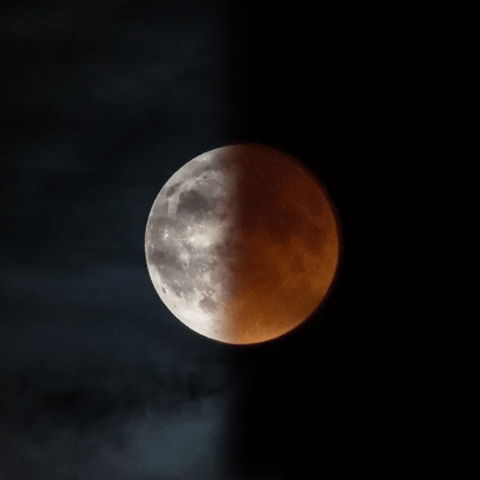
Join us for a total lunar eclipse watch party, the last one in Ontario until 2029!
"The status and scientific promise of the Thirty Meter Telescope"
"Evidence for Photospheric Absorption Lines in the X-ray Spectrum of the Neutron Star in Puppis A"
Supermassive black holes, though tiny compared to their host galaxies, play a crucial role in shaping galaxy evolution. In this month’s KPL astronomy talk, Marie-Joëlle Gingras will explore how these cosmic beasts influence their surroundings through a process known as Active Galactic Nucleus feedback, regulating star formation and transforming galaxies over billions of years.
Raphael is a post doc at Carnegie Mellon University, working on the the clustering properties of dark matter on galactic scales, with a particular focus on the tidal evolution of dwarf spheroidal galaxies. He builds dynamical models to contrast observational data against competing theories of dark matter.