News

Filter by:

Limit to news where the title matches:
Limit to items where the date of the news item:
Date range
Limit to news items where the audience is one or more of:

An alumnus of Waterloo Engineering has been recognized by an industry publication as one of the 100 leading women in the North American automotive industry.

Erin Buchanan (BASc ’98, chemical engineering), general manager of Toyota Motor Manufacturing Canada in Cambridge, made the Automotive News list for 2025 alongside CEOs, engineers, founders, marketers and financiers described as “visionaries, problem-solvers and catalysts for change.”

In a story about the winners, Buchanan credited Waterloo and its co-op program with leading her into the auto industry.

“Through the co-op program, I was able to gain insight into some manufacturing supply chain companies. I spent several co-op terms working for a few automotive suppliers,” she said.

“That gave me insight into how competitive the industry is, how fast-paced the industry is, how quickly models are changing, how integrated the supply chain can be, how important the relationships are between an OEM and their supplier partners.”

Buchanan was one of only 11 Canadian women named to the list, which is announced by the weekly, Detroit-based newspaper every five years.
New research at the University of Waterloo could lead to the development of batteries that triple the range of electric vehicles.

The breakthrough involves the use of negative electrodes made of lithium metal, a material with the potential to dramatically increase battery storage capacity.

“This will mean cheap, safe, long-lasting batteries that give people much more range in their electric vehicles,” said Quanquan Pang, who led the research while he was a PhD candidate in chemistry at Waterloo.

From Waterloo Engineering News.

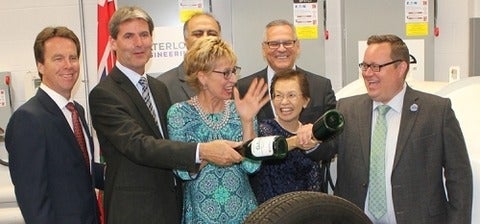
A state-of-the-art automotive research and testing facility that was five years in the making officially opened at the University of Waterloo today with a twist on the old ship-christening tradition.

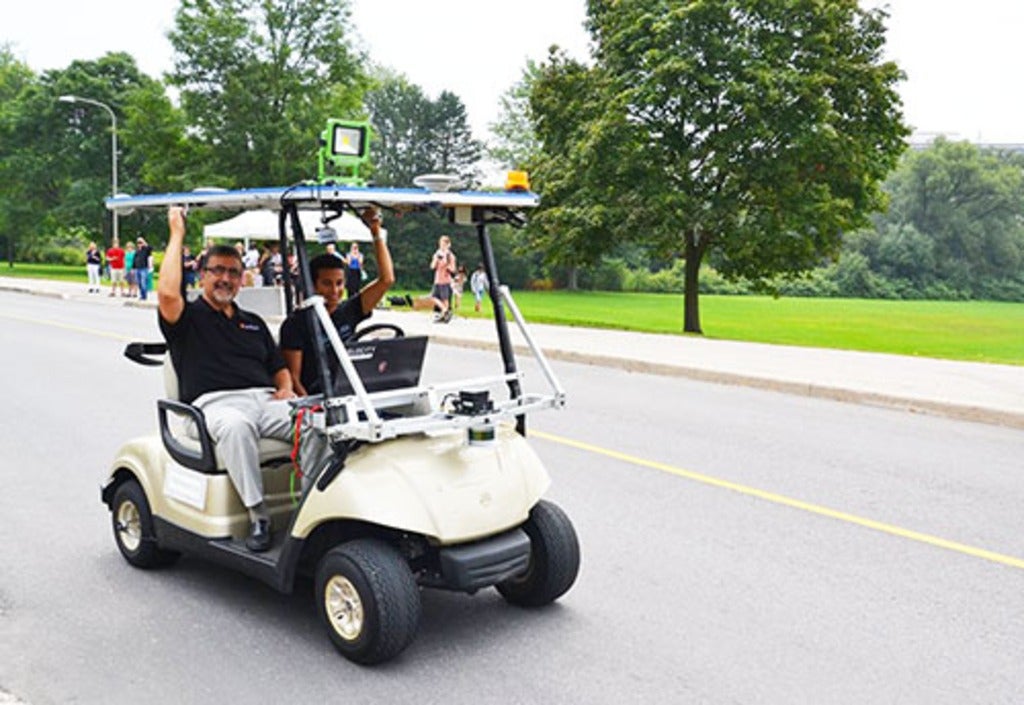
Driverless cars are no longer just being driven in The Jetsons' futuristic utopia. 

Steve Waslander spoke with the CBC's Matt Galloway about how the future is today with the province taking the lead on allowing self-driving cars to be tested on our roads.

Read the full story...

From General Motors

While the age of fully-autonomous cars is not yet upon us, the truth is humans have not actually been driving by themselves for years. From anti-lock braking in the 1970s to the advanced driver assist functions of today, cars have been giving drivers a hand, and helping keep them safe, for decades.

The race to build a better battery has drawn in some of the world’s biggest innovators — notably billionaire CEO Elon Musk, who is one of the players in the global drive to invent a low-cost, powerful battery to fuel the next-generation of electric cars.

Waterloo Engineering automotive research projects are receiving financial support from the Canada Foundation for Innovation's (CFI) Automotive Partnership Canada Fund. The two initiatives will help improve fuel efficiency: one by developing lightweight parts and the other by designing intelligent control systems.