

The Waterloo Climate Institute brings together the research community and partners to advance strategic research and capacity building priorities at the local, national, and international scales. Our work empowers business, government and civil society to respond effectively to the climate crisis.
Based at the University of Waterloo, the Climate Institute harnesses a unique combination of strengths and depth of expertise to enhance the impact and excellence of innovative interdisciplinary research and education, and to deal head-on with the complexity and interconnectedness of social, political and technological dimensions of climate change.
Our key focus areas:

Research
Strategic research development and management across priority research areas (deep decarbonization and sustainability transitions; climate risks, resilience and adaptation; and climate science, modelling and observation).

Training and Capacity Building
Supporting climate action through targeted professional development opportunities and the integration of climate education in academic programs.

Knowledge Sharing
Informing decision makers in policy, practice and innovation through tailored reports, briefs, facilitated workshops, data visualization, media engagement, and partnerships.
Learn more about the work at the Waterloo Climate Institute:

Climate education resources
From Illuminate — our climate change simulation game — to our series of curriculum briefs, explore our list of internal and external resources that support climate education, research and action.
News
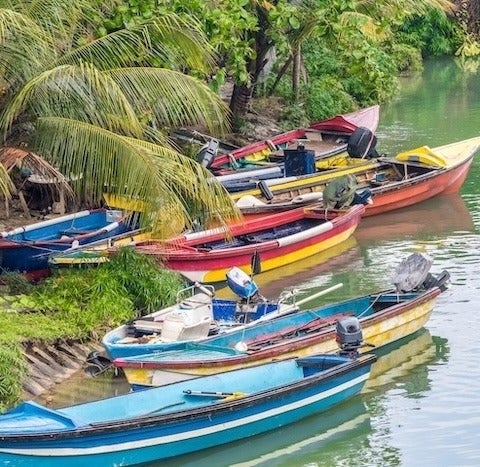
New policy brief calls for strengthening connections between disaster risk reduction and climate change adaptation to support Caribbean SIDS
A new policy brief from the Waterloo Climate Institute, led by Lowine Hill and Prof. Simron Singh, stresses the need to approach climate-related risks in Caribbean Small Island Developing States (SIDS) through a risk governance lens that recognises the interconnected nature of social, ecological and economic systems.
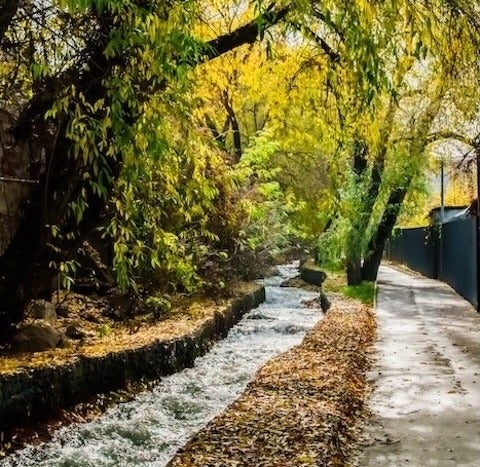
New technical brief highlights impact of urban stream daylighting for climate adaptation and mitigation
A new technical brief from the Waterloo Climate Institute led by Luna Khirfan is showcasing lessons from Seoul’s Cheonggyecheon and Zürich’s Bachkonzept to explore the potential urban stream daylighting – the practice of uncovering culverted streams and restoring them to the surface – as a nature-based solution.

University of Waterloo researchers launch ULYSSES Climate Intelligence
University of Waterloo researchers are turning years of climate risk and adaptation research into real-world solutions with the launch of ULYSSES Climate Intelligence. The AI enabled platform is designed to help organizations better anticipate climate risks, strengthen supply chains and make more informed decisions.
Events

Risk, Resilience, and Climate Change - from Power Systems to Communities: Seminar with Seth Guikema
How can data help us better understand and strengthen resilience? This talk, with special guest Dr. Seth Guikema, explores data-driven approaches to assessing risks to power systems and communities, with a focus on extreme weather, climate change and new data sources.