Future students

Friday, May 11, 2018 1:30 pm - 1:30 pm EDT (GMT -04:00)

Seminar • RAMP: RDMA Migration Platform

Babar Naveed Memon, Master’s candidate
David R. Cheriton School of Computer Science

Remote Direct Memory Access (RDMA) can be used to implement a shared storage abstraction or a shared nothing abstraction for distributed applications. We argue that the shared storage abstraction is an overkill for loosely coupled applications and that the shared nothing abstraction does not leverage all the benefits of RDMA.
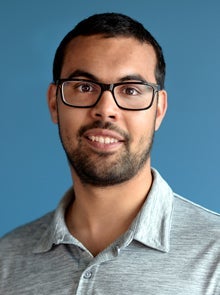
Panos K. Chrysanthis, University of Pittsburgh

Abstract: Online analytics, in most advanced scientific, business, and defense applications, rely heavily on the efficient execution of large numbers of Aggregate Continuous Queries (ACQs). ACQs continuously aggregate streaming data and periodically produce results such as max or average over a given window of the latest data.  It was shown that in processing ACQs it is beneficial to use incremental evaluation, which involves storing and reusing calculations performed over the unchanged parts of the window, rather than performing the re-evaluation of the entire window after each update.

Monday, July 30, 2018 2:00 pm - 2:00 pm EDT (GMT -04:00)

DSG Seminar Series • Data Models from Traditional Databases to NoSQL Systems

Paolo Atzeni, Database Professor and Head of the Department of Engineering
Università Roma Tre

NoSQL systems have gained their popularity for many reasons, including the flexibility they provide with modeling, which tries to relax the rigidity provided by the relational model and by the other structured models.

Torben Bach Pedersen, Professor of Computer Science
Aalborg University, Denmark

Data collected from new sources such as sensors and smart devices is large, fast, and often complex. There is a universal wish to perform multidimensional OLAP-style analytics on such data, i.e., to turn it into “Big Multidimensional Data”. Supporting this is a multi-stage journey, requiring new tools and systems, and forming a new, extended data cycle with models as a key concept.

Thursday, May 10, 2018 2:00 pm - 2:00 pm EDT (GMT -04:00)

DSG Seminar Series • Next Generation Indexes For Big Data Engineering

Daniel Lemire
Université Télug

Maximizing performance in data engineering is a daunting challenge. We present some of our work on designing faster indexes, with a particular emphasis on compressed indexes. Some of our prior work includes (1) Roaring indexes which are part of multiple big-data systems such as Spark, Hive, Druid, Atlas, Pinot, Kylin, (2) EWAH indexes are part of Git (GitHub) and included in major Linux distributions.

Rachel Pottinger, Department of Computer Science
University of British Columbia

Users are faced with an increasing onslaught of data, whether it's in their choices of movies to watch, assimilating data from multiple sources, or finding information relevant to their lives on open data registries.

Lei Zou, Institute of Computer Science and Technology
Peking University

In this talk, I focus on accelerating a widely employed computing pattern — set intersection, to boost a group of relevant graph algorithms. Graph’s adjacency-lists can be naturally considered as node sets, thus set intersection is a primitive operation in many graph algorithms. We propose QFilter, a set intersection algorithm using SIMD instructions. QFilter adopts a merge-based framework and compares two blocks of elements iteratively by SIMD instructions.