The University of Waterloo’s Hub for Sustainability Integration hosted it's second annual conference at RBC WaterPark Place in Toronto, bringing together leaders from industry, academia, and the student community for a full day of discussion on how sustainability is transforming business. Through keynotes, panels and networking, the event explored how organizations can turn purpose into profit while addressing the world’s most urgent environmental and social challenges. Experts shared practical insights on policy, best practices, and how embedding sustainability into business strategy creates positive outcomes for people, the economy and the planet.
An innovative partnership between the School of Accounting and Finance (SAF) and the School of Environment, Enterprise and Development (SEED), the Hub bridges the gap between education and industry by connecting students, faculty and partners to foster innovation and advance sustainability integration in business.

Matt Giffen delivers a keynote titled "The Future of Sustainability: Integrating Purpose with Profit in a Changing World"
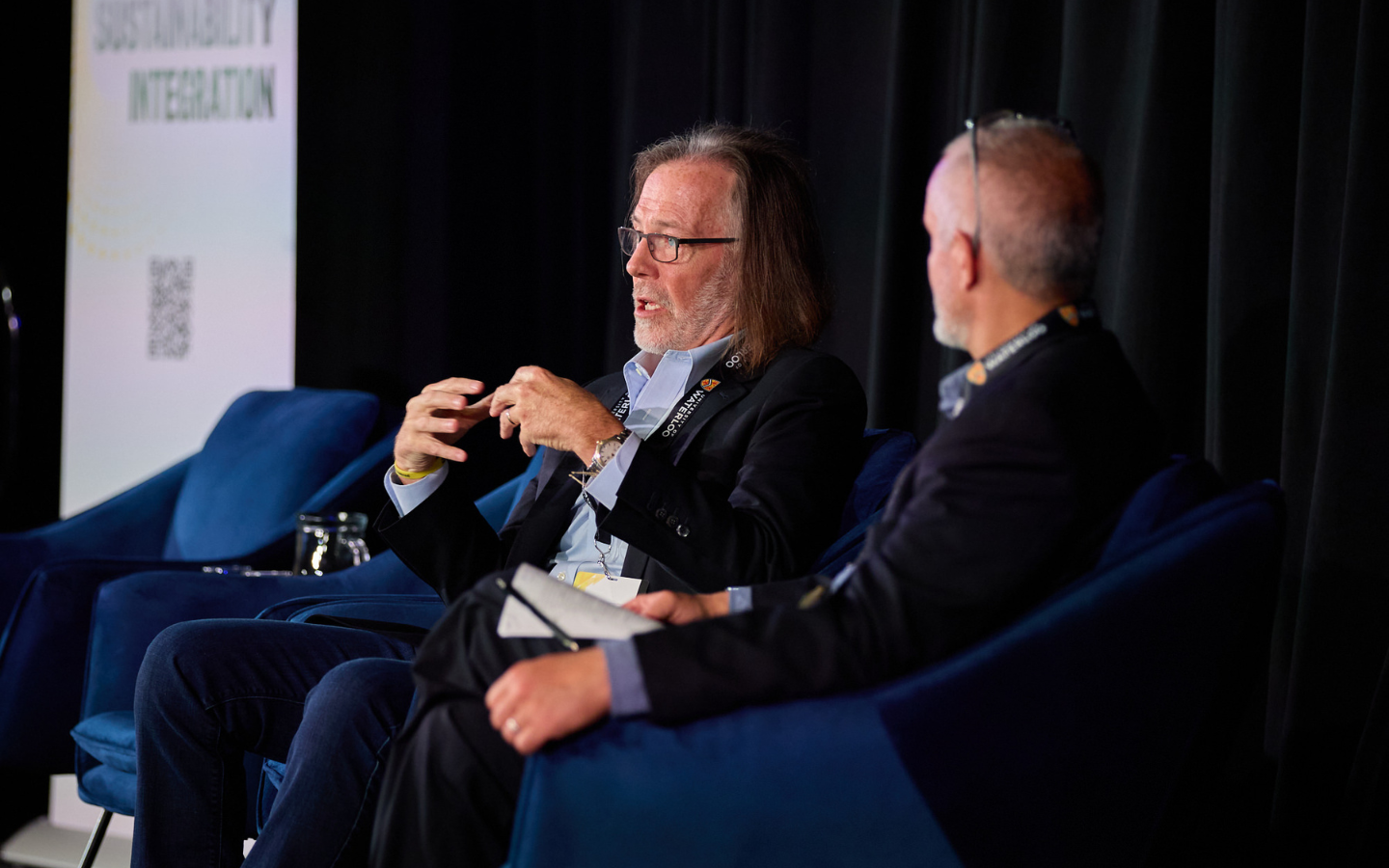
The conference opened with an inspiring keynote by Matt Giffen, founder of Bench Brewing Company, who shared his journey from a 24-year banking career to building a thriving, B Corp-certified brewery in Niagara’s Benchlands. Driven by conviction rather than regulation, Giffen built sustainability into every part of his business, showing that environmental responsibility and profitability go hand in hand. His story illustrated that when companies align their values with their operations, sustainability transforms from a cost into a catalyst for innovation and long-term growth.
A morning panel on investing for impact versus divesting examined how investors can balance engagement and withdrawal to drive meaningful climate action. Panelists agreed that engagement remains one of the most powerful levers for change when backed by credible data and long-term vision, and that collaboration between investors, policymakers and corporations is critical to building a low-carbon economy.
In the midday keynote, Mallory Rose, vice president, communications, marketing and student success of Indspire, spoke about sustainable reconciliation and how Indigenous leadership principles—rooted in listening, accountability and storytelling—can guide business and education toward more authentic, inclusive approaches to sustainability. Indspire is a national Indigenous charity that invests in the education of First Nations, Inuit and Métis people, supporting their success through scholarships, programs and mentorship. Rose’s remarks challenged attendees to consider how reconciliation and sustainability are deeply interconnected, beginning with respect for community, culture and the land itself.
The afternoon then turned to biodiversity and business with a panel moderated by Claire Purvis, the recently-appointment associate director of the Hub. The session explored how companies can balance growth with protecting ecosystems and featured perspectives from across industry and government on why biodiversity is no longer simply an environmental concern, but a business imperative tied to resilience, reputation and long-term value creation.

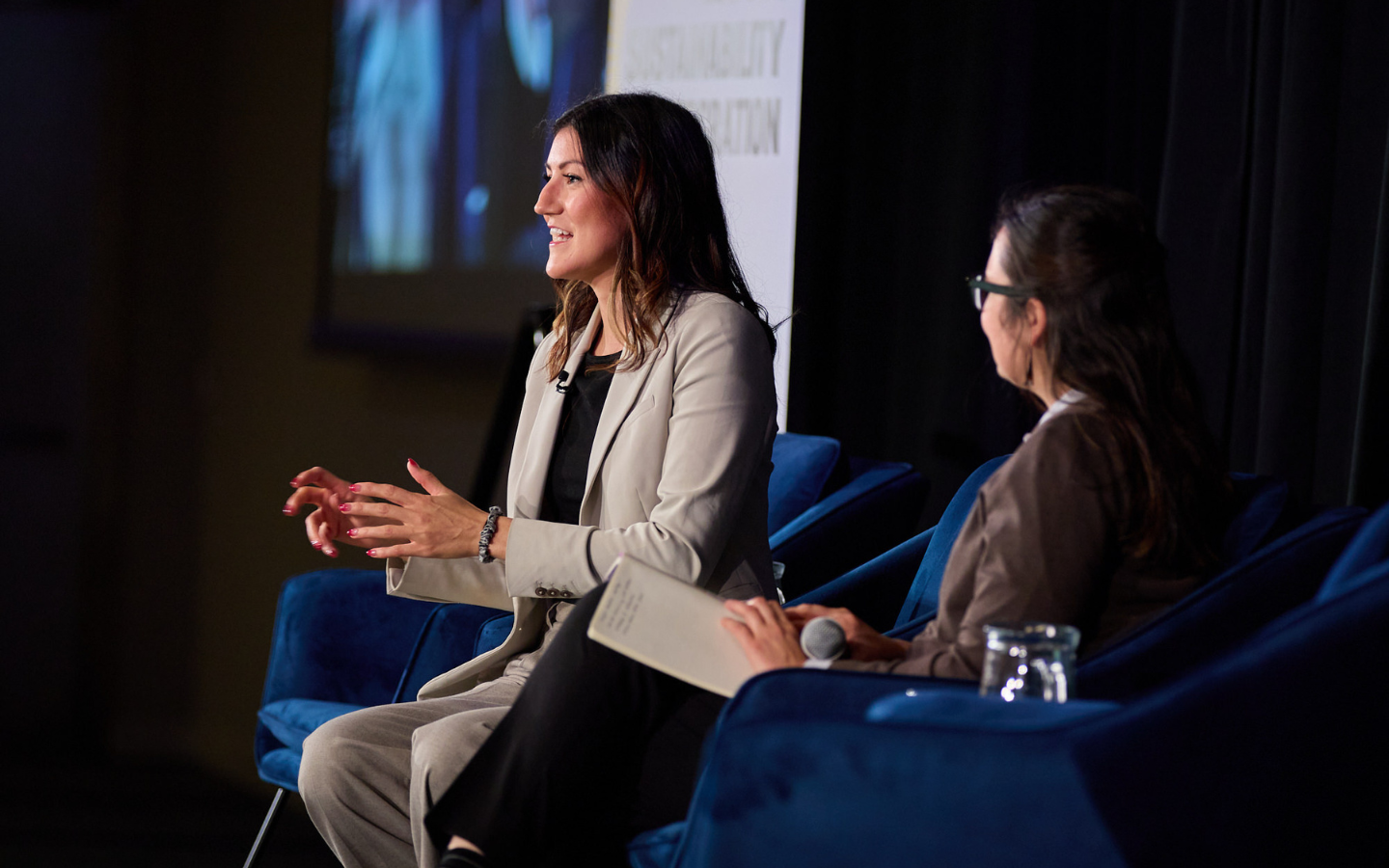
Mallory Rose delivers a keynote titled "Sustainable Reconciliation: Integrating Indigenous Leadership into Education and Business"
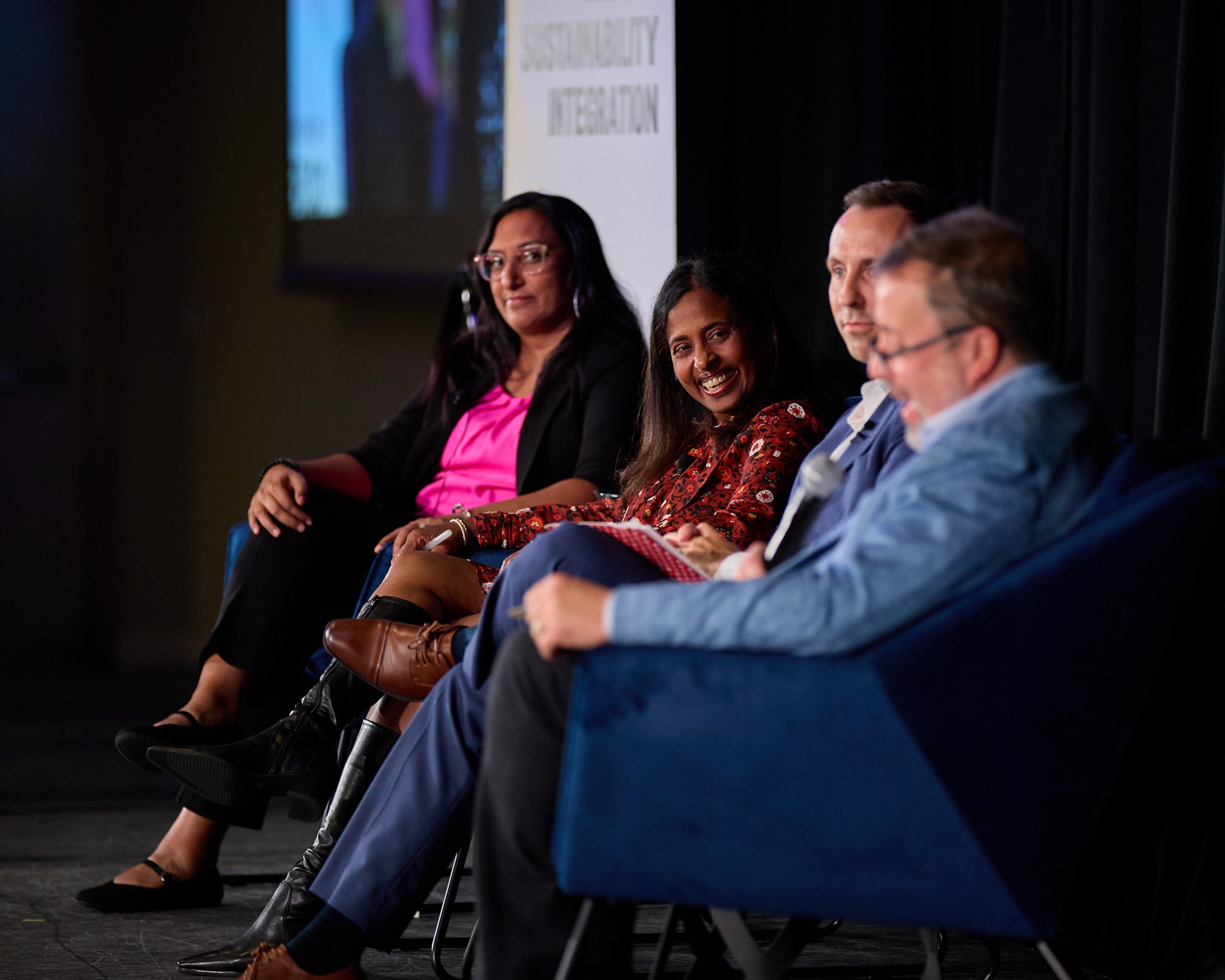
A subsequent session on geopolitics, legislation and public perception explored how shifting political landscapes and heightened ESG scrutiny are reshaping corporate sustainability. Panelists highlighted the growing technical demands of sustainability roles—such as carbon accounting and risk management—and emphasized the importance of a unified Canadian framework alongside stronger Indigenous participation in shaping sustainable policy and practice.

Vivek Goel moderates a fireside chat with Danièle Sauvageau.
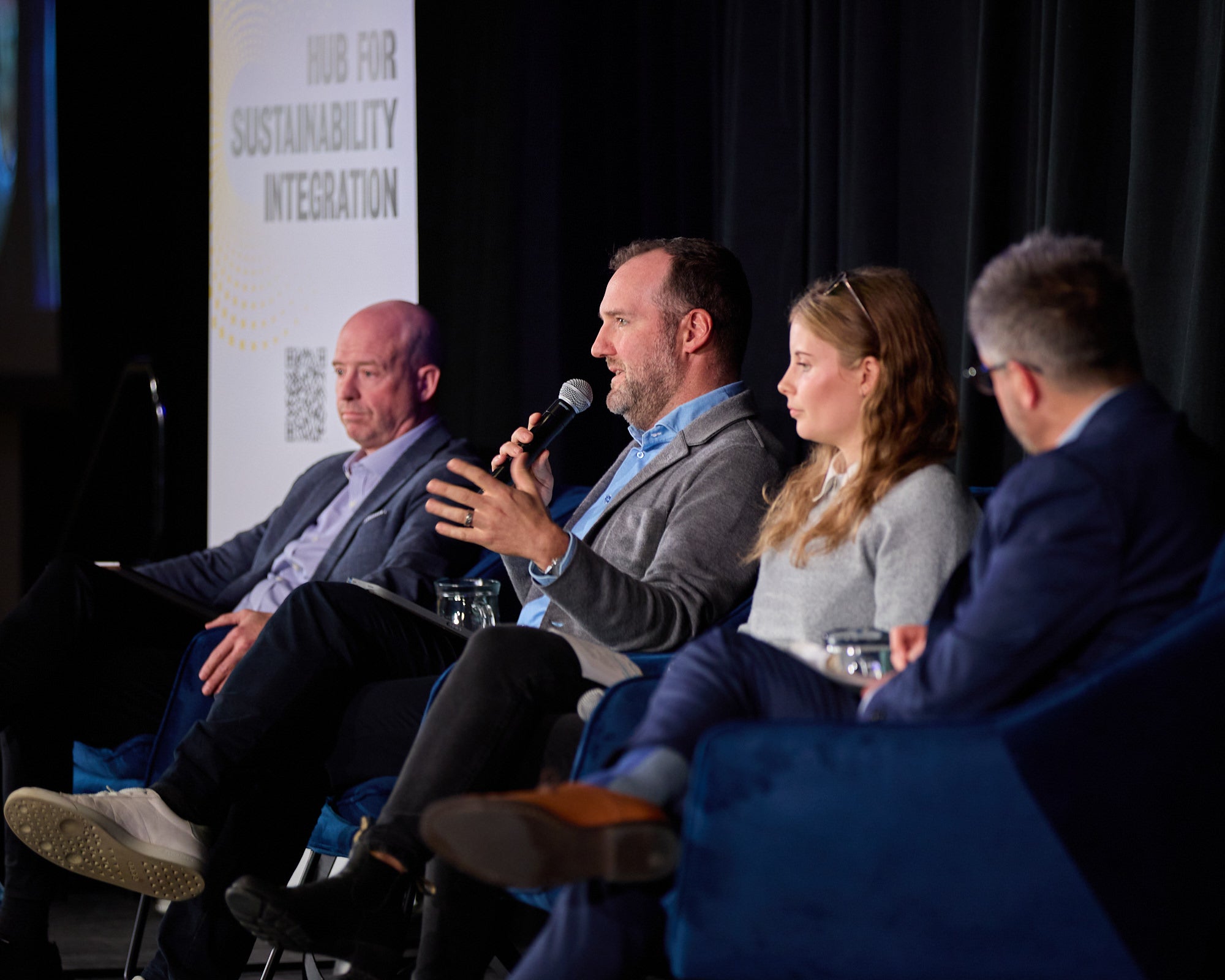
The final panel brought together voices from Blue Mountain Resorts, Sobeys, and Axis Insurance to discuss physical climate risks and how industries are adapting to a changing climate. Speakers shared practical examples of innovation—from energy efficiency and machine learning to climate mapping—and reinforced that collaboration across sectors is key to resilience.
The day closed with a keynote by Danièle Sauvageau, general manager of Montréal Victoire in the Professional Women’s Hockey League, who was introduced by Vivek Goel, president and vice-chancellor of the University of Waterloo. Sauvageau drew from her extensive career in sport and leadership to reflect on the power of vision, integrity and inclusion, urging attendees to “find their north,” focus on long-term purpose and lead with authenticity. Following her keynote, Sauvageau and Goel sat down for a fireside chat where they discussed the shared qualities of effective leadership across disciplines, from sports to academia to business, and how resilience and collaboration drive sustainable success.
From finance to reconciliation, biodiversity to leadership, UWaterloo’s Hub for Sustainability Integration Conference reinforced a clear message: sustainability isn’t a side strategy—it is the strategy. By connecting ideas and people across disciplines, the Hub continues to strengthen Waterloo’s commitment to integrating sustainability into education, research and practice—work that also aligns with the University’s broader efforts to embed Indigenous ways of knowing, stewardship of the land and community interconnectedness into its sustainability vision.
These perspectives remind us that environmental and social well-being are inseparable, and that building a sustainable future begins with respect—for the planet, for people and for the relationships that connect them.
The Hub also extends its gratitude to RBC, whose generous support helps make initiatives like this conference possible and advances the shared goal of empowering students and industry leaders to embed sustainability into business for lasting impact.

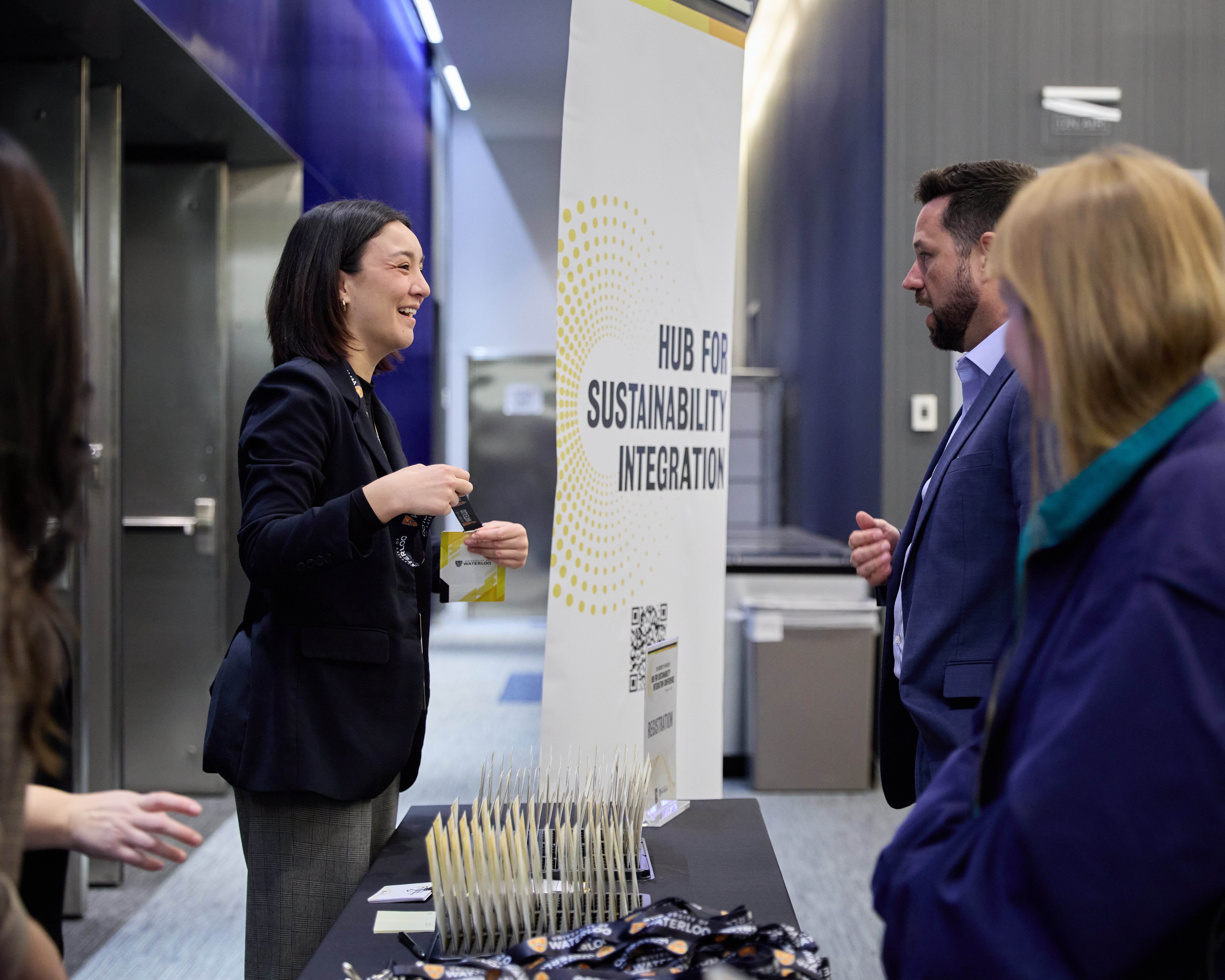
Conference guests check in at the registration desk.

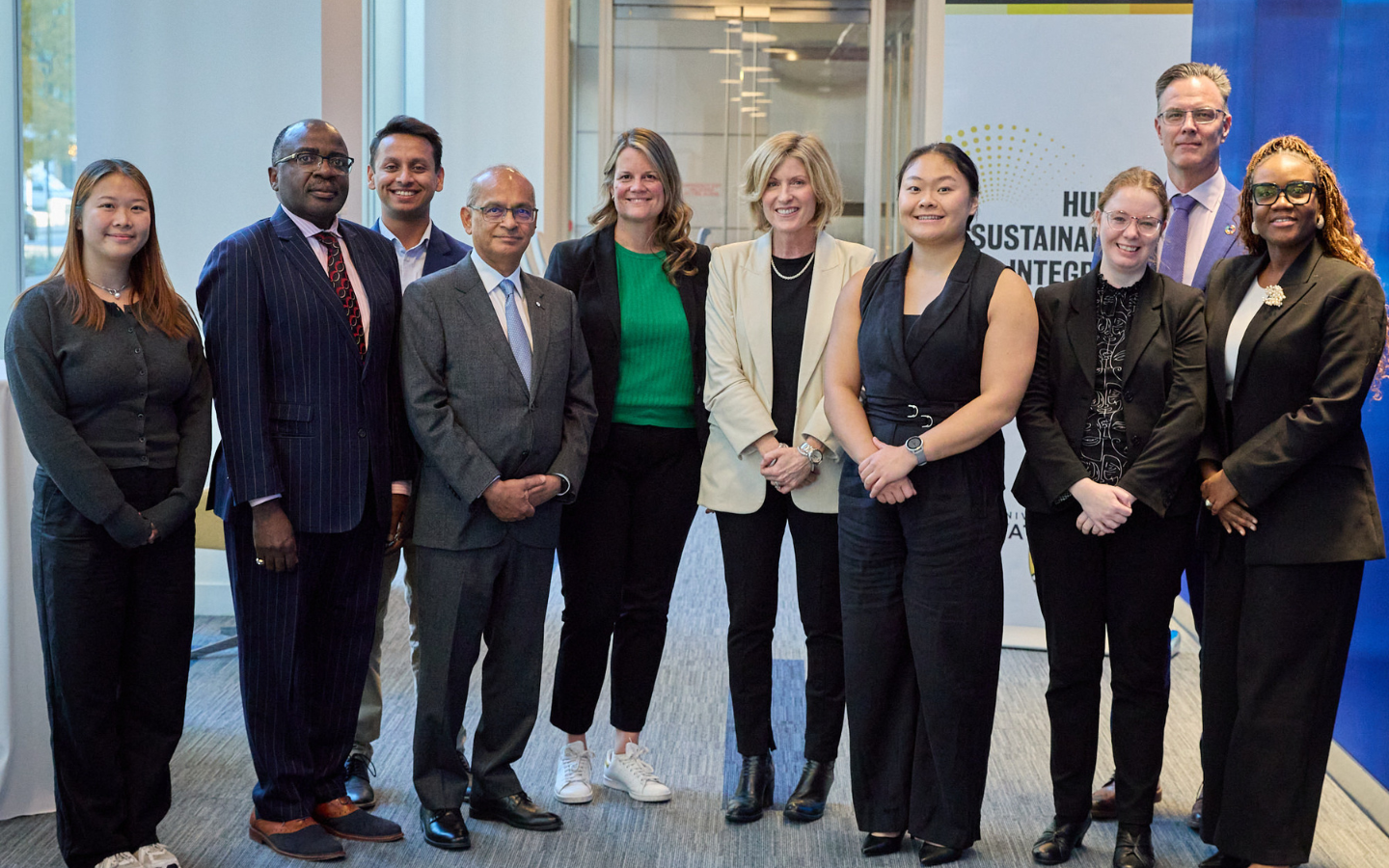
RBC Scholarship recipients and senior leadership from the University of Waterloo with Andrea Barrack from RBC.

"Investing for Impact vs. Divesting" panel. From left to right: Patrick Taylor, Sarah Thompson, Barbara Zvan, and moderator Ethan Fraser.

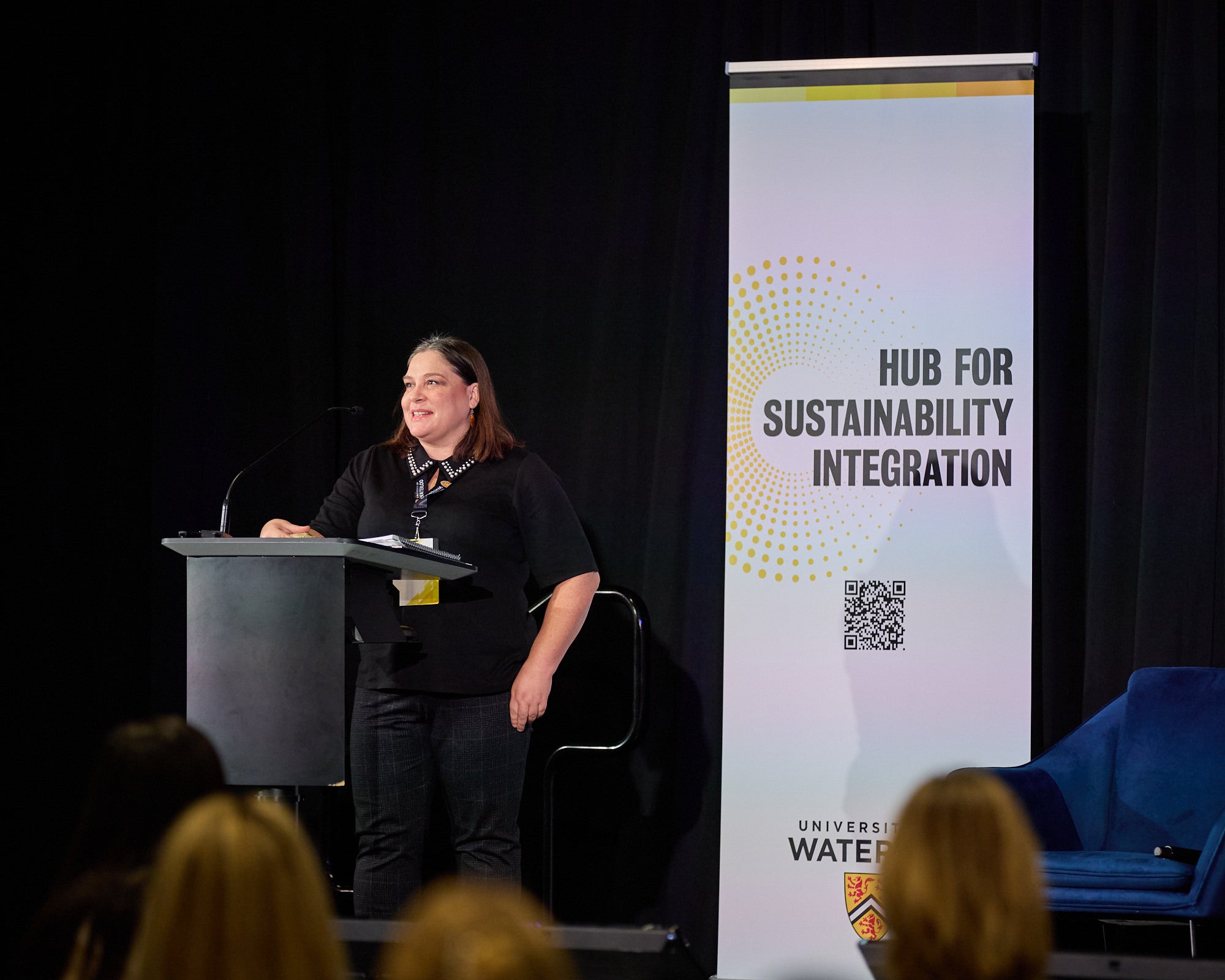
Melissa Ireland, Director of Indigenous Relations at Waterloo, delivers opening remarks.

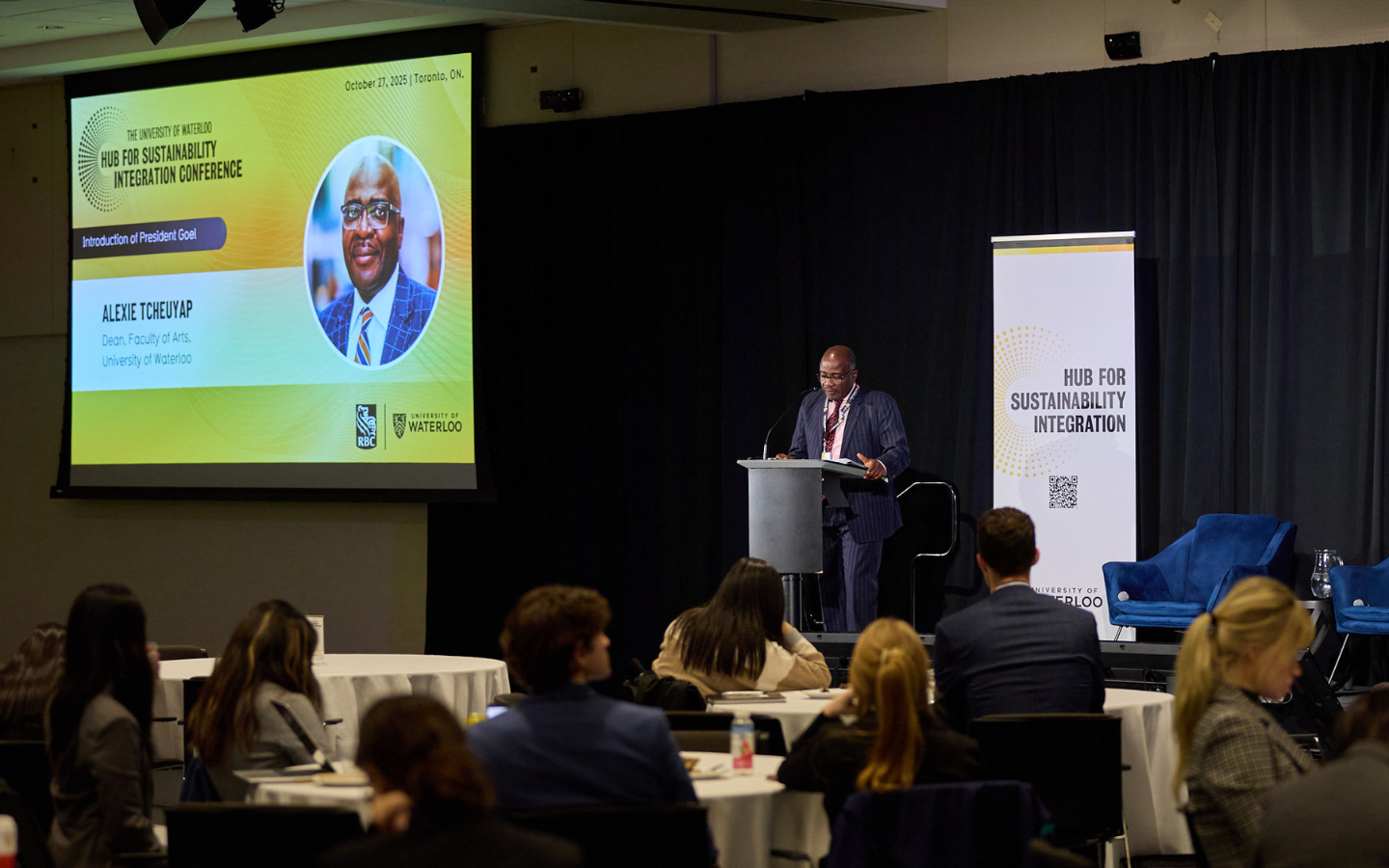
Alexie Tcheuyap, dean of Arts at the University of Waterloo, addresses the conference audience.

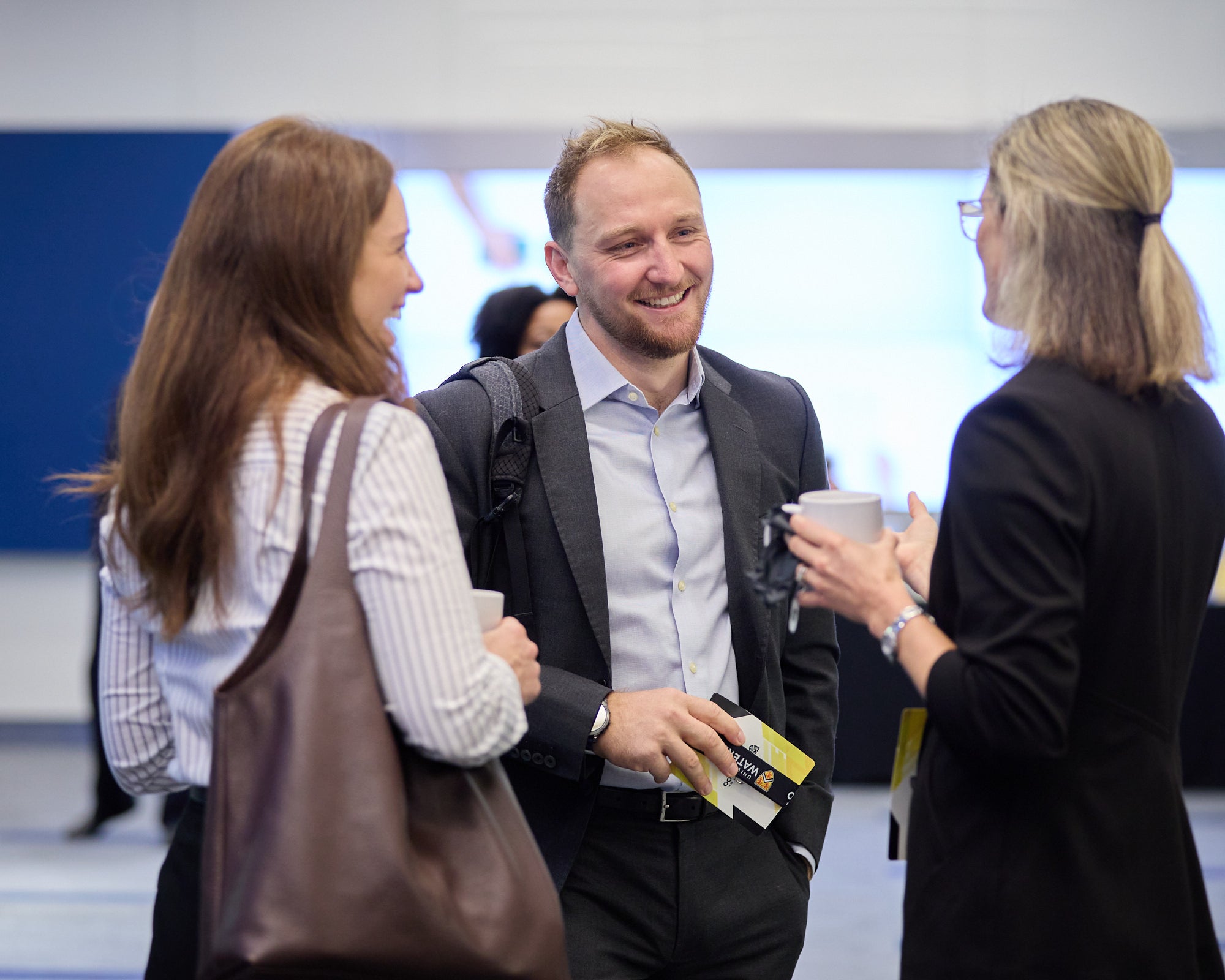
Conference guests mingle during a networking break.

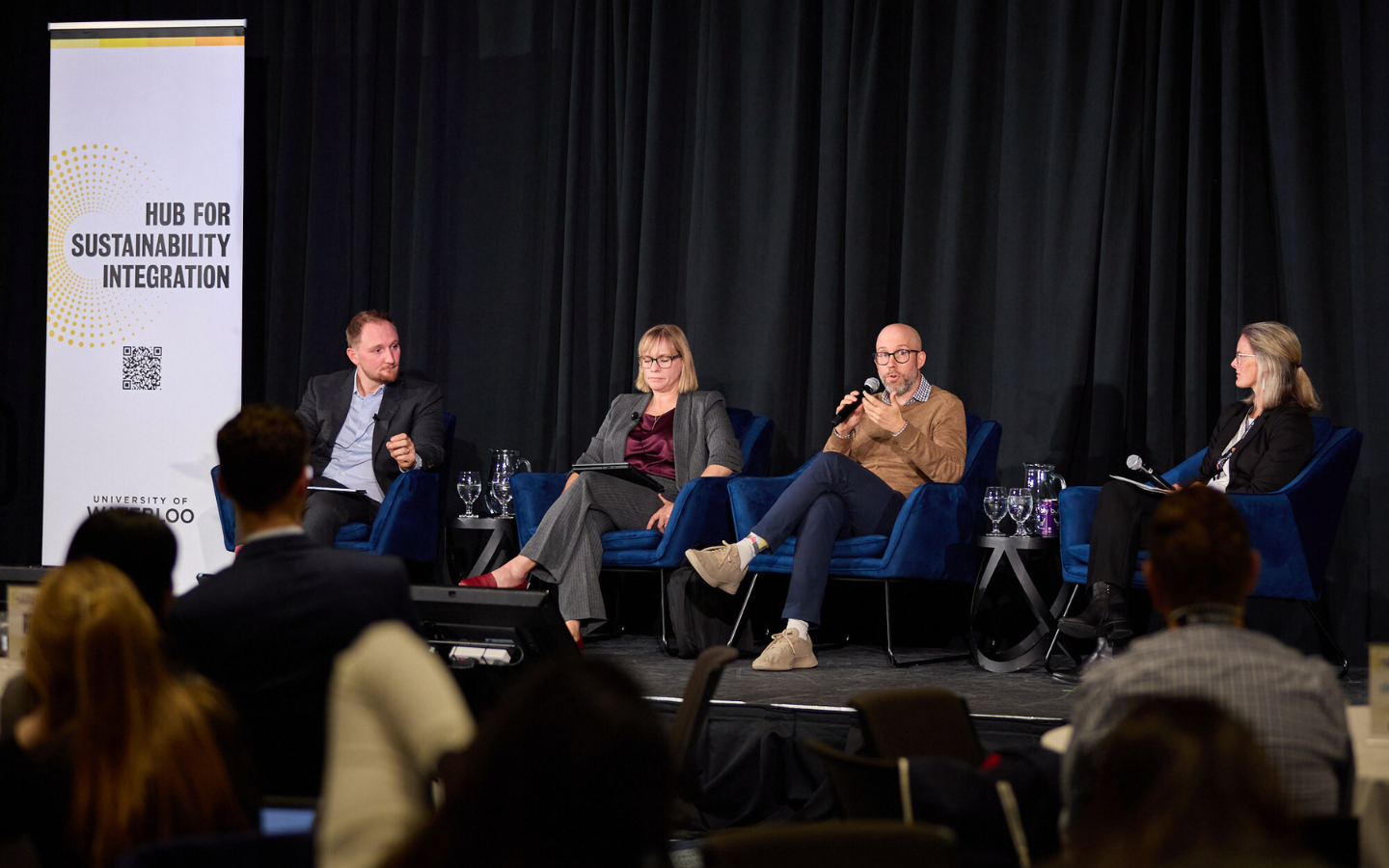
"Biodiversity and Business" panel. From left to right: Josh Hasdell, Renée Bowler, Mike Morrice, and moderator Claire Purvis

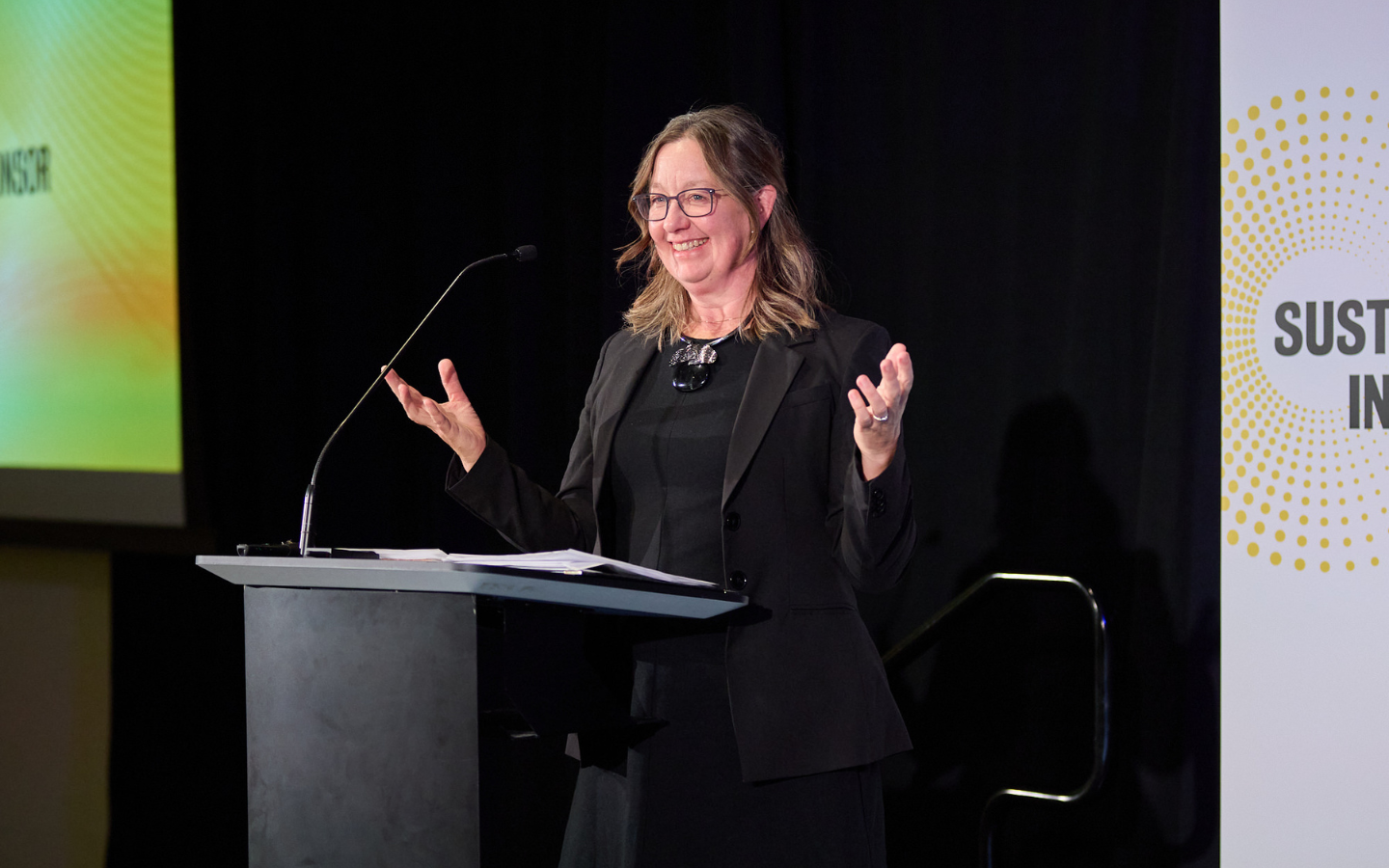
Jennifer Lynes, conference host, addresses the audience.

Adam Vitalis moderates a fireside chat with Matt Giffen.

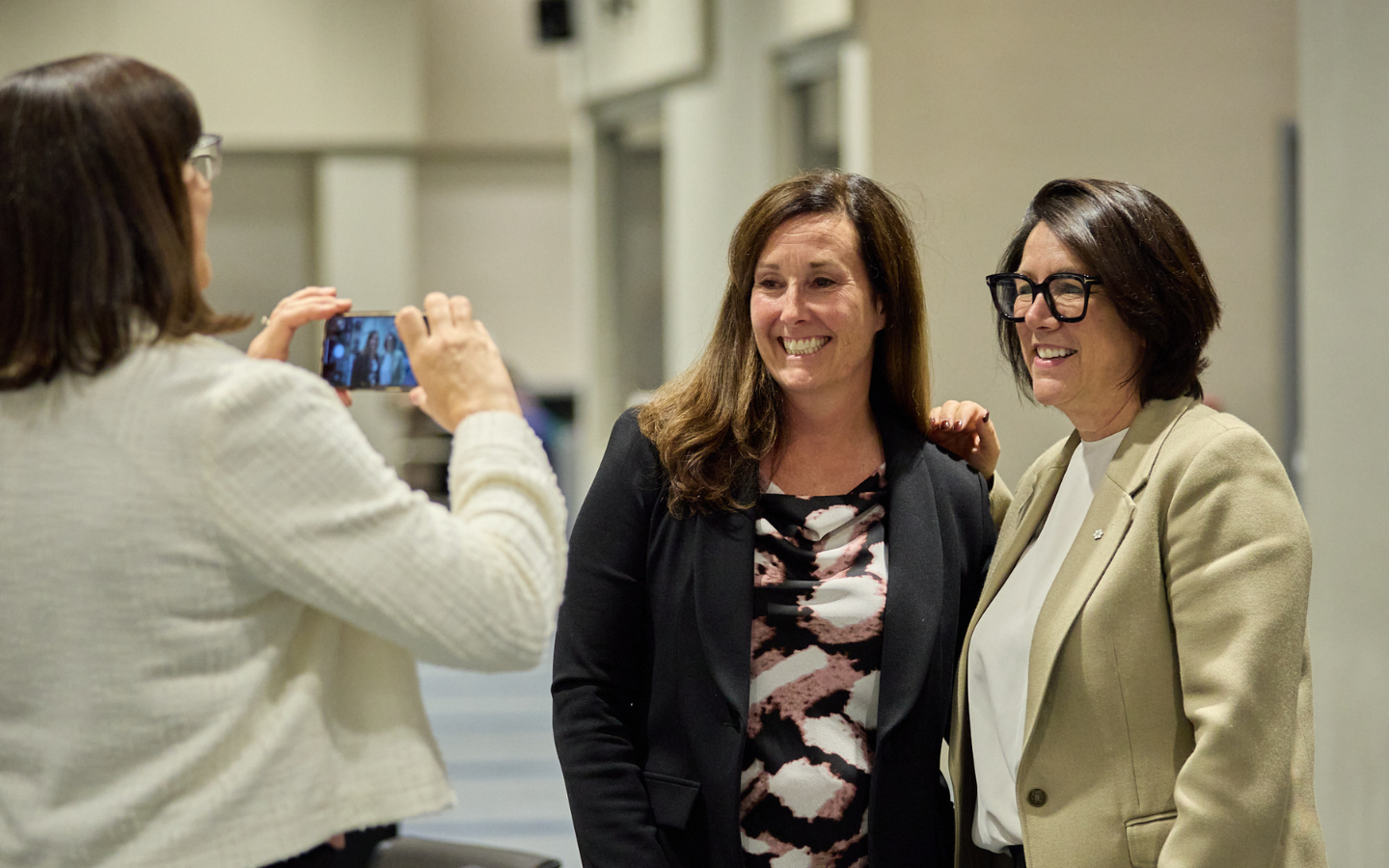
Conference guests take a photo with keynote speaker Danièle Sauvageau.

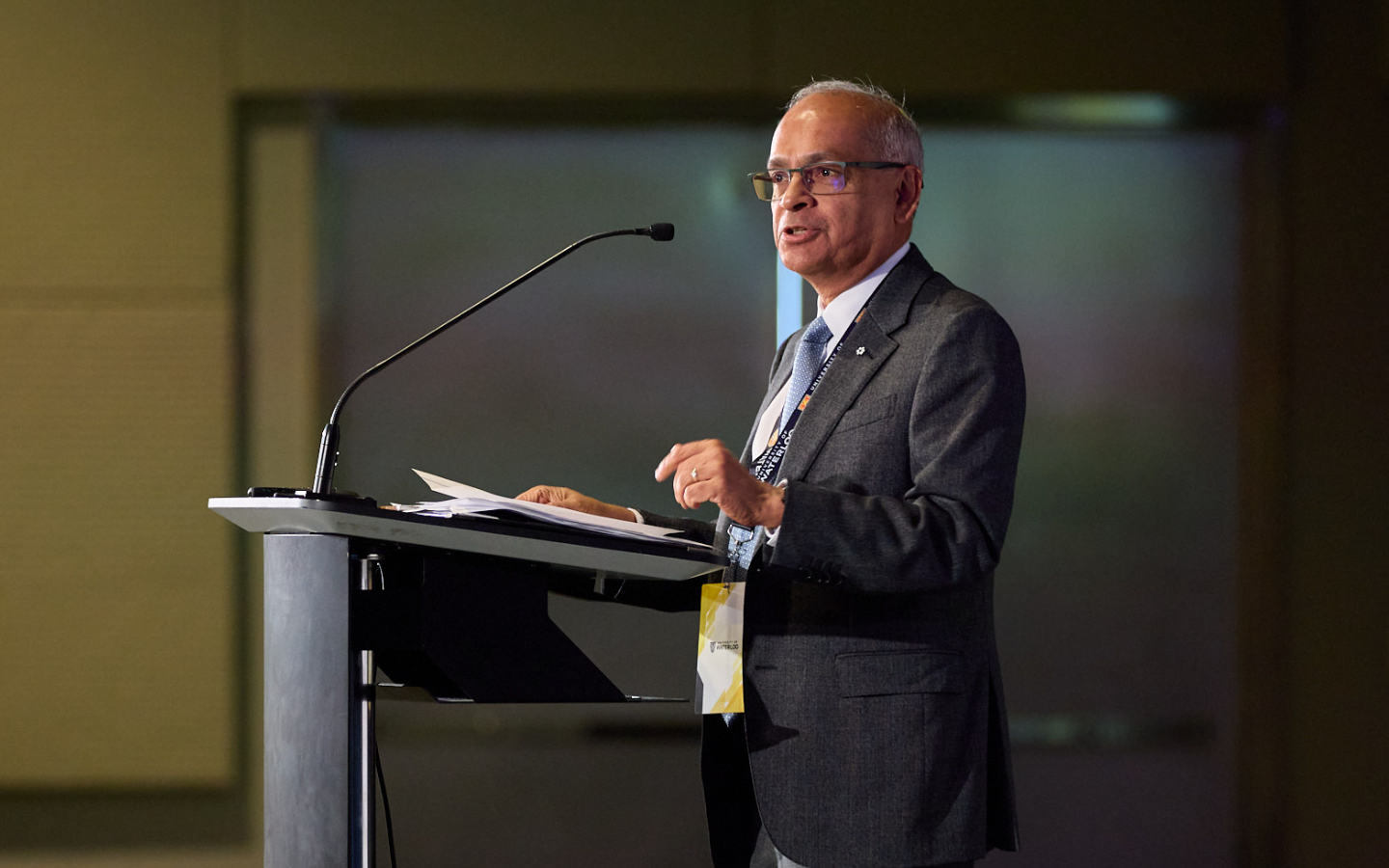
Vivek Goel addresses the conference audience.

Amanda St. Marie moderates a fireside chat with Mallory Rose.

"Navigating the Crossroads" panel. From left to right: Manasi Koushik, Dilhari Fernando, Andrew McLaughlin, and moderator Tim Hutzul.

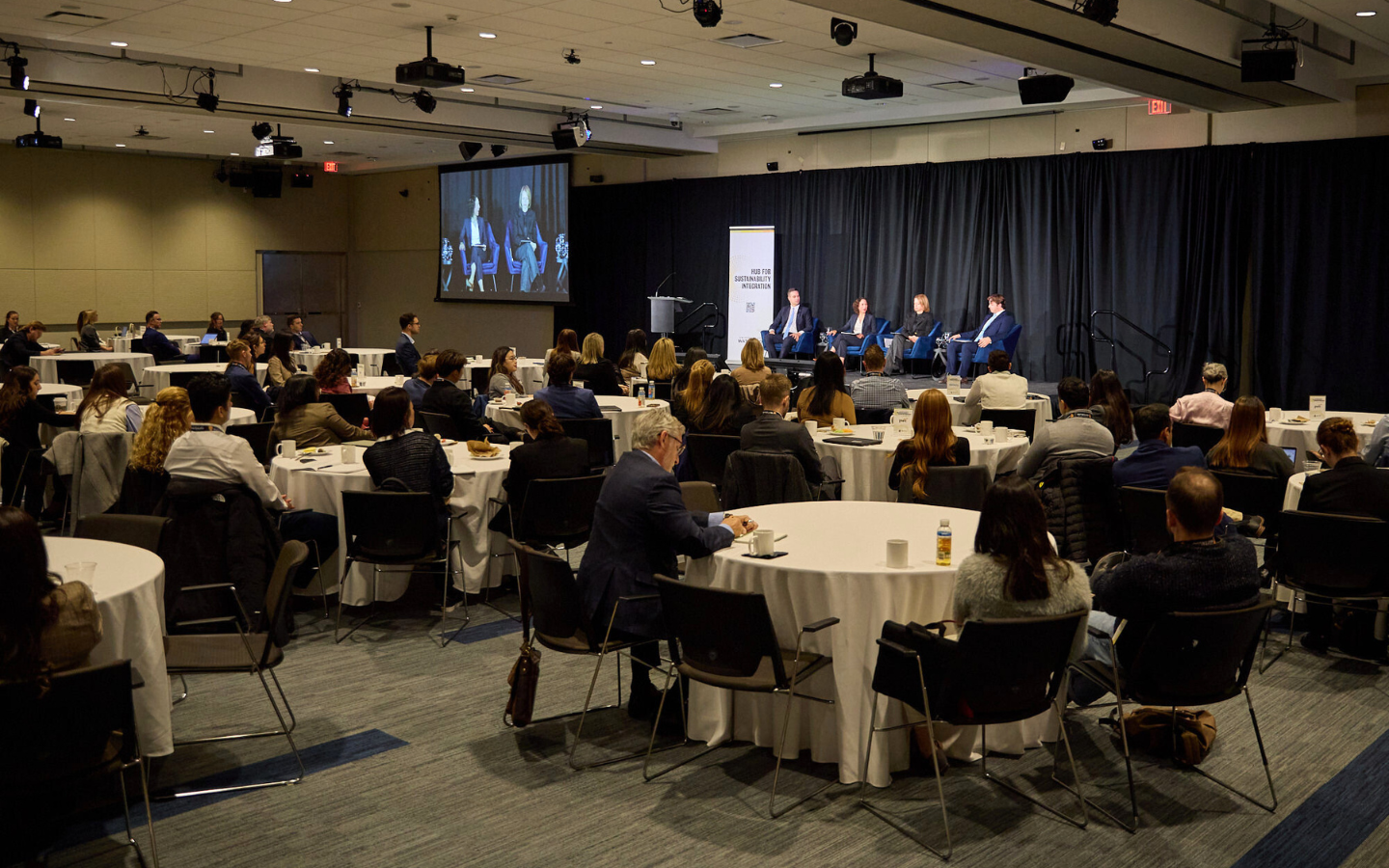
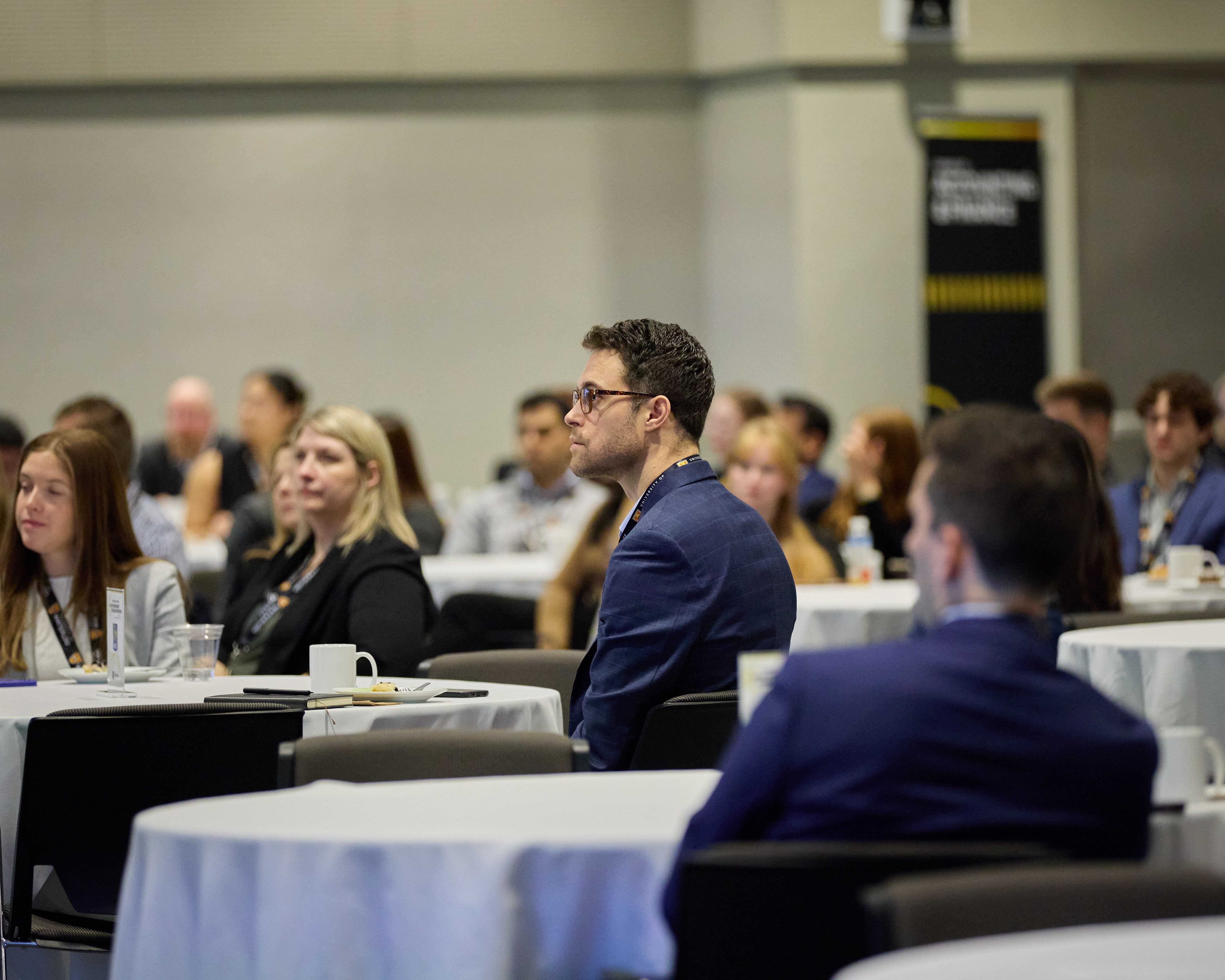
Seated at their tables, guests watch the conference sessions.

"Tackling Physical Risks" panel. From left to right: Kevan Thompson, Joshua Goodman, Tori Rooney, and moderator Jason Thistlethwaite.