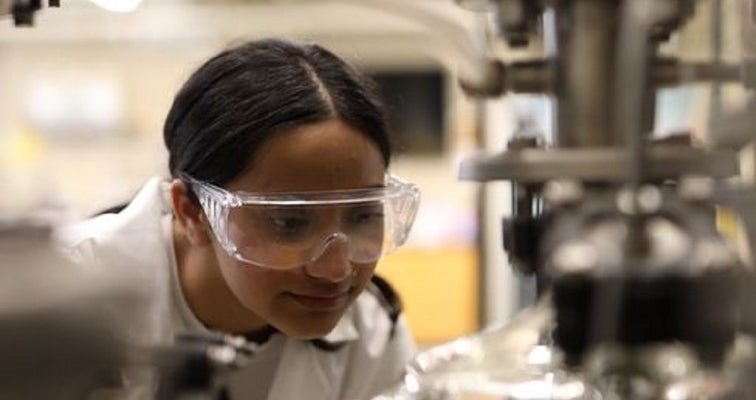
Bring learning to life!
Bring your class to campus for Chemical and Nanotechnology Engineering Lab Day! Students will try out hands-on activities and see how chemical and nanotechnology innovations are powering breakthroughs in sustainability, energy, and medicine. It’s a fun, interactive way to spark curiosity and show future engineers what’s possible.
Date: Tuesday, October 14
Time: 10:00 a.m. - 2:30 p.m. (includes a half an hour lunch break for students to enjoy their own lunches)
Audience: Grades 10 - 12
Cost: Free!
What activities will students engage in?
Students will do three or four hands-on workshops depending on student numbers. Each workshop lets them explore real-world engineering concepts in a fun, interactive way.
Whether you’re a first year student, or about to graduate, find the important resources and information needed for personal and academic success.
Future Students
The Nanotechnology Engineering honours degree program is designed to provide a practical education and industry experience with our world class co-operative education program.
Current Students
Whether you're a first-year student, or about to graduate, find all the important information you need for your personal and academic success in this section of our website.
Gas busters
Who you gonna call? In this lab, you’ll create and capture carbon dioxide gas using a chemical reaction. But this isn’t just about making gas—it’s about figuring out how to trap it. You’ll explore real-world solutions to climate change by experimenting with capturing CO₂ to protect our planet. With so much CO2 generated, you will learn about CO2 sequestration.
Links to the Ontario curriculum:
Grade 11 Gases and Atmospheric Chemistry
Grade 11 Scientific Solutions to Contemporary Environmental Challenges
Grade 11 Environmental Science
Amp it up
How much can you store? In this lab, students craft functional supercapacitors and test energy delivery to motors or LEDs. They see how chemical engineering and nanomaterials boost charge storage and how supercapacitors model modern energy technology. By experimenting with materials and design, students explore electricity storage in action.
Links to the Ontario curriculum:
Grade 10 & 11 Chemistry — Chemical Reactions, Chemical Bonds
Grade 11 Physics – Electricity and Magnetism
Grade 12 Electrochemistry
Watt a shock! Build your own power generator
Who can generate the most power? In this lab, students design and build Triboelectric Nanogenerator (TENG) devices. They complete a simple circuit with an LED and test their device with a digital multimeter. Students see how motion can be converted into electricity through material choices and design.
Links to the Ontario curriculum:
Grade 11 Energy, Electricity
Grade 11 Physics Forces, Energy Transformations
Grade 12 Physics Electrical Energy Transformation
Grade 12 Physics Forces that Affect Motion and its Applications