
Sunday, March 8, 2026
International Women's Day 2026
A message from the President and Vice-Chancellor Vivek Goel
A message from the President and Vice-Chancellor Vivek Goel

Every four years, the Olympics and Paralympics propel curling into the spotlight and researcher Heather Mair is working on building and sustaining a more diverse following

Two University of Waterloo affiliated health-tech companies secure major provincial investment to bring lifesaving innovations to market

New evidence-based classification rules expand access and improve fairness for Para Cross Country and Para Alpine skiers
Dr. Mary Wells recognized for decades of leadership in higher education

A fresh injection of $7.5 million USD seed funding is propelling Upside Robotics into its next phase of growth, giving the Velocity‑based startup momentum to deepen its partnerships with farmers and agricultural companies across Canada.
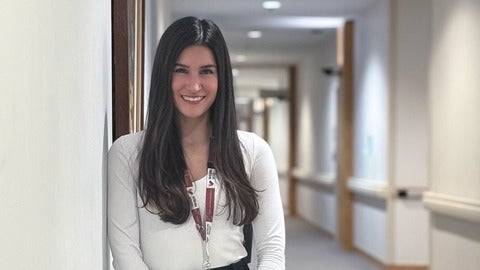
Patients receiving oral anticancer therapy are receiving better support thanks to a Waterloo Pharmacy alum and a team at the Waterloo Regional Health Centre (WRHN) Cancer Centre who have launched the Medication Assessment by Pharmacist (MAP) clinic.
Jackie Diebold (BScPhm '14, PharmD ’21), a clinical pharmacist, was backed by interim director of pharmacy Anthony Amadio (BScPhm ’11) oncology pharmacy co-ordinator Anna Granic and pharmacy manager Kathy Planinac to implement the new model to improve cancer care delivery while optimizing each clinicians’ skill set.

Balancing a demanding academic program with the intensity of varsity athletics takes vision, resilience and a strong community of support. For a fifth-year School of Planning student, Reka Somogyi, those have been the key ingredients to a successful journey at the University of Waterloo. This year, Somogyi is the recipient of the Environment Student-Athlete Award, recognizing her excellence in both sport and studies and her leadership within the Faculty of Environment.

This year marks 30 years since Black History Month was officially recognized in Canada.
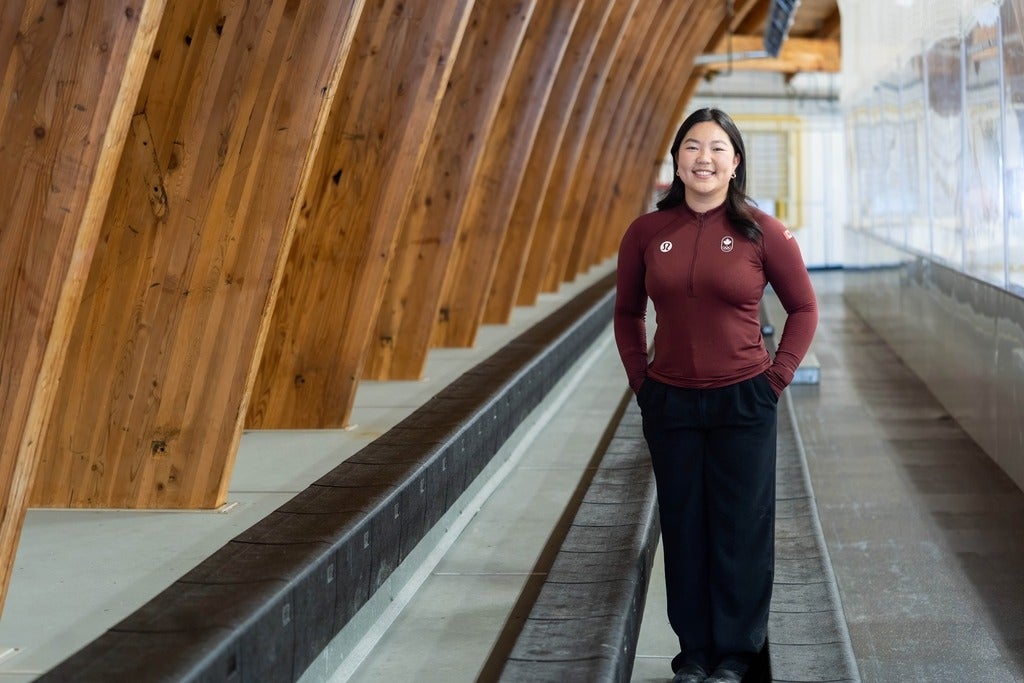
When Canadian athletes step onto the podium at this year’s Olympics, their journey to a medal will have been supported by coaches, teammates, family, friends and support staff. Among those support staff is third-year University of Waterloo co-op student Diane Choi.