Six Waterloo researchers awarded $6 million
New and renewed Canada Research Chairs will tackle future-focused problems spanning climate change, mental health and technology
Six researchers at the University of Waterloo have been awarded $6 million in funding to support their research as part of the prestigious Canada Research Chair (CRC) program.
This cycle, a total of 165 researchers will receive funding totalling more than $139 million for new and renewed chairholders. The announcement was made by the Honourable Mélanie Joly, Minister of Industry and Minister responsible for Canada Economic Development for Quebec Regions.
“Congratulations to our new and renewed Canada Research Chairs,” says Charmaine Dean, Vice-President, Research and International. “Guided by the Global Futures, these exemplary researchers will tackle society’s most complex challenges through an interdisciplinary lens and are set to deliver groundbreaking advances across health, society, sustainability, technology and economics for the benefit of Canada and beyond.”
Here are Waterloo’s newest Research Chairs:
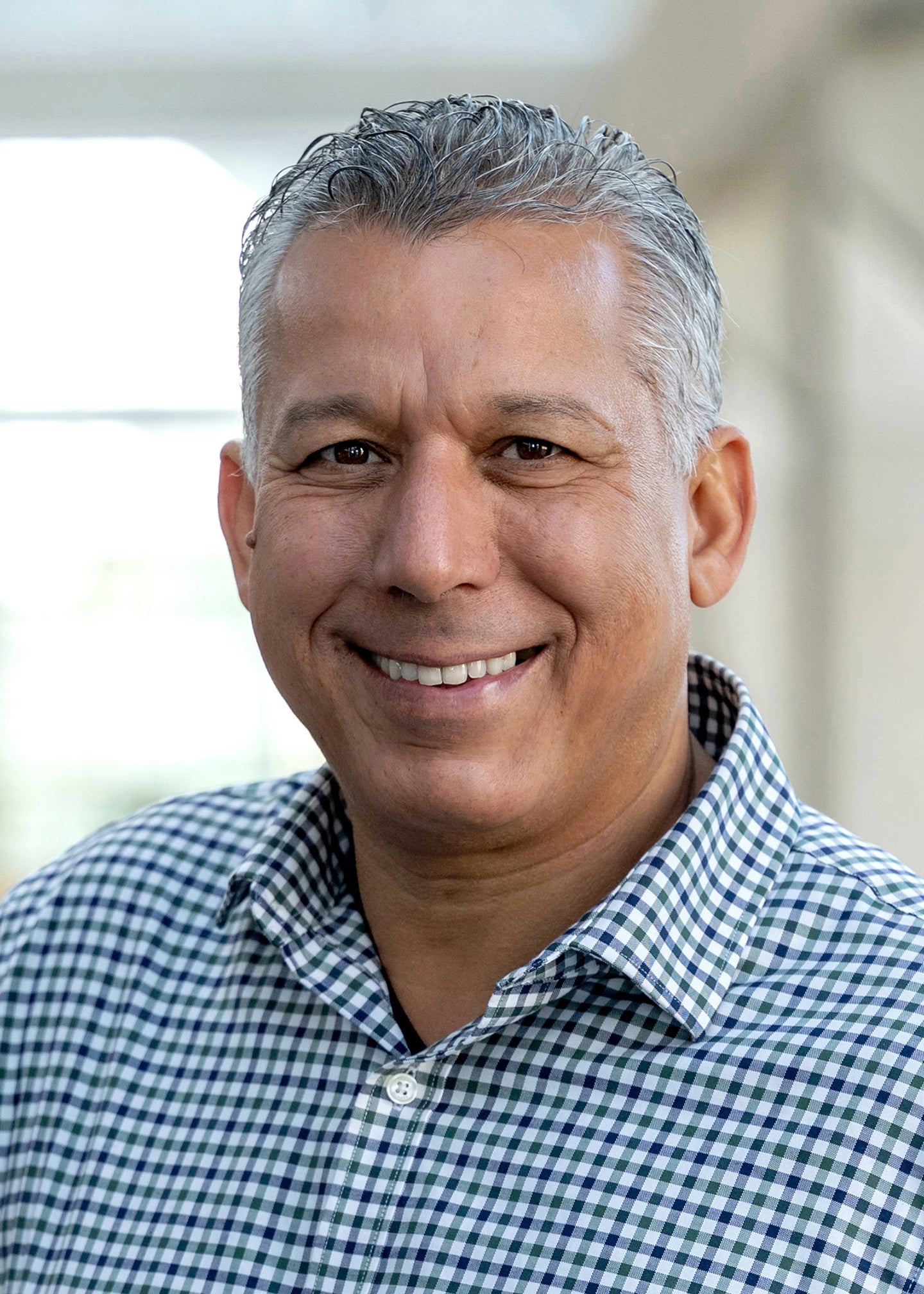 Dr. Raouf Boutaba | Faculty of Mathematics
Tier Level: Tier 1 NSERC in Network Intelligence
$1,400,000
Modern digital networks are becoming increasingly complex, with traditional, human-driven management approaches struggling to keep pace with rapid growth and real-time demands. Dr. Raouf Boutaba, Canada Research Chair in Network Intelligence, addresses this challenge by advancing automated, AI-driven network management. His research embeds intelligence throughout the network control process, enabling systems to analyze data, detect faults and adapt operations autonomously. By developing real-time telemetry, predictive models and adaptive orchestration tools, the project aims to create self-managing networks that are more efficient, resilient and scalable. This work will help meet the demands of emerging technologies and services while positioning Canada at the forefront of innovation in next-generation network infrastructure.
 Dr. Sarah Burch | Faculty of Environment
Tier Level: Tier 1 SSHRC in Transformative Climate Change Governance
$1,400,000
Communities across Canada are confronting climate change alongside interconnected crises such as biodiversity loss, food insecurity and social inequity. Yet, efforts to address these challenges are often fragmented and slow to scale. Dr. Sarah Burch, Canada Research Chair in Transformative Climate Change Governance, tackles this gap by advancing community-driven, interdisciplinary approaches to climate action. Her research examines how local actors design, test and expand solutions that address multiple sustainability challenges at once. By combining systems thinking, storytelling and experimental interventions, her team will prototype and scale real-world climate initiatives. The work will also harness, disrupt and reshape the capacities of communities to create opportunities for transformative change toward climate resilient, low-carbon development at a global level.
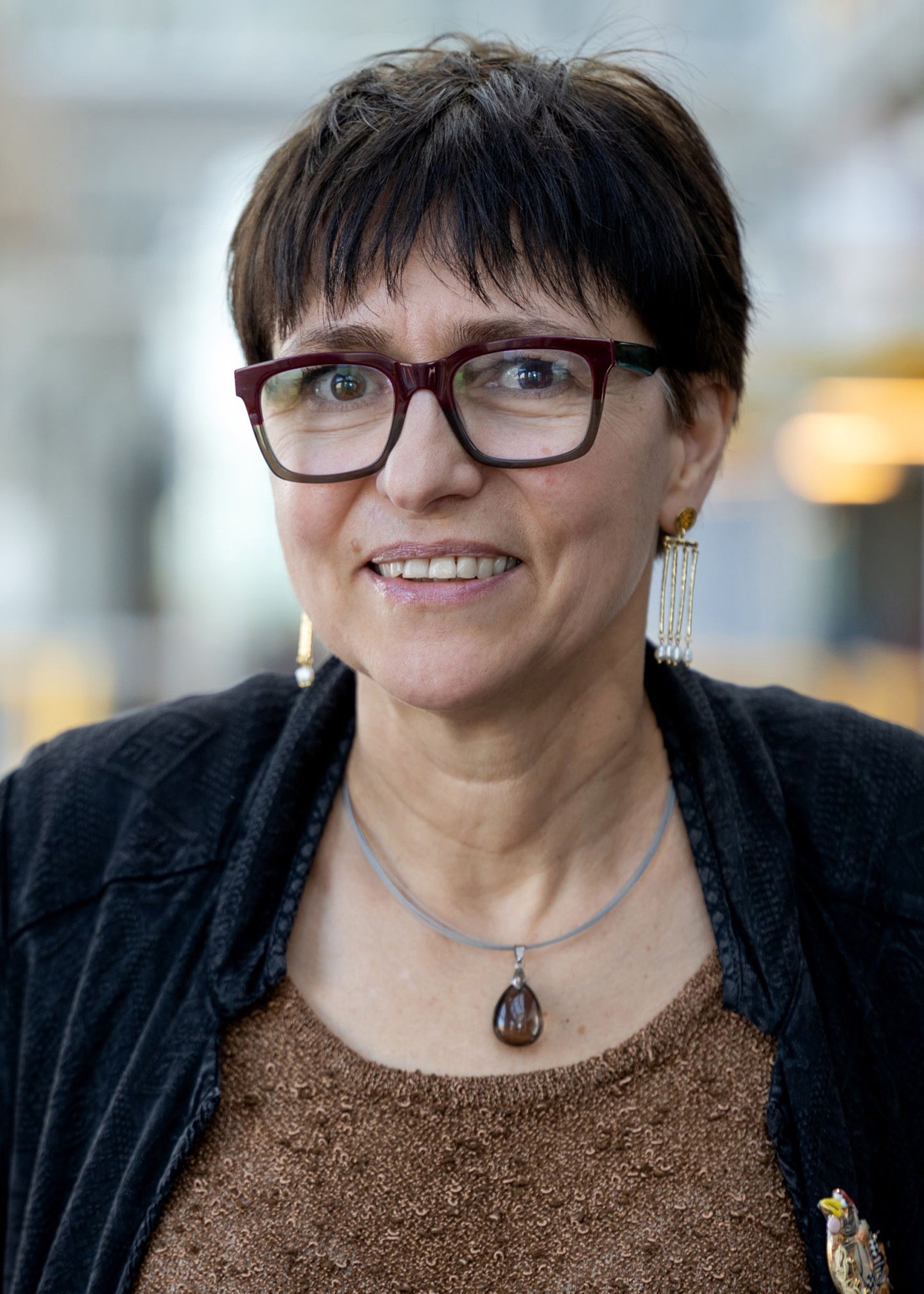 Dr. Marina Meilă | Faculty of Mathematics
Tier Level: Tier 1 NSERC in Reliable Structure Discovery
$1,400,000 + $100,000 JELF
As machine learning becomes central to scientific discovery, researchers face a growing challenge: distinguishing meaningful patterns in complex data from unreliable or misleading results. Dr. Marina Meilă, Canada Research Chair in Reliable Structure Discovery, addresses this problem by developing rigorous methods to verify and interpret data-driven findings. Her research creates algorithms that assess the stability of detected patterns and translate complex structures into scientifically meaningful insights. By automating key aspects of validation, the work reduces reliance on costly experiments and helps prevent false discoveries. Ultimately, it strengthens the reliability and transparency of machine learning, accelerating the path from data to knowledge and supporting more trustworthy science across disciplines.
Here are our renewed CRCs:
 Dr. Dillon Browne | Faculty of Arts
Tier Level: Tier 2 SSHRC in Child and Family Clinical Psychology
$500,000 + $200,000 JELF
Many families in Canada, particularly those from marginalized communities, face significant barriers to accessing effective mental healthcare, while traditional clinical approaches often fail to address their needs. Dr. Dillon Brown's renewed Canada Research Chair in Child and Family Psychology addresses this gap by developing innovative tools to support more inclusive and data-informed care. His FamilyPsycle Lab uses “synthetic modelling” to combine small datasets into comprehensive simulations of population health. In close partnership with RUNWITHIT Synthetics, an industry leader in synthetic decision intelligence, these tools will be incubated in a new synthetic modeling centre, called the Synthetic Waterloo Intelligent Futures Technology (SWIFT) Hub. By enabling more precise and culturally responsive decision-making, the work aims to improve access to care and support better mental health for children and families.
 Logan MacDonald | Faculty of Arts
Tier Level: Tier 2 SSHRC in Indigenous-led Models for Artistic Engagement and Decolonized Learning
$500,000
Indigenous art and knowledge systems are often isolated within institutional archives, limiting their role in contemporary artistic practice and post-secondary education. Logan MacDonald's second term as Canada Research Chair of Indigenous-led Models for Artistic Engagement and Decolonized Learning seeks to transform these spaces into active accessible sites of creation and learning. Building on Longhouse Labs (LLabs), his research supports Indigenous artists in engaging directly with cultural materials held in archives, while developing community-informed approaches to pedagogy. By integrating artist residencies, partnerships and curriculum innovation, the project advances Indigenous-led research-creation and expands experiential learning opportunities. This work positions archives as living resources and strengthens the role of Indigenous knowledge in shaping the future of arts education in Canada. Further, MacDonald’s Chair will position LLabs as a critical site for shaping Indigenous-led Fine Arts research, policy and pedagogy within Canadian higher education.
 Dr. Ashley Mehlenbacher | Faculty of Arts
Tier Level: Tier 2 SSHRC in Rhetorical Theory and Practice
$500,000
Rapid technological and scientific change is reshaping society, and what language we use to understand or meaningfully discuss these transformations matters. Dr. Ashley Rose Mehlenbacher, Canada Research Chair in Rhetorical Theory and Practice, explores how people communicate about profound societal shifts through the lens of metamorphosis. Drawing on rhetorical traditions, her research analyzes language across fiction, public discourse and scholarly writing to understand how we describe emerging futures. By developing frameworks for discussing complex change, the project aims to highlight how language shapes not only how we interpret transformation, but also the range of futures we imagine and pursue.
These researchers are part of a large network of experts at Waterloo who are working across disciplines to advance society, health, economies, technology and the environment.
These projects are made possible by the Canada Research Chair program.
Drs. Dillon Browne and Marina Meilă’s also received $200,000 and $100,000 respectively from the John R. Evans Leaders Fund, associated with the Canada Research Chair.