How to make wise AI systems
A new study is the first to suggest realistic ways to integrate wisdom into artificial intelligence, to create AI systems that will be more robust, transparent, cooperative and safe.
A research team led by the University of Waterloo is developing a novel tool to treat cancer by engineering hungry bacteria to literally eat tumours from the inside out.
Researchers at the University of Waterloo have discovered a way to turn plastic waste into acetic acid, the main ingredient of vinegar, using sunlight.
The breakthrough offers a promising new approach to reducing plastic pollution through photocatalysis, while simultaneously creating a useful, value-added chemical product through a process inspired by nature.
Why do some melodies feel instantly right, balanced, memorable and satisfying, even if you have never heard them before?
New research from the University of Waterloo suggests that more than creativity is at play. Behind many great melodies, researchers found something surprisingly powerful: symmetry. Their work shows that advanced algebra can reveal deep musical patterns that are not always obvious by ear or even on a written score.
A novel method to manipulate the inner structure of cells connects several scientific fields and could represent a significant step in the treatment of neurodegenerative diseases, such as Alzheimer’s and Parkinson’s disease.
Astrophysicists from the University of Waterloo have observed a new jellyfish galaxy, the most distant one of its kind ever captured.
As Canada experiences record snowfall, new research from the University of Waterloo suggests that tiny amounts of industrial pollution trapped in snow can change how sunlight reaches the ground below and significantly alter fragile environments.
Millions of bats in North America have died from white-nose syndrom
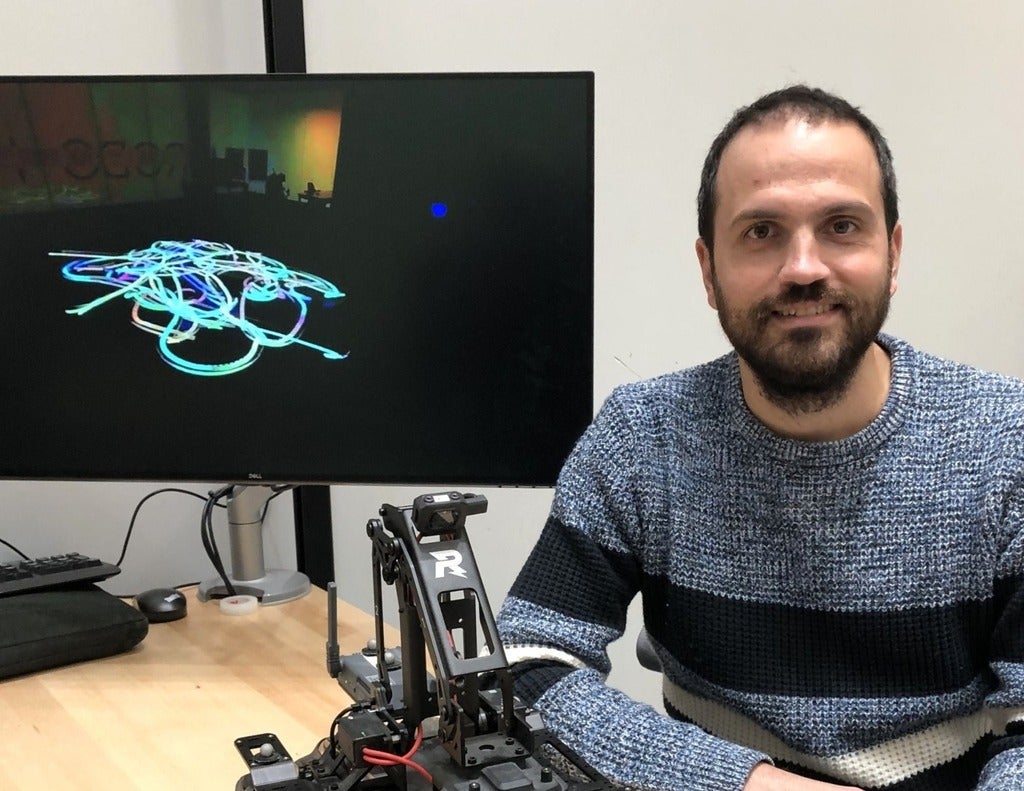
A system developed by researchers at the University of Waterloo lets people collaborate with groups of robots to create works of art inspired by music.
The new technology features multiple wheeled robots about the size of soccer balls that trail coloured light as they move within a fixed area on the floor in response to key features of music including tempo and chord progression.

As a leader in health research, the University of Waterloo is home to extraordinary researchers who collaborate across fields, turning complex, interconnected challenges into opportunities for global change.
Two research projects have been awarded more than $4 million from the Canadian Institutes of Health Research (CIHR) to improve national-level food policies and make continuous glucose monitoring (CGM) devices more accessible.