Building the world’s first open-source quantum computer
And a new model for how quantum research is shared — opening doors for the next generation of scientists and entrepreneurs
Researchers from the University of Waterloo’s Faculty of Science and the Institute for Quantum Computing (IQC) are prioritizing collaboration over competition to advance quantum computer development and the field of quantum information. They are doing this through Open Quantum Design (OQD), a non-profit organization that boasts the world's first open-source, full stack quantum computer.
OQD was co-founded in 2024 by faculty members in the Department of Physics and Astronomy and IQC, Drs. Crystal Senko, Rajibul Islam and Roger Melko, alongside CEO Greg Dick (BSc ’93).
The group is helping reshape how quantum research is shared, opening doors for the next generation of quantum scientists, and even seeding new quantum startups.
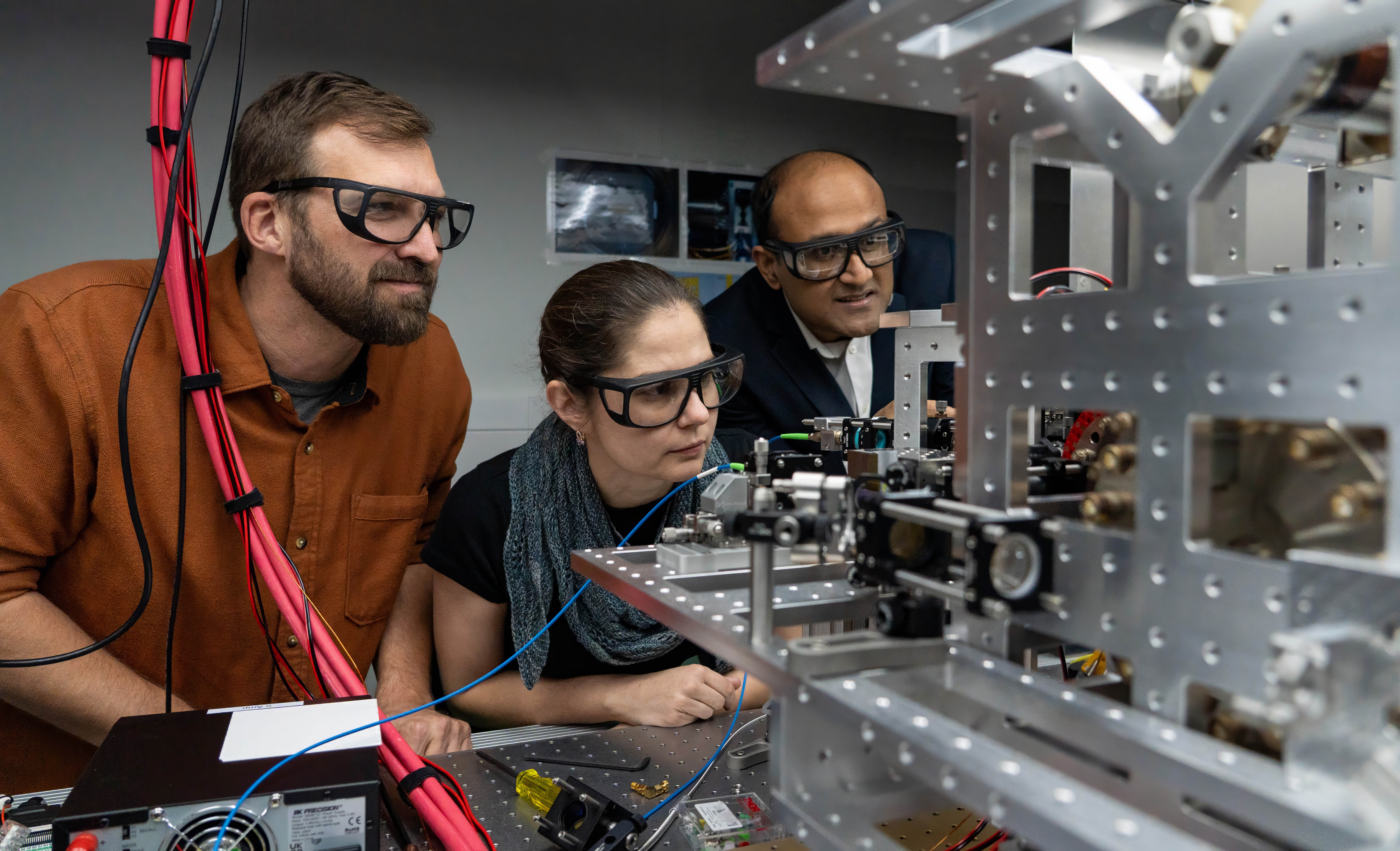
“We are offering a shared hub where groups can contribute what they’re comfortable sharing and, as a non-profit, we can be transparent about real progress without commercial pressures,” Senko says.
OQD’s stack spans hardware, the electronic and computing layers that run it, and open software. Their quantum computer uses ion-trapping, which involves isolating charged atoms (ions) in a vacuum and manipulating them with lasers and electromagnetic fields. This isolation allows the atoms to act as quantum bits (qubits), storing and processing information with carefully controlled interactions.
“The trapped-ion quantum computing community has a strong tradition of sharing designs and knowledge,” Senko says. “OQD shares that ethos and scales it.”

OQD counts more than 30 software contributors and dozens of laboratory collaborators, including Waterloo undergraduate students and co-op employees, and graduate and post-doctoral researchers. The initiative builds on eight years of computing hardware development at IQC, where Senko and Islam built the trapped-ion quantum computer which is now part of OQD’s open-source technology stack.
Instead of onboarding individual users, OQD recruits organizational partners and has already penned agreements with the University of Waterloo, Haiqu, the Unitary Foundation and quantum hardware company Xanadu. Partners gain full access to the stack and can participate in OQD’s steering activities.
Quantum computing is still in its infancy, even though quantum mechanics was described a century ago. At IQC, researchers are building and running experiments on various quantum computing approaches.

There are quantum computers based on trapped atoms like OQD is working with; the visually iconic, chandelier-like computer that uses superconducting qubits; photonic quantum computers that use light particles as qubits; and spin-based devices that manipulate the magnetic properties of electrons, nuclei, and quantum dots to store and process information.
“It’s important to research all different computing approaches,” Senko says, “Insights from one platform often inform another — but sustained investment in each is also vital if we want to understand quantum computers’ full potential.”
Beyond speeding up technological advancements, OQD is also a boon for training quantum industry experts and advancing other areas of quantum information science and technology. By opening access to quantum computers, the platform helps software developers and theorists test algorithms, which relieves bottlenecks that are hampering progress.
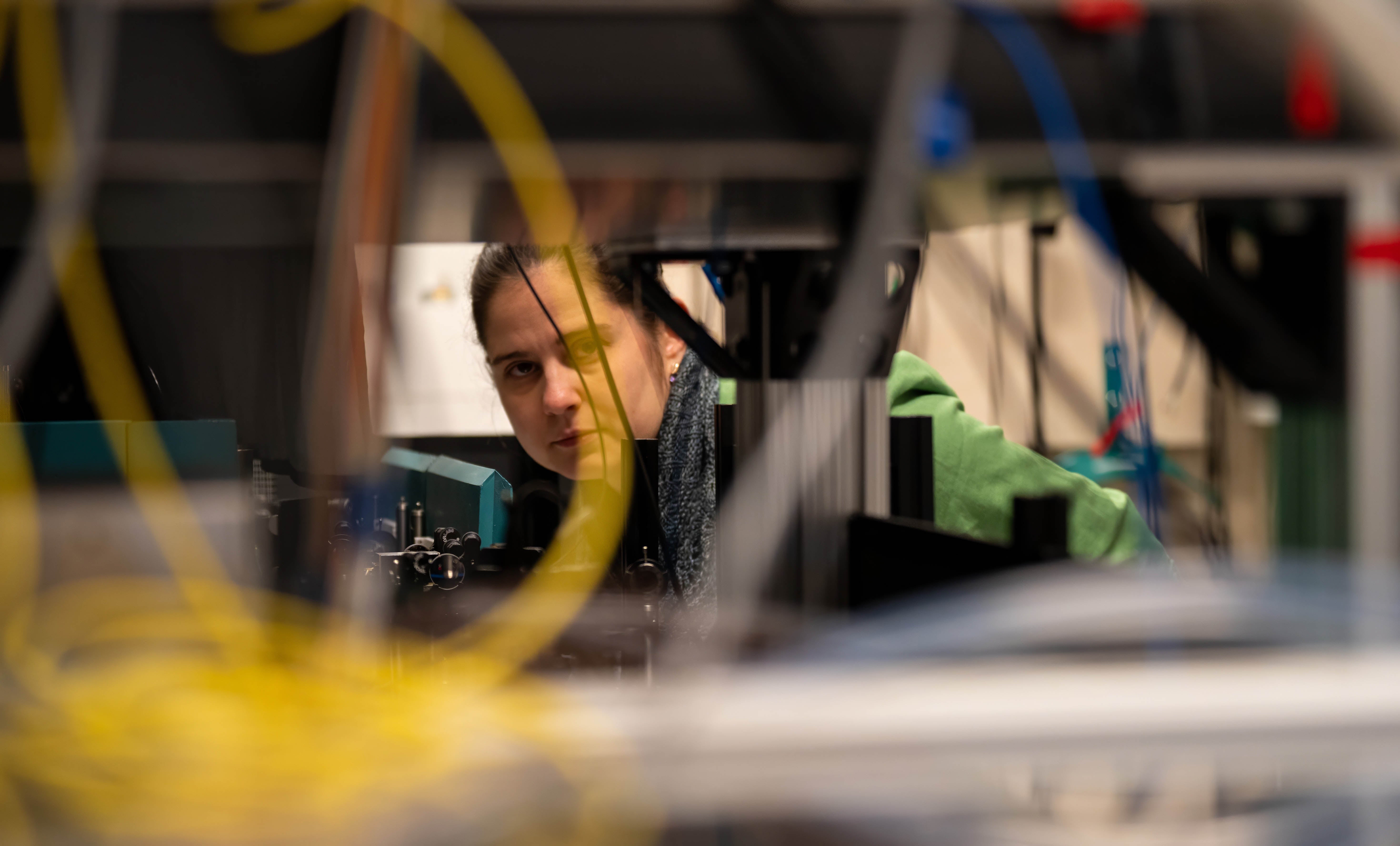
“Real hardware access is essential for developing and testing quantum algorithms,” Senko says. “OQD makes that access open, inviting broader participation and helping the community build faster on shared foundations instead of starting from scratch.”
As quantum computers and the field of quantum information science advances, OQD offers a distinct third path alongside academic labs and startups, prioritizing shared progress and open access to accelerate the fields’ development.
“This is an alternative to how other quantum computing labs and startups operate,” Senko says. “Ours is an open, collaborative model that reflects how we want to develop the technology and, we hope, helps the broader community move faster together.”