Made by Waterloo: Stealth quantum sensors unlock possibilities anywhere
Phantom Photonics’ quantum remote sensing technology offers precision for industries operating in extreme environments where GPS doesn’t work
As commercial interest in quantum technologies accelerates, entrepreneurial minds at the University of Waterloo are not waiting for opportunities — they are creating them.
Among them is Alex Maierean (MMath ‘24), CEO of Phantom Photonics and part-time PhD student at the Institute for Quantum Computing (IQC). Her startup is developing ultra-sensitive quantum sensors that can filter out background noise and detect the faintest signals, even down to a single photon — the smallest unit of light. This offers new levels of precision and stealth for industries operating in extreme environments, from the depths of the ocean to outer space.
Launched in 2023, the Velocity startup emerged from fundamental research at an IQC lab led by Dr. Thomas Jennewein, IQC affiliate and adjunct faculty in the Department of Physics and Astronomy. Today, the startup is based at Velocity where it has established a dedicated lab space to continue to develop its quantum sensor technology and build its core team.
Maierean joined IQC determined to run a quantum startup, but it wasn’t until a postdoctoral researcher in the lab, now co-founder Dr. Shihan Sajeed, encouraged her to re-visit the idea of turning research into a commercial venture.
“I was lucky because the sensor research I was working on turned out to be commercializable and I had no reason not to run with it,” Maierean says.
Phantom Photonics’ product relies on a type of quantum coherence that is inherently resistant to external factors and unlocks new possibilities in underwater environments where GPS doesn’t work. Submarines, for example, could determine their location without having to surface. And the chemical makeup of fluid can be analyzed from a distance.

While maritime applications represent a major market for the startup, the technology’s potential spans industries like oil and gas, offshore infrastructure and even space, where safe monitoring of harsh and remote conditions is critical.
“The possibilities are wide ranging,” Maierean says. “Many industries need our product and once we can get the device down to the size of a chip, then we're impacting industries like industrial robotics for manufacturing and consumer electronics.”
As quantum technologies mature, investor interest in quantum startups is gaining momentum, driven by real-world applications and growing market demands.
“There's more curiosity and more knowledge and acceptance around quantum technology being more than just hype. Investors are serious,” Maierean says.
Making use of Waterloo’s startup resources has helped Phantom Photonics take the technology out of the lab at IQC and build a product. She says early stage, non-dilutive funding from Natural Sciences and Engineering Research Council of Canada (NSERC), Velocity and the Waterloo Commercialization Office’s Up Start program required a full-time commitment. And the support from her supervisors to take time off and forge ahead was crucial to commercialize the research and get Phantom Photonics to where it is today.
Now full-time at Velocity, the team has grown from three co-founders to 10 employees.
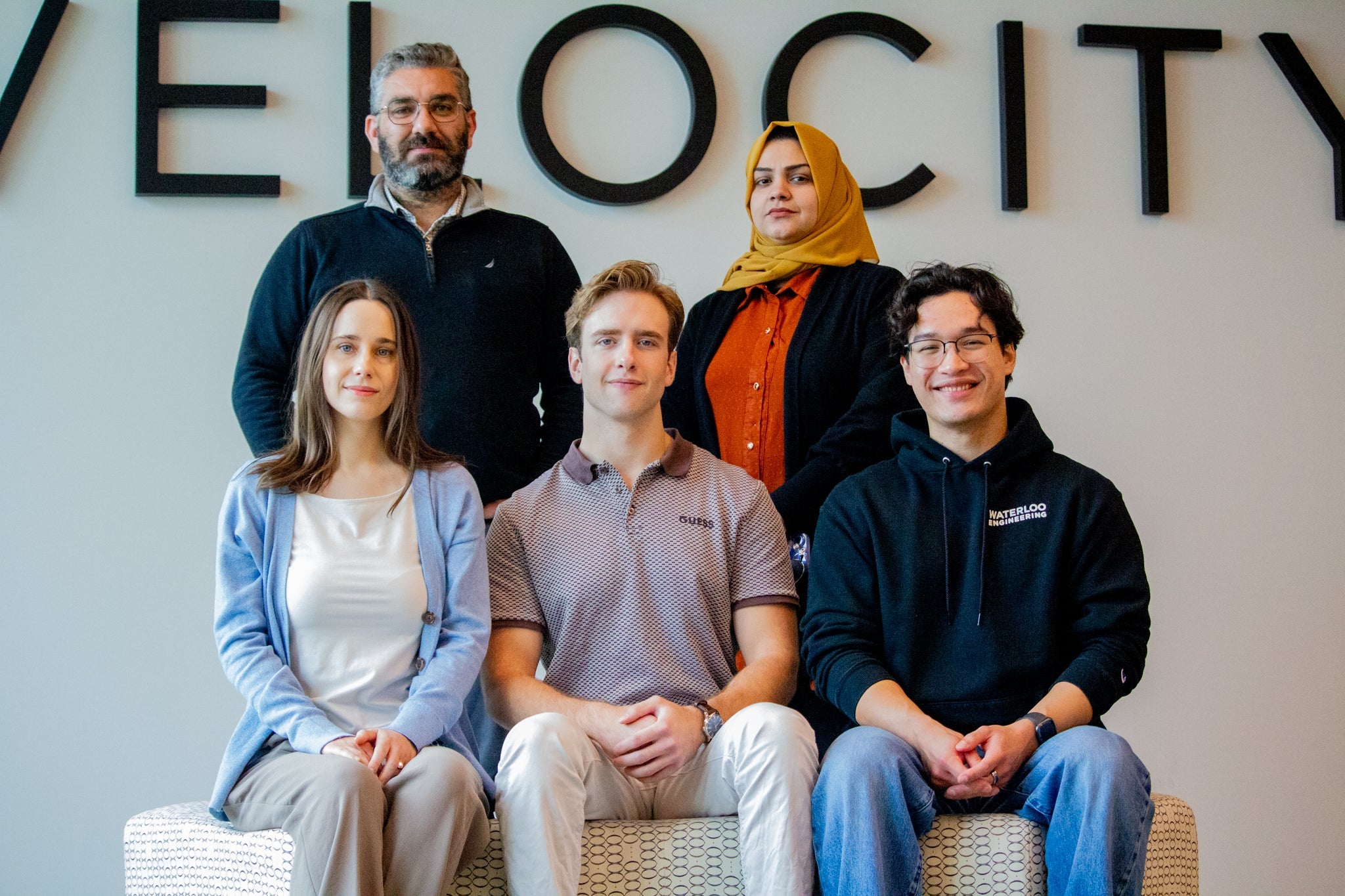
“At Velocity we can really organize what we are doing,” Maierean says. “We’ve built a strong team with one cohesive goal to develop and sell our product.”
As she continues to lead Phantom Photonics, she encourages the next generation of researchers to create their own opportunities in the quantum startup space.
“Now’s the time to step into quantum research commercialization. The technology is still so new that successful products are likely to become truly disruptive.”