Rapid concussion detection using saliva
New medical device removes the guesswork from concussion screening in contact sports using only saliva

Andrew Cordssen-David (BSc ’22, MBET ’23)
Alum, Faculty of Science and Faculty of Engineering
> Co-Founder and CEO, HeadFirst
> Velocity
> Conrad School of Entrepreneurship and Business
Imagine a simple saliva test that makes concussion screening faster and more objective than ever before. Thanks to neurotechnology being developed and piloted by Andrew Cordssen-David (BSc ’22, MBET ’23), co-founder and CEO of HeadFirst, a small, game-changing device aims to remove the uncertainty surrounding head injuries in contact sports and beyond.
Having played competitive hockey for many years, including in the Canadian Hockey League, Cordssen-David understands first-hand the fear and discomfort athletes face when dealing with post-concussion syndrome.
When a professional hockey career didn’t materialize, he redirected his passion for science and learning into academics — earning an undergraduate degree in Science and Business, followed by a Master of Business, Entrepreneurship and Technology (MBET) at the University of Waterloo.
While in the MBET program, Cordssen-David reflected on his junior hockey career and the long-term risks created by subjective concussion tests that often miss concussions and enable athletes to minimize symptoms just to stay in the game. This contributes to an estimated 50 per cent of sports-related concussions going unreported or undiagnosed.
“A lot of concussion screening today is still guesswork because of the subjectivity of current assessments. What we’re doing is adding the first objective test into the toolkit of athletic and health care professionals — something they can use to make more informed decisions,” Cordssen-David says.
Through a partnership with Waterloo Athletics, HeadFirst is advancing research on its saliva-based device using samples from various University sports teams.
“Saliva contains key biomarkers that have shown strong potential for indicating brain injury,” says Dr. Shazia Tanvir, co-founder of HeadFirst and professor at Waterloo. “Once clinical trials are complete, these devices can be used alongside other assessments to provide an objective result that assists athletic therapists in making informed decisions at the point of care.”
Since news broke of HeadFirst’s breakthrough technology, Cordssen-David shares that Olympic committees, professional sports leagues and other major international sports teams have approached the company.
“It just shows how significant the problem is and how massive the demand is in the market. We're building something that can really make an impact,” he says.
Beyond sports, the device has potential applications in other high-impact environments where rapid concussion assessment is critical, such as roadside accident scenes or military combat zones.
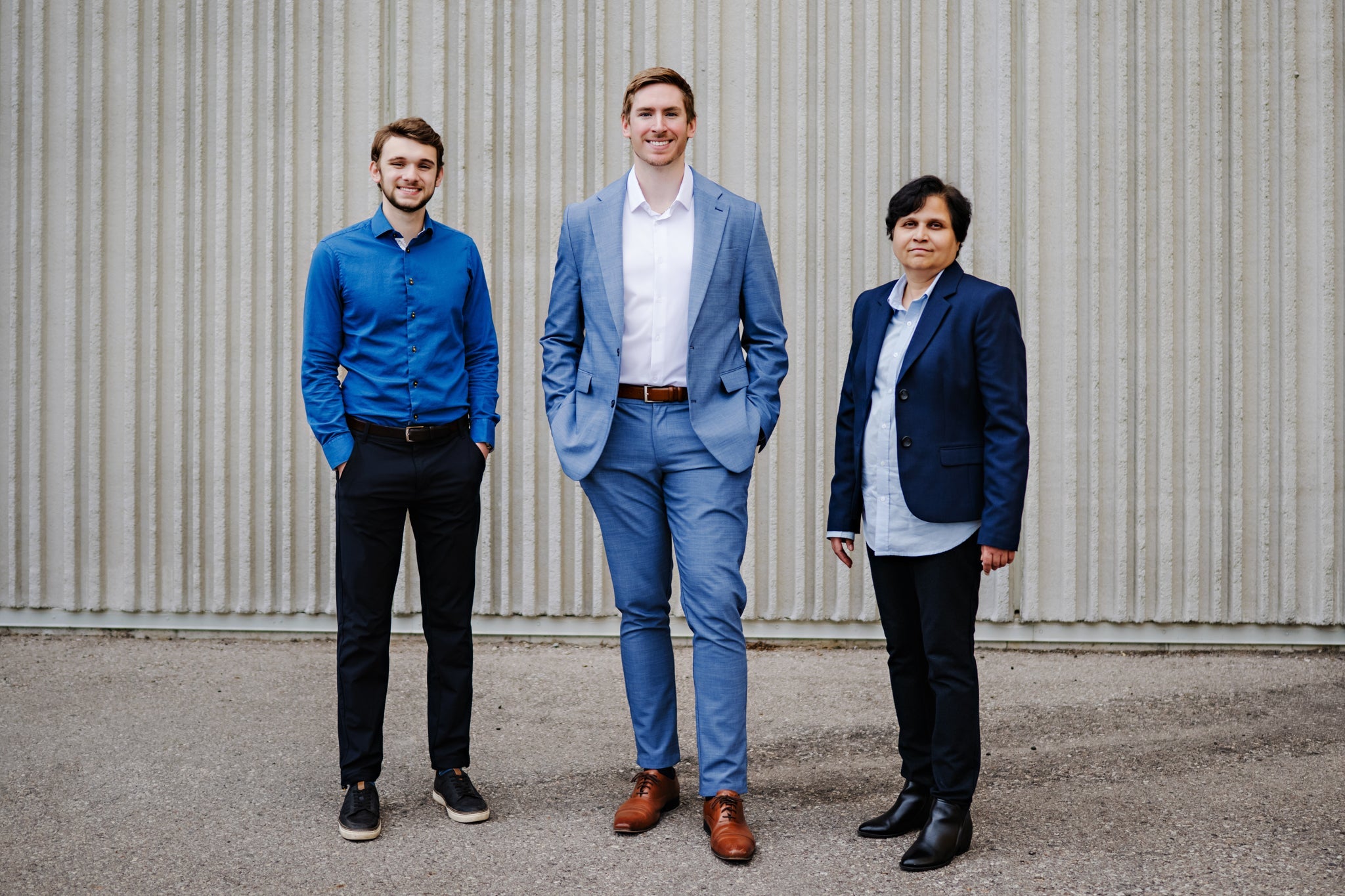
From left to right: Oliver Aramini, R and D engineer at HeadFirst; Cordssen-David; and Dr. Shazia Tanvir, co-founder at HeadFirst and professor at the University of Waterloo.
Cordssen-David credits his time at Waterloo for developing his technical foundation, the Conrad School of Entrepreneurship and Business and Velocity, the University’s centres of entrepreneurship, for providing the tools and resources for HeadFirst to take off.
“At Velocity and the Conrad School, you're surrounded by people who want to build solutions to solve really big problems around the world. Being in that ecosystem of founders was extremely valuable in transforming an early idea into a real company.”
Cordssen-David and Tanvir are grateful for the support of Drs. Marc Aucoin and William Anderson, who were key in helping HeadFirst get off the ground and continue to make important contributions to the company’s mission.
Now at the pre-clinical trial stage, HeadFirst’s mission is clear: to leave no concussion undetected.