Mineral dust accelerating melting of Greenland ice sheet
Study reveals that airborne dust promotes algae growth that speeds glacial melt
Large-scale melting of the Greenland Ice Sheet is irreversible and happening at a rapid rate, and now a new international study is the first to understand why.
A University of Waterloo scientist and a team of international collaborators found that airborne mineral dust and other aerosols are directly connected to how much algae grows on the ice. The algae interfere with albedo, or the reflection of the sun’s rays, exacerbating melting.
As one of the fastest-melting cryosphere regions in the world, the Greenland ice sheet is an area of great significance, and understanding the factors driving its melt helps predict its contribution to future sea-level rise.
Dr. Jenine McCutcheon, a professor of geomicrobiology at Waterloo, and her collaborators set out to better understand the airborne mineral dust found on the ice sheet and whether it is connected to the growth of glacier algal blooms. They studied the composition of the mineral dust landing on the ice to determine the origin and identify nutrients present in the dust. The two-year study, conducted with collaborators from other institutions, including the University of Leeds, is the first to use on-ice dust collection and geochemical measurements paired with airmass history modelling.
“The mineral dust we tested had the same composition as rocks from nearby Greenlandic sources and also contained phosphorus that, when spread across ice surfaces, can fuel the growth of pigmented glacier algae,” McCutcheon said. “The amount of phosphorus delivered in the dust each year is enough to support large populations of glacier algae, which is what we see documented in the region.”
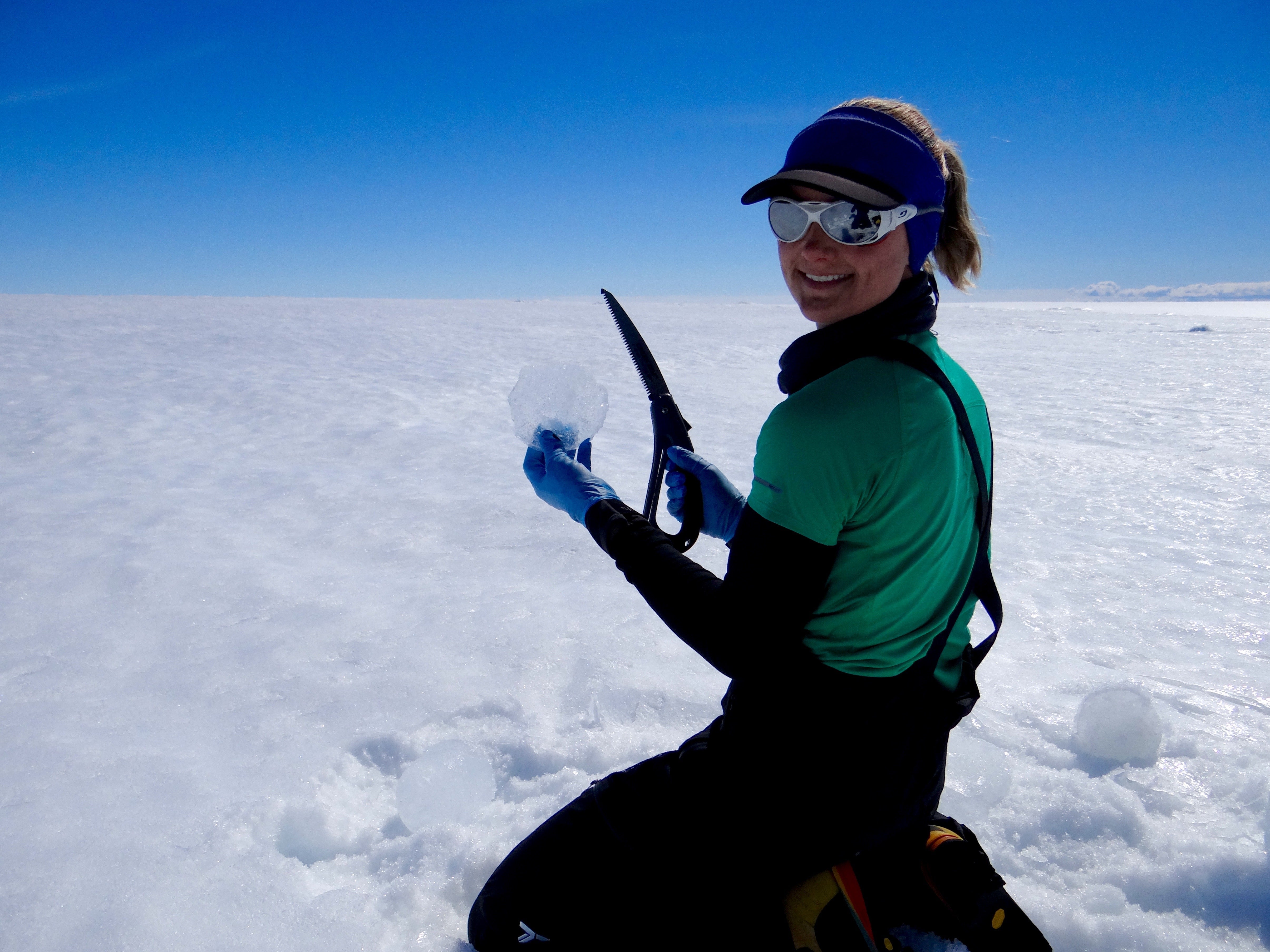
Dr. Jenine McCutcheon samples an ice core. (University of Waterloo)
Along with the mineral dust, the team also collected biological aerosol samples. Those samples contained airborne snow and ice algae, leading to an additional hypothesis on how the algae move around the ice surface.
“The cells are likely transported over the ice by wind, providing a mechanism for these organisms to be dispersed and grow on new snow and ice surfaces further afield, helping new algal communities get started,” McCutcheon said.
Future work will explore the accumulation of soot on the ice. Understanding the different factors impacting melting will improve melt forecasting, which is important for coastal communities.
“While we were in Greenland studying the airborne dust, we were also sampling soot being deposited out of the air,” she said. “We want to better understand its role in darkening the ice surface, especially as events like forest fires are becoming more frequent.”
The paper, Atmospheric Deposition of Local Mineral Dust Delivers Phosphorus to the Greenland Ice Sheet was recently published in Environmental Science & Technology.