University of Waterloo community recognized at 2026 Oktoberfest Women of the Year Awards
Alumni, faculty, staff and community contributors are among this year's winners and nominees, highlighting Waterloo's impact across sectors
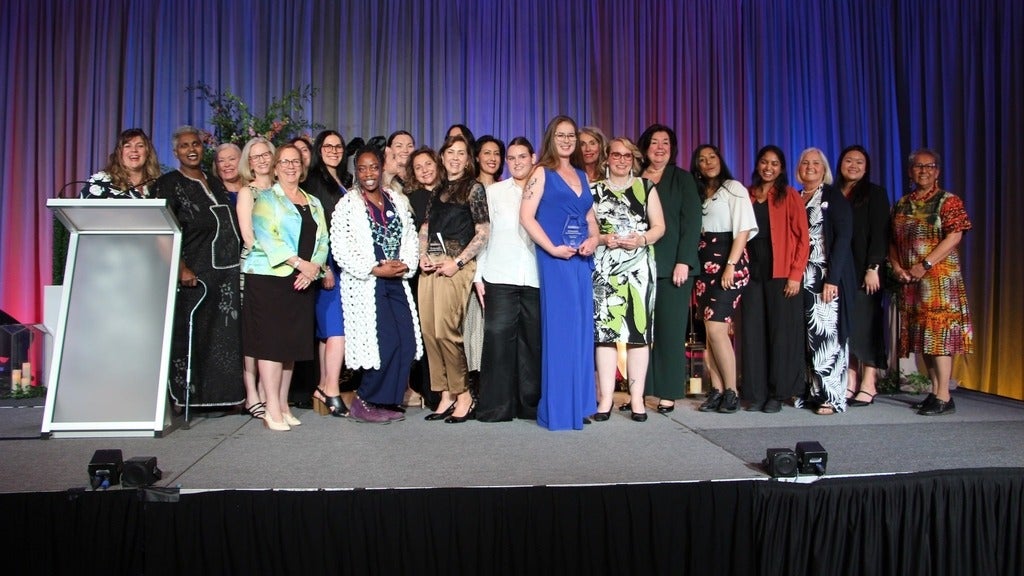
The University of Waterloo community was strongly represented at the 2026 Kitchener Waterloo Oktoberfest BMO Women of the Year Awards, with alumni, faculty, staff and community partners recognized among both winners and nominees.
The annual awards celebrate women who are advancing Waterloo Region through leadership, innovation and service. Now in its sixth decade, the program highlights contributions across fields including STEM, education, health, entrepreneurship, arts and culture and community engagement. More than 90 nominees were recognized this year, many with direct or indirect ties to the University of Waterloo.
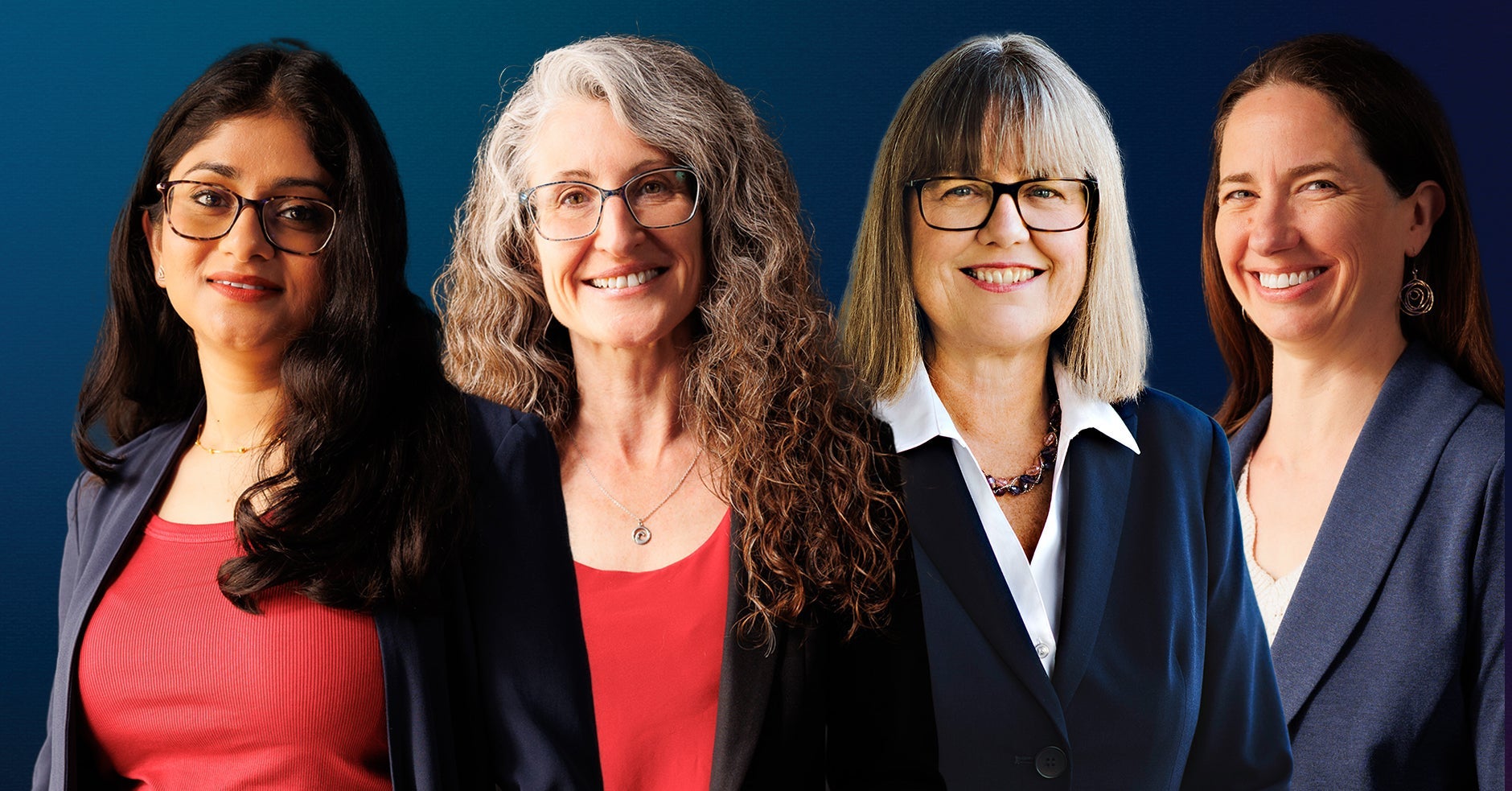
Pictured (left to right): Dr. Sirisha Rambhatla, Nadine Quehl, Dr. Donna Strickland and Mary Robinson
Among the winners, several are deeply connected to Waterloo through research, teaching and community impact. Dr. Donna Strickland, a Professor in the Faculty of Science and Nobel Prize-winning physicist, was honoured in the STEM category for her continued global leadership in optical physics and her advocacy for women in science. Nadine Quehl, Senior Manager of Knowledge Mobilization and Partnerships at Waterloo, was recognized in health and wellness for her facilitation of yoga, meditation and mindful movement to support mental health and community well-being in diverse settings, including hospitals, correctional institutions, community centres and the University of Waterloo.
In the educator category, Mary Robinson (BASC ’02, MASC ’10), a chemical engineering alum and Professor in the Faculty of Engineering, was honoured for her commitment to student-centred learning and innovation in engineering education. In the Vanguard category, Dr. Sirisha Rambhatla, Professor in the Faculty of Engineering, was recognized for advancing ethical and transparent artificial intelligence.
The awards also recognize community leadership and contributions beyond campus. Amanda Amaral, recipient of the arts and culture award, has a connection to the University through volunteer work that supports campus and community initiatives. Lucia Harrison, recognized in community service, has ties to Conrad Grebel University College, while lifetime achievement recipient Judy Nairn has contributed to governance at St. Jerome’s University. Both institutions are affiliated with Waterloo.
Across all categories, the presence of Waterloo-affiliated nominees and recipients underscores the University’s role as a hub for talent, research and community collaboration. From emerging student leaders to internationally recognized scholars, those connected to Waterloo continue to shape the social, economic and cultural fabric of the region.
Waterloo-affiliated 2026 nominees
The strength of Waterloo’s connections is equally evident in the nominee list, which includes faculty members, alumni, students and community collaborators working across disciplines.
Educator category
- Dr. Joanne Atlee, Professor, David R. Cheriton School of Computer Science
- Dr. Leia Minaker (BSc ’04), Professor, School of Planning
- Cathy Newell Kelly (BA ’93), Retired Registrar
Health & Wellness category
- Dr. Sarah Connors (BSc ’09), University of Waterloo Indigenous Naturopathic Doctor
- Dr. Lili Liu, Dean, Faculty of Heath
STEM category
- Dr. Heather Keller, Professor, Faculty of Health
- Cythnia Lennon, Clinician-in-Residence in the Department of Systems Design Engineering
STEM & Lifetime Achievement categories
- Dr. Weihua Zhuang, Professor in Electrical and Computer Engineering
40+ Professionals category
- Dawn Milne (BA ’06)
- Kate McCrae Bristol (BA ’05)
- Jacinda Reistma, Vice-President, Administration and Finance
- Tammy Webster (BSc ’94, BA ’00)
Skilled Trades category
- Krystal Darling (BSc ’07)
Community category
- Laura Galbraith (BES ’08)
- Heidi Hallman (BA ’68)
Vanguard category
- Saba Oji (BSc’18), PhD student
Young Adult category
- Delaney Armstrong, University of Waterloo accounting student
- Sarah Bayrakdarian, University of Waterloo public health student
- Sierra Blackburn, University of Waterloo science and biotechnology student
- Allysa Greidanus, University of Waterloo chemistry student
- Anne Hambly, University of Waterloo biology student
- Gurnoor Kaur, University of Waterloo biomedical engineering student
- Brianna Thomas, University of Waterloo science and business student
- Henrietta Van Niekerk, University of Waterloo business and digital arts student
Arts & Culture category
- Christine Goucher, Creative Director, University of Waterloo Creative Studios
The University of Waterloo congratulates all of this year’s winners and nominees whose achievements demonstrate the power of curiosity, collaboration and community impact.