Technological Futures

Monday, January 22, 2024

Illuminating human bias and our ability to be misled
by Jordan Flemming, University Relations

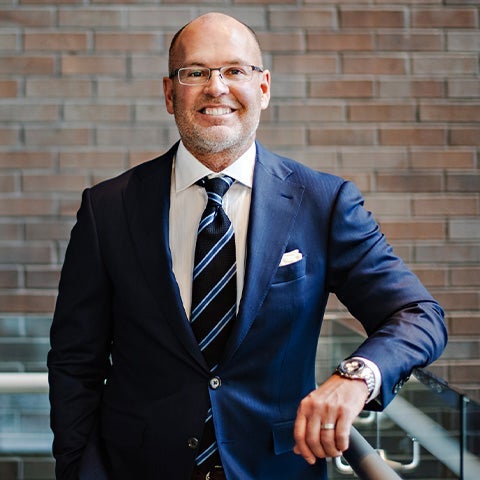
Jonathan Fugelsang

Jonathan Fugelsang
Professor, Faculty of Arts

In an era of rapidly spread information, distinguishing between what’s meaningful and profound and what’s misleading nonsense has never been more vital to a productive society.

Thursday, January 18, 2024

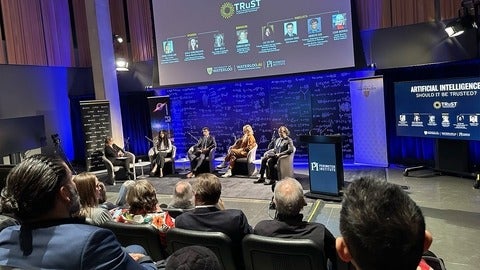
Can we really trust AI?

by Jordan Flemming, University Relations

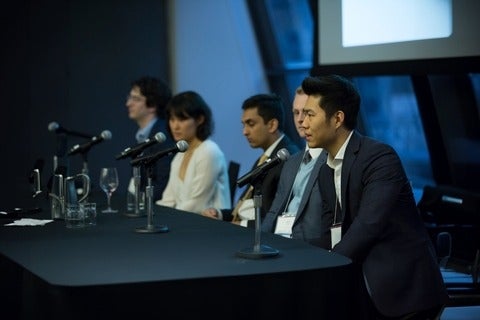
The University of Waterloo, in collaboration with the Perimeter Institute, hosted the TRuST Scholarly Network’s Conversations on Artificial Intelligence (AI), a dynamic and engaging discussion that delved into the societal impact of AI. The event was also supported by the Waterloo AI Institute, which is dedicated to developing human-centered AI for social good, fostering trust with industry partners, and scaling responsible solutions to enhance lives.

Wednesday, January 17, 2024

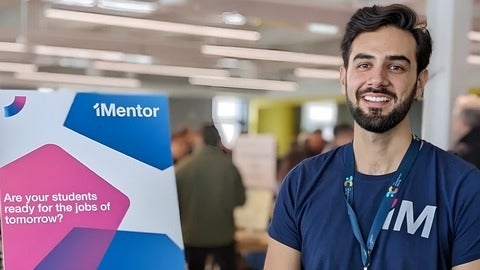
Higher education analytics giant acquires Waterloo-grown 1Mentor

by Jasmin English & Naomi Grosman, Conrad School & Velocity

Waterloo-based 1Mentor’s recent acquisition by Quacquarelli Symonds (QS), the world’s largest global higher education network, underscores the urgent need for their platform and the data it provides higher education institutions. 

Friday, January 12, 2024

PatientCompanion is a tech-solution to support nurses

by Angelica Marie Sanchez, University Relations

Before coming to the University of Waterloo, Christy Lee volunteered at hospitals and long-term care homes, working closely with patients and residents to help reduce the workload for staff. But Lee found that with the current communication call system, nurses and personal support workers do not know what types of requests the patients are making, and which patients need immediate help.  

Thursday, January 11, 2024

From student investor to startup success

by Kelsey Stoddart, School of Accounting and Finance

As an alum of the first Student Investment Fund (SIF) cohort, a student-led initiative at the School of Accounting and Finance (SAF) that gives students real-world investing experience, Andy Wang (BCFM ’13) is familiar with the benefits of experiential education that extends beyond classroom walls.

To advance climate change monitoring and public safety, researchers at the University of Waterloo have developed new tools that bring an unprecedented level of accuracy to identifying lake ice conditions.

The researchers are the first to use machine learning models for processing satellite radar altimetry data that can identify between open water, thin ice, growing ice, or melting ice with 94 per cent accuracy.  

Wednesday, January 10, 2024

Driving up talent for Canada’s electric vehicle sector

by Jordan Flemming, University Relations

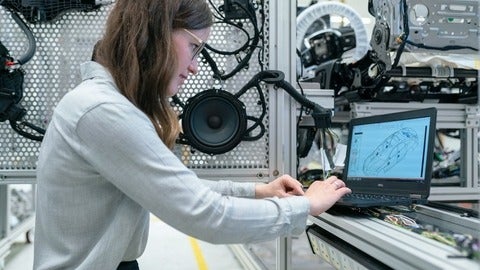
Canadians are buying more electric vehicles (EV) than ever, with one in 10 now owning EVs. The number is set to increase as consumers look for ways to reduce their environmental impact and capitalize on government incentives.

With the growing market share of EVs, there is also an increasing need for talent in the design, development and maintenance of electric vehicles as well as support infrastructure from charging stations, improved battery technology and energy generation.

Friday, January 5, 2024

Top health-tech innovations we're following in 2024

by Jordan Flemming, University Relations

Global and individual health care is experiencing disruption through a variety of technologies. Building disruptive technologies is at the core of what we do, and since our inception, the University of Waterloo has also been disrupting the boundaries of health.

Explore just some of the health-tech innovations springing up from the University’s ecosystem that we will be keeping an eye on this year.

Tuesday, January 2, 2024

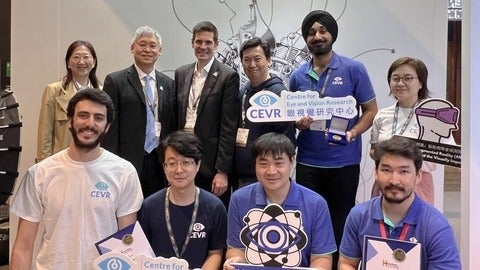
Visionary inventions for eye disease

by Karen Kawawada, School of Optometry & Vision Science

Navigating the world safely can be a major challenge for people with vision impairments. One award-winning new invention aims to change that, while another aims to diagnose a common eye disease earlier, potentially preventing vision loss in the first place.