Tuesday, March 26, 2019
A faculty member at Waterloo since 1987, Professor Ager is a full professor in the Department of Classical Studies and currently serves as interim chair for the Department of Fine Arts.

Sheila Ager
National discussions on cannabis legalization, along with increased access to medical marijuana, may have encouraged more high school students to consume the drug years before it became legal in Canada.

In 2011, Heidi Swanson’s phone rang. An unfamiliar voice said, “Hi, Heidi? This is George. I heard you work on fish mercury and that you are good at working with communities.”
Eight years later, Swanson and George, who turned out to be George Low, coordinator for the Dehcho Aboriginal Aquatic Resources and Oceans Management program in the Northwest Territories, are planning their seventh field season together.
March 18 to 22 is National Co-op and Work-Integrated Learning (WIL) Week, and the University of Waterloo is celebrating its students’ experience-driven learning opportunities.
More than 22,000 students — approximately 55 per cent of Waterloo’s student population — are currently enrolled in co-op work terms. With the opportunity to develop professional skills by participating in four to six co-op terms, having access to a network of more than 7,000 employers and earning $33,000 to $90,000 — no one does co-op like the University of Waterloo.
The researchers showed how the quantum process can outperform a classical version of the radar by a factor of 10, enabling the detection of objects that are faster, smaller, or further away – all while making the radar less detectable to targets.
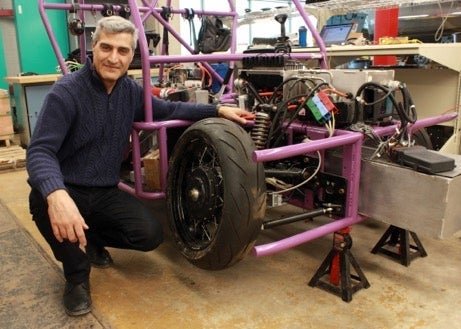
Vehicles could be affordably produced for a wide variety of specialized purposes using a sophisticated wheel unit developed by researchers at the University of Waterloo.
The self-contained unit combines a wheel and an electric motor with braking, suspension, steering and a control system in a single module designed to be bolted to any vehicle frame.
Final year engineering students will be on hand to showcase their projects ranging from a train brake sensor testing system designed for VIA Rail (Mechanical Engineering – March 22) to tattoo removal that’s minimally invasive and painless. (Nanotechnology Engineering – March 22)
Over 750 students in 13 programs will present more than 150 projects they have spent months designing and building.
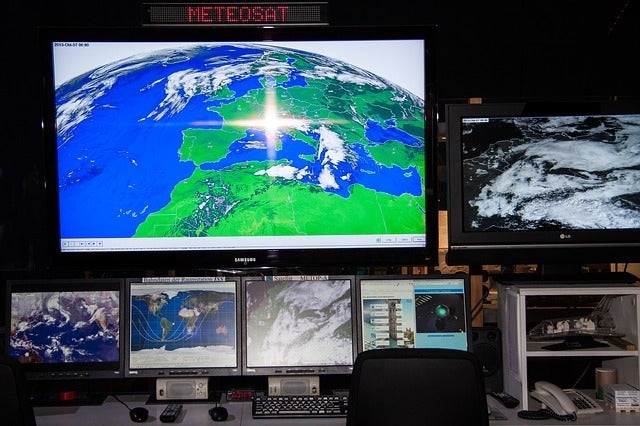
Canadian meteorologists who deliver the evening news are interested in educating Canadians about the increasing impacts of climate change.
A recent study from the University of Waterloo found that television weathercasters are increasingly interested in getting into climate change journalism, as opposed to just forecasting current conditions, but face a number of barriers to taking on the role.