March 18 to 22 is National Co-op and Work-Integrated Learning (WIL) Week, and the University of Waterloo is celebrating its students’ experience-driven learning opportunities.
More than 22,000 students — approximately 55 per cent of Waterloo’s student population — are currently enrolled in co-op work terms. With the opportunity to develop professional skills by participating in four to six co-op terms, having access to a network of more than 7,000 employers and earning $33,000 to $90,000 — no one does co-op like the University of Waterloo.
Waterloo’s new EDGE program also supports students with real-world work experience. The experiential education certificate program allows Waterloo students in non-cooperative programs an opportunity to develop their professional skills, explore their career options and market themselves to employers.
During National Co-op and WIL week, students Aaron Buckley, Leah Drost and Amanda Truong are being recognized for their outstanding achievements and performance in the fields of experiential learning.
Leah Drost, Clinical Research Assistant

“My very first day was very intimidating,” she says. “I was thrown right in to the role and I had to learn a lot — right away.”
In total, Drost ended up spending three work terms at the cancer clinic. The research she did on post-surgery radiotherapy for cancer that had spread to the bone was published in the Radiotherapy and Oncology medical journal. It also earned Drost the UWaterloo Faculty of Applied Health Sciences Co-op Student of the Year Award.
“I think my supervisor saw me as an investment,” she explains. “Both for my own future growth and for the growth of the research that we were doing.”
Drost insists that the responsibility she took on during her work term allowed her to achieve more than she expected.
Aaron Buckley, Undergraduate Environment Scientist

“I learned the language I needed to speak to impress my employer,” says Buckley.
Buckley took initiative where he could, making suggestions along the way to make valuable contributions. Eventually, his employer started to put trust in him, providing him with more opportunities to have a bigger impact.
“The most transferable skills that I learned from my first work term was how to do research on my own and to figure out the answers and solutions to complex problems that I couldn’t necessarily figure out.”
These transferable skills helped Buckley manage a project which lead to a 30 per cent increase in drinking water capacity for a major North American city. His work earned him the UWaterloo Faculty of Environment Co-op Student of the Year Award and a full-time job offer from his employer.
Amanda Truong, Front Desk Assistant
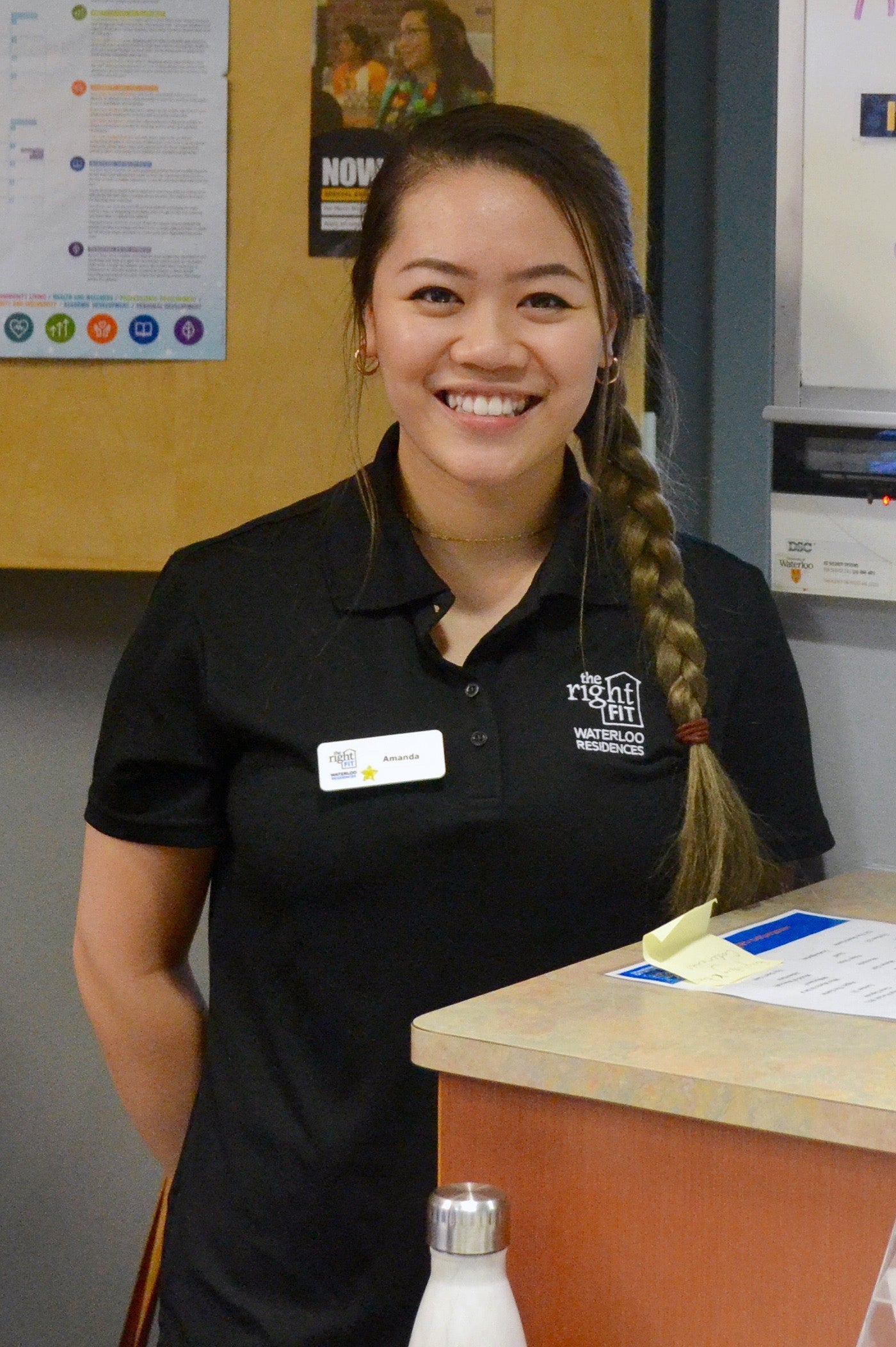
For many students, university residence is their first experience living away from home. The first year of university is a very exciting time, filled with new experiences, freedoms, and opportunities. However, being away from home in a demanding academic program can also bring stress and uncertainty. Amanda’s background in sexuality, marriage and family studies makes her the perfect candidate to be on the front lines when addressing problems students encounter.
Through EDGE, Truong is able to apply the skills she’s learning when helping students work through issues, de-escalating situations and offering a supportive touch-point for anyone in the community.