Research

Tuesday, January 24, 2023

Clocking a personal best

by Brian Caldwell, Faculty of Engineering

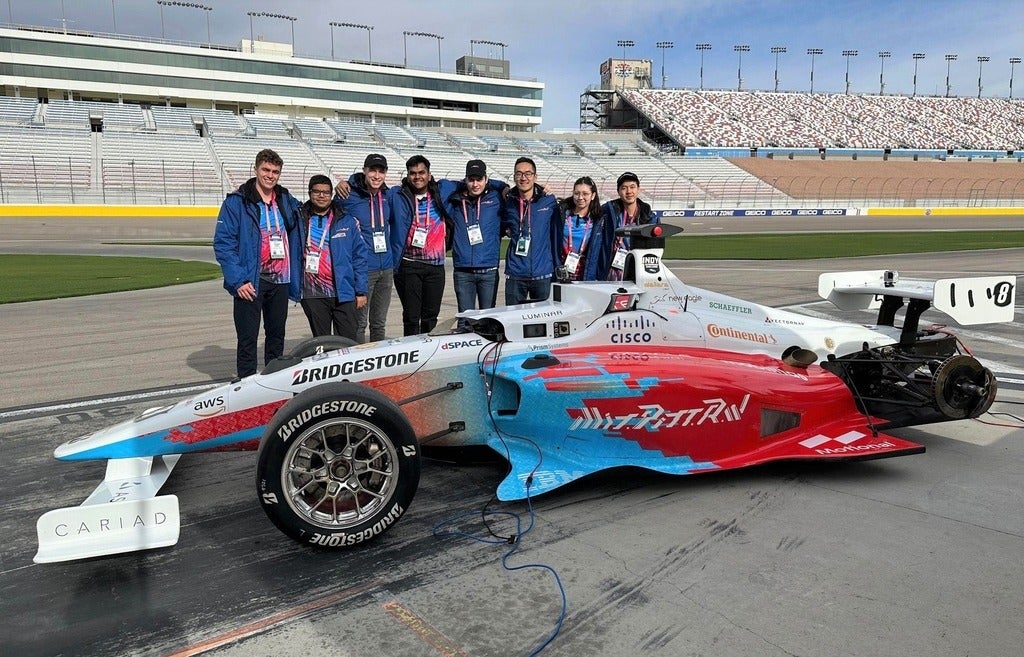
Eight engineering, computer science and mathematics students from Waterloo teamed up with peers from the Massachusetts Institute of Technology, the University of Pittsburgh and the Rochester Institute of Technology for a high-profile event earlier this month at the Las Vegas Motor Speedway.


Monday, January 23, 2023

Congratulations to the Graham Seed Fund recipients

by Office of Research

This fall, the University of Waterloo’s Health Initiatives team launched the Graham Seed Fund (GSF) and invited researchers to submit their proposals for innovative health-care solutions. The GSF strengthens the University’s health system partnerships by providing resources for collaborating directly with a full range of health providers and clinicians.

Monday, January 23, 2023

Building a stronger health-care system

by Milana Madzarac, School of Pharmacy

As of January 1, 2023, the pharmacists’ scope of practice has expanded across Ontario with the ability for pharmacists to assess and autonomously prescribe medications for 13 minor ailments.

While new to Ontario, this process is not a novelty, as pharmacists in other countries and Canadian provinces have been improving patient care through pharmacist-led prescribing for years.

Wednesday, January 18, 2023

OneButtonPIN increases security for blind and low-vision tech users

by Media Relations

Working closely with blind and low-vision (BLV) users, researchers at the University of Waterloo and the Rochester Institute of Technology have developed a new authentication method that could help BLV technology users more securely access their devices. The new method, OneButtonPIN, allows users to input PIN codes using a single large button and a series of haptic vibrations.

Wednesday, January 18, 2023

Waterloo marks 15 straight years as top research university

by Angelica Sanchez, University Relations

The University of Waterloo has been designated Research University of the Year among Canadian comprehensive universities by Research Infosource Inc. for the 15th consecutive year. 

Waterloo’s President and Vice-Chancellor, Vivek Goel, says the University’s research excellence stems from its continued focus on empowering its students, faculty, and community to seek out solutions to the world’s most pressing challenges. 

Dr. Raymond Laflamme, founding director of the Institute for Quantum Computing (IQC) at the University of Waterloo, has been named co-chair of the National Quantum Strategy’s (NQS) Advisory Council. The announcement was made by the Honourable François-Philippe Champagne, Canada’s Minister of Innovation, Science and Industry. Laflamme will work in close collaboration with fellow chair Dr. Stephanie Simmons of Photonic and IQC affiliate.

Monday, January 16, 2023

Using machine learning to predict brain tumour progression

by Media Relations

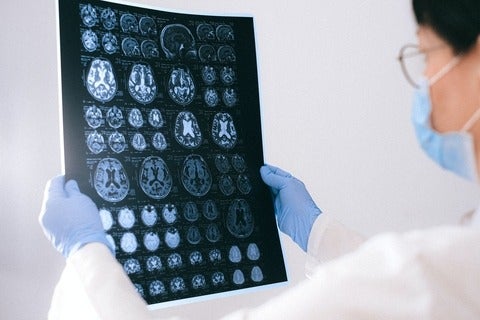
Researchers at the University of Waterloo have created a computational model to predict the growth of deadly brain tumours more accurately.

Glioblastoma multiforme (GBM) is a brain cancer with an average survival rate of only one year. It is difficult to treat due to its extremely dense core, rapid growth, and location in the brain. Estimating these tumours’ diffusivity and proliferation rate is useful for clinicians, but that information is hard to predict for an individual patient quickly and accurately.

A new research study has found that banning menthol cigarettes does not lead more smokers to purchase menthols from illicit sources, contradicting claims made by the tobacco industry that the proposed ban of menthol cigarettes in the U.S. by the Food and Drug Administration (FDA) will lead to a significant increase in illicit cigarettes.

Thursday, January 12, 2023

Rethinking dementia and dementia care 

by Nadine Quehl, Department of Recreation and Leisure Studies

As we recognize Alzheimer’s Awareness Month, Dr. Sherry Dupuis and her team’s work shines a light on aging, helping us think about how to re-imagine dementia and dementia care –— and ultimately create a new culture of care.