Research

Thursday, December 1, 2022

Putting pieces of a puzzle together

by John Roe, Faculty of Engineering

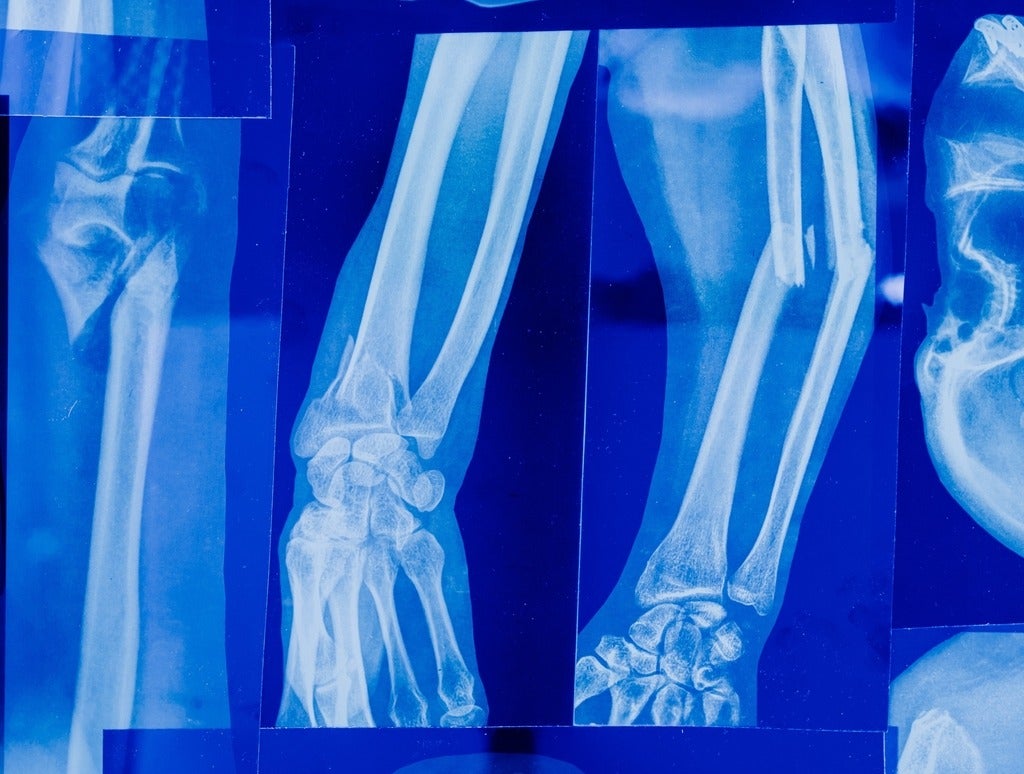
Engineering and health experts at the University of Waterloo are collaborating on research that may lead to breakthroughs in preventing a serious, all-too-common injury — broken bones. 

Their findings could prove especially important to elderly people typically more prone to falls and hip fractures. In fact, understanding the mechanics of how bones weaken over time could help serve the needs of the aging population in many parts of today’s developed world. 

High school students who have a large weekly allowance, friends who smoke and low levels of physical activity are more likely to use multiple substances over time. Conversely, being older, being Black and eating breakfast daily were factors associated with a smaller chance of transitioning to multiple use.

These conclusions were reached by a team of researchers at the University of Waterloo who used artificial intelligence to analyze a large, complex public health dataset – a novel way to approach public health analysis.

Wednesday, November 30, 2022

Latest Vanier Graduate Scholarships and Banting Postdoctoral Fellowships announced at Waterloo

by Graduate Studies and Postdoctoral Affairs

Six University of Waterloo doctoral students have been awarded the prestigious Vanier Canada Graduate Scholarships (Vanier CGS). One postdoctoral scholar has received the Banting Postdoctoral Fellowship, as announced on Monday, November 28.

Tuesday, November 29, 2022

Creating a technologically inclusive model of disability

by Jon Parsons, University Relations

Dr. Lynne Sargent

Dr. Lynne Sargent (PhD '22)
-PhD in Applied Philosophy
-Disability and technology consultant

Dr. Lynne Sargent’s research focuses on what she defines as the “techno-inclusive model of disability,” which has practical application for the ways that disabled people live their lives in digital and physical spaces.

Tuesday, November 29, 2022

Artificial intelligence needs good data to grow the future

by Bill Bean, University Relations

Data is the currency of tomorrow, with boundless opportunities, but there needs to be a common standard for how that currency is created and used, said Canada’s chief data steward.

Anil Arora, Chief Statistician of Canada for Statistics Canada, was the keynote speaker at the Fall Industry Day on Monday, hosted by the Waterloo Artificial Intelligence Institute (Waterloo.AI) and Communitech.

The Government of Canada's Environmental Damages Fund, administered by Environment and Climate Change Canada, is allocating $15.8 million to six University of Waterloo research projects to identify solutions to environmental challenges.

Funded through the Climate Action and Awareness Fund (CAAF), the research supports building sustainable net-zero emissions in Canada by 2050.

For the first time in experimental history, researchers at the Institute for Quantum Computing (IQC) have created a device that generates twisted neutrons with well-defined orbital angular momentum. Previously considered an impossibility, this groundbreaking scientific accomplishment provides a brand new avenue for researchers to study the development of next-generation quantum materials with applications ranging from quantum computing to identifying and solving new problems in fundamental physics.