On January 23rd, 2025, RISE researchers and project partners gathered at the University of Waterloo for the RISE project’s second Annual Meeting. In addition to providing updates on the project’s research progress, a main goal of this year’s meeting was to receive input from partners on their priorities for a RISE scoring system and feedback on the current scoring system under development. Feedback from partners is crucial to ensure uptake of the Scorecard by stakeholders and end users, and is a key part of the project’s knowledge mobilization strategy.
The day began with updates from the project team on Year 2 progress followed by a presentation from the City of Kitchener, a partner on the project. Participants learned about the High Performance Development Standards being drafted across municipalities in the Region of Waterloo.
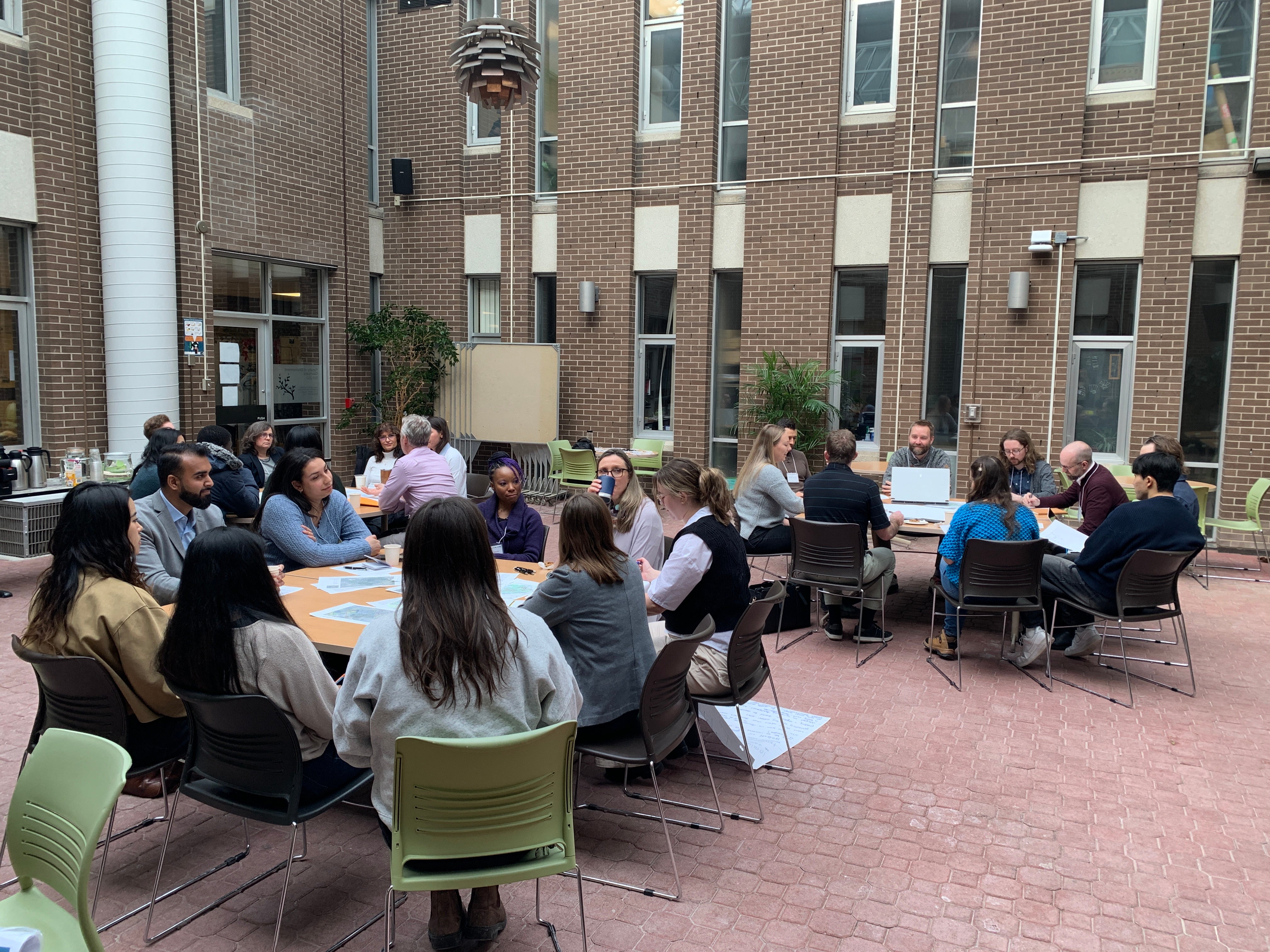
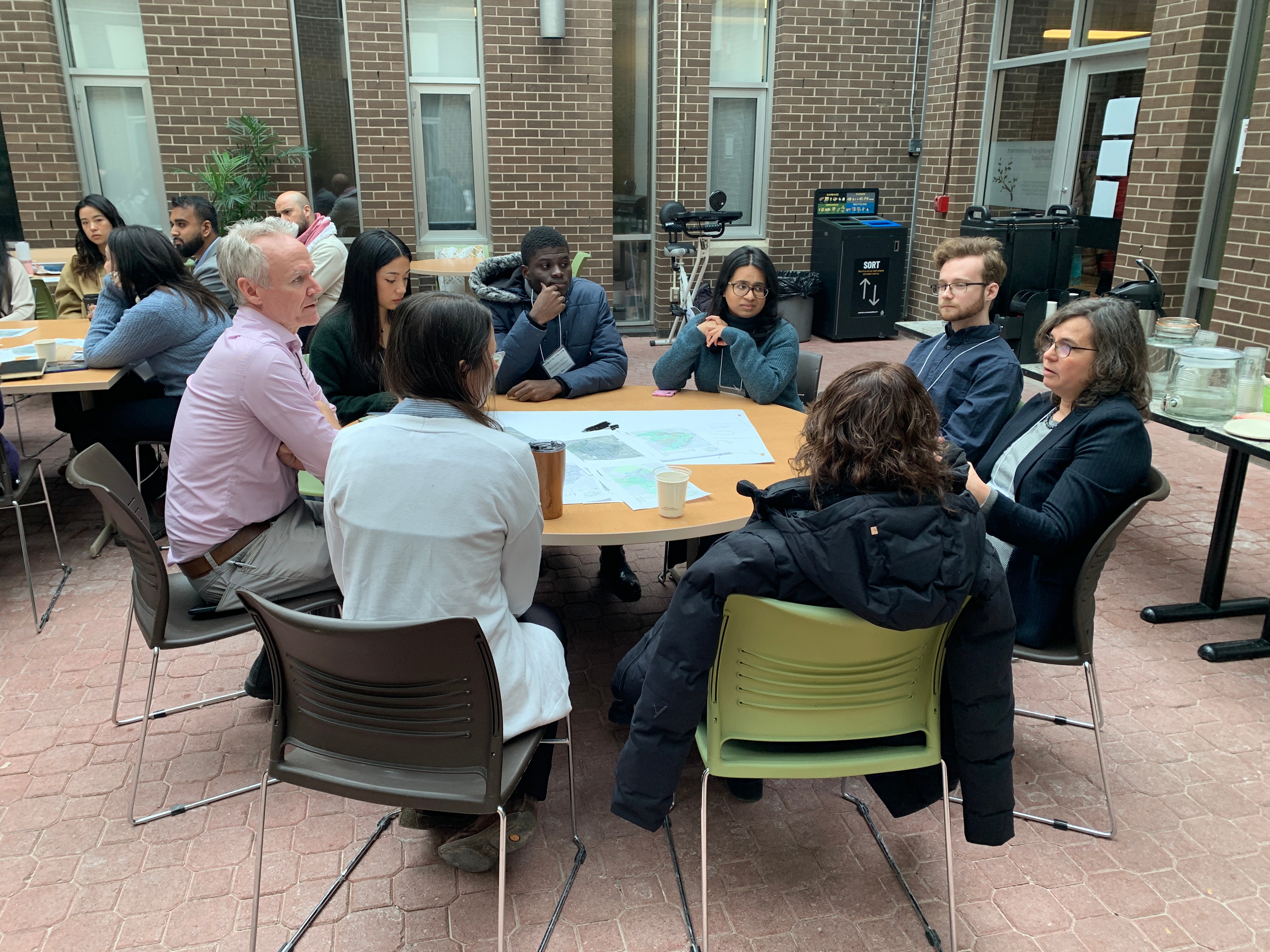
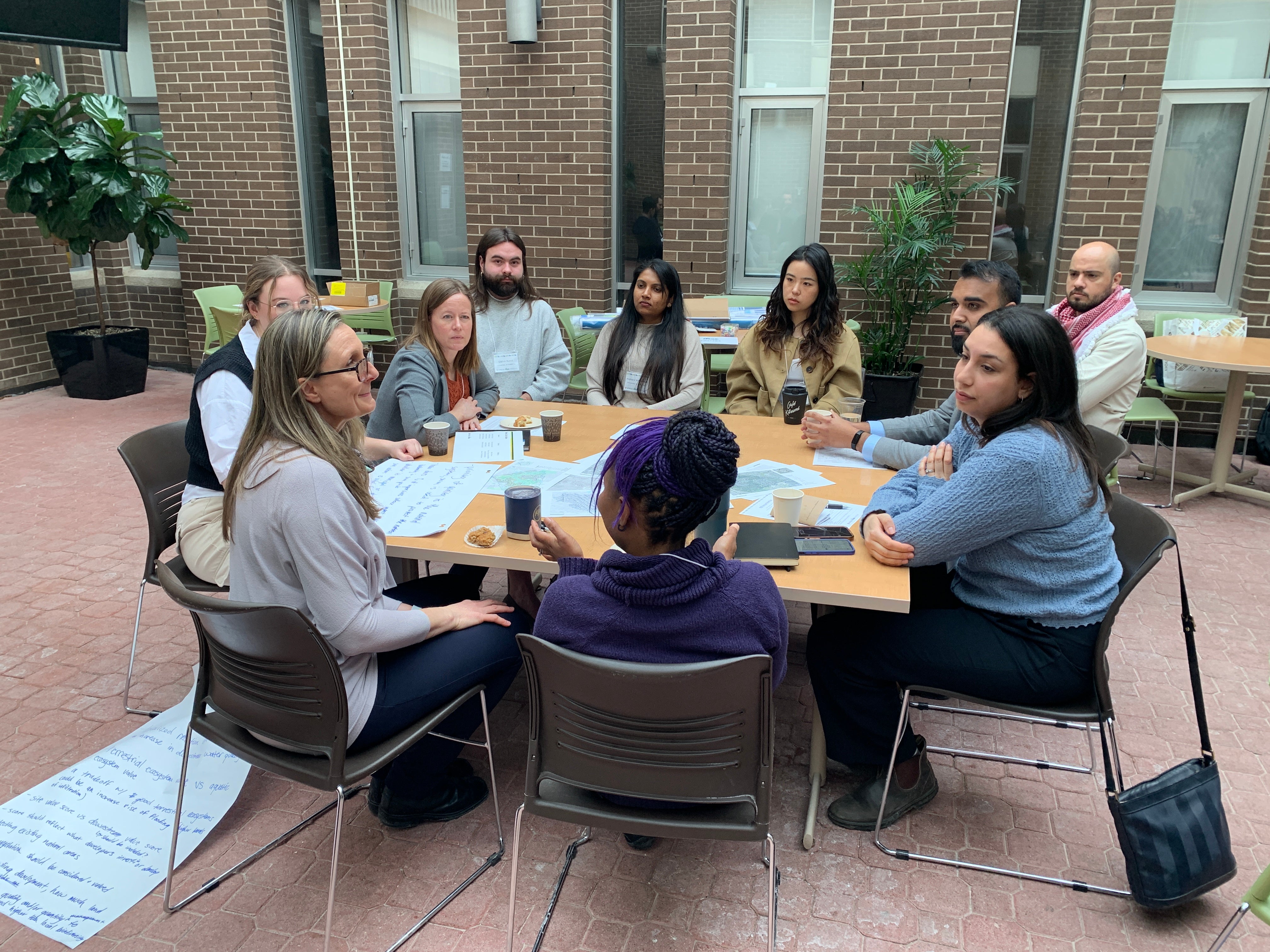
Participants moved on to a “World Café” session where they participated in a hands-on site scoring activity that evaluated trade-offs in residential development designs. Using hypothetical sites, participants explored how different design elements, such as stormwater ponds or low-impact developments, different types of trees and vegetation, and natural wetlands might impact a site’s aquatic and terrestrial GHG emissions. These elements will affect a site’s overall score on the RISE Scorecard that is currently in development, and receiving feedback from project partners as stakeholders and end users of the Scorecard is a crucial part of knowledge co-creation of the final product

The World Café session where attendees participated in a hands-on scoring activity to evaluate trade-offs in residential developments.

Dr. Bruce MacVicar (left) and Dr. Dawn Parker (right) discuss with partners potential trade-offs in residential developments.

Project partners engaged in discussion at a World Cafe table facilitated by Dr. Maria Strack (third from left).
In the afternoon, participants heard a presentation and engaged in discussion on the issue of equity in urban green infrastructure. They discussed whether and how green neighbourhoods could be made available and affordable to all. Participants then took part in a second hands-on activity where they evaluated two different designs of a mock RISE-Beta Scorecard. The first version offered a high-level overview of a site and its scoring, designed to appeal to a wide audience; the second version offered a more technical description of the scoring. Participants offered insights into the pros and cons of each version, and overall what would be most useful to them if using a Scorecard.
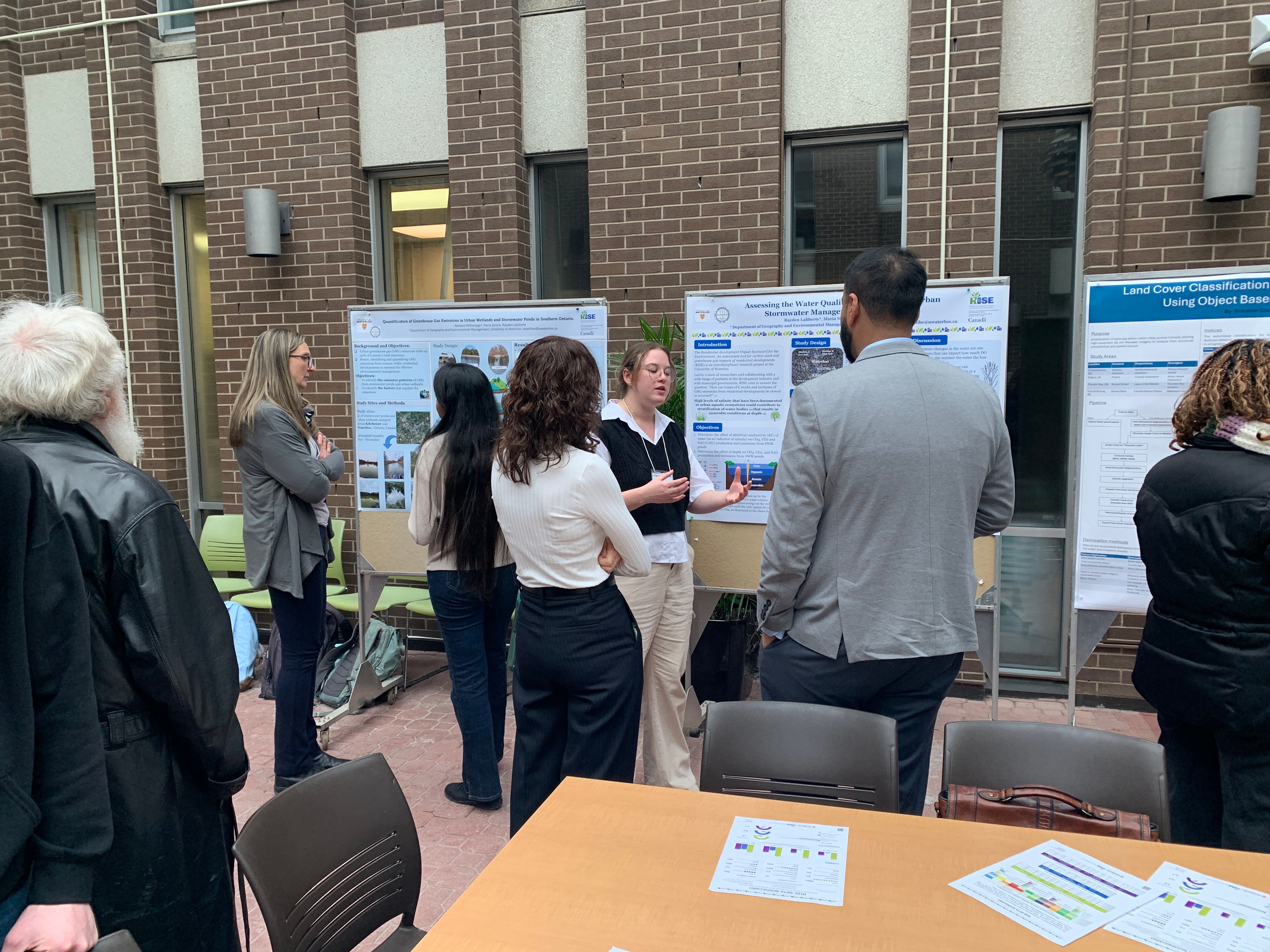
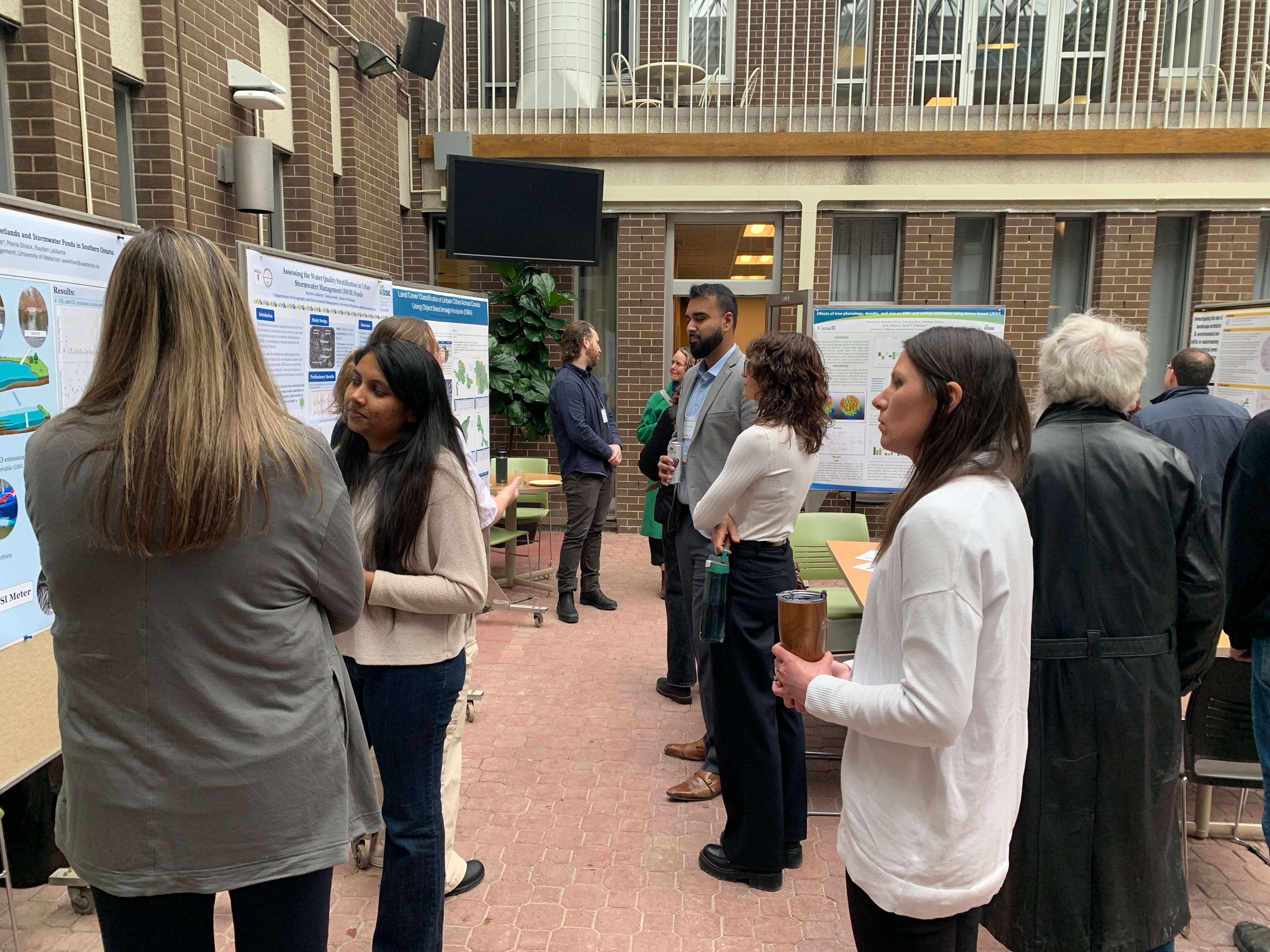
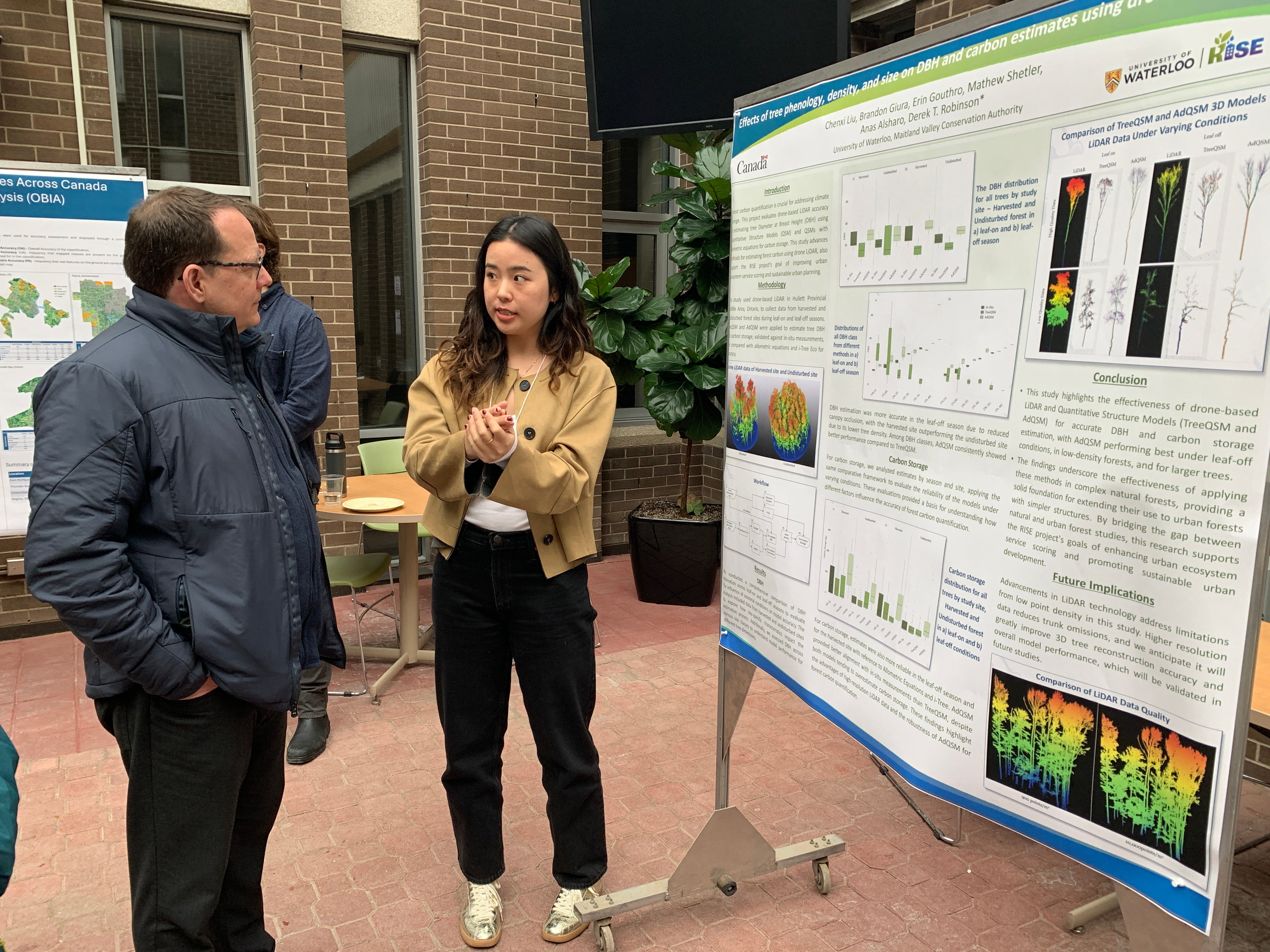
The day concluded with an interactive poster session, with posters from nine students on the project each offering a detailed look into their research. Project partners walked around to learn and discuss one-on-one with students the different components of their research. Participants and project team alike were treated to a surprise visit from two local MPPs: Aislinn Clancy, MPP for Kitchener Centre; and Mike Schreiner, MPP for Guelph. MPPs Clancy and Schreiner joined in the poster session and took an active interest in learning about the project, the students’ research, and the impact the results from the project could have on improving emissions from residential developments in Ontario.

RISE student Rayden Laliberte (centre) talking with project partners from Caivan and Mattamy Homes about her research poster.

Project partners from City of Kitchener and City of Barrie talking with RISE student Akshara Withanage (second from left) about her research poster.

RISE student Chenxi Liu (right) speaks with MPP Mike Schreiner (left) about her research on estimating carbon storage using drones.