The Turbulent Combustion Modeling Lab is a team of fastidious researchers and students focusing on the multi-engineering facets of turbulent combustion modeling found in many industrial applications ranging from aero and automotive engines to furnaces to fire safety.
Meet the team

Cecile Devaud
Director of the Turbulent Combustion Lab
Professor in Mechanical and Mechatronics Engineering. She is also a member of Waterloo Engineering’s Fire Research Group, the Waterloo Institute for Sustainable Energy and Waterloo Institute for Sustainable Aeronautics. Her research group focuses on Computational Fluid Dynamics (CFD) for turbulent reacting flows. They are interested in developing and implementing new mathematical models for problems related to turbulent mixing, flame stabilization and emissions. Applications are diverse; ranging from aero and automotive engines to fire scenario analysis. More recently, some research activities have been devoted to numerical simulations of two-phase flows and compartment fires related to the nuclear industry.

Amir H. Mahdipour
Amir H. Mahdipour received his B.Sc. and M.Sc. degrees in Aerospace Engineering from Sharif University of Technology, Iran, in 2017 and 2021, respectively, prior to joining the turbulent combustion modeling lab at the University of Waterloo for his Ph.D. studies in January 2022. Currently, he works under the supervision of Prof. Devaud in the Mechanical and Mechatronics Engineering Department. His research currently focuses on turbulent combustion modeling using the CSE model for non-premixed flames.
Amir had previously worked on exploring computational aspects of the CSE model using a DNS database of a premixed flame and currently works on improving this model for turbulent combustion modeling in RANS and LES, based on his experience with the DNS database.
The research group focuses on Computational Fluid Dynamics (CFD) for turbulent reacting flows. The lab develops and implements new mathematical models for issues related to turbulent mixing, flame stabilization, and emissions.
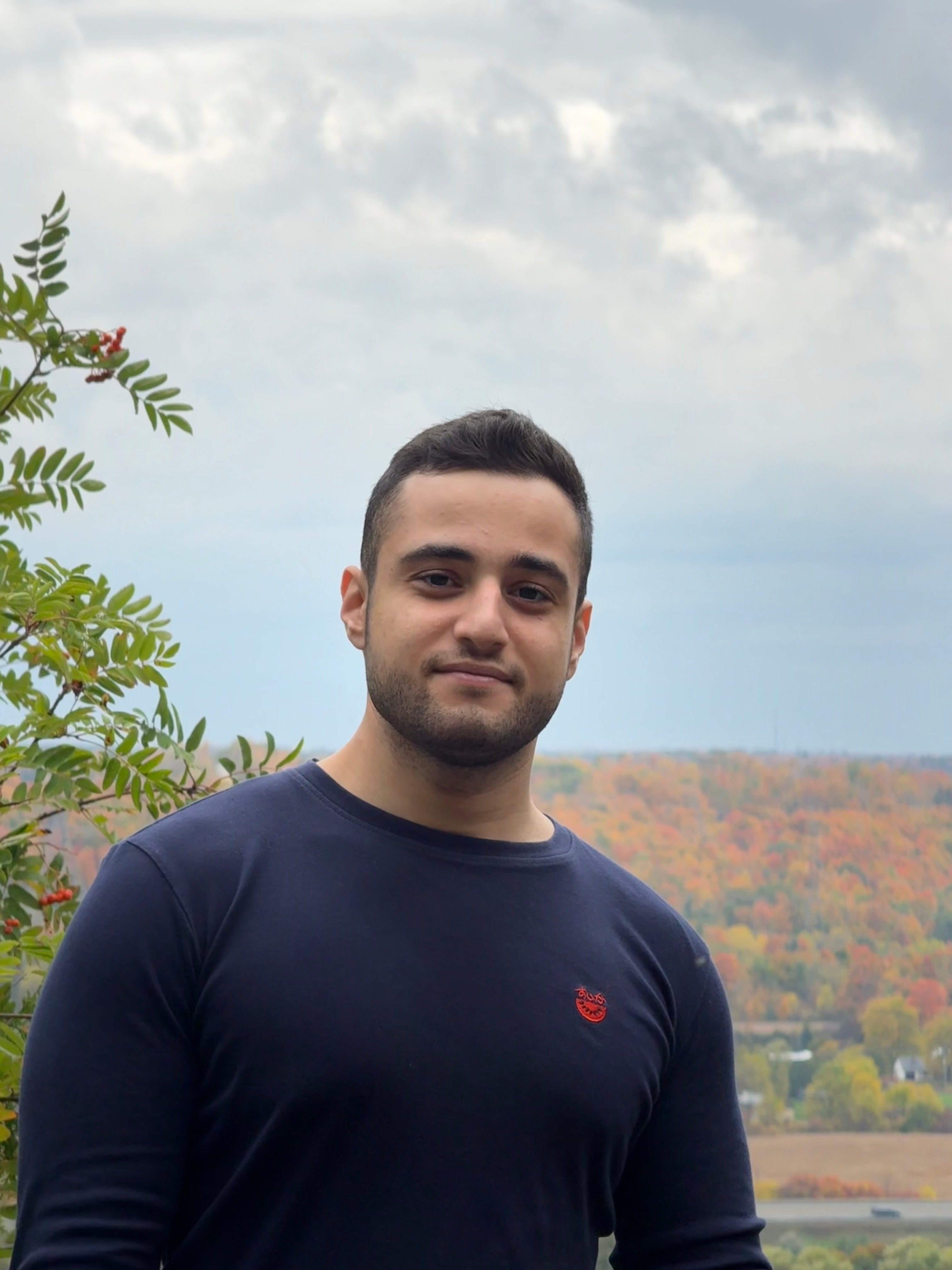
Matin Davoodi
PhD candidate and researcher
Matin received his Bachelor of Science in Aerospace Engineering from Sharif University of Technology in Tehran, Iran, in 2024. He joined the Turbulent Combustion Modeling Lab in Winter 2025 as a Ph.D. student under the supervision of Professor Devaud. His research focuses on the numerical modeling of turbulent hydrogen flames using the Conditional Source Term Estimation (CSE) method. By applying computational fluid dynamics (CFD), he works on improving combustion modeling approaches to obtain accurate results that support the needs of the lab’s industrial partners.
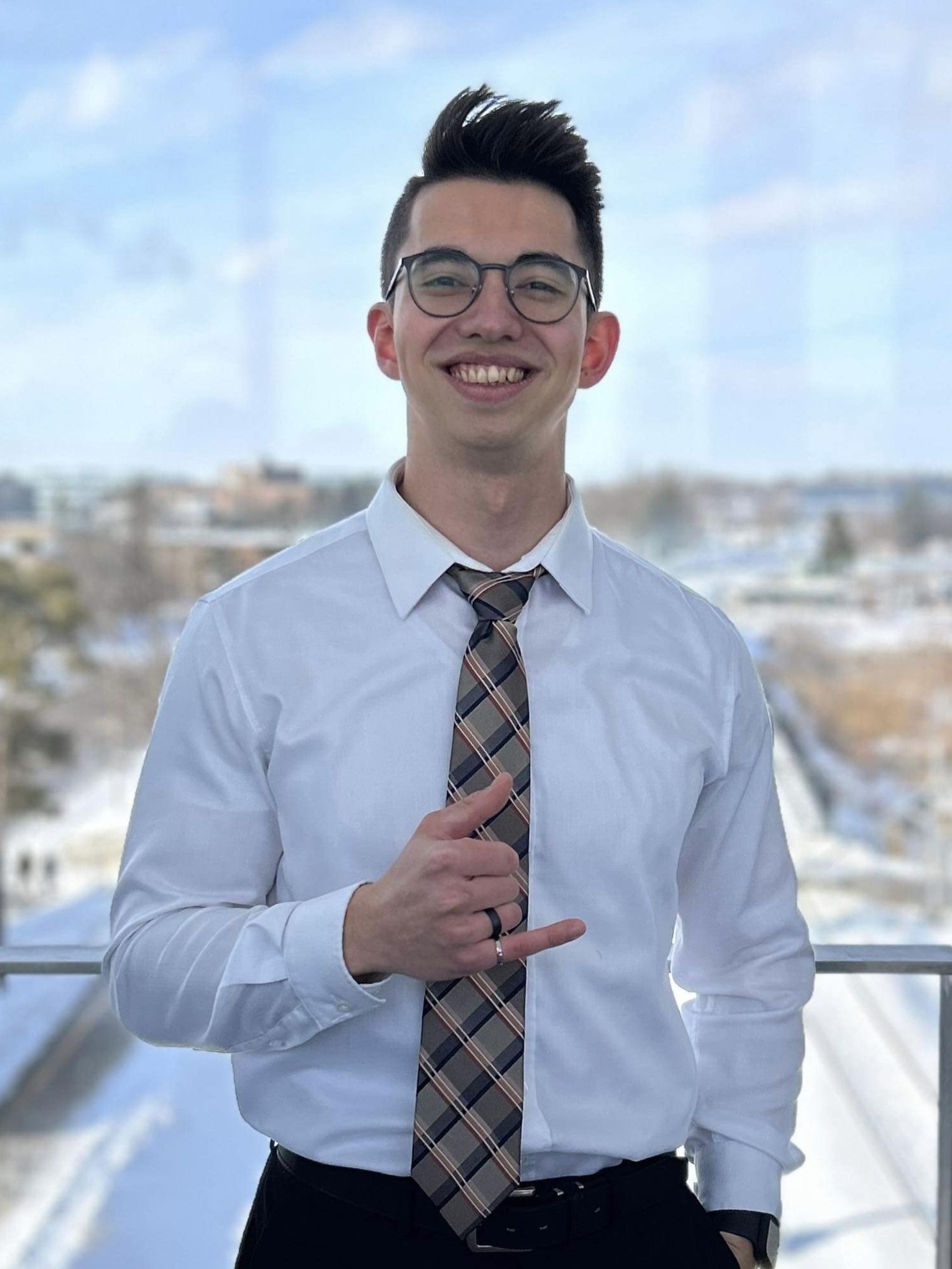
Akira Tiesma
MASc candidate and researcher
Akira Tiesma graduated from the University of Waterloo with a Bachelor of Applied Sciences in Mechanical Engineering in 2023, and returned back to pursue a Masters of Applied Science in Mechanical Engineering. His research includes computational fluid dynamics (CFD) analysis for combustion, and contributes to state-of-the-art turbulent combustion modelling for premixed flames. Akira is a member of the Turbulent Combustion Lab (TCL) supervised by Dr. Cecile Devaud, who focuses on development and improvement of mathematical models for CFD of turbulent reacting flows
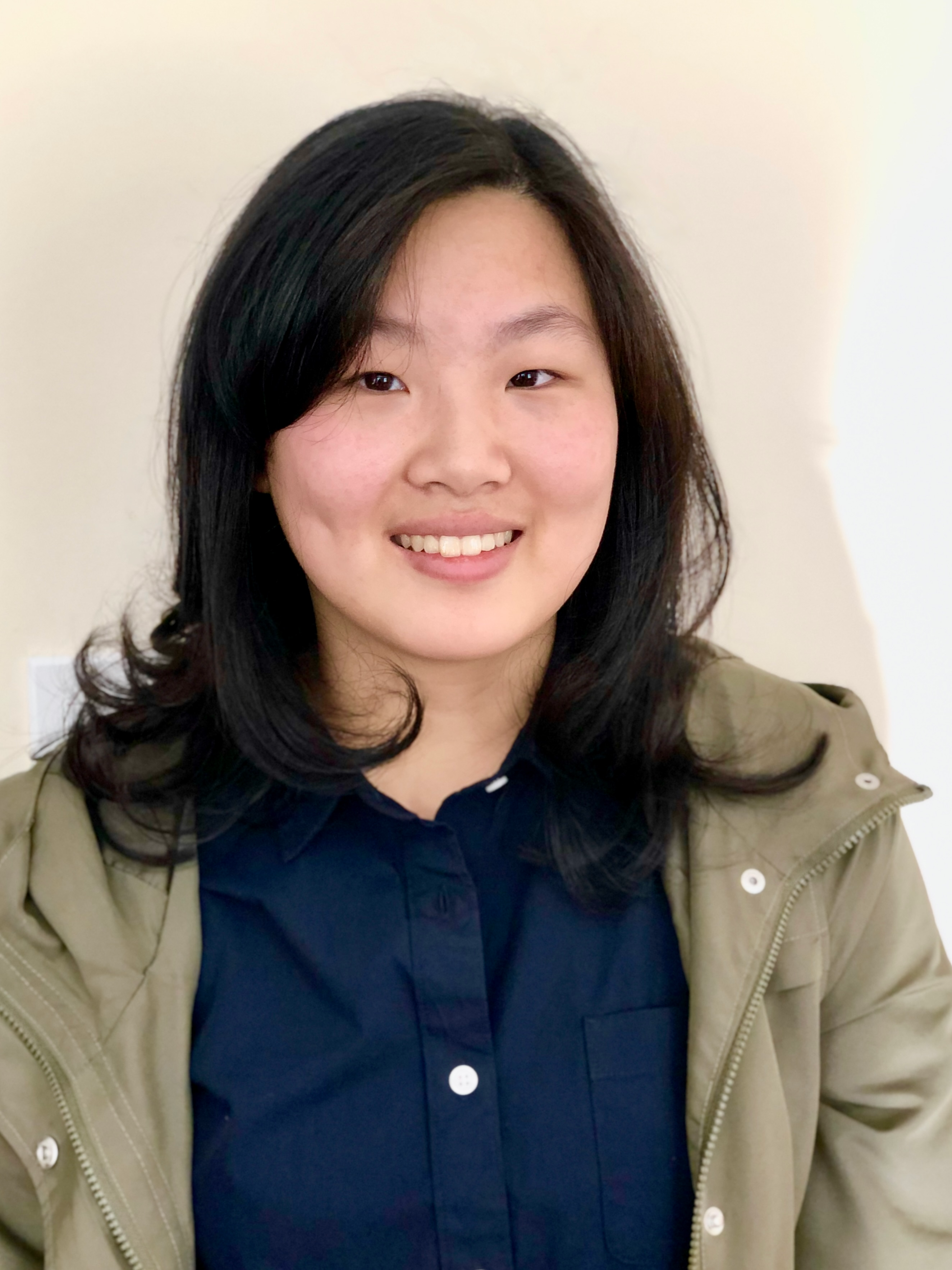
Anna Shen
MASc candidate and researcher
Anna is a Master’s student in the Department of Mechanical and Mechatronics Engineering at the University of Waterloo, supervised by Professor Devaud. She completed her Bachelor’s of Applied Science in Mechatronics Engineering at the University of Waterloo 2025. Her research focuses on computational fluid dynamics (CFD) modelling of premixed hydrogen flames in OpenFOAM, with an emphasis on conditional source-term estimation (CSE) for turbulent combustion.