The objective in gene therapy is the introduction of a missing or defective gene into the cell nucleus where the encoded protein can be expressed. The process of introducing foreign DNA into the cell is known as transfection, and requires the DNA to cross cellular, lysosomal, and nuclear membranes prior to expression. This requires suitable delivery systems to "package" the DNA, which in our consist of cationic lipid-based DNA complexes.
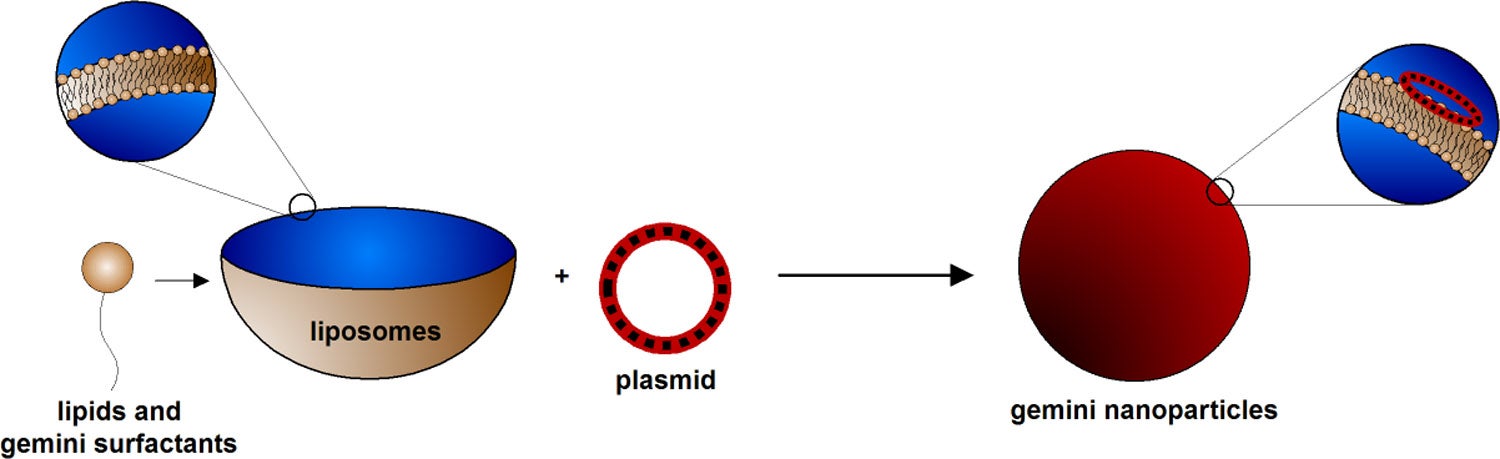
Gemini nanoparticle DNA delivery system
The transfection activity of the complexes is examined as a function of cationic lipid structure, and correlated to physicochemical characteristics such as particle size, surface charge, lipid morphology etc. We have previously shown that our gemini surfactants are efficient vectors for DNA transfection both in vitro (in cellular based assays) and in vivo in mouse models. A formulation based upon the 16-3-16 surfactant was to our knowledge, the first system based upon a gemini surfactant that was only able able to delivery DNA through a topically applied ointment rather than using the usual injection route.
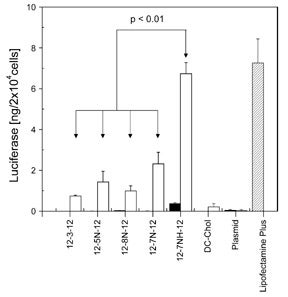
In
vitro
transfection
activities
for
gemini
surfactant-based
nanoparticles.
(see
Badea
et
al.,
J.
Gene
Med.
2005)
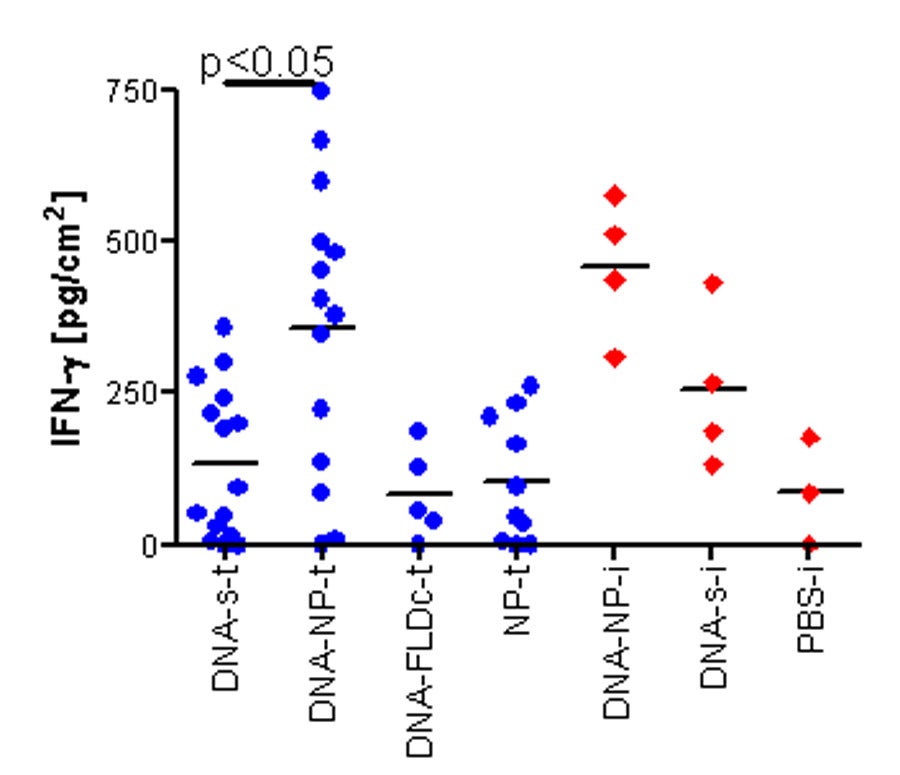
In vivo transfection activity of gemini surfactant-based nanoparticles.
(see Badea et al., J. Gene Med., 7 (2005) 1200-1214 )
The effect of variations in the length of the alkyl tail groups, the length of the spacer group, and substitutions within the spacer group of the gemini surfactants have also been explored. As has been observed with many other classes of cationic lipids, increasing the length of the alkyl tail to approximately C16 or C18 provides optimal transfection activity. Short spacer groups (2 - 4 methylene groups in length) also provides optimal activity. The effect of substitution within the spacer group is much more complex; however, we have shown that gemini surfactants having a dipropylamine spacer group (m-7NH-m surfactants )resulted in significant improvements in transfection activity.
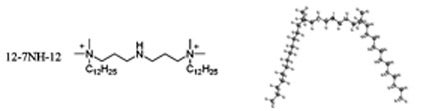
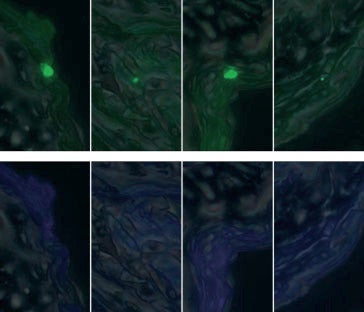
Our current efforts are focused on understanding the mechanism(s) involved in gemini surfactant mediated transfection, specifically how variations in molecular structure result in differences in transfection activity. For example, we have recently demonstrated that the substitution of one of the tail groups for an alkylpyrenyl group recents in a completely different binding mechanism, where the surfactant binds through an intercation between DNA base pairs, rather than the usual electrostatic interaction between surfactant head groups and DNA phosphates.
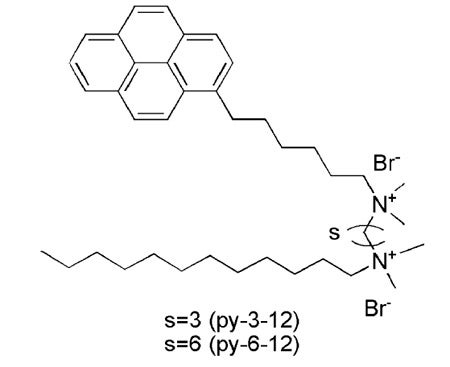
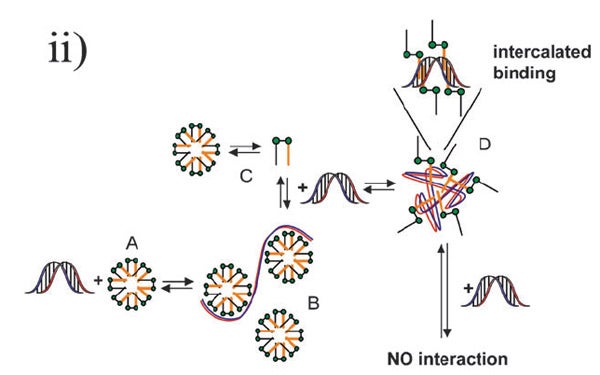
Techniques used to study these systems include dynamic light scattering, titration calorimetry, surface tension, atomic force microscopy, fluorescence/confocal microscopy, small angle X-ray scattering (SAXS), and in vitro transfection assays among others. Individuals with a strong background in biophysical methods OR membrane biophysics would be well suited for studies in this area. Interested candidates can find contact information below.