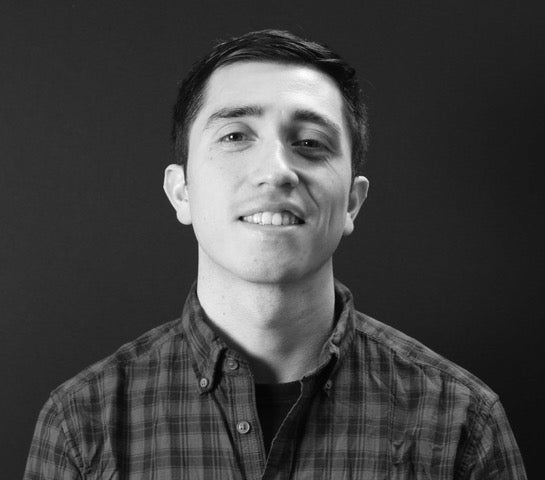
Tomás Cassanelli is an astronomer and assistant professor specializing in astronomical instrumentation at Universidad de Chile. He holds a PhD in Astronomy & Astrophysics from the University of Toronto, where he focused on fast radio burst (FRB) localization at the time of detection using very-long-baseline interferometry (VLBI). His research spans radio astronomy, including analog and digital components, as well as fast optical astronomy with fast photon counters. Tomás' scientific interests lie in the rapidly varying transient sky such as pulsars, FRBs, and long period transients, and interferometric methods across radio to optical wavelengths.
Title: Canadian-Chilean array for radio transient studies (CHARTS)
Abstract: Fast radio bursts (FRBs) are micro- to milli-second duration flashes of coherent radio emission which have been studied in detail over the last ten years. Today, multiple facilities are capable of detecting these rapid events, with a few detections per week worldwide. However, their emission mechanism and astrophysical origins remain largely unknown. The Canadian-Chilean array for radio transients studies (CHARTS) will be a long wavelength transient-specific aperture array to be located in Chile and set to observe the southern radio sky. Motivated by the growing field of FRBs and other Galactic transient-like phenomena, CHARTS will probe lower declinations in the 300–500 MHz band. CHARTS will be composed of 256 single-polarization custom antennas, spread over ~20 m x 20 m with a wide field-of-view of ~8e3 squared degrees and equipped with a realtime search engine. CHARTS science will focus on bright nearby low-DM FRB events (progenitors and emission mechanisms), discover new repeating FRBs (where less than ~4% are currently known at low declinations), energetic Galactic magnetar bursts (Galactic center monitoring), bright pulsars giant pulses, and search for slow pulsars. Furthermore, most FRBs have been found at higher declination, with less than ~20% found in the south. CHARTS will fill this gap, and enable the galactic host localization of bright events (alongside statistical arguments), and in the future, prompt multi-wavelength followup by leveraging existing astronomical facilities in the region. In this talk I will present the project, highlight CHARTS science cases, provide an overview of our instrumentation selection, and detail progress made throughout the past 1.5 years of the project.