

The University of Waterloo Climate Institute brings together the research community and partners to advance strategic research and capacity building priorities at the local, national, and international scales. Our work empowers business, government and civil society to respond effectively to the climate crisis.
Based at the University of Waterloo, the Climate Institute harnesses a unique combination of strengths and depth of expertise to enhance the impact and excellence of innovative interdisciplinary research and education, and to deal head-on with the complexity and interconnectedness of social, political and technological dimensions of climate change.
Our key focus areas:

RESEARCH
Strategic research development and management across priority research areas (deep decarbonization and sustainability transitions, climate risks, resilience and adaptation; and climate science, modelling and observation).

TRAINING AND CAPACITY BUILDING
Supporting climate action through targeted professional development opportunities and the integration of climate education in academic programs.

KNOWLEDGE SHARING
Informing decision makers in policy, practice and innovation through tailored reports, briefs, facilitated workshops, data visualization, media engagement, and partnerships.
Learn more about the work at the Waterloo Climate Institute:

Municipal Climate Adaptation Certificate
Discover the Waterloo Climate Institute's new professional development opportunity, the Municipal Climate Adaptation Certificate. This forward-thinking initiative is funded by the Federation of Canadian Municipalities (FCM) and is designed specifically for municipal staff who are looking to strengthen their climate resilience skills.
News

National Forum Explores Climate-Ready Education for Future Professionals
From February 2 to 5, 2026, the Climate Institute convened nearly 300 participants for a national virtual forum, Designing Climate-Ready Education for the Next Generation of Professionals. This was the second national forum under the Accelerating Climate Education for the Next Generation of Professionals (ACE) project.
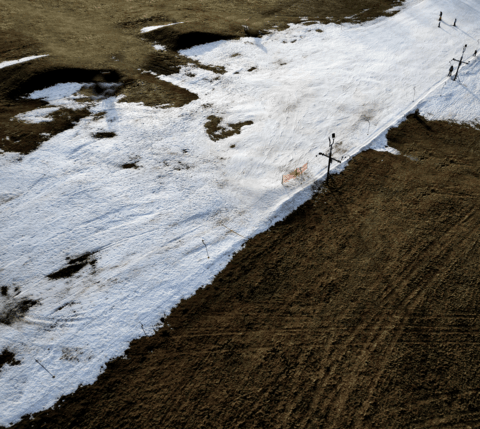
Safeguarding the Winter Olympics-Paralympics against climate change
New research into the impact of climate change on snow sports provides recommendations to increase the climate-resilience of the Olympic and Paralympic Winter Games.

New Policy Brief Calls for Long-Term Lake Monitoring to Protect Peace-Athabasca Delta
A new policy brief from the Waterloo Climate Institute led by Dr. Laura Neary, Prof. Roland Hall and Prof. Brent Wolfe is urging governments and stewardship bodies to act quickly to establish long-term lake monitoring in the Peace-Athabasca Delta (PAD), the world’s largest freshwater boreal delta, amid growing pressures from climate change and major energy developments.
Events

HCI and data science research towards development of a public climate observatory: The view from Toronto
Join Professor Soden as he examines why three decades of rapid technological advancement, spanning satellite imagery, urban sensors, GIS, and machine learning, have yet to translate into effective implementations of climate action.

Introduction to sustainability education for post-secondary educators from any discipline
Join the Waterloo Climate Institute and our campus partners for a hands-on interdisciplinary workshop to explore the what’s, why’s and how’s of sustainability education and learn where to access resources for teaching and learning.