The Emerging Radio Systems Group (EmRG) develops the radio hardware on which wireless networks depend: semiconductor devices, radio-frequency integrated circuits, antenna and beamforming arrays, and the digital signal processing that governs them. Its aim is a smaller, cheaper and more efficient radio front end for the sixth generation (6G) of wireless communication and for the satellite systems that will operate alongside it.
EmRG is a research group in the Department of Electrical and Computer Engineering at the University of Waterloo, directed by Dr. Slim Boumaiza, Professor in the department and Director of the Centre for Intelligent Antenna and Radio Systems. It has twenty-seven members today, and more than one hundred students, fellows and research staff have been trained here; its graduates work at Apple, SpaceX, Qualcomm, Ericsson, NXP Semiconductors, Analog Devices and Intel.

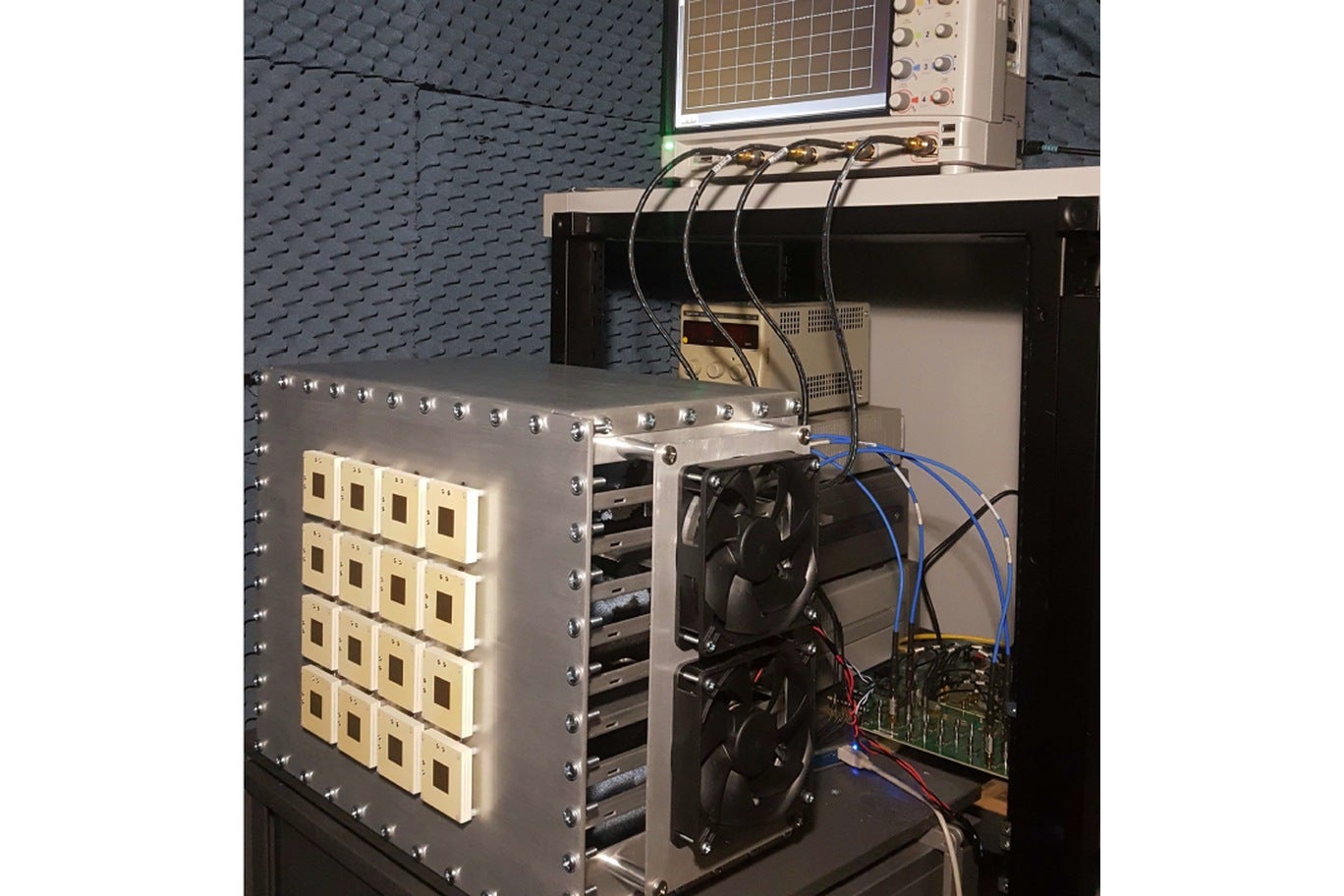
Characterization of a power amplifier prototype in the EmRG laboratory
Latest News
Three research positions open on the C‑COM satellite phased-array project
The group is recruiting at postdoctoral fellow and research associate level for three roles on its Ka-band satellite work with C-COM Satellite Systems: RF and antenna design, digital signal processing for adaptive beamforming and anti-jamming, and over-the-air testbed measurement.
Automated design framework delivers a GaN power amplifier linearized over 1 GHz of modulation bandwidth
A framework in IEEE Transactions on Microwave Theory and Techniques evolves matching-network topologies as graphs and turns them automatically into manufacturable, EM-aware layouts. The 10 W GaN prototype spans 3.2 to 4.3 GHz with 1 GHz of instantaneous bandwidth in the n77 band.
Our Research Groups
The group’s work is organized into three research groups that share a single laboratory. Each group defines the constraints against which the others design, an arrangement that allows efficiency, linearity and manufacturability to be addressed together rather than in sequence.
Our Approach
Three characteristics distinguish the group’s research program: design that spans every layer of the radio, experimental validation of every design in the group’s own laboratory, and sustained collaboration with government agencies and industry. A single project can run from device characterization and behavioural modelling, through circuit and system design, to prototype fabrication and measurement in the group’s laboratory in the Engineering 5 building.
Design Across Every Layer
A radio system is limited by its weakest layer, and the group therefore works at all of them: multi-physics compact models for gallium nitride and silicon devices at millimetre-wave frequencies, circuit topologies and their layout and verification, array architectures and their packaging, and the digital algorithms that compensate for the non-idealities of the hardware. Each design decision is assessed against the constraints it imposes at the adjacent levels.
Experimental Validation
Every design is fabricated and characterized in the group’s laboratory. The facility supports on-wafer probing and frequency extenders into the D band, multi-harmonic and wideband active load-pull, modulated signal generation and analysis at gigahertz bandwidths, and over-the-air measurement of active arrays in an anechoic chamber. Its instrumentation is reviewed and extended continually.
Government and Industry Collaboration
The program is carried out in partnership with federal and provincial agencies and with companies in the information and communication technology sector. Partners contribute instrumentation, foundry access and problem definitions drawn from production; in return they gain early access to results and to graduates trained on the tools they use.
Recent Work
A selection of the integrated circuits, antenna prototypes and measurement testbeds currently in use across the three research groups.

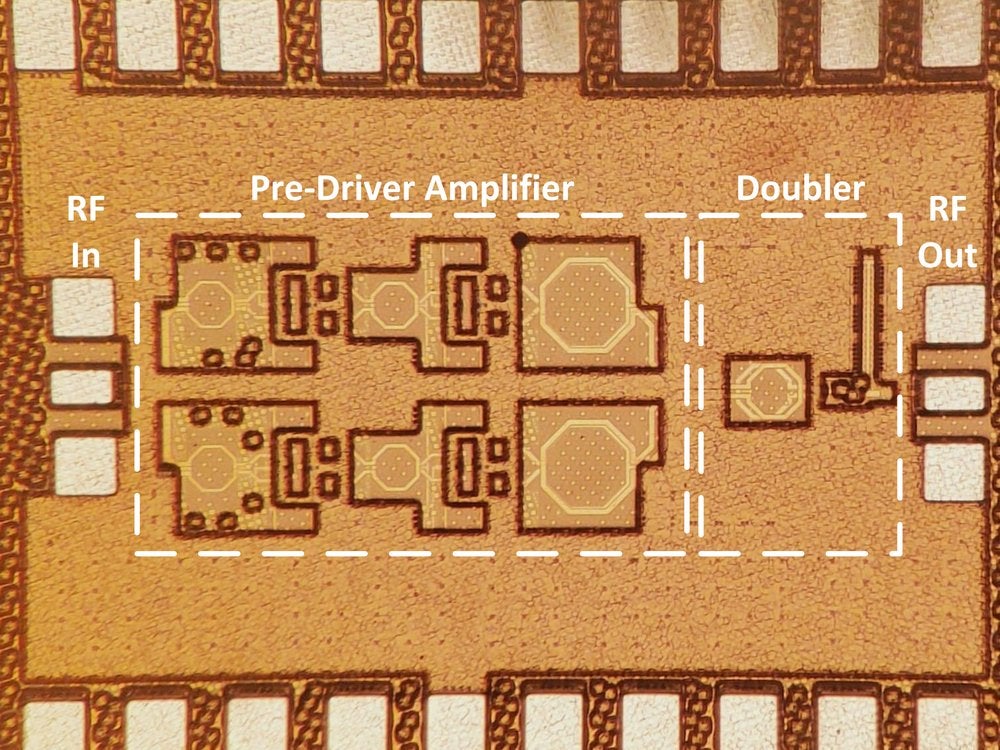
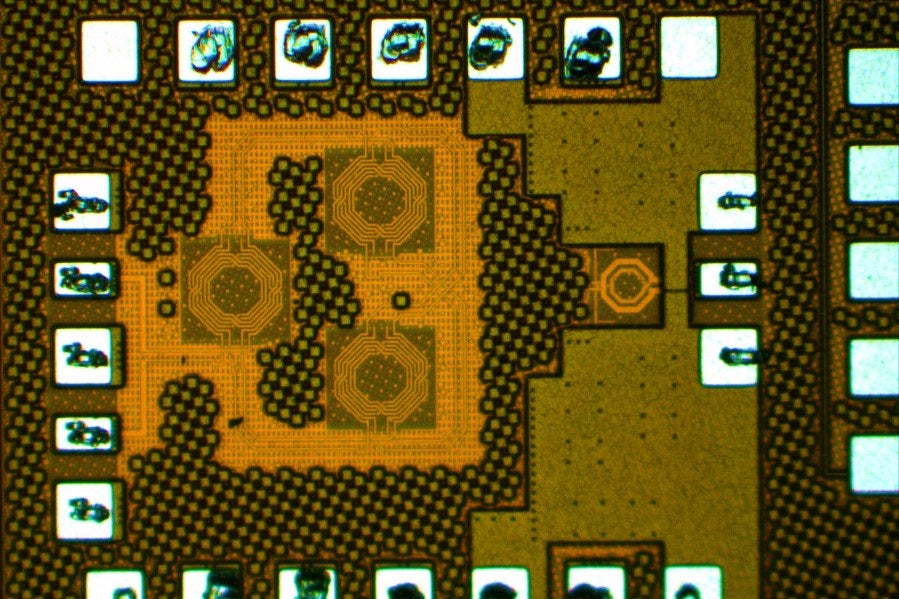
Digitally-assisted 27 to 33 GHz reflection-type phase shifter

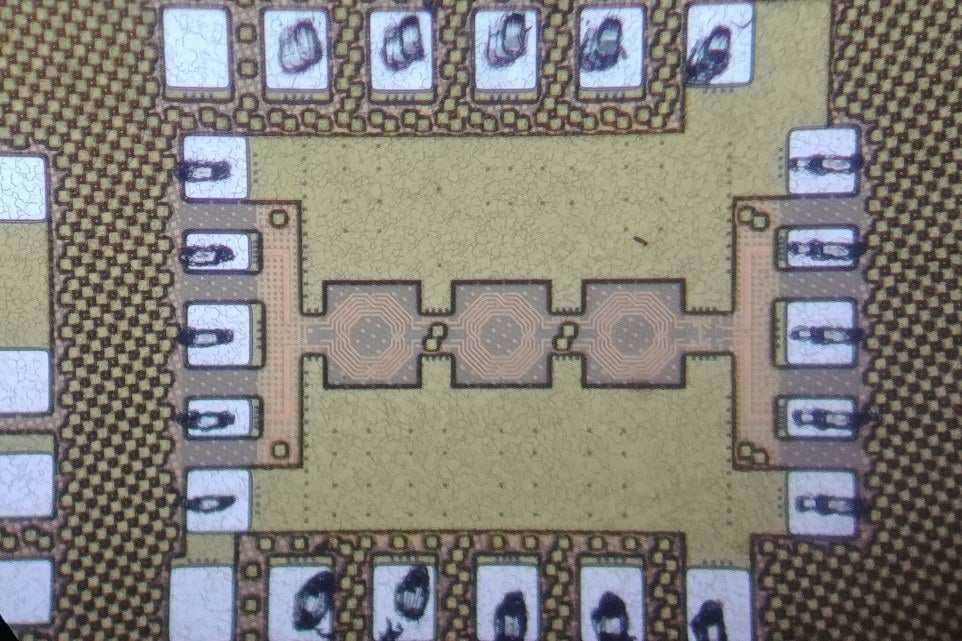
Digitally-assisted 28 GHz active phase shifter

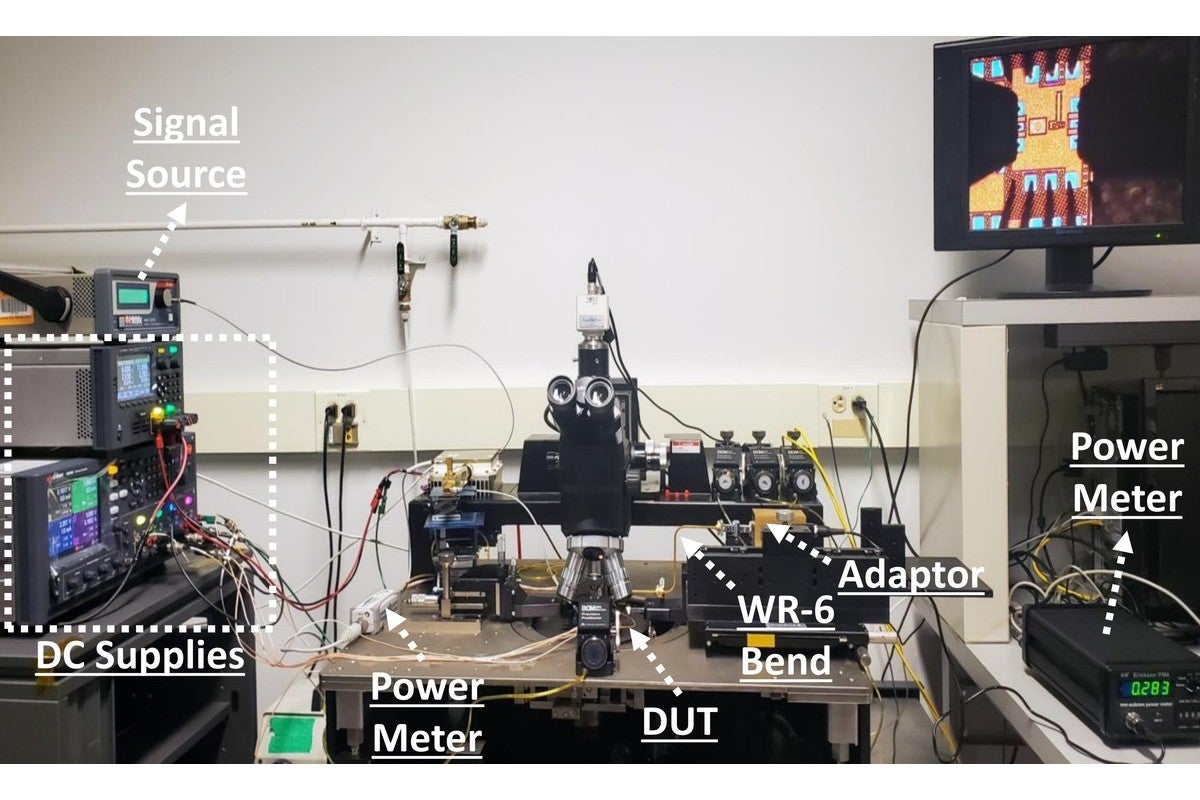
120 GHz frequency doubler testing bench

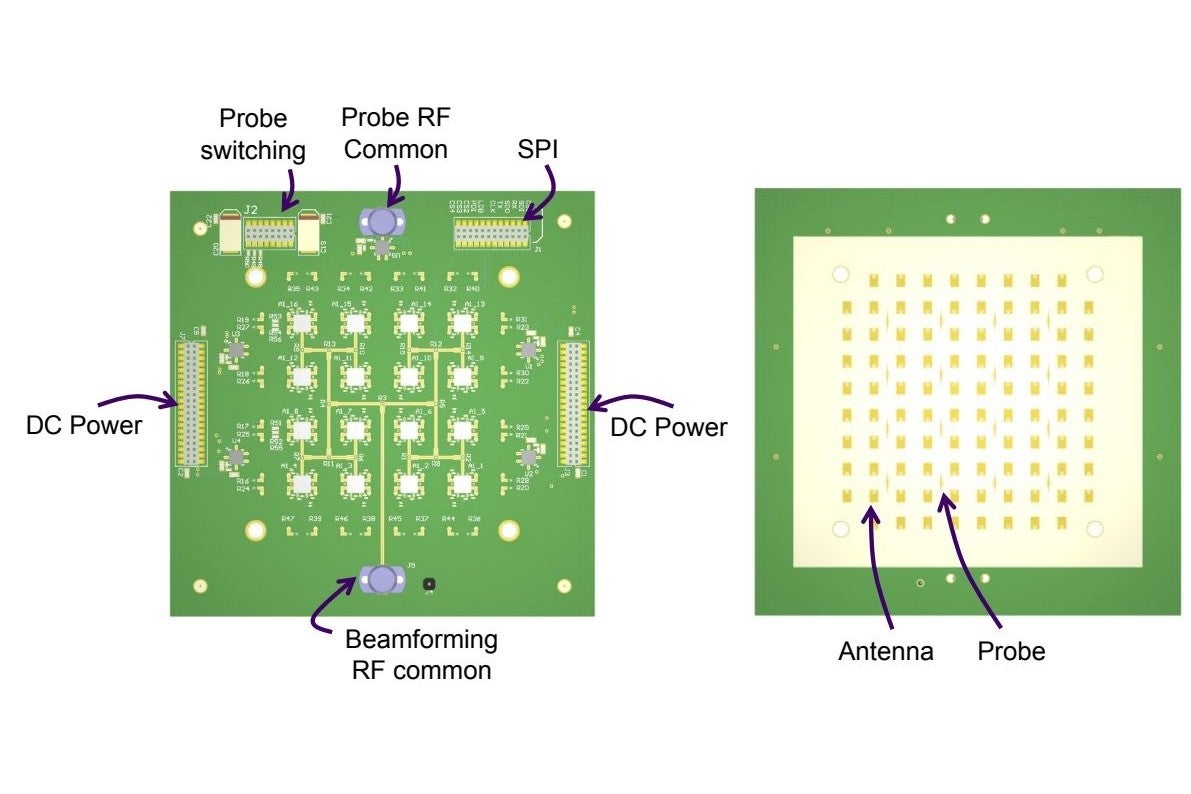
28 GHz 8 x 8 active phased array antenna with near-field probe

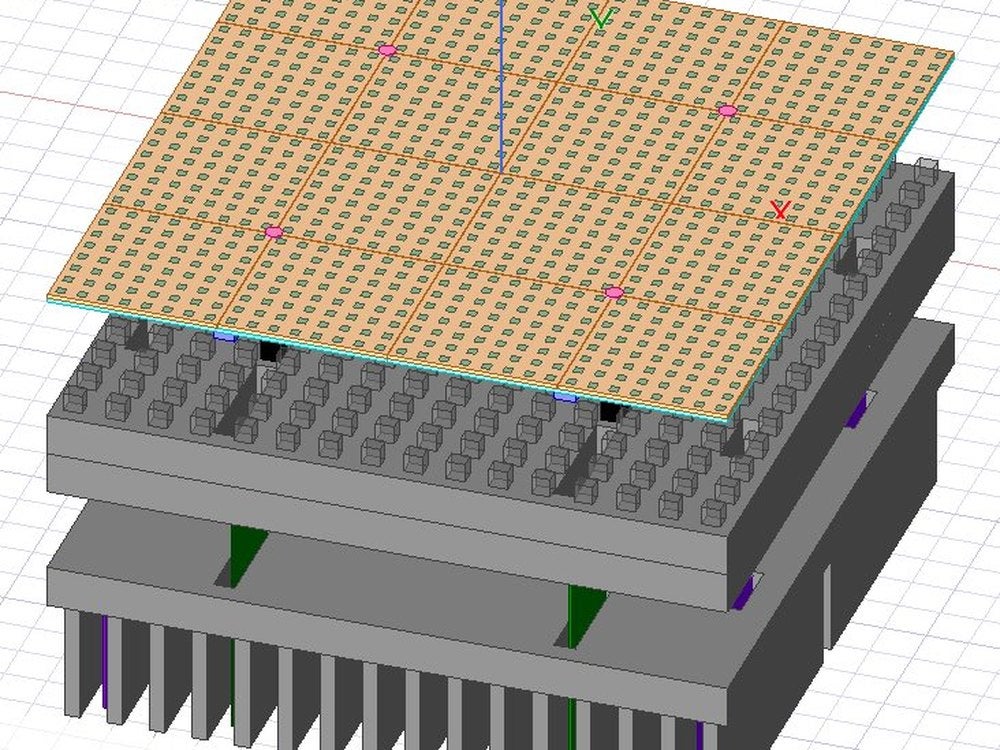
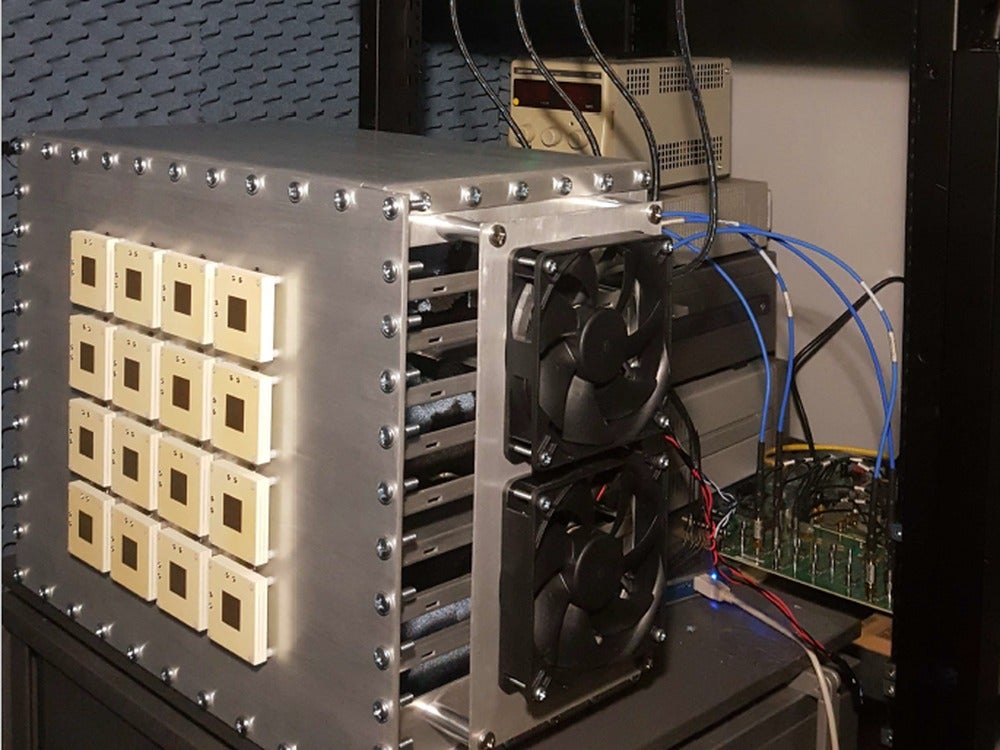
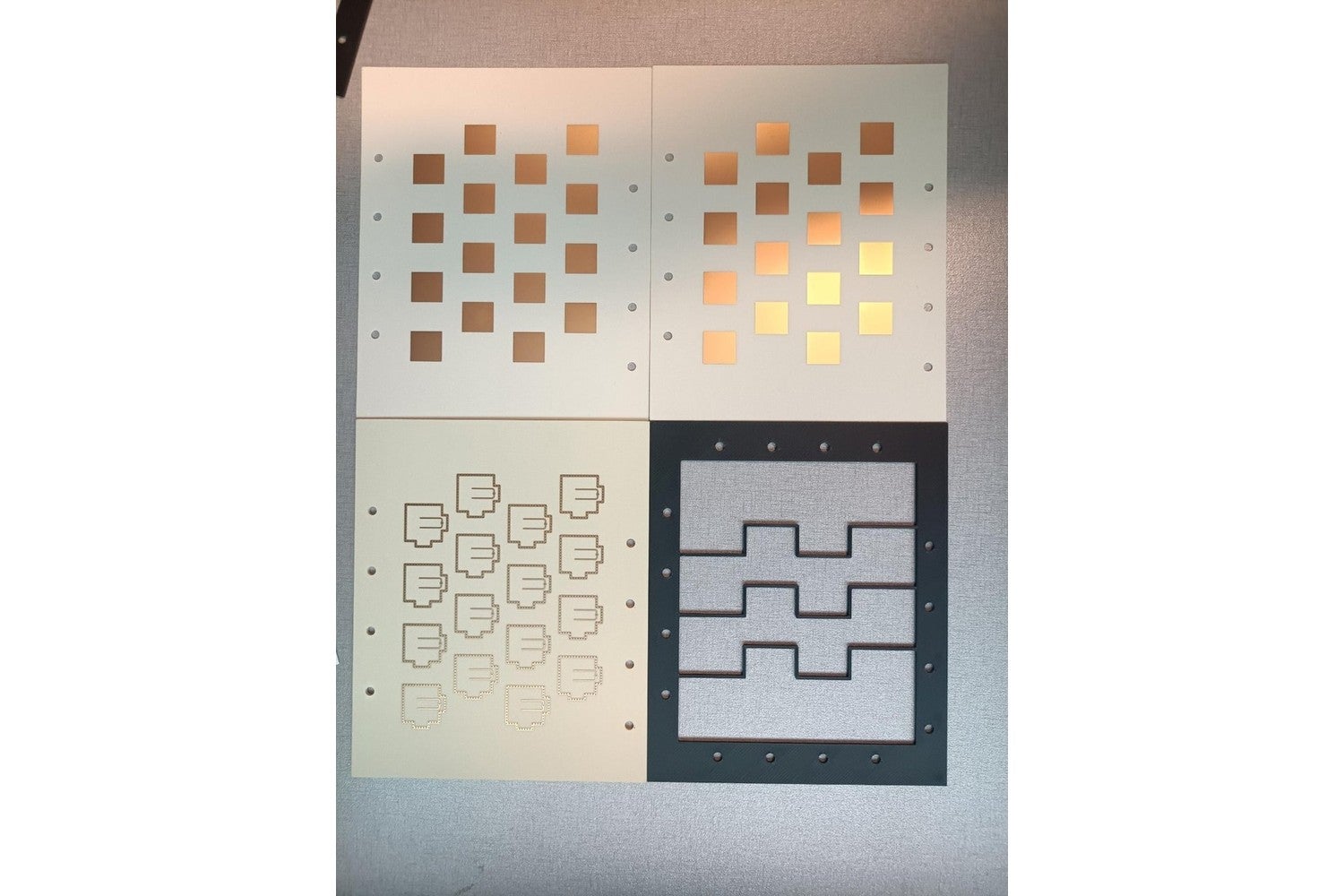
FR3 4 x 4 antenna array

FR1 fully digital MIMO test and measurement setup
Recent Publications
The group’s five most recent articles in IEEE journals. A fuller list, including conference papers and patents, is on the Publications page.
- Y. Chen, H. Yu, Z. J. Su, S. Boumaiza, “Automated broadband power amplifier design via circuit-graph evolution and layout-aware synthesis,” IEEE Transactions on Microwave Theory and Techniques, early access, Aug. 2026.
- M. A. Chalaki, A. Ben Ayed, P. Mitran, S. Boumaiza, “Assumption-free active calibration of mm-wave phased arrays using excitation estimation via far-field measurements,” IEEE Microwave and Wireless Technology Letters, vol. 36, no. 6, pp. 938–941, June 2026.
- J. G. Lim, A. Ben Ayed, S. Boumaiza, “A two-tier low-complexity linearization architecture for fully digital mMIMO transmitters,” IEEE Microwave and Wireless Technology Letters, vol. 36, no. 6, pp. 946–949, June 2026.
- Y. Chen, M. A. Chalaki, S. Boumaiza, “High-accuracy, fast calibration of large-scale phased antenna arrays via novel constellation modeling method,” IEEE Transactions on Microwave Theory and Techniques, vol. 73, no. 12, pp. 10771–10785, Dec. 2025.
- A. Ben Ayed, S. Boumaiza, “Millimeter-wave wideband active load–pull system using vector network analyzer frequency extenders,” IEEE Microwave and Wireless Technology Letters, vol. 35, no. 6, pp. 932–935, June 2025.
Supported By
The group’s research is co-sponsored by federal and provincial funding agencies and carried out with companies across the information and communication technology sector. Partners and sponsors →