Lecture

Tuesday, September 21, 2021 12:00 pm - 12:00 pm EDT (GMT -04:00)

September anti-racism book club

White Fragility: Why it's so hard to for white people to talk about racism book coverIn September, Professor Frankie Condon, who has conducted extensive research in anti-racism rhetoric and anti-racism pedagogy, will lead the discussion of Robin DiAngelo’s, White Fragility (2018), the New York Times bestseller that gained international prominence in the aftermath of the murder of George Floyd in the US.

Wednesday, June 16, 2021 2:00 pm - 3:00 pm EDT (GMT -04:00)

Indigenous Business and Leadership

Indigenous dancers in front of colourful animals

Join Alumni Tracy Primeau, BA ‘98, in a discussion about Indigenous Business and Leadership. Tracy Primeau is a shift manager at Bruce Power, and also member of many  organizations – she is a member of the Board of Directors of Women in Nuclear Canada, Chair of the Women’s House Serving Bruce and Grey, Executive of the Kincardine Bulldogs Hockey Club and sits on two Municipality of Kincardine Council committees.  

Tuesday, May 25, 2021 1:00 pm - 2:30 pm EDT (GMT -04:00)

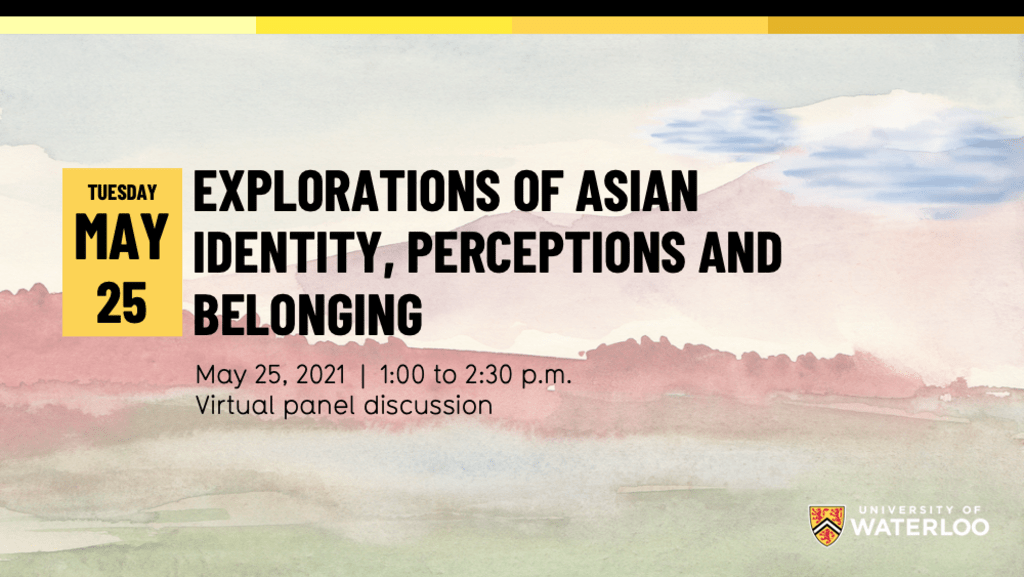
Asian Heritage Month: Explorations of identity, perceptions and belonging

Explorations of Asian identity, perceptions and belonging. May 25, 2021. 1 - 2:30 p.m. Virtual panel discussion.

In honour of Asian heritage month the President's Anti-Racism Taskforce (PART) invites you to attend Explorations of Asian Identity, Perceptions and Belonging. The event will feature a robust panel discussion that explores Asian-Canadian identity and anti-Asian racism, particularly in light of the rise in hate crimes over the past year.

Tuesday, March 31, 2026 6:00 pm - 8:00 pm EDT (GMT -04:00)

Nomad: Correcting the Narrative

In recognition of National Indigenous Languages Day, the Office of Indigenous Relations is hosting a special event featuring Susan Aglukark, the award-winning Inuk singer-songwriter.

Susan Aglukark is one of Canada’s most distinctive artists—an award-winning Inuk singer-songwriter who blends Inuktitut and English with contemporary pop music.

Wednesday, February 18, 2026 12:00 pm - 1:00 pm EST (GMT -05:00)

Virtual-first, human-first: Reimagining primary care through innovation

Manulife presents CareNext Collective, a monthly virtual forum hosted by the CareNext Coalition.

Primary care sits at the foundation of the health system — yet it is often the hardest place to innovate. Join Dr. Neil Naik, primary care physician at the Waterloo Regional Health Network, as he shares how his clinic has evolved into a living lab for primary care innovation, built around a virtual-first, patient-centered model that treats technology as an enabler rather than a barrier.

The Bechtel Lectures provide the opportunity for representatives of a variety of disciplines and professions to explore topics that reflect the breadth and depth of Mennonite history, identity, faith and culture. Conrad Grebel University College is pleased to host this annual event. The 2026 Bechtel Lecturer is Isaac Villegas, MDiv.

Thursday, January 15, 2026 6:30 pm - 8:00 pm EST (GMT -05:00)

Science in the City - Energy

Researchers in Waterloo Region are doing amazing work when it comes to the renewable energy. From minerals to exploring machine learning impact on renewable energy technologies Waterloo researchers are focused on finding solutions. Join us to explore some of the great things happening right in your backyard at the University of Waterloo.

Friday, December 5, 2025 2:00 pm - 4:00 pm EST (GMT -05:00)

Shaw-Mannell Award and Lecture

Talk Title: When Love and Hate Collide: Poo and Zombies in Leisure and Leisure Studies

Abstract: Poo and zombies are loved and hated in society. We put manure on our gardens to help the plants of our leisure places grow while we ban human and dog poo from the public leisurescape. Our televised leisure is replete with zombies, the bad guys we love to see being killed. Leisure studies is also filled with research enslaved by zombie paradigms that dominate thinking and ways of being as researchers. The result is research outputs that smell of roses or resemble something that is a shade of brown and slightly squishy depending on your perspective.