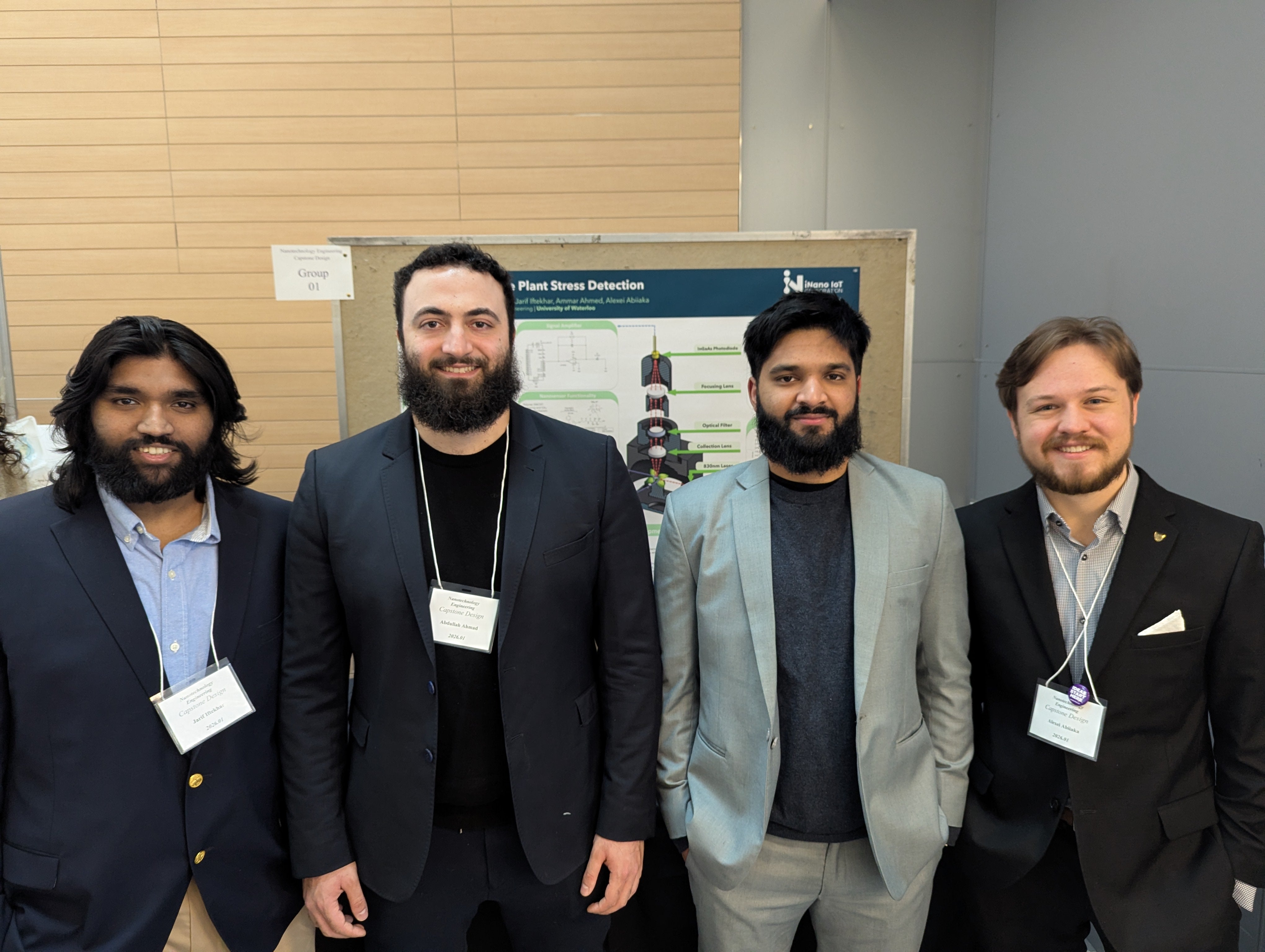
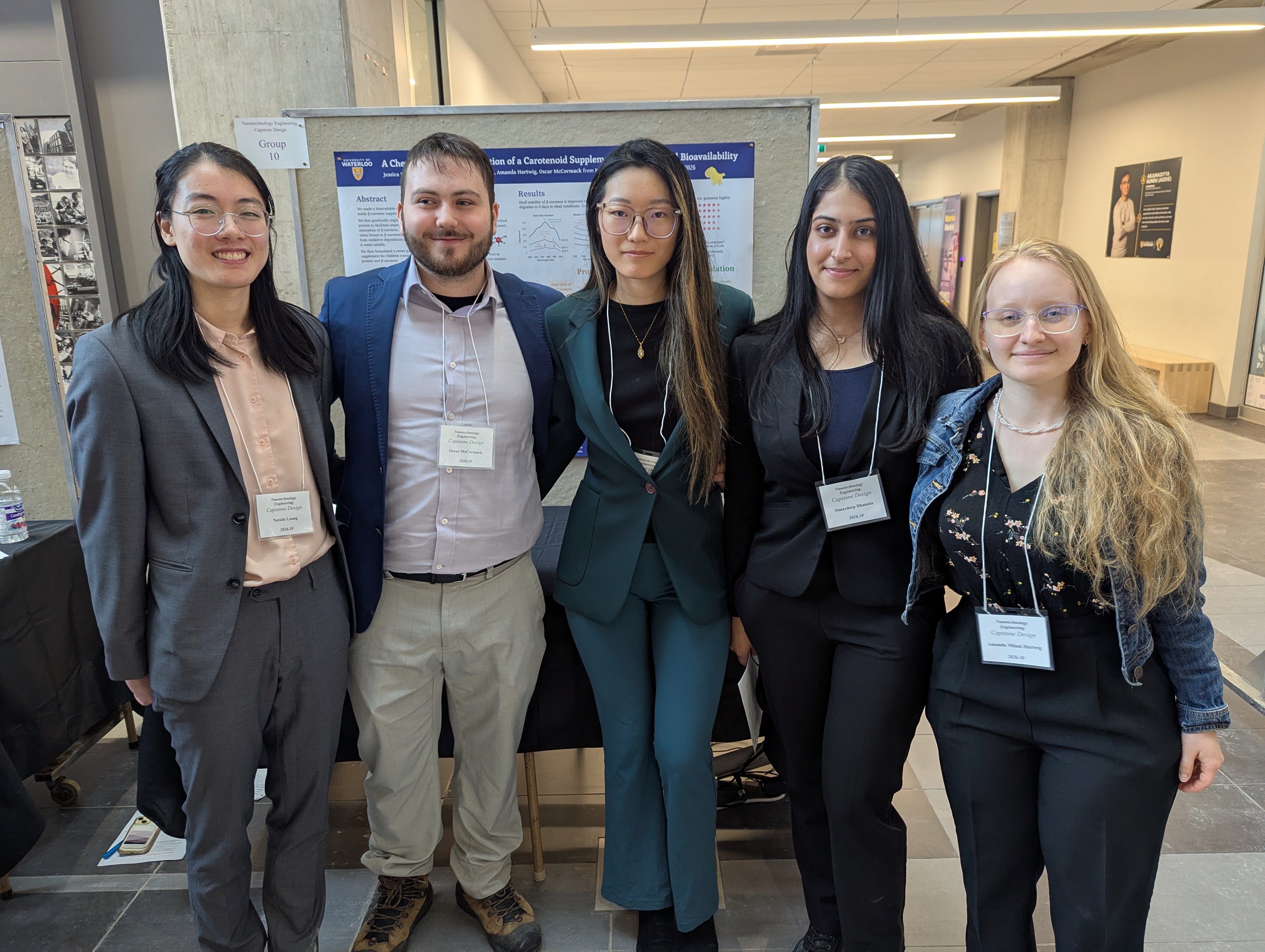
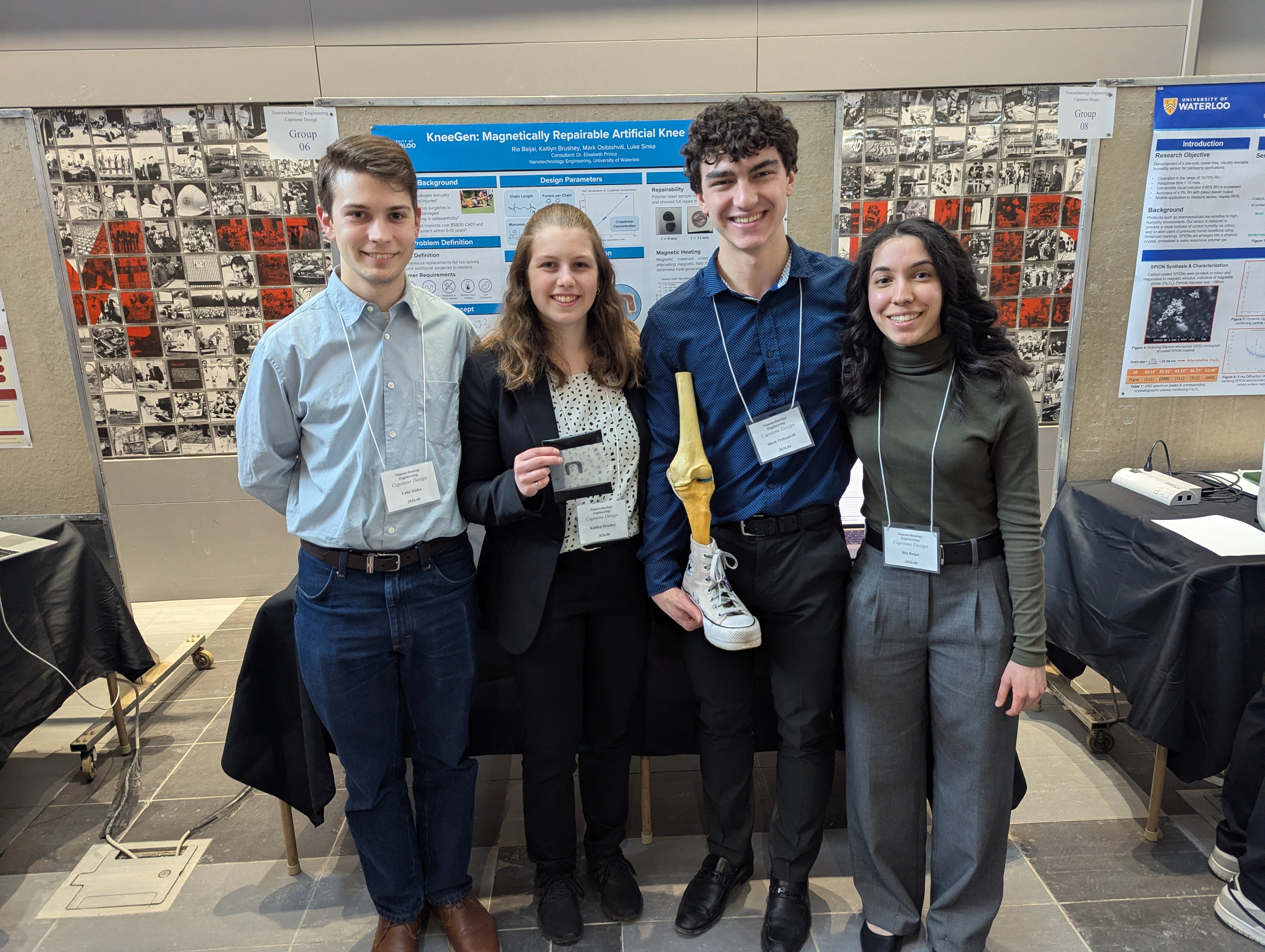
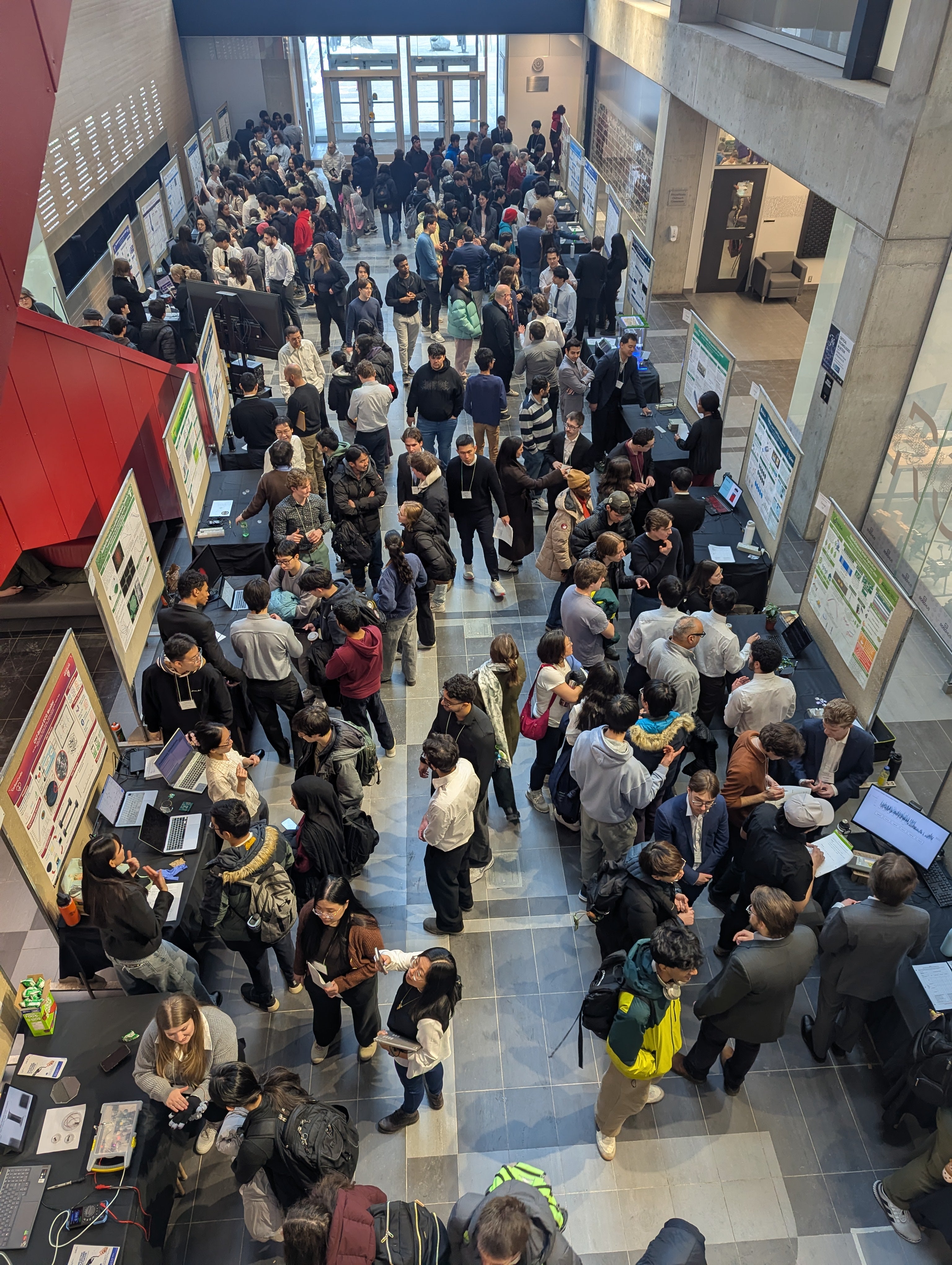
Capstone Design

Participation in Capstone Design Projects synthesizes theory learned in class, lab work, and real-world experience from co-op programs.

Students are able to create design projects in areas that interest them. Capstone Design projects often lead to the creation of a marketable product and entrepreneurial opportunities for the graduating students.

Students own the ideas and devices they create for the design competition and there are several pitch competitions that follow the Capstone Design Event, acting as a platform for students to compete for funding to commercialize their devices. Some projects are developed in collaboration with industry partners or community organizations. This allows students to address real-life challenges and potentially contribute to positive change in the world.

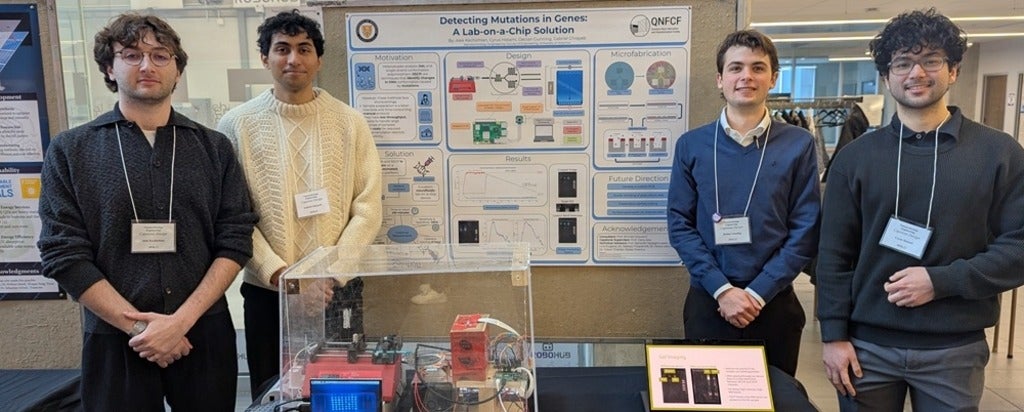
Nanotechnology Engineering (NE) Group 22 placed second for their Capstone Design Project titled Detecting Mutations in Genes: A Microfluidic Lab-on-a-Chip Solution.

The group designed a benchtop microfluidic device which detects DNA mutations. DNA mutation detection can be used to tailor cancer treatments, identify genetic disorders like cystic fibrosis, prenatal testing and more.

 DNA mutation detection is a time-consuming process. It takes between four to six hours to get the results from the current process of testing. The device designed by group members Gabriel Ghrayeb, Declan Gunning, Cyrus Hatami, and Alek Kechichian takes a small DNA sample and can process and produce results quickly and with minimal manual intervention.

“Our device works with and can be tuned for any DNA segment of interest, whether you're working in genetic engineering and you want to check if you have successfully caused or edited a gene mutation, or in genetic screening where we want to check if a person's genetic code has a mutation that might make them at higher risk for breast cancer or some other condition down the line,” says Kechichian.

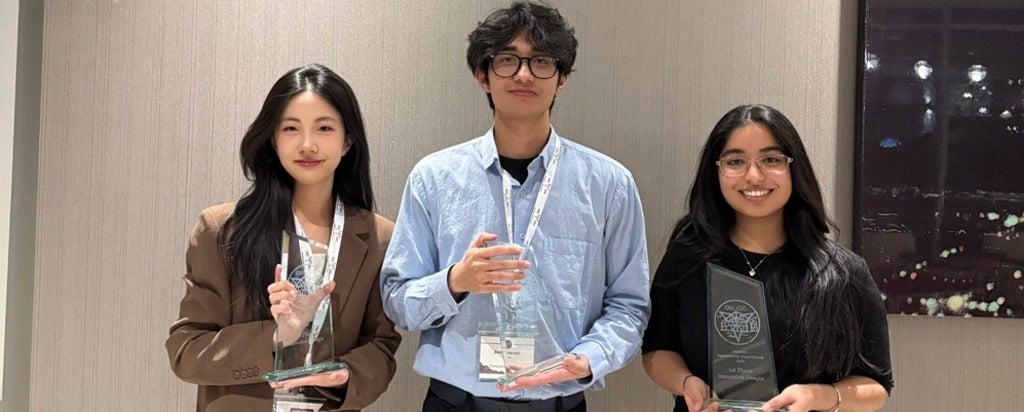
Nanotechnology Engineering (NE) Group 26, Airsero, won several awards for their Capstone Design Project. Airsero won the $5K in an Innovation and Entrepreneurship Award at the Norman Esch Pitch Competition.

They also secured the UN Sustainable Development Goals Award within the Nanotechnology Engineering department. At the inception of their project in 2024, the team received a MITACS Accelerate Award that helped with financing the project.

Group members Anthony Keen, Aliasgar Bawangaonwala, and Hamzah Curtay knew they wanted to focus on working with aerogel materials and were eager to do a project that could lead to a start-up.

"Capstone allowed us to go beyond theory —it pushed us into actual engineering problem-solving. Our supervisor, Professor Milad Kamkar, was incredibly supportive and encouraged us to explore various facets of aerogel and material science,” said Keen.

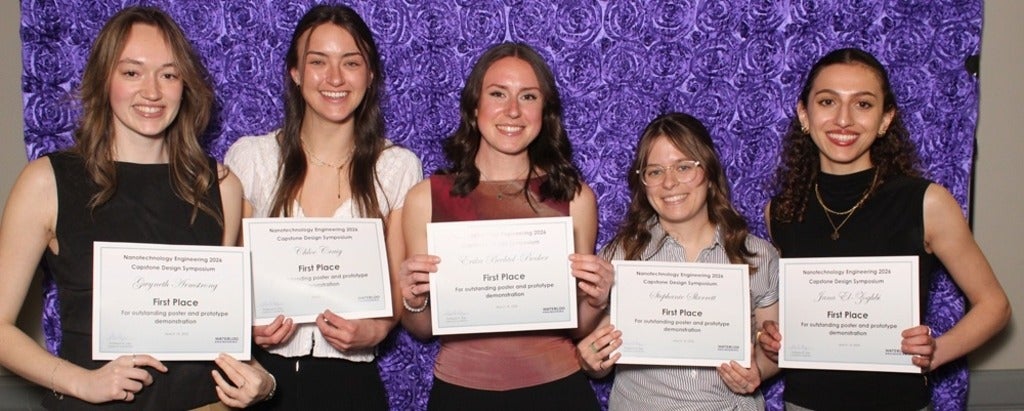
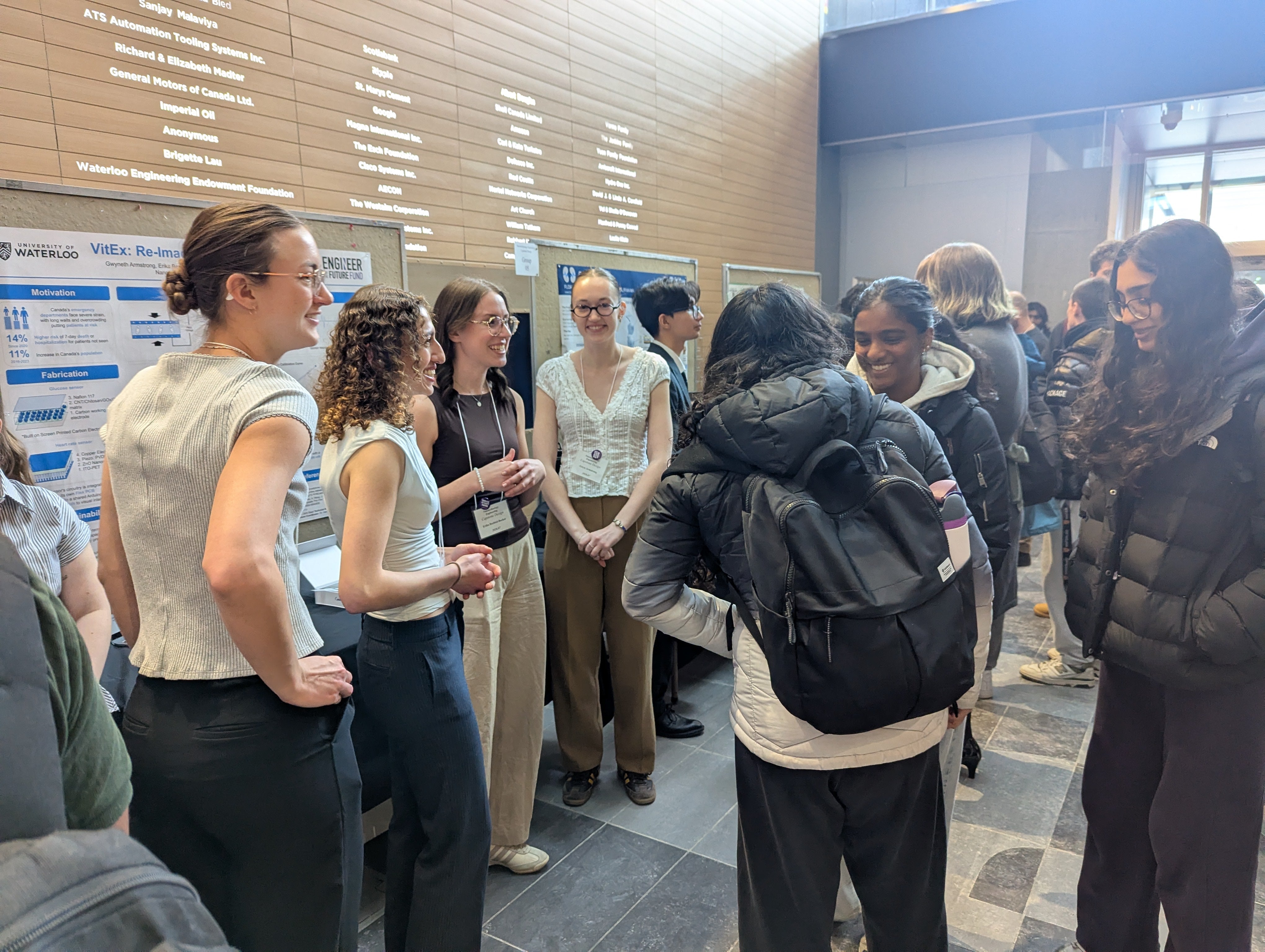
Nanotechnology Engineering (NE) Group 7 took first place for their Capstone Design Project VitEx, that reimagines hospital emergency room triage through a new approach in wearable nanotechnology.

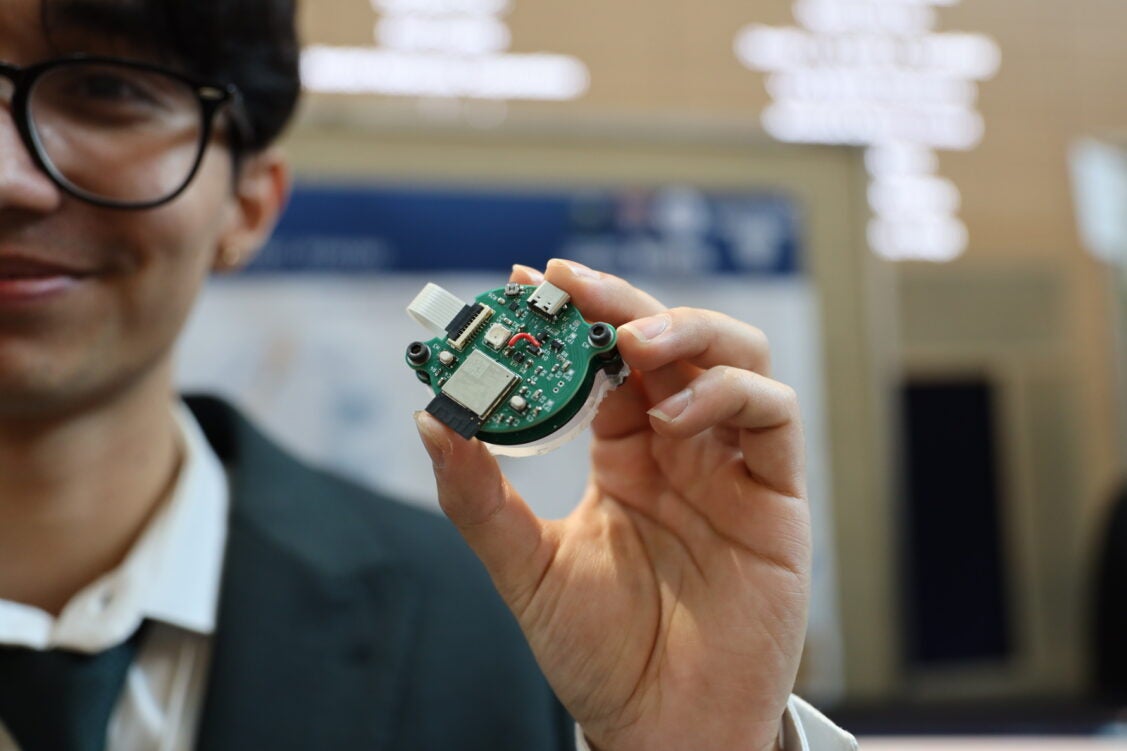
The group created a wristband for use in hospital emergency rooms embedded with sensors to enable continuous monitoring of the patients’ vitals.

The wrist band uses a sweat-based enzymatic sensor to continuously measure patients’ glucose levels and heart rate. When a voltage is applied to the glucose sensor, glucose is oxidized and then that produces a measurable current that can be measured using an electrode.

The heart rate sensor is a pressure-based sensor that uses piezoelectric PVDF as the sensing layer with the addition of zinc oxide nanorods underneath to increase the overall sensitivity.