Robots are prone to privacy leaks despite encryption
A new study from the University of Waterloo has unveiled major privacy weaknesses in collaborative robots — calling for stronger defenses.
Founders from the University of Waterloo raised more than $14 billion USD in venture capital, according to the latest 2025 rankings by PitchBook, a company that tracks global venture capital and private equity markets. Waterloo’s entrepreneurial ecosystem continues to make an impact locally and globally with more than 639 founders launching 527 companies.
The University of Waterloo is pleased to welcome 10 outstanding students to its incoming first-year class through the prestigious Schulich Leader Scholarships program.
Awarded annually to 100 high school graduates across Canada, these scholarships recognize exceptional individuals who demonstrate strong entrepreneurial potential in science, technology, engineering and mathematics (STEM). Each Schulich Leader receives between $100,000 and $120,000, empowering them to pursue their academic goals with financial peace of mind.
The Global Futures Office is proud to announce the inaugural recipients of the Global Futures Fund
Leveraging Waterloo’s renowned co-op program, students are making a significant impact in the business and technology sector with transformative innovations.
As more consumers choose to support local shops over big-box chains, Waterloo co-op students at Faire — an online wholesale platform connecting independent retailers with unique brands — are helping build tools that strengthen local economies and empower small businesses to thrive.
Researchers at the University of Waterloo have developed an inexpensive device that generates enough electricity to power a calculator using only waste walnut shells and drops of water.
The coin-sized device – known as a water-induced electric generator (WEG) – produces electrical energy as water evaporates from a complex network of pores that make up the shell structure.
How the brain is wired has been understood for a long-time, but how that wiring results in neural activity and cognition remains a mystery. Researchers like Dr. Travis Craddock are using quantum mechanics to gain new insights into the brain and how it works.
Craddock, a Science professor and the Canadian Research Chair in Quantum Neurobiology, bridges the disciplines of biology and physics to map out the physical and molecular processes within the brain.
A world-travelling quantum device is making its only North American stop at the Institute for Quantum Computing (IQC) at the University of Waterloo.
As wildfires grow more frequent and severe across Canada, University of Waterloo
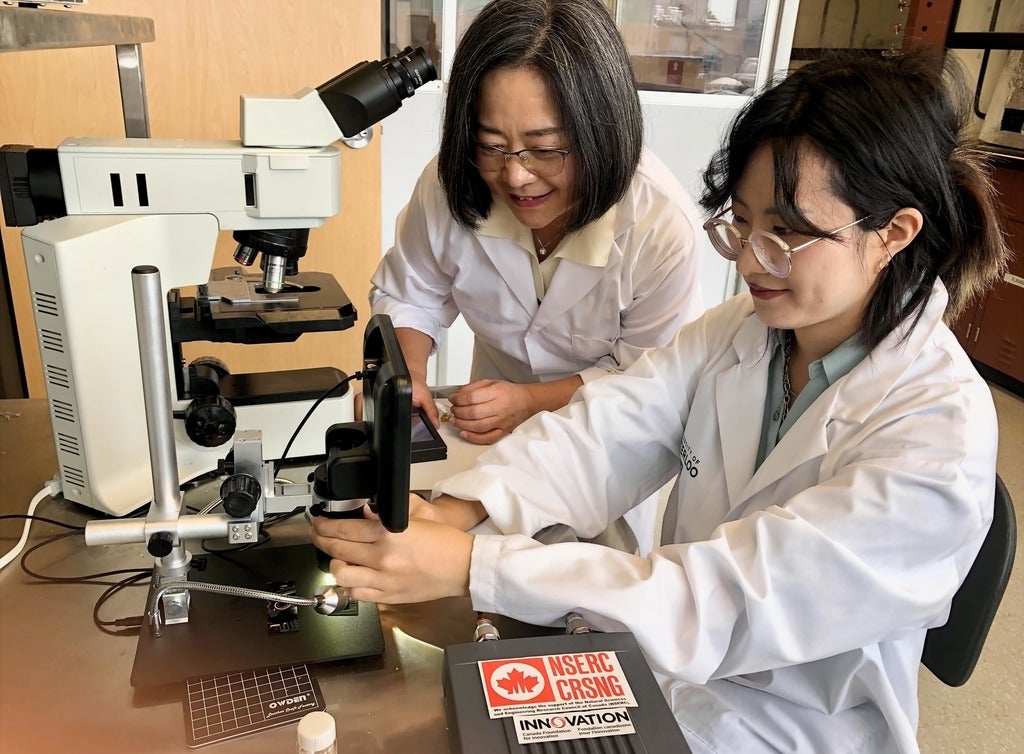
A palm-sized device developed by researchers at the University of Waterloo could help save lives and reduce illness by rapidly and inexpensively detecting toxic bacteria in water supplies.
Contamination caused by E. coli, a bacterium commonly found in the gastrointestinal tracts of mammals, causes an estimated 230 deaths and three million acute illnesses globally each year, mostly affecting babies and young children, according to a study from the National Institute of Health.