Waterloo researchers receive honour in recognition of research excellence
The Royal Society of Canada welcomes eight Waterloo researchers to the Class of 2026 of Fellows and College Members
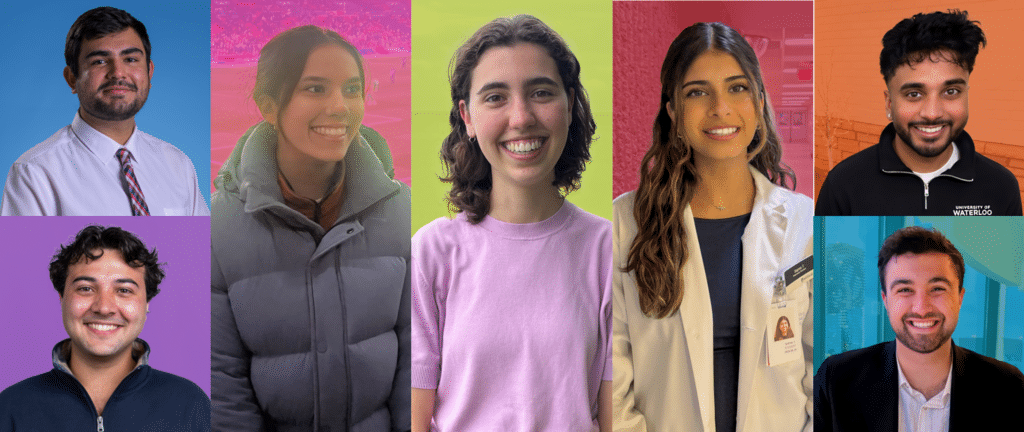
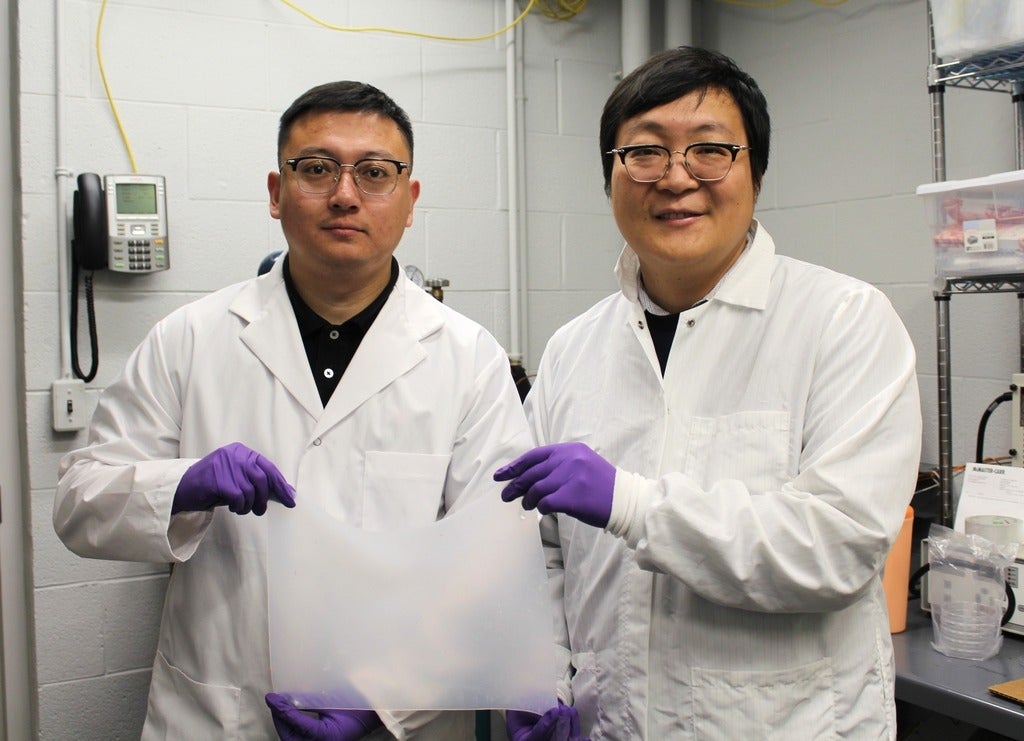
Eight University of Waterloo researchers have been elected as Fellows and College Members of the Royal Society of Canada (RSC), one of the country’s highest academic honours. The appointments recognize exceptional contributions to research, scholarship and innovation across a wide range of disciplines, from global governance and public health to artificial intelligence, cybersecurity and quantum neurobiology.
The University is also celebrating an additional RSC distinction: Dr. Geoffrey Fong, an RSC Fellow since 2017, is the second recipient of the Eric Jackman Prize in the Human Behavioural and Social Sciences, which recognizes path-breaking and sustained research that benefits society and informs public policy.
“Congratulations to Waterloo's new Royal Society of Canada Fellows and new Royal Society of Canada College Member on this outstanding achievement,” says Charmaine Dean, Vice-President, Research & International. “Recognition from the Royal Society of Canada marks an exceptional milestone for Canada’s leading researchers and highlights not only the strength of their research programs but also the significant contributions they make to Canada’s research ecosystem and beyond.”
Founded in 1882, the RSC comprises the Academy of Arts and Humanities, Academy of Social Sciences, Academy of Science and the RSC College. The RSC recognizes excellence, advises the government and the larger society, and promotes a culture of knowledge and innovation in Canada and with other national academies around the world.
These eight faculty members are among this year’s cohort of 159 exceptional scholars, artists and scientists from across Canada who will be formally inducted during the 2026 Celebration of Excellence and Engagement conference in Ottawa on November 13. The RSC is Canada’s senior academy, recognizing individuals whose achievements have made transformative contributions to the arts, humanities and sciences and public health.
RSC Eric Jackman Prize
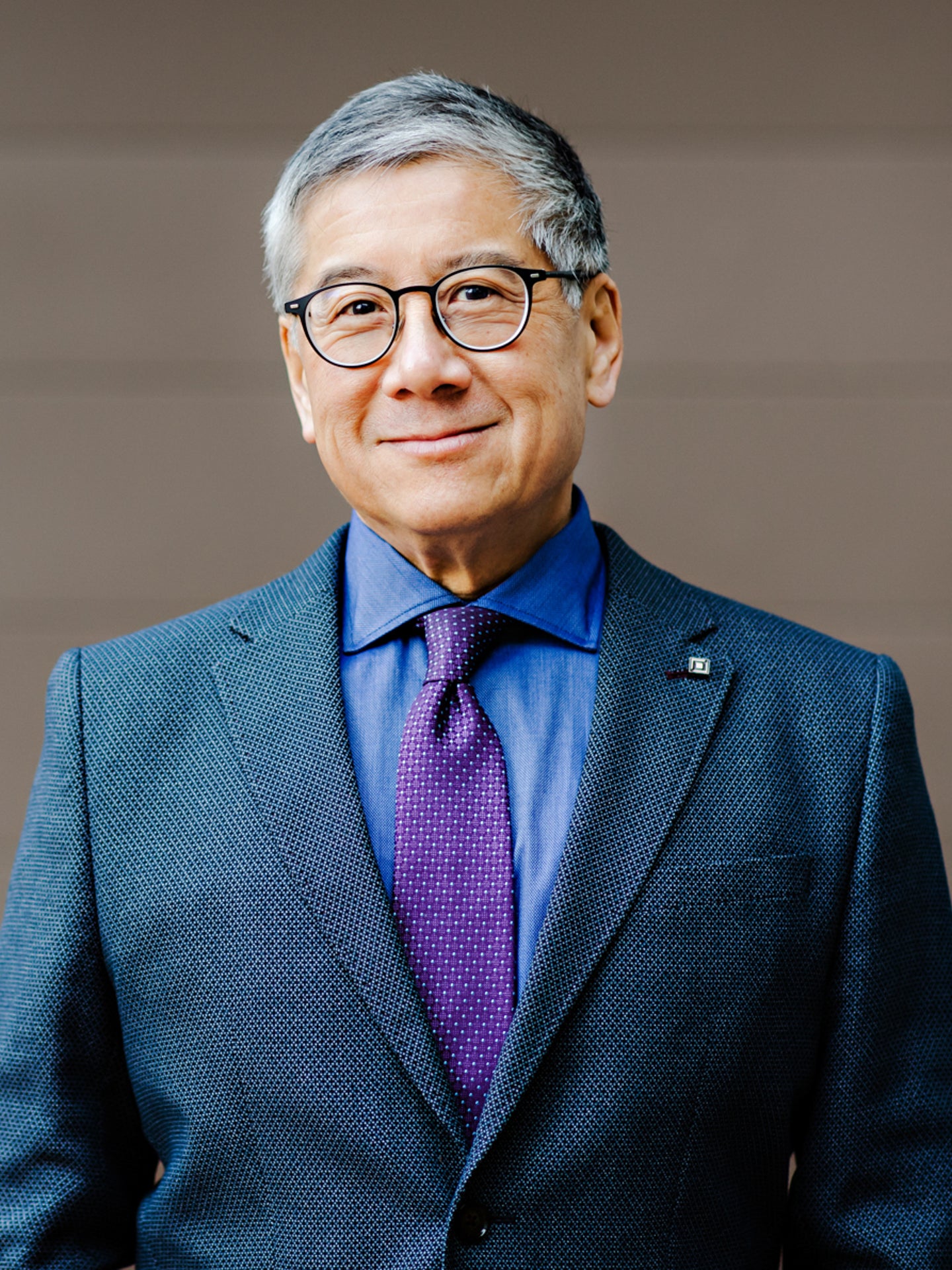
Dr. Geoffrey Fong is the second recipient of the Eric Jackman Prize in the Human Behavioural and Social Sciences, which "celebrates path-breaking and sustained scientific contributions to preventing harm, strengthening resilience or otherwise benefiting humankind through research in one or more behaviour and social science fields."
This prize recognizes Fong’s international leadership in tobacco control research and its impact on public health policy worldwide. He is Founder and Chief Principal Investigator of the International Tobacco Control Policy Evaluation Project (ITC Project), the world’s first international cohort study of tobacco use and tobacco control policy, which integrates theories and methods from the behavioural and social sciences into public health surveillance systems.
Through a collaboration of more than 150 researchers across 31 countries, the ITC Project has evaluated the effectiveness of tobacco-control policies implemented under the World Health Organization (WHO) Framework Convention on Tobacco Control, the world’s first public health treaty. The ITC Project examines the behavioural and psychosocial impact of major tobacco-control measures, including health warning labels, smoke free legislation, taxation policies, cessation programs and nicotine-product regulation.
Fong is University Professor of the School of Psychology and School of Public Health Sciences and a Senior Investigator at the Ontario Institute for Cancer Research.
Learn more about Fong’s research on the Faculty of Arts website.
Waterloo’s new Royal Society of Canada Fellows

Dr. Andrew Fenton Cooper (BA ‘72, MA ‘73) is a University Research Chair in the School of Social, Political and Historical Research, and a Professor at the Balsillie School of International Affairs (BSIA). An internationally recognized scholar of diplomacy, global governance and international institutions, his research examines how ascendant powers are reshaping world politics and multilateral cooperation.
Cooper’s work has influenced scholarship and policy discussions on major international summit forums, including the G20 and BRICS, as well as the recalibrated role of middle powers. Cooper has held visiting appointments at a number of institutions including Harvard University, the Australian National University and Stellenbosch University in South Africa. In 2009 Cooper was selected as the Canada-US Fulbright Research Chair, Annenberg Center, University of Southern California.
Cooper has contributed more than 250 total publications, including nine sole-authored books. Standing out among his 30 edited collections is The Oxford Handbook of Modern Diplomacy. His work has generated more than 12,500 total citations (Google Scholar), reflecting its extended reach and impact on the study of international relations. In 2019, he was named the inaugural recipient of the Distinguished Scholar Award from the Diplomacy Section of the International Studies Association.

Dr. Myra Annette Fernandes is a Professor in the School of Psychology. Her work integrates psychology, neuroscience and gerontology to understand how the brain dynamically coordinates systems to optimize memory. Her pioneering research has developed cognitive methods that enhance memory in younger and older adults, individuals with a history of concussion, and people living with dementia, pinpointing its brain basis using functional neuroimaging.
Fernandes’ multidisciplinary research addresses a pressing global health challenge: population aging and the associated rise in dementia and other forms of cognitive decline. Her work draws on a combination of behavioural, neuroimaging, and developmental methods to advance understanding of how memory works and build models of how it functions. Her research is supported by the Natural Sciences and Engineering Research Council of Canada (NSERC), the Canadian Institutes of Health Research (CIHR), and the Ontario Ministry of Research and Innovation.
Fernandes has co-authored more than 100 peer-reviewed articles, four books, and five book chapters. She is a past president of the Canadian Society for Brain, Behaviour and Cognitive Science, recipient of the inaugural Women in Cognitive Science Canada Mentorship Award and the Canadian Psychological Association’s President’s Researcher Award and currently serves as Chair of the internationally renowned Psychonomic Society.

Dr. Ian Goldberg is a Professor in the David R. Cheriton School of Computer Science and a Tier 1 Canada Research Chair in Privacy Enhancing Technologies. A leading expert in cybersecurity, cryptography and digital privacy, his research focuses on developing privacy-enhancing technologies (PETs) that help protect online communications, resist censorship and safeguard personal information in an increasingly connected world.
As a founding member of the Cryptography, Security, and Privacy (CrySP) research group, Goldberg has helped establish Waterloo as a global leader in privacy and security research. CrySP researchers study a wide range of topics, from designing cryptographic protocols to evaluating their effectiveness and usability in real-world systems.
Goldberg has authored or co-authored more than 100 publications and received more than 12,700 citations. In 2024, he was named a Fellow of the Association for Computing Machinery (ACM). The distinction recognizes his pioneering contributions to the development and deployment of PETs, including Off-the-Record Messaging, which was later adapted for mobile environments as the Signal Protocol. Today, the protocol underpins secure messaging for billions of users worldwide across platforms such as Signal, WhatsApp and Facebook Messenger.
Learn more about Goldberg’s research on the Cheriton School of Computer Science website.

Dr. David Hammond is a Professor in the School of Public Health Sciences and a global leader in tobacco control, substance use policy and nutrition policy research. He has received more than $100 million in research funding to conduct large international studies that evaluate the impact of public health policies and regulations on consumer behaviour.
Hammond has worked closely with policymakers across the globe and has served as an advisor to the World Health Organization (WHO). His research has helped shape policies on tobacco and vaping, cannabis legalization and nutrition policies, making him one of Canada’s leading voices in public health policy and population health.
Hammond has authored or co-authored more than 600 publications and he is among the most highly cited authors worldwide in the fields of social science and public health. His contributions have been recognized through numerous honours, including from the World Health Organization, the Canadian Cancer Society, the Canadian Medical Association and the Royal Statistical Society of Canada.
Learn more about his research at www.davidhammond.ca

Dr. Jimmy Lin is a Professor in computer science and holds the David R. Cheriton Chair in Software Systems. His research spans information retrieval, natural language processing and data management, with a focus on developing tools that help users make sense of large and complex datasets. He has made foundational contributions to question-answering systems, and more recently, the application of large language models to information seeking.
Throughout his career, Lin has focused on high-impact problems and translated scientific innovations into real-world applications. He also passionately advocates for reproducibility in the computational sciences by building and sharing software artifacts that encapsulate his innovations.
Lin is a prolific scholar who has authored or co-authored nearly 800 publications that have received more than 50,000 citations. He is an ACM Fellow, a Fellow of the Association for Computational Linguistics (ACL), and a member of the SIGIR Academy. Lin’s current research is exploring an emerging world where users seek knowledge in collaboration with software agents, which requires rethinking how we build search systems.
Learn more about Lin’s research on the Cheriton School of Computer Science website.

Dr. Robert Mann is a distinguished Professor Emeritus in the Department of Physics and Astronomy and a member of the Waterloo Centre for Astrophysics. As a theoretical physicist, his work focuses on testing gravitational theory, investigating the physical properties of black holes and advancing our understanding of quantum gravity. Mann has made influential contributions to the field, including black hole thermodynamics — often referred to as “black hole chemistry”, which revealed parallels between the behaviours of black holes and everyday chemical systems.
Mann leads a research group of graduate and undergraduate students studying fundamental questions about the nature of space, time and the universe. They collaborate closely with the Department of Applied Mathematics, the Perimeter Institute and the Institute for Quantum Computing, helping bridge theory and experiment in the pursuit of foundational discoveries in physics.
He has authored more than 600 publications and garnered more than 41,000 citations. In 2022, Mann was named a University Professor, one of Waterloo’s highest academic honours and the first faculty member from the Department of Physics and Astronomy to receive the distinction. He is also recognized as one of the founders of relativistic quantum information, a subfield that combines quantum information science and gravity to better understand the fundamental laws of the universe.
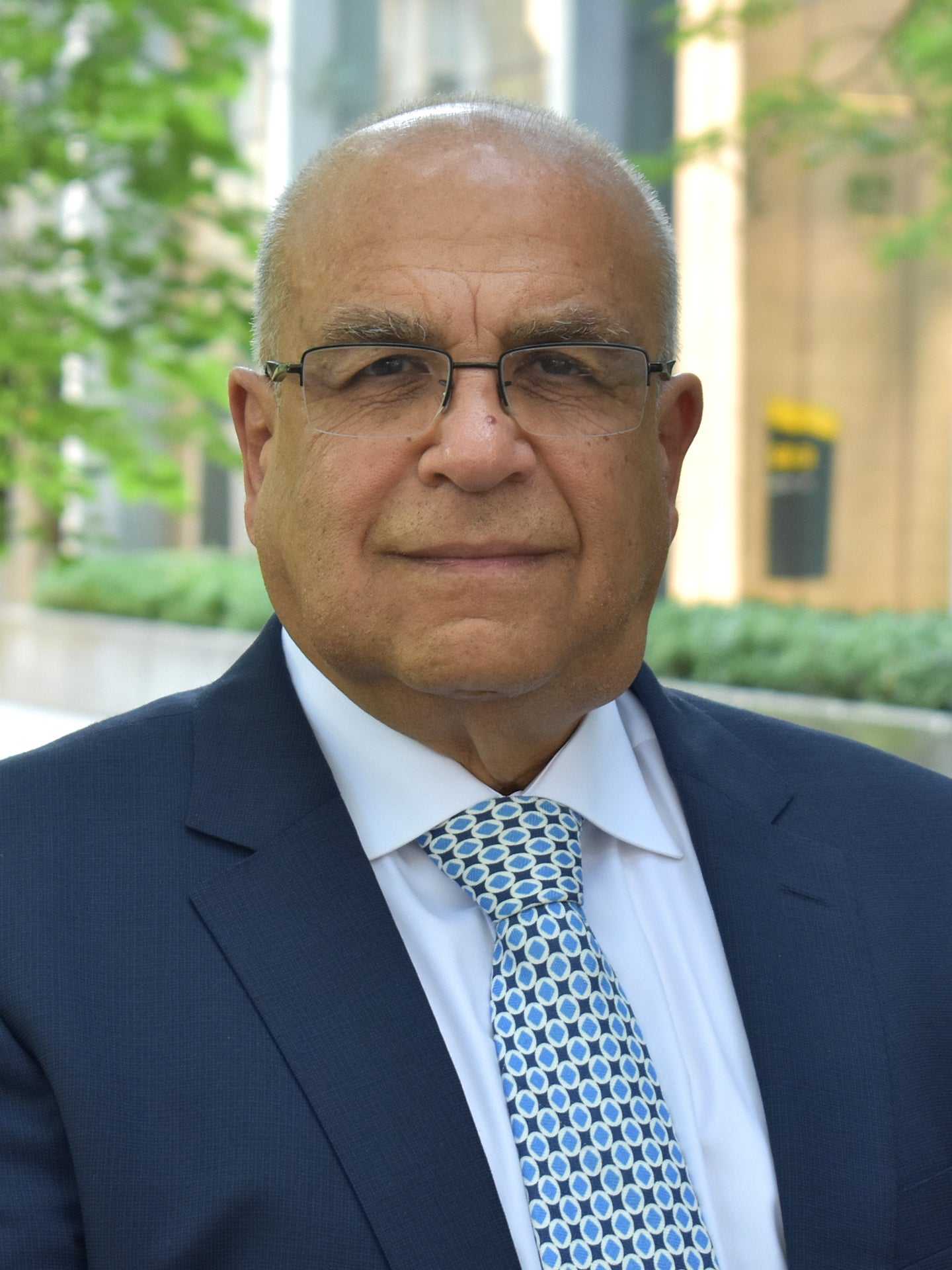
Dr. Raafat Mansour is a Professor in the Department of Electrical and Computer Engineering and an internationally recognized leader in radio-frequency (RF), microwave and micro-electromechanical systems engineering. His research has advanced high-performance communications technologies, nano-instrumentation and cryogenic RF hardware for quantum computing.
As founding Director of the Centre for Integrated RF Engineering, he helped establish Waterloo as a leader in RF and microsystems research. Throughout his career, Mansour has supervised 48 PhD students, 35 master’s students and 18 postdoctoral fellows, many of whom now hold leadership positions in academia and industry.
His work has also translated into commercial success through co-founding two companies with his graduate students including AdHawk Microsystems, a pioneer in eye-tracking technology and Integrated Circuit Scanning Probe Instruments (ICSPI-Corp), a company that develops desktop atomic force microscopes that accelerate scientific discovery and technology development. He recently joined QuantumCore’s strategic collaboration to advance cryogenic RF multiplexing microchips for quantum computing applications.
A prolific inventor and scholar, Mansour holds 37 U.S. and Canadian patents and has authored and co-authored more than 450 peer-reviewed publications, as well as a Wiley book that was translated to Mandarin in 2012. He is a Fellow of the Institute of Electrical and Electronics Engineers (IEEE), Canadian Academy of Engineering and the Engineering Institute of Canada. In 2014 he received Professional Engineers Ontario (PEO) Engineering Medal for Research and Development, the IEEE Canada A.G.L. McNaughton Gold Medal Award in 2019 and the IEEE MTT Society Distinguished Educator Award in 2026.
Waterloo’s new Royal Society of Canada College Members

Dr. Travis Craddock is a Professor in the Department of Biology and Tier 1 Canada Research Chair in Quantum Neurobiology. His interdisciplinary research combines biology, physics and computational science to investigate how information is processed at cellular and molecular levels. Craddock’s goal is to uncover new insights into brain health, neuroinflammation and neurodegenerative diseases such as Alzheimer’s disease and Parkinson’s disease.
Craddock is a leading scholar in the emerging fields of computational and quantum biology, bridging discoveries in fundamental science with potential applications in human health.
He has authored nearly 60 publications and received more than 3,200 citations. His research has advanced our understanding of neurodegenerative disease, molecular information processing and the biophysical mechanisms underlying brain function, positioning him among the pioneers of quantum neurobiology.
For a full list of recipients, visit the Royal Society of Canada website.