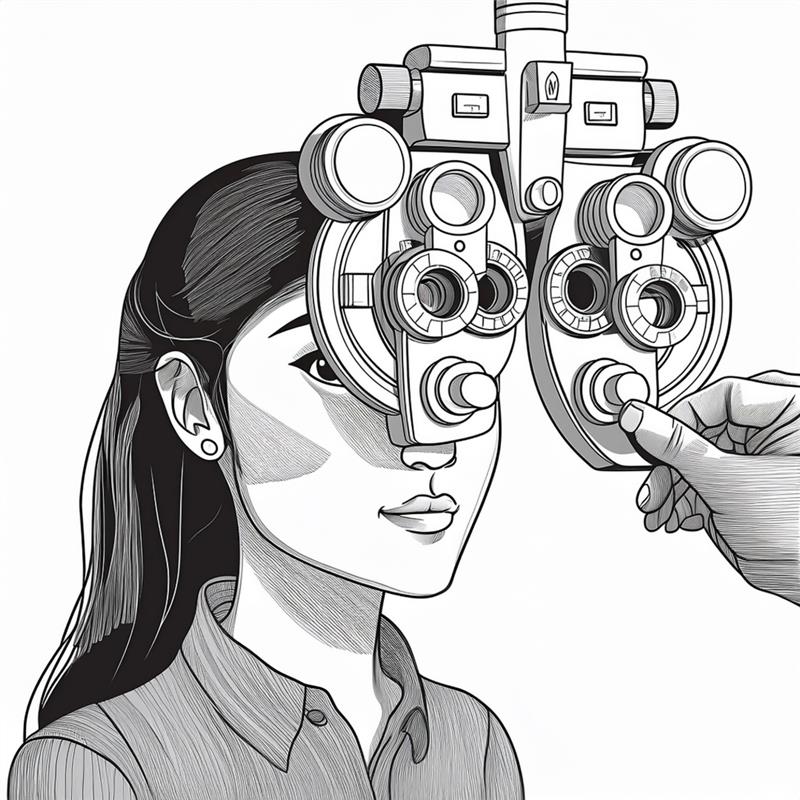
Imagine sitting in an optometrist’s chair. The phoropter swings into place, and the doctor begins flipping lenses. “Better one, or two?” With each adjustment, your vision sharpens—or blurs—until finally, clarity emerges.
This process is a powerful metaphor for how we perceive the world. Each of us views situations through a unique set of lenses—shaped by our experiences, values, and, inevitably, our biases. Just as the wrong lens can distort vision, unchecked biases can cloud our understanding of people and events. But with intentional reflection and adjustment, we can move closer to clarity—and fairness.
Perception and Bias: The Lenses We Wear
Perception is not passive. It’s an active process of interpreting the world, deeply influenced by cognitive shortcuts and emotional filters. Bias—whether implicit or explicit—can act like a smudge on a lens, subtly altering what we see and how we respond.
We all carry biases. They’re not inherently malicious; they’re part of how our brains process information efficiently. But when left unexamined, they can lead to unfair judgments, miscommunication, and harm — especially in environments where equity and trust are essential.
Fairness as Clarity
Fairness, then, is not about achieving a single, objective truth. It’s about striving for clarity — acknowledging that our initial view may be incomplete or distorted and being willing to adjust our lens. Like the optometrist, we must test different perspectives, ask questions, and listen carefully to others’ experiences.
In Canadian post-secondary institutions, fairness is often framed using the Fairness Triangle: fair process, fair decision, and fair service. This model, adapted by ombudspersons across Canada, encourages institutions to consider not just outcomes, but how those outcomes are reached and communicated. (Sharpe, 2015).
The Ombudsperson: A Guide Toward Clarity
Enter the Ombudsperson—an impartial, confidential, and independent resource within the university. Their role is not to take sides, but to help students and institutions navigate conflict, miscommunication, and perceived unfairness.
Like the optometrist, the Ombudsperson helps individuals examine their situation through different lenses. They ask clarifying questions, explore policies and procedures, and help all parties see the full picture. Their goal is not to prescribe a solution, but to empower individuals to find clarity and resolution.
Choosing the Right Lens
Fairness is not a fixed destination—it’s a practice. It requires humility, curiosity, and a willingness to adjust our view. By acknowledging our biases and seeking clarity, we can create spaces where fairness is not just an ideal, but a lived experience.
Just like in the optometrist’s chair, the question remains: “Better one, or two?” The answer lies in our willingness to keep looking—until we see clearly.
--
References
- Sharpe, N. (Ed.). (2015). Fairness is everyone’s concern: A sampling of practices and resources on cultivating fairness from your ombuds community (Version 2). Association of Canadian College and University Ombudspersons (ACCUO). http://accuo.ca/wp-content/uploads/2017/07/FairnessGuide2015.pdf
- Farrell, N. (2002). Administrative fairness checklist for decision-makers. Toronto Metropolitan University. https://www.torontomu.ca/content/dam/ombudsperson/documents/Administrative%20Fairness%20checklist.pdf
- Canadian Council of Parliamentary Ombudsman. (2022). A bid for fairness [Podcast transcript]. https://ccpo-ccop.ca/wp-content/uploads/2022/12/A-Bid-For-Fairness-EN-accessible-1.pdf