Minzee Kim and Sidharth (Sid) Bajaj have published a new research article in JMIR Aging, highlighting interdisciplinary work at the intersection of statistics, health technology, and aging.
Their article, “Personalized Predictive Model to Predict Subtask Success of Medication Adherence Technologies for Older Adults With Diverse Capabilities: Development and Internal Validation Study,” is the result of a collaboration with Dr. Tejal Patel’s lab at the School of Pharmacy. The study focuses on improving medication management for older adults by evaluating how different technologies perform for individuals with varying abilities.
The research examined a range of medication adherence technologies (MATs) designed for older adults, a population that often faces cognitive, physical, sensory, motivational, and environmental barriers to effective medication management. Kim led the development of personalized predictive models aimed at estimating the likelihood of success for individual MAT subtasks across users with diverse capabilities. She implemented two logistic regression models integrating SMAT vision scores and DLTV summary vision scores.
“Working on this project was an exciting opportunity to extend my research in personalized predictive modeling to another discipline,” said Kim. “Collaborating with researchers from different fields allowed me to broaden my perspective on how statistical methods can be translated into practical solutions that support medication management for older adults.”
As additional data were collected, Bajaj conducted a comprehensive evaluation of the modeling approaches. He compared personalized, non-personalized, and naïve baseline models using cross-validation methods. Through simulation-based analyses, Bajaj identified optimal tuning parameters and demonstrated that the personalized predictive models consistently outperformed both the non-personalized and naïve models. Notably, the naïve baseline showed no performance advantage over the proposed personalized approaches.
“This project provided a valuable opportunity to apply model selection techniques commonly taught in statistics courses to a real-world problem,” Bajaj noted. “The work was particularly engaging because it required a deeper investigation of personalization as a methodology, including optimizing personalization hyperparameters and rigorously comparing tuned personalized models with their non-personalized counterparts.”
The findings underscore the value of personalized predictive modeling in health technology design and highlight the impact of interdisciplinary collaboration in addressing real-world challenges faced by older adults.
Congratulations to Minzee Kim and Sidharth Bajaj on this accomplishment.
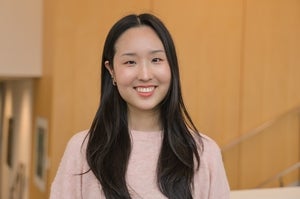
About Minzee Kim
Minzee Kim is a recent PhD graduate from the Department of Statistics and Actuarial Science. She was a graduate consultant at the SCSRU. Her research interests include personalized prediction modelling and longitudinal data analysis.

About Sidharth Bajaj
Sid is a 3rd year PhD student at the Department of Statistics and Actuarial Science. He is currently one of the graduate consultants at the SCSRU. His research interests lie broadly within the field of online-learning