
The Water Institute and the Faculty of Engineering are pleased to present a Visiting Scholar Lecture, Invertebrates under pressure: From pesticides to heatwaves, presented by Dr. Johannes Raths, Postdoctoral scientist, Department Environmental Chemistry, Swiss Federal Institute of Aquatic Science and Technology (Eawag), Dübendorf, Switzerland.
E2-2350
Lecture: 2:00 - 3:00 pm
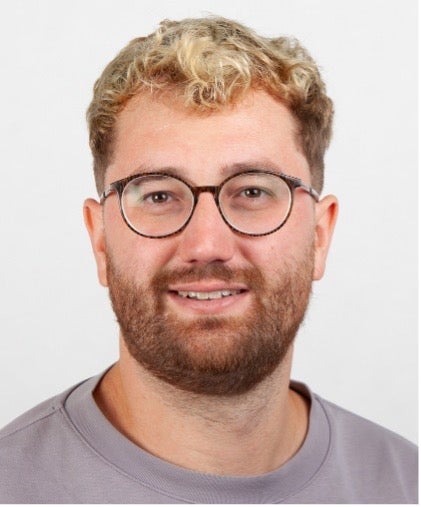
Speaker Bio
Dr. Johannes Raths (he/him) is an environmental chemist working at the interface of chemical pollution and climate change. He completed his PhD in 2023 from ETH Zürich. He is based at the Swiss Federal Institute of Aquatic Science and Technology (Eawag) and in his research asks how much of a contaminant ends up inside an organism, by which pathways and under which environmental conditions -- the toxicokinetic link between external exposure and toxic effect. His talk will present findings from his research on how warming and heatwaves affect the bioaccumulation of the neonicotinoid thiacloprid in aquatic invertebrates. His work has been recognized through several prestigious awards, including the Rifcon Early Career Scientist Award (Best paper, SETAC Europe 2023, Dublin) and the Otto Jaag Water Protection Prize (Best PhD thesis, ETH Zürich, 2025).
Dr. Raths' work stretches from molecular mechanisms (i.e. receptor binding) to field and mesocosm studies, using aquatic invertebrates such as Gammarus pulex and Hyalella azteca as model systems. He combines trace analysis of pesticides, pharmaceuticals and PFAS in complex matrices (online-SPE-LC-HRMS/MS, MS imaging) with mechanistic multi-compartment modelling.
If you’re interested in meeting with Dr. Raths during his visit (October 13 to November 13), please contact Dr. Maricor Arlos at maricor.arlos@uwaterloo.ca.
November 12, 2026 Workshop Details:
Bioaccumulation in Aquatic Organisms - From One-Compartment Toxicokinetic Models to Real-World Complexity
Half-day workshop (4 h) on bioaccumulation theory and exercises on TK modelling
Bioaccumulation in Aquatic Organisms - From One-Compartment Toxicokinetic Models to Real-World Complexity Toxicokinetic (TK) processes (including uptake, elimination and transformation) determine the internal concentration of an organism exposed to a contaminant - thereby linking exposure and effects. In this half-day, hands-on workshop you will learn to analyze toxicokinetic data and to extend the classic one-compartment model step by step towards real-world complexity.
Short lectures alternate with guided modelling exercises on curated experimental datasets.
What you will learn
- Fit TK models and derive parameters such as kinetic rate constants and bioconcentration factors (BCFs)
- Account for the effect of temperature on toxicokinetic processes and predict bioaccumulation under different climate conditions
- Model biotransformation with parent-metabolite models
- Explore multi-compartment kinetics, e.g. elimination resistance through receptor binding
- No prior experience with bioaccumulation or programming is needed - ready-to-use scripts and datasets are provided.
Audience: Master Students, PhD students, postdocs. Format: Half-day (4 h, 13:00-17:00); please bring your own laptop - software installation instructions
will be sent in advance
Date: 12th November 2026, 13:00 - 17:00
Location: E2-2350
Contact: johannes.raths@eawag.ch; maricor.arlos@uwaterloo.ca