Collaborative Water Program students present integrated solutions to Canada’s pressing water challenges
As part of the Collaborative Water Program’s WATER 601 course, student teams delivered final presentations featuring integrated water management solutions to complex water challenges, sharing their ideas with a panel of experts from the University of Waterloo and the Canada Water Agency (CWA). The exercise goes beyond a typical class assignment. It asks students to think across disciplines, weigh ecological, social and economic trade-offs and deliver practical recommendations that could inform real policy and practice.
Each team of four students explored a pressing issue facing Canadian water systems, reflecting the growing need for approaches that connect water science, engineering, economics and governance and maximize policy and community impact. The current cohort of CWP students originate from the Faculties of Engineering, Science, Environment and Arts.
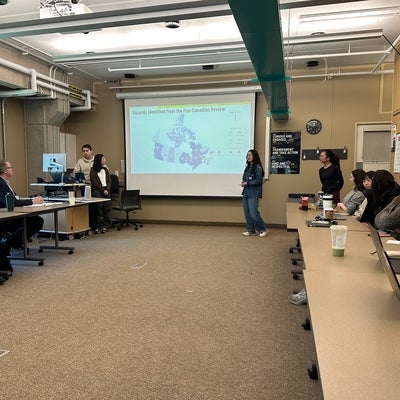
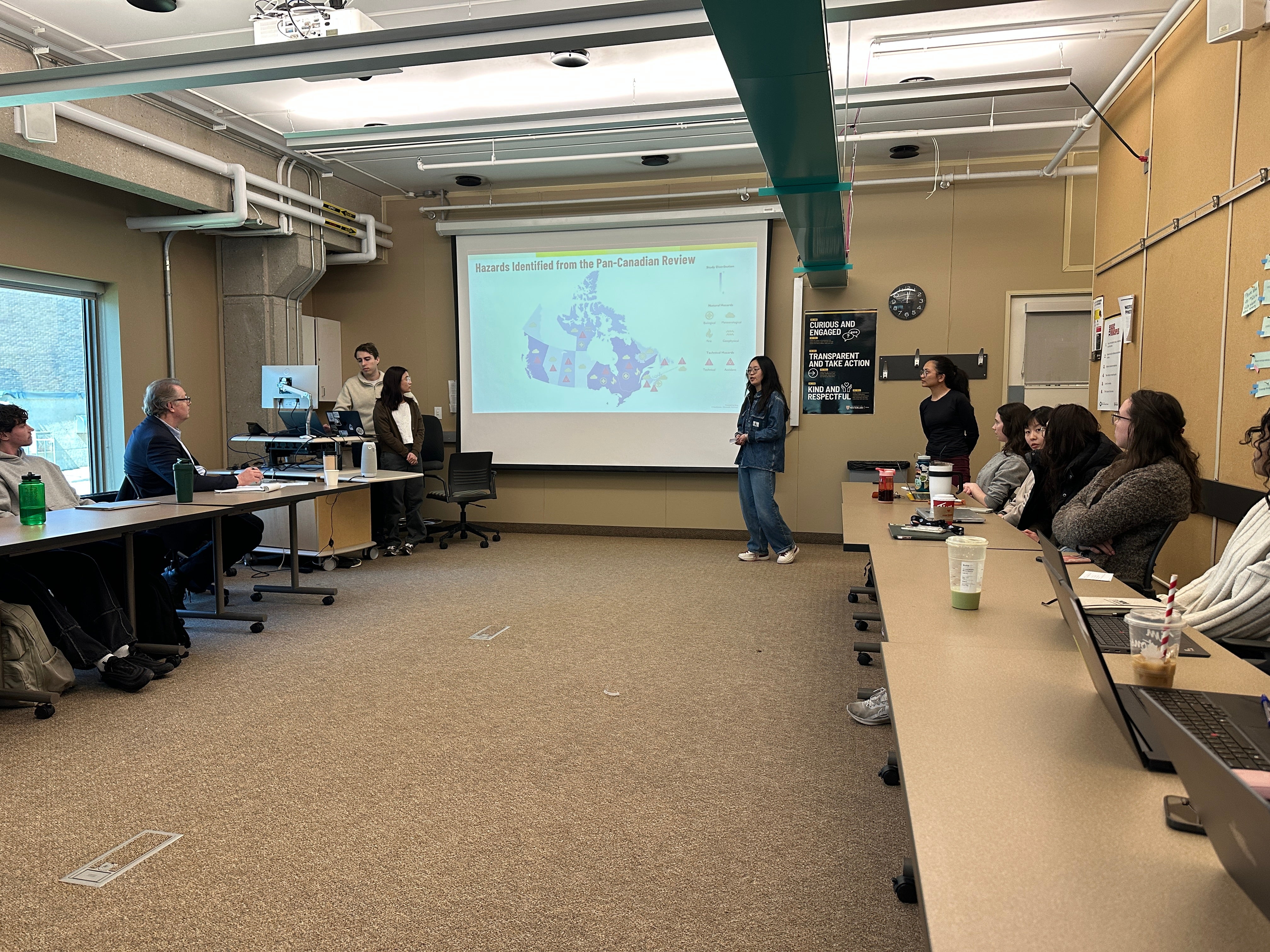
Ben DePetris, Eloisa Sia, Madeline Ho and Xi Feng explored challenges facing safe drinking water access in Canada through an integrated water management lens. Taking a pan-Canadian perspective, they examined key risks to drinking water systems, with a focus on small, rural and Indigenous communities. Their work highlighted how climate change, pollution, aging infrastructure and limited local capacity intersect with governance gaps and lack of community buy-in. Grounded in a community-based case study, the team emphasized a two-eyed seeing approach that centres local context and shifts the focus from infrastructure to building community capacity. Their recommendations included better reflecting community needs in policy, strengthening engagement and advancing partnerships to support more equitable, sustainable outcomes.
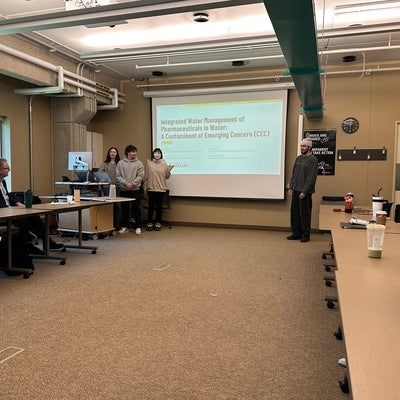
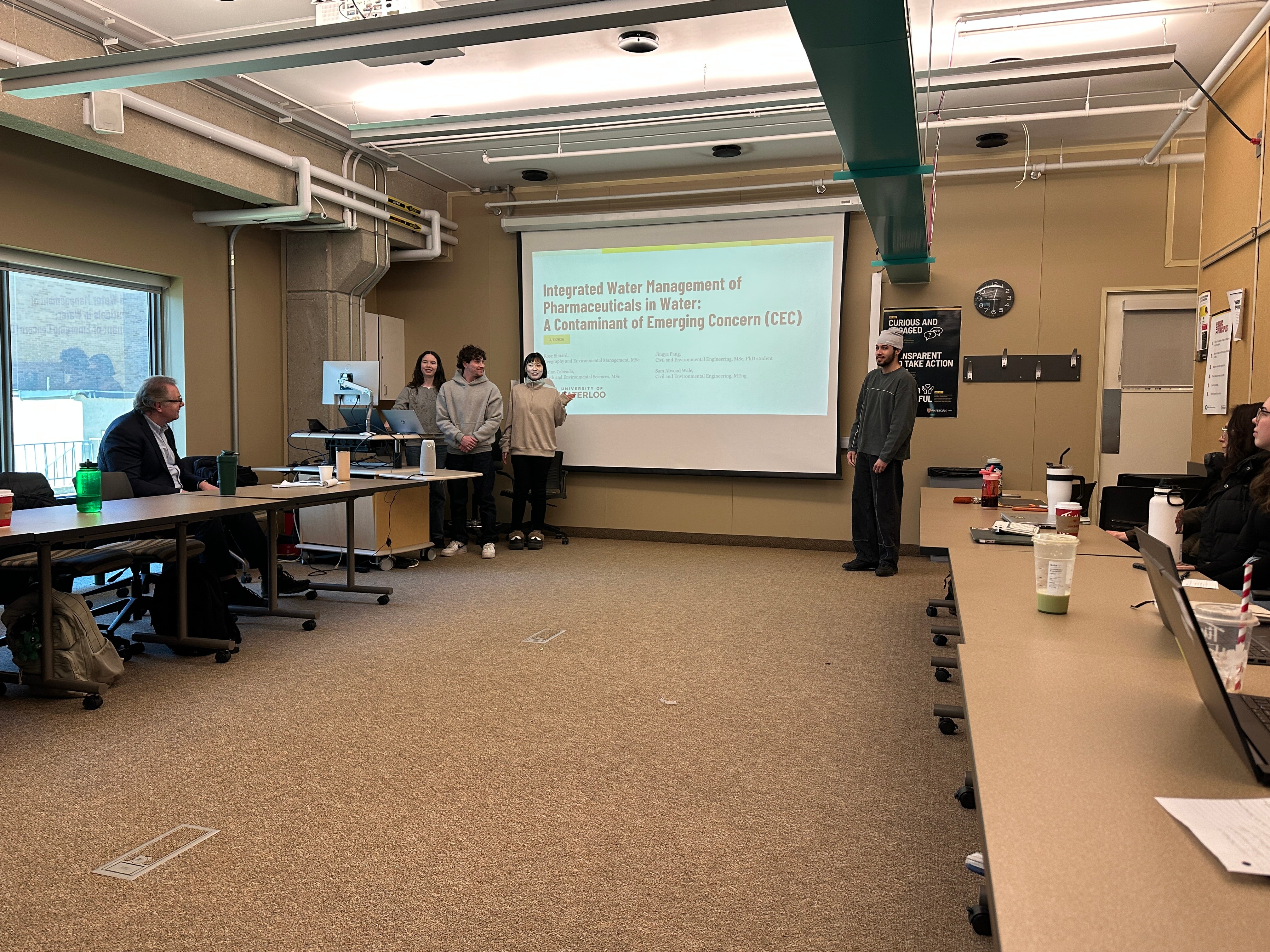
A second team, comprised of Quinn Cabenda, Jingya Pang, Rose Simard and Sam Atwood Wale, focused on pharmaceuticals in water. These compounds, which enter waterways mainly through wastewater systems and agricultural runoff, are an emerging global concern. The group identified key drivers, including rising use in both human and veterinary care, and proposed practical, coherent interventions (Figure 1). These included establishing clear targets and accountability for managing contaminants, preventing pharmaceuticals from entering water bodies and advancing treatment approaches to remove them once in the system.
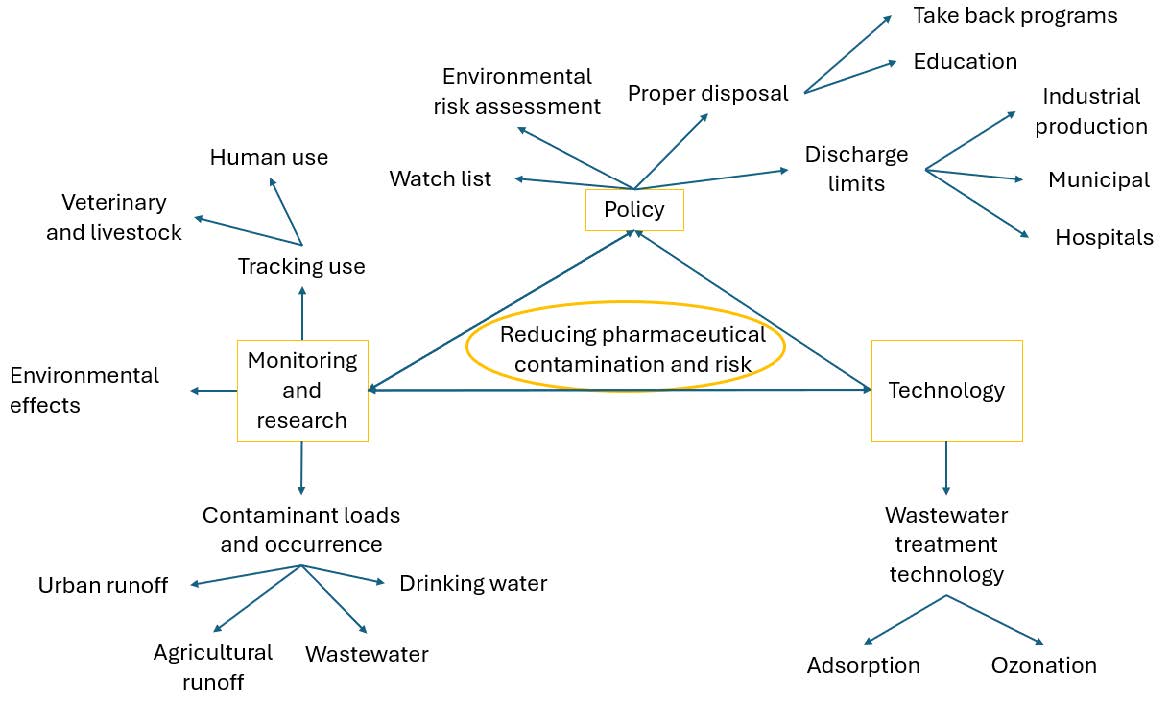
Figure 1: Integrated water management of pharmaceuticals as a contaminant of emerging concern.
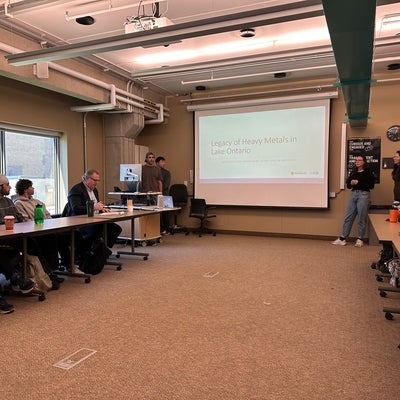
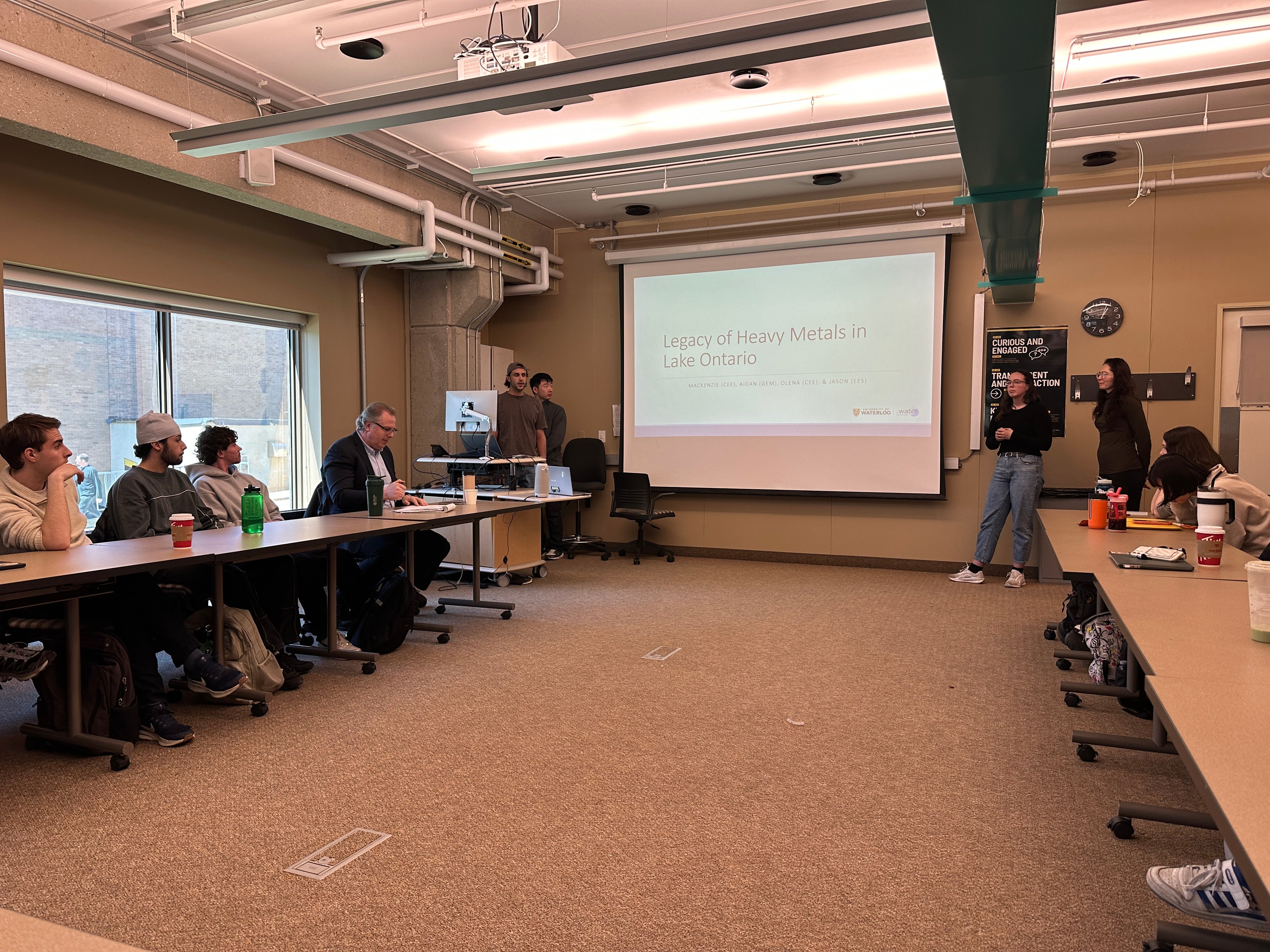
Closer to home, a third team, consisting of Mackenzie Rosebrugh, Aidan Iapicco, Olena Krutenko and Jason Zhu, explored the legacy of heavy metals in Lake Ontario. Drawing on historical data and literature, they examined how contaminants such as mercury, arsenic, cadmium and lead persist due to decades of industrial and urban activity. Their analysis highlighted long-term declines in some metal concentrations alongside ongoing legacy contamination, particularly in sediment hotspots across Areas of Concern (Figure 2). The team underscored the complexity of managing a binational waterbody and identified governance gaps, including the need for stronger cross-border coordination and sustained monitoring. They proposed targeted, risk-based remediation strategies such as dredging, in-situ capping and nature-based approaches, alongside investments in wastewater and stormwater infrastructure to prevent recontamination and support long-term ecosystem recovery.
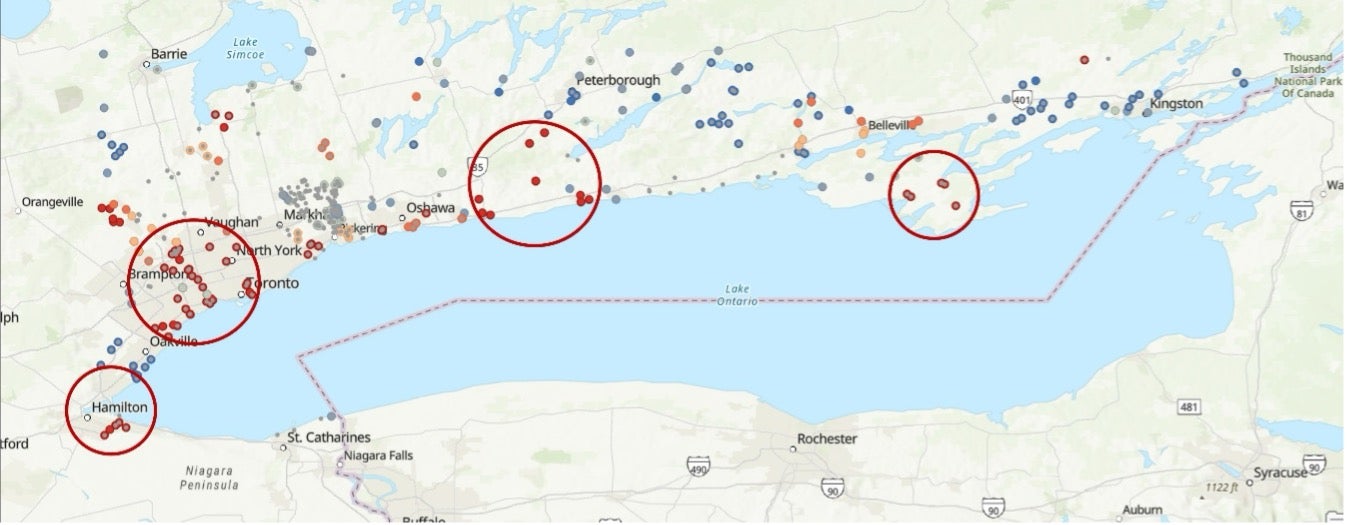
Figure 2: Hot spot analysis based on long-term analysis of heavy metal concentration data between 1964-2024.
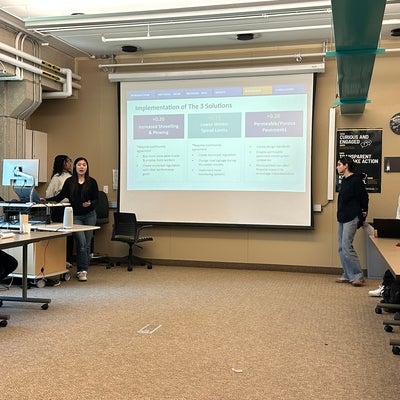
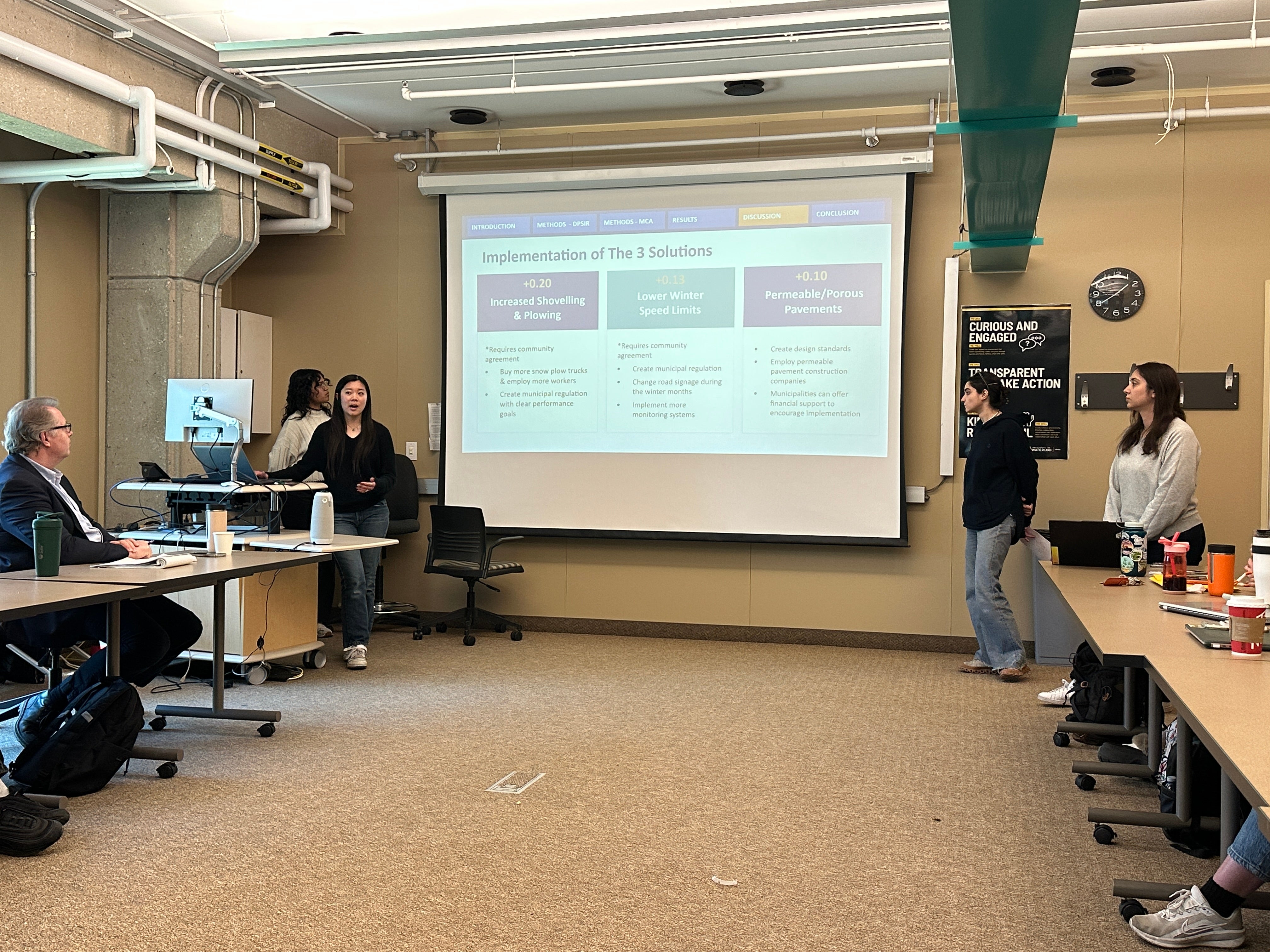
The fourth team included Puvaanah Arrumugam, Keira Hum, Golshid Jalili and Mahta Nazari and examined the widespread use of road salt across urban areas in Ontario. While critical for winter safety, road salt can damage infrastructure, degrade water quality and harm aquatic ecosystems, with downstream impacts on drinking water (Figure 3). The team assessed a range of alternatives, including increased shovelling and plowing, reduced winter speed limits and permeable pavements, evaluating their environmental, economic and social impacts and trade-offs. They presented practical, evidence-informed recommendations such as alternative de-icing approaches and improved application practices that could reduce environmental impacts without compromising public safety.
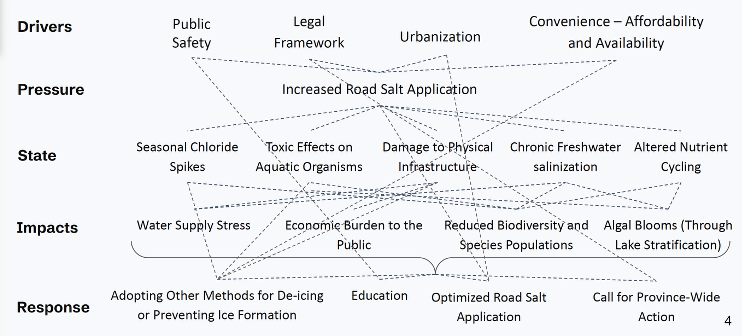
Figure 3: Driving Force-Pressure-State-Impact-Response (DPSIR) framework applied to road salt application in Ontario.
Across all presentations, a clear message emerged: the investigated water challenges are complex and interconnected, shaped by environmental, social and economic factors. Students were asked to move beyond their disciplinary comfort zone by adopting multiple disciplinary perspectives in defining the root causes underlying the problems, identify key stakeholders involved and propose practical, realistic solutions based on integrated water management principles. Each team delivered a 10-minute briefing followed by questions from the expert panel consisting of Faculty members from Science, Engineering, Environment, and Arts, a CWA Senior Policy Advisor and the Water Institute Knowledge Mobilization Specialist, giving them the chance to explain and refine their ideas in real time. By engaging with experts beyond academia, such as the CWA, Collaborative Water Program students gain insight into how water decisions are made in practice while strengthening their ability to communicate complex ideas and integrated solutions clearly. This way the WATER 601 experience is helping students prepare for real world challenges and learn how to make an impact through interdisciplinary collaboration.
Below: Photos from the Collaborative Water Program Water 601 end-of-term final presentations.