forWater Insights Forum reflects on a decade of collaboration and looks ahead to what’s next
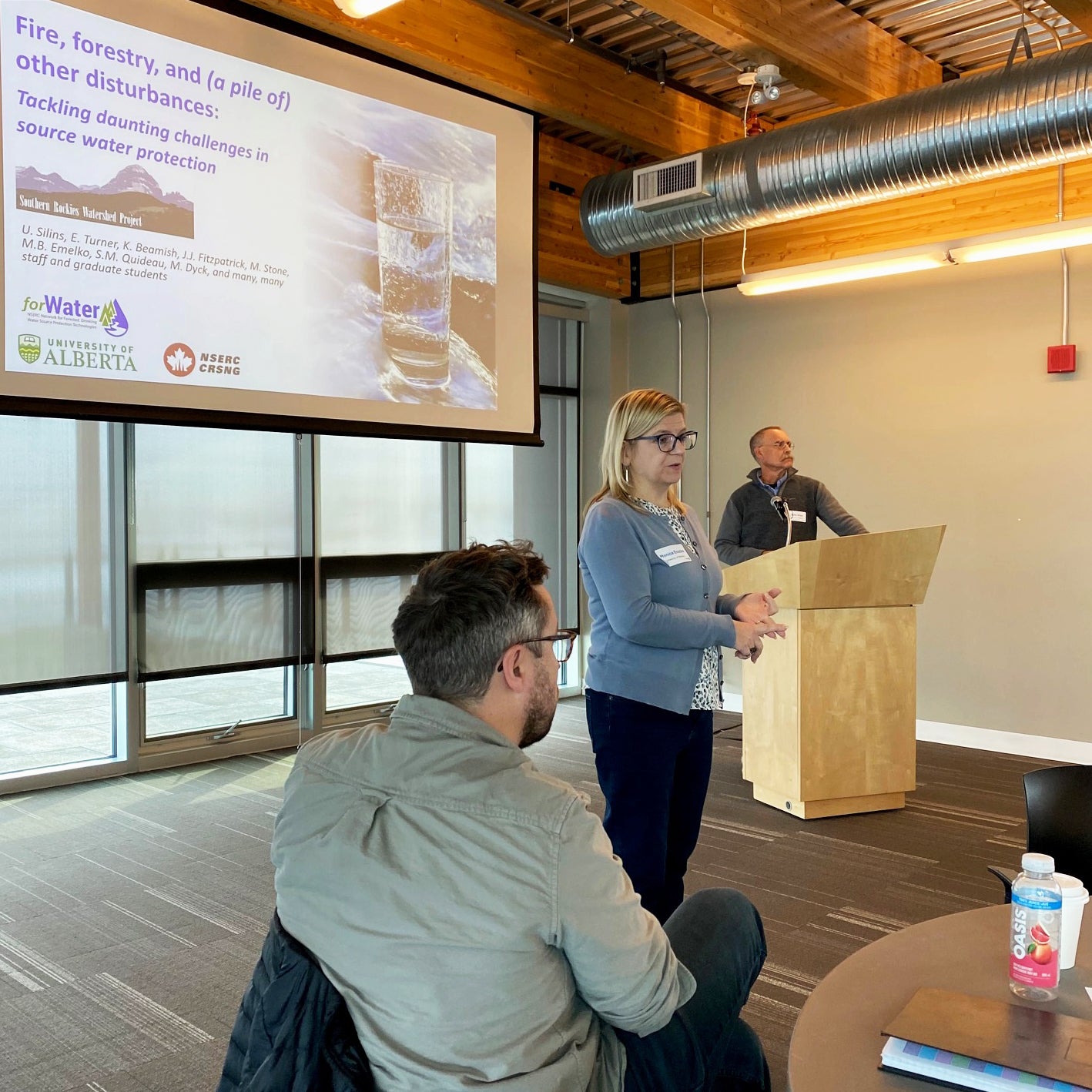
Researchers and community partners gathered in Calgary on November 26 and 27 for the forWater Network Insights Forum. Established in 2017 as a national network dedicated to advancing science on forested drinking water sources, forWater used this event to mark the conclusion of its initial research program and reflect on nearly a decade of collaboration. The two-day forum, held at the city’s Ralph Klein Park Environmental Education Centre, brought together members of the forWater Network and partners from across Canada to share research, identify emerging challenges, and plan next steps for forest water protection efforts.
Monica Emelko, Professor in the Department of Civil and Environmental Engineering and forWater Principal Investigator, opened the forum by reflecting on the growing impact of climate-driven disturbances on forested drinking water sources and the importance of sustained, coordinated research. She highlighted the strength of the forWater Network as both a scientific collaboration and training platform. Since its launch, the Network has supported 44 undergraduate students and funded 62 graduate degrees, helping build a new generation of water researchers and practitioners. That training effort has translated into more than 50 refereed journal articles and over 180 conference presentations, including 53 invited talks, underscoring forWater’s influence on international conversations about drinking water protection.
The first day featured lightning talks on forest harvesting, watershed hydrology, dissolved organic carbon transport, and the implications of disturbance for downstream water quality, treatability and treatment costs. Speakers from the University of Waterloo, University of Alberta and McMaster University highlighted project findings on watershed processes across ecozones. Discussions emphasized how disturbances can increase drinking water treatment complexity and costs, and, from an economic perspective, the substantial benefits of sustainable forested watershed management, particularly in terms of avoided treatment costs for municipalities. A lunchtime student poster session showcased emerging research and provided a valuable opportunity for students and partners to exchange ideas.
Partner presentations from municipal and regional organizations added real-world perspectives and research mobilization experiences. Antoine Rempp from the Regional Municipality of Wood Buffalo and Norma Ruecker from the City of Calgary spoke about managing drinking water sources after wildfire and applying research findings in practice. Work continues with forWater researchers to better adapt to continued impacts from the 2016 Horse River wildfire on source water quality and drinking water treatment. Cyanobacteria have been detected in the reservoir each summer since the fire, and changes in organic carbon are influencing how the water is treated. Most recently, cyanotoxins have been detected. The research is helping the municipality mobilize forWater research insights regarding reservoir management to design innovative approaches for reducing risks to drinking water.
The second day focused on integrated insights from the forWater Network. Presentations addressed pan-Canadian trends and critical linkages in identifying unique landscape features that can impact watershed resilience to climate shocks.
The forum concluded with a synthesis session to set priorities for the coming years and the next chapter for the forWater Network. The importance of integrating risk characterization for diverse water uses was highlighted and continued knowledge gaps in understanding cost implications were discussed. Universal consensus indicated that these are key future directions for the Network. The final discussion explored continued collaboration and commitment across the forWater community.
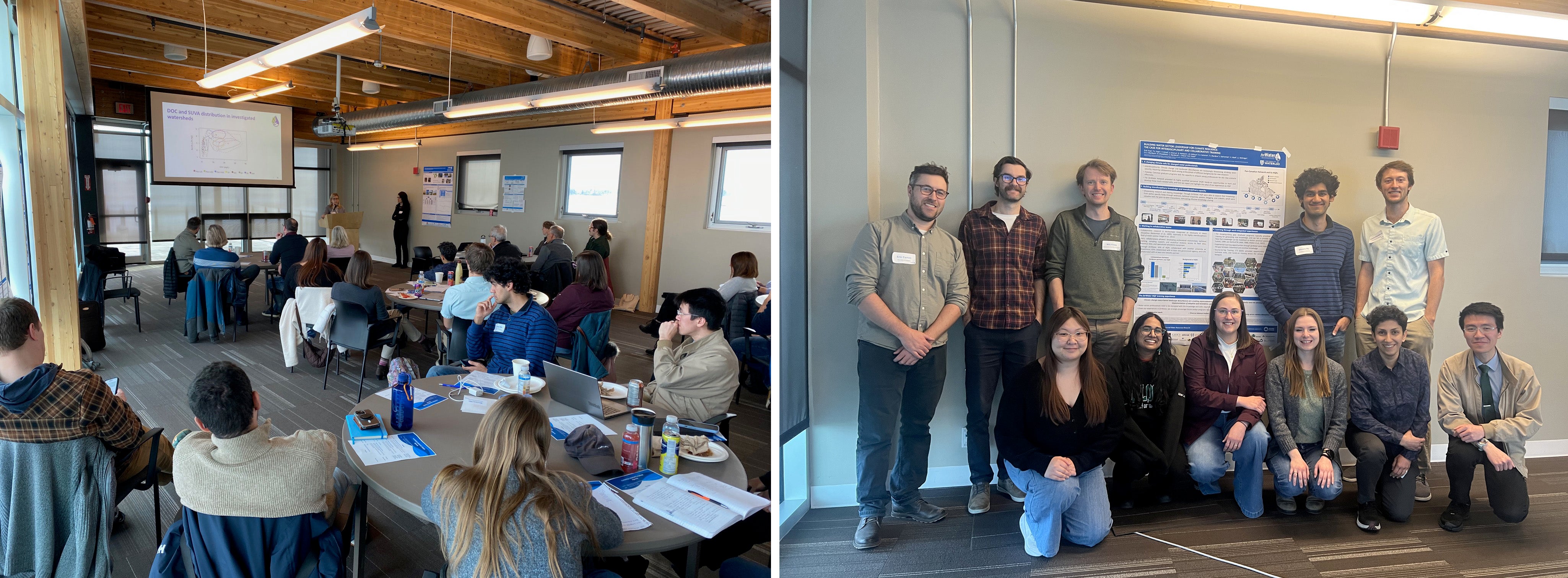
Photo L) Project meeting participants, R) forWater student researchers.
Banner photo: Interpretive Centre, Ralph Klein Park, Calgary, Alberta