Living with scarcity: Researching Bauru, Brazil’s hidden water systems

A WaterLeadership Snapshot
WaterLeadership Snapshots feature articles written by graduate students participating in the Water Institute’s WaterLeadership training series. Students describe the value of their research and its potential for real world impact.
This article brings together the work of two graduate students studying water scarcity in Bauru, Brazil, from complementary perspectives. One examines the fragile groundwater systems beneath the city and the risks created by aging infrastructure. The other investigates how households cope when the formal water supply becomes unreliable. Together, their research reveals how hidden water systems, both underground and within homes, are sustaining the city, while also creating new risks and inequities.
Beneath the Surface: Groundwater Scarcity in Brazil
By Fernanda Souto Barreto
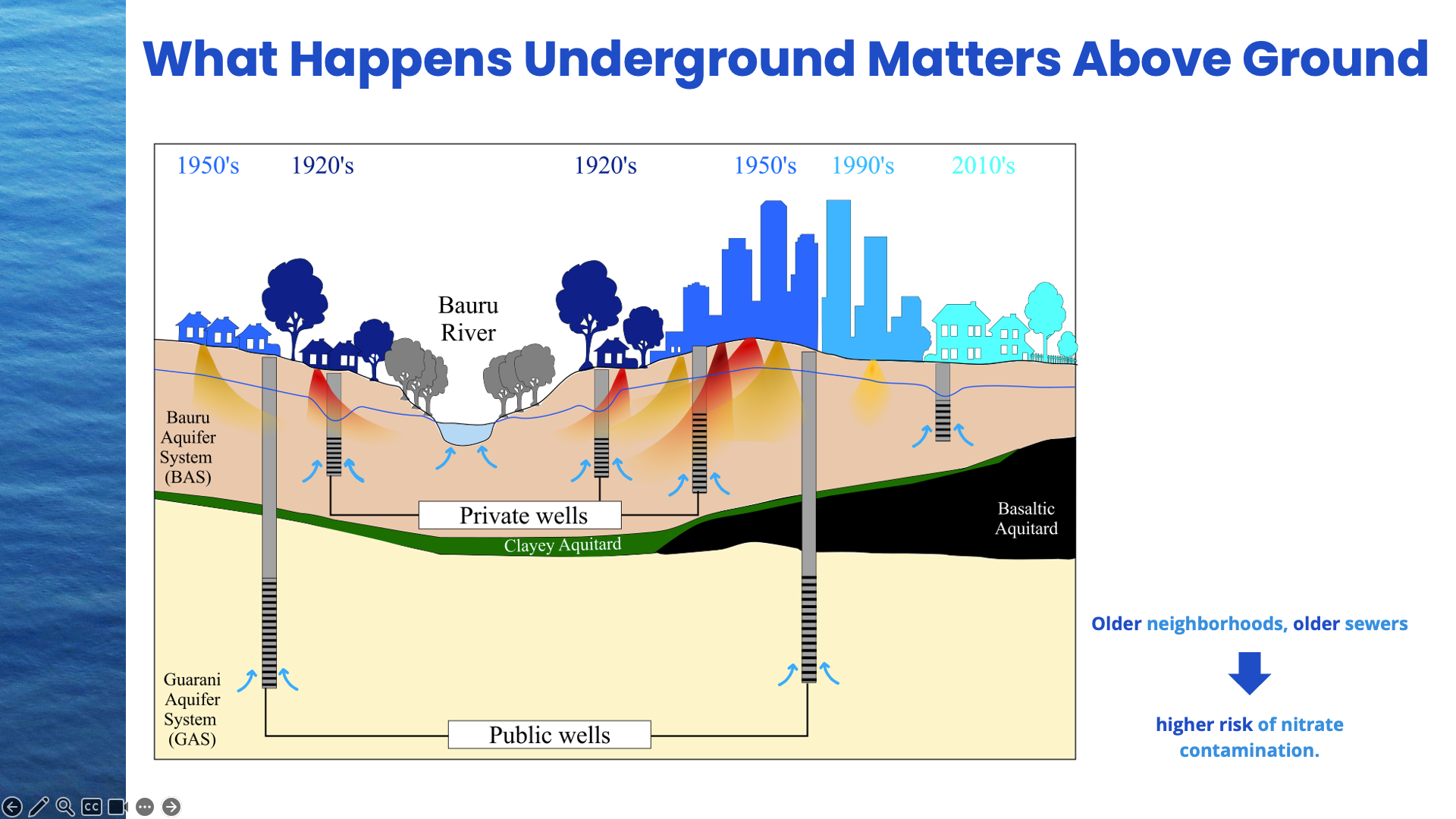
Imagine turning on your tap and finding it dry. For residents in Bauru, Brazil, this isn’t a hypothetical scenario; it is a recurring reality. While the city relies on the Batalha River for 35% of its supply and the deep Guarani Aquifer for the rest, the public system is under immense strain. Frequent shortages and rationing have forced the community to take matters into their own hands, drilling over 600 private wells into a shallower, more accessible source: the Bauru Aquifer System (BAS).
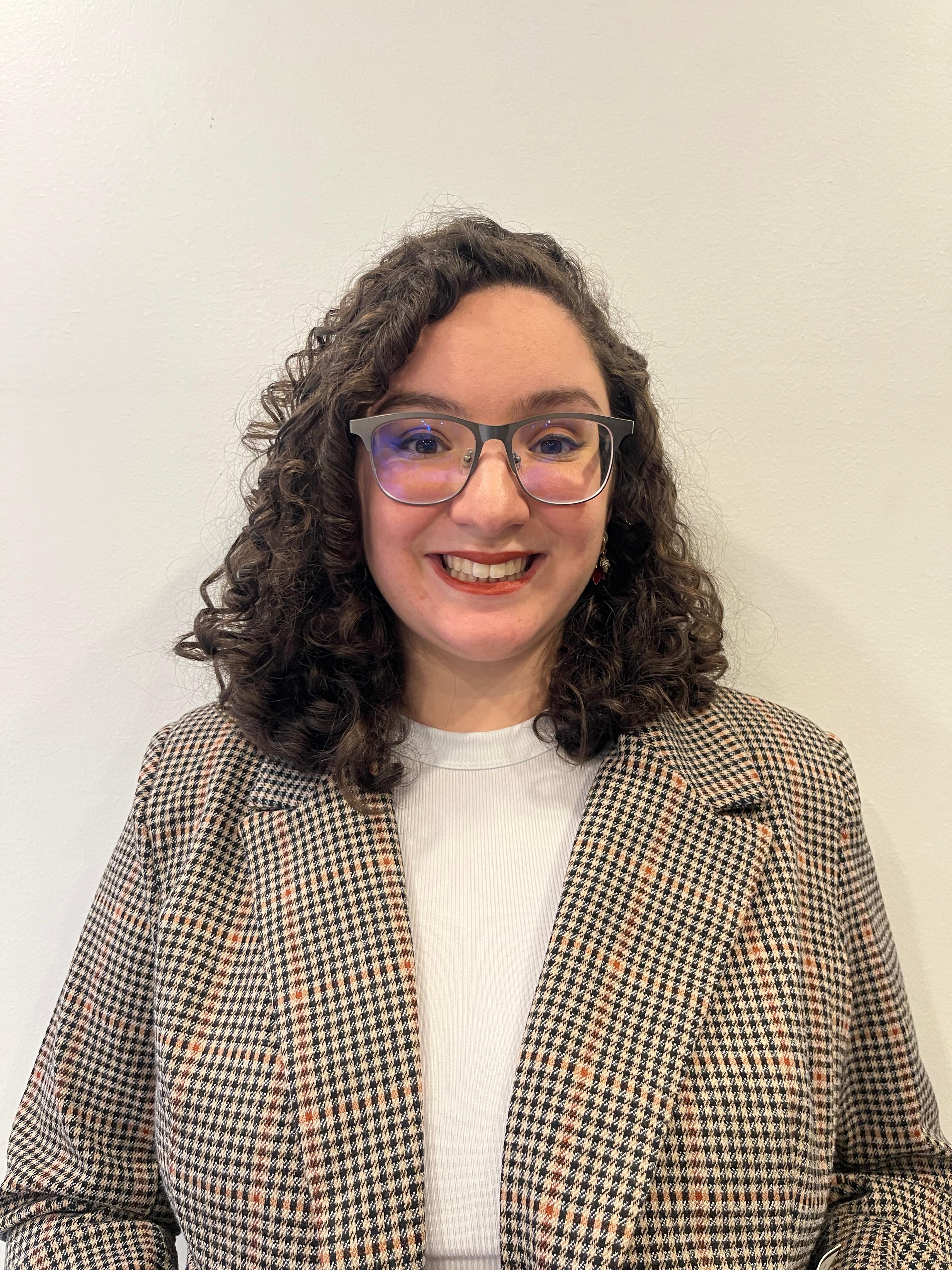
Fernanda Souto Barreto, Visiting PhD Student.
This shallow aquifer has become the city’s “invisible reservoir,” an indispensable resource for local water security. However, there is a catch. This vital water source is located directly beneath an aging city with a crumbling secret.
As cities grow, the infrastructure buried beneath them often struggles to keep up. In Bauru’s historic downtown, the sewage network is aging. Decades of wear and tear have created contamination hotspots where untreated wastewater leaks into the soil.
Managing this risk requires precision. Studying diffuse pollution sources, leaks that are scattered, hidden, and hard to detect, is a major challenge in urban hydrogeology. To tackle this, Barreto established a research field site in the heart of Bauru’s oldest district. By focusing on known leak sources, the research team is mapping the behavior of nitrogen species, chemical fingerprints of sewage, as they travel through the subsurface. The research is not just looking at current pollution levels, it is piecing together a historical puzzle to understand how nitrogen loads accumulated over years of urban expansion.
Barreto’s goal is to identify priority zones where the interaction between leaks and the water table is most critical. By understanding how nitrogen transforms from ammonium to nitrate in these environments, we can help city planners prioritize which pipes to fix first. Ultimately, this research is about resilience. We cannot simply turn off the pumps to the Bauru Aquifer System. Instead, we must manage the coexistence of urban infrastructure and groundwater to keep this lifeline safe.
How Cities Cope When Water Supply Breaks Down
By Fernando Schuh Rörig
While groundwater sustains Bauru beneath the surface, households are quietly assembling their own water systems above ground. This second study is led by Fernando Schuh Rörig, an International Visiting Graduate Student at the University of Waterloo, who examines how people cope when piped water supplies become unreliable.
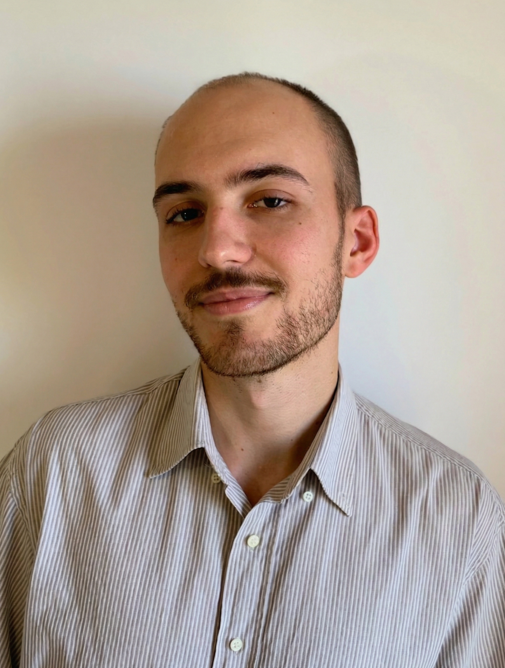
Fernando Schuh Rörig, Visiting PhD Student.
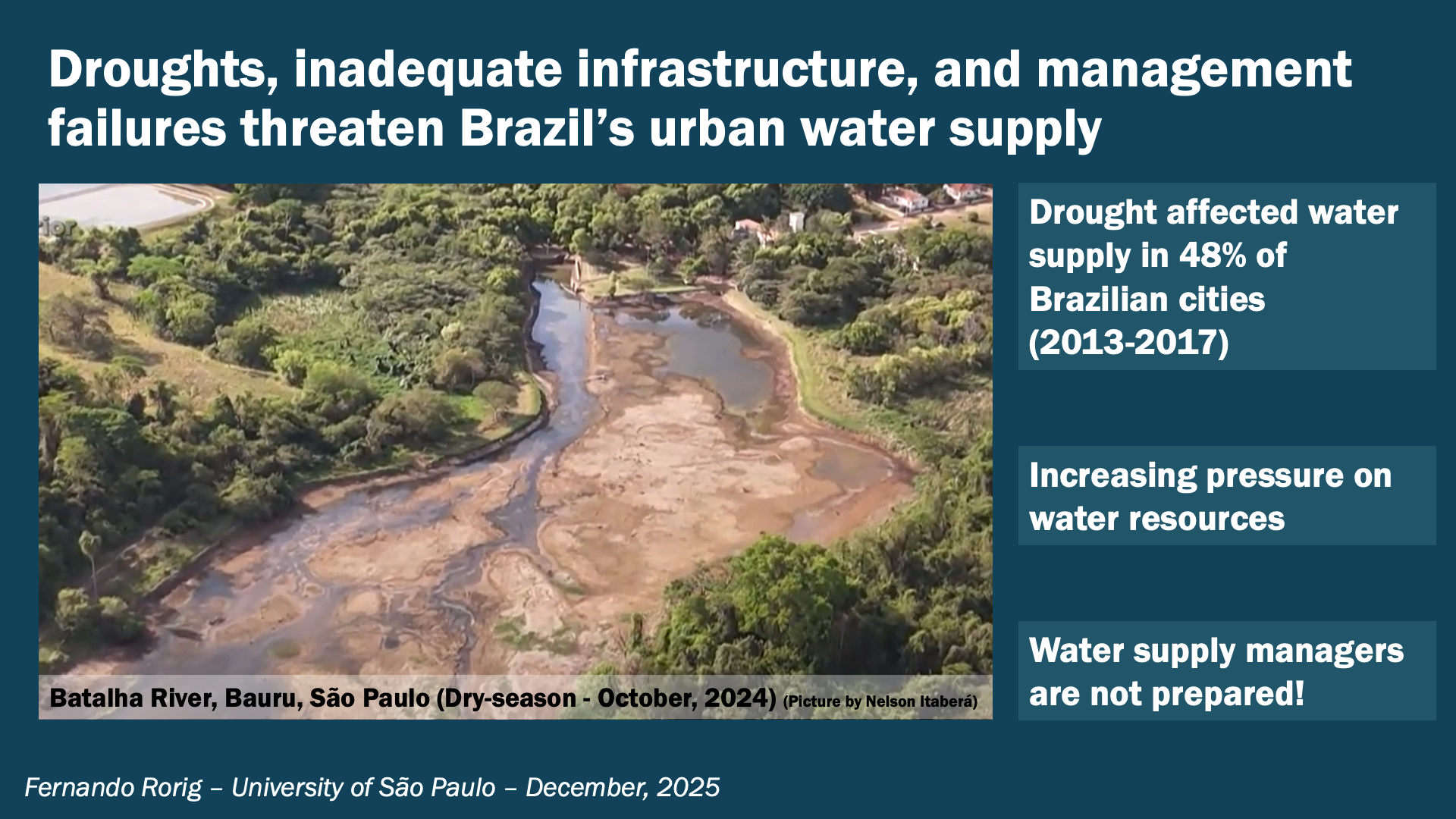
Water scarcity is a recurring feature of life in many cities. We are entering a state of global water bankruptcy, where rivers and aquifers are used beyond recoverable limits. In Brazil, dry conditions affect multiple cities, including the São Paulo megacity, currently under drought, threatening large-scale supply interruptions, with serious consequences for well-being, the economy, and ecosystems.
Most water planning still assumes that a piped connection means an adequate service. In reality, supply often becomes intermittent. Households assemble hidden backup systems, including private wells, bottled water, water trucks, and rainwater harvesting. These parallel sources can protect families, but they are often invisible to utilities and planners.
That invisibility matters. It can distort demand data, as apparent drops in consumption reflect substitution rather than reduced need. It can also deepen inequality: higher-income households can drill wells or install storage, while lower-income families rely on expensive stopgaps like bottled water or truck deliveries, paying more for worse reliability.
As part of the SACRE Project, this research links household consumption patterns, neighborhood characteristics, and exposure to interruptions in Bauru. The findings show that scarcity strongly shapes behavior. Private wells can improve security for wealthier households, while disadvantaged residents face higher costs. Ongoing household surveys aim to inform water management strategies that better reflect people’s experiences, values, and vulnerabilities in an era of growing water scarcity.
Acknowledgements
This research is part of the SACRE Project, an international collaboration that includes The Water Institute at the University of Waterloo as a key partner, and is supported by the São Paulo Research Foundation (FAPESP) [Grant 2020/15434-0]. Thanks to our supervisors and the technical team at CEPAS/University of São Paulo for their support in the field and laboratory analysis.
Banner image: Batalha River, Bauru, São Paulo Dry-season by Miguel Filho.