Mapping tomorrow’s floods today: New tools for a changing climate
Building better flood resilience through science and innovation
As climate change fuels more extreme rainfall and flooding, protecting Canada’s communities, infrastructure, and ecosystems depends on understanding where and how severely floods will strike. But in many regions, especially where historical data is limited, predicting the likelihood of rare, high-impact floods remains a major challenge.
A new University of Waterloo-led project is taking aim at this critical knowledge gap. Backed by $595,000 in recent federal funding, the team is developing advanced model-based flood analysis methods to improve how Canada estimates the uncertain magnitude of low-frequency flood events, such as 50-year, 100-year, and 200-year floods—the kinds of extreme floods that can overwhelm infrastructure and put lives at risk.

The project, entitled “Improved model-based techniques for estimating low-frequency flood event magnitudes across Canada,” is led by Water Institute member Dr. James Craig, Professor and Canada Research Chair in Hydrologic Modelling and Analysis, inCivil and Environmental Engineering.
Craig is working alongside fellow Water Institute researchers:
- Bryan Tolson, Professor, Civil and Environmental Engineering (Co-Investigator)
- John Quilty, Assistant Professor, Civil and Environmental Engineering (Co-Investigator)
- Jonathan Romero-Cuellar, Postdoctoral Fellow, Civil and Environmental Engineering (Research Associate)
Together, the team will develop advanced modelling approaches that integrate hydrological science, artificial intelligence, and high-performance computing to support more accurate, nationally consistent flood hazard mapping.
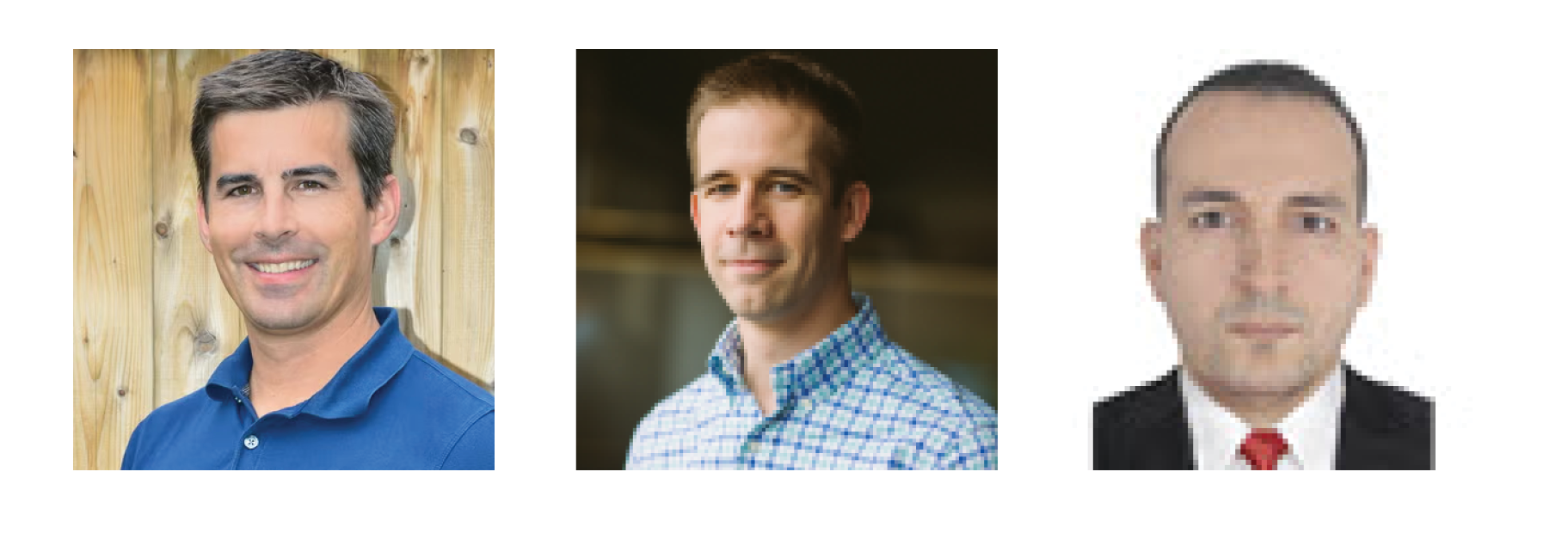
L) Bryan Tolson, Professor, Civil and Environmental Engineering (Co-Investigator), (M) John Quilty, Assistant Professor, Civil and Environmental Engineering (Co-Investigator), (R) Jonathan Romero-Cuellar, Postdoctoral Fellow, Civil and Environmental Engineering (Research Associate).
Capturing the complexity of Canada’s flood risks
Previous methods for estimating flood magnitudes often fall short when it comes to handling complex conditions such as snowmelt-driven floods, rain-on-snow events, frozen ground contributions, or upstream reservoir operations, factors that are common across Canada’s diverse watersheds. They also tend to neglect the inevitable presence of uncertainty.
The Waterloo team will apply process-based hydrological models, machine learning techniques, and hybrid approaches to capture these dynamics, generating more realistic flood estimates in areas where streamflow data is limited or unavailable. At the same time, the models will respect and integrate existing historical flood data where it exists, improving reliability.
Critically, these models are designed to evolve. As new information becomes available—whether it’s changes in land cover, improved reservoir operation data, or new measurements of flood events, the models can be refined, offering communities and decision-makers continuously improving flood hazard insights.
“Reservoir operations, land use, forest cover, and climate all evolve over time. It is essential that our estimates of flood magnitude can evolve accordingly,” says project lead James Craig.
Supporting national climate resilience
This work directly supports Canada’s National Adaptation Strategy goals of improving flood hazard mapping and reducing disaster risk. The improved methods and tools developed by the Waterloo team will help engineers, planners, and governments better identify flood-prone areas, update floodplain maps, and design infrastructure and emergency plans that reflect the realities of a changing climate.
“We believe that this collaborative effort to both quantify uncertainty in flood magnitudes and reduce the uncertainty in our flood magnitude estimates will help to both improve public safety and protect critical infrastructure,” says Craig.
With more extreme weather on the horizon, these tools represent a powerful step forward in protecting Canada’s people, communities, and natural landscapes from future flood risks.