POSEIDON: Transforming water quality data into actionable insights
Water Institute members, Dr. Nandita Basu and Dr. Julie Mai, recently hosted a webinar showcasing the POSEIDON Water Quality Portal, a collaborative platform that uses artificial intelligence (AI) to transform water quality data into actionable insights for researchers, watershed managers, and communities.
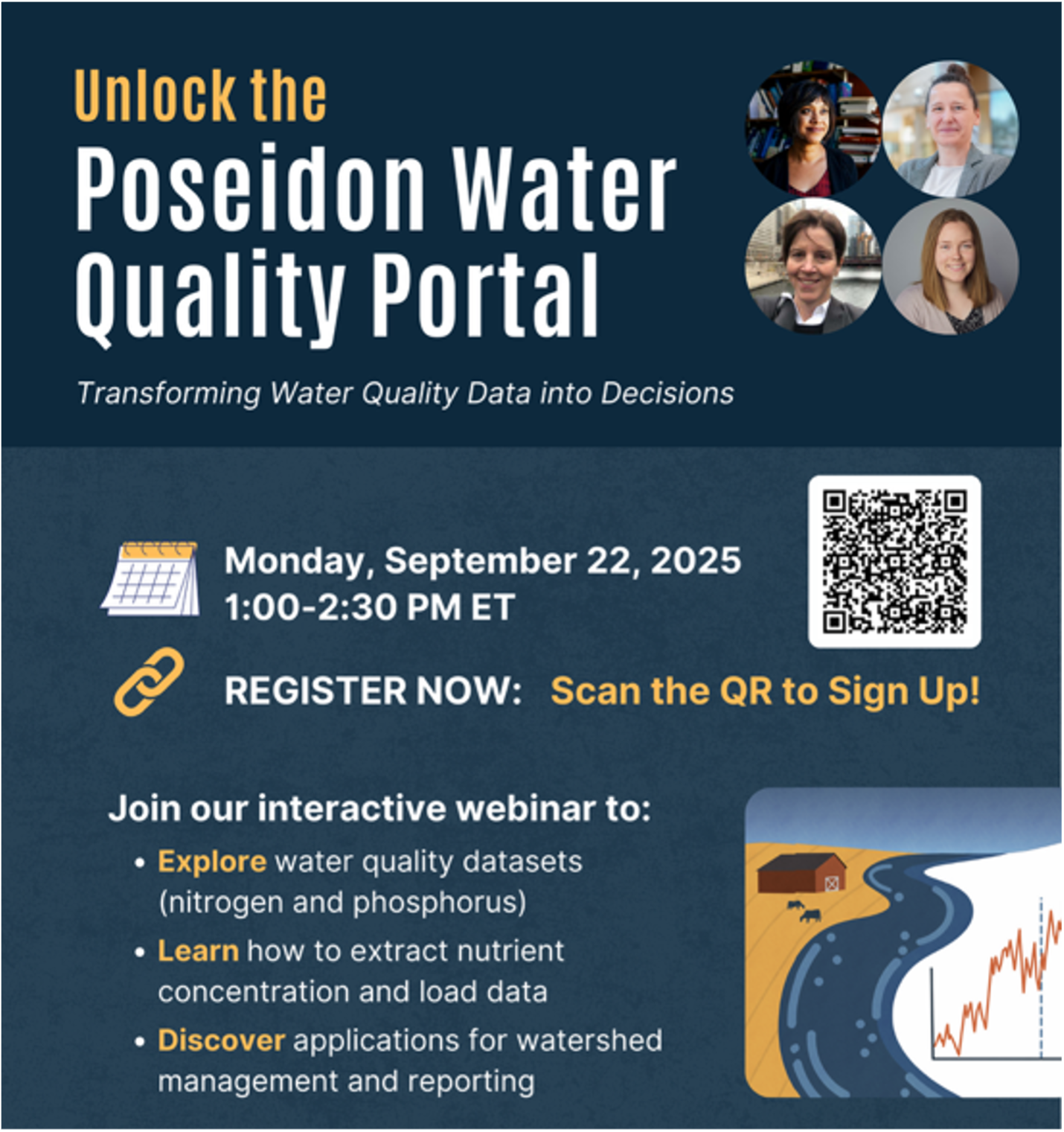
The webinar, Unlock the POSEIDON Water Quality Portal: Transforming Water Quality Data into Decisions, took place on September 22, 2025, attracting 182 registrants. Attendees represented a broad range of sectors from academia, government, NGOs, and industry, and joined from across Canada, and internationally from North America, Europe, Asia, and Africa.
The session was hosted by Basu and Mai from the University of Waterloo, alongside Dr. Kimberly Van Meter, from Penn State University and Meghan McLeod, from DataStream.
Participants explored the portal’s capabilities for accessing and analyzing nitrogen and phosphorus datasets and discussed potential applications in watershed management, policy, and reporting.
“Our mission is to transform water quality data into actionable insights,” said Dr. Basu, emphasizing the portal’s role in converting complex monitoring datasets into tools that guide real-world decisions. She added, “POSEIDON connects the dots, turning sparse samples into daily concentrations and loads,” highlighting its predictive capabilities.
The POSEIDON Portal, informed by nutrient data synthesized through DataStream, predicts nutrient concentrations and loads at daily, monthly, and annual scales for hundreds of streams across Canada. Since the webinar, the team has expanded the portal to include over 500 active monitoring stations, integrating modeled streamflow where gauges are absent and incorporating complementary nutrient and landscape datasets.
“We’ve grown DataStream to harmonize water-quality datasets so projects like POSEIDON can scale,” said McLeod, underscoring the importance of standardized, accessible data. Dr. Van Meter highlighted the next steps: “More interaction and feedback to shape the portal,” reflecting the team’s commitment to ongoing engagement with users.
Webinar participants asked questions about data coverage, methodological approaches, integration with DataStream, community-based water monitoring, and practical applications. Their questions emphasized the importance of collaboration and local knowledge in enhancing the portal’s usability and impact. As Meghan McLeod noted, “Many of the datasets on DataStream are collected, formatted, and uploaded by community monitoring groups,” highlighting the vital role of community contributions in the portal’s success.
The POSEIDON team hopes to continue expanding spatial coverage, refining predictions, and engaging the water management community to ensure the platform meets real-world needs. By connecting data, AI, and users, POSEIDON is helping bridge the gap between monitoring and water governance—turning scientific information into actionable knowledge.
If you missed the webinar the recording can be viewed here.
The POSEIDON Water Quality Portalis available at poseidonhydro.net


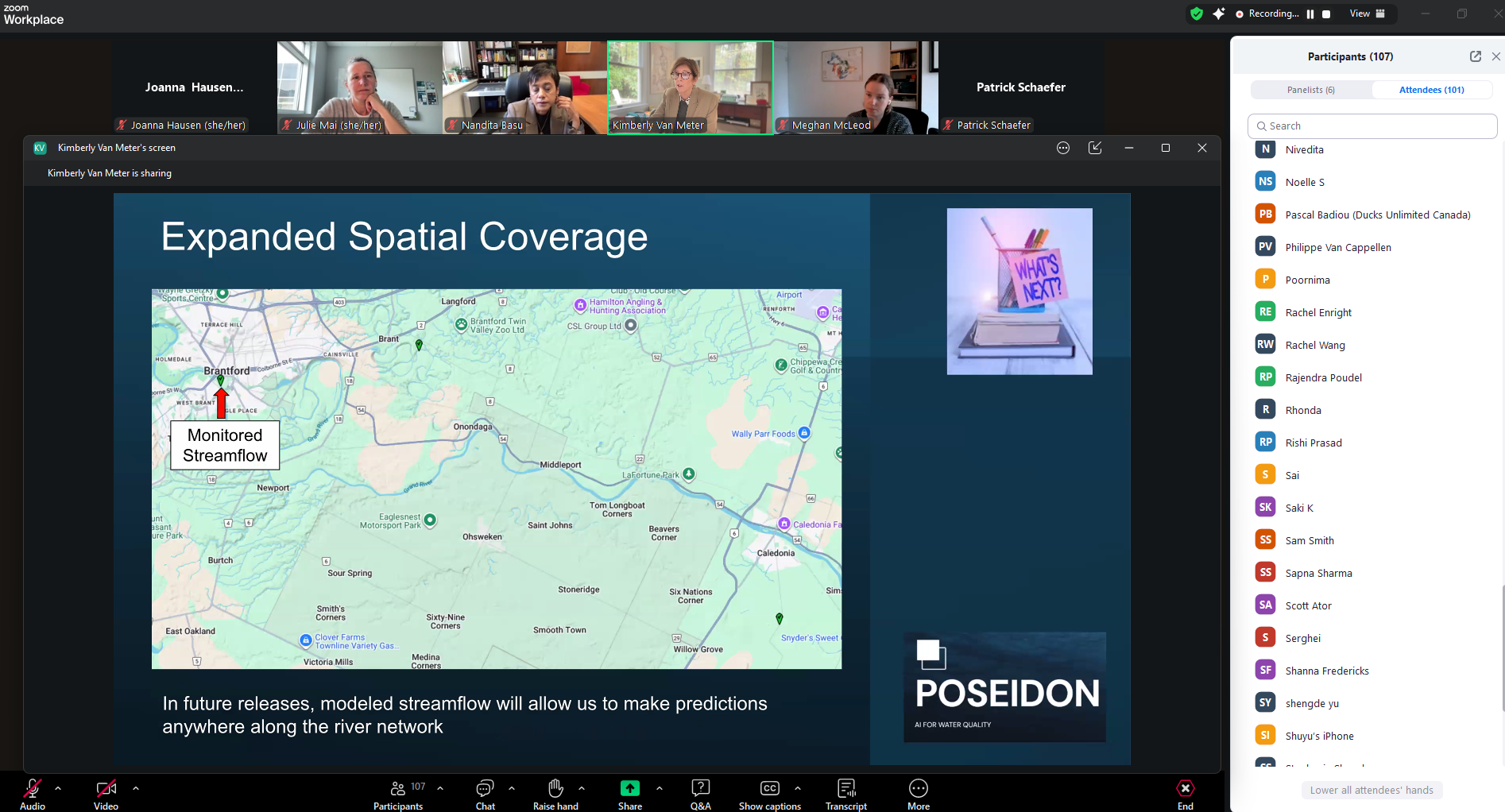
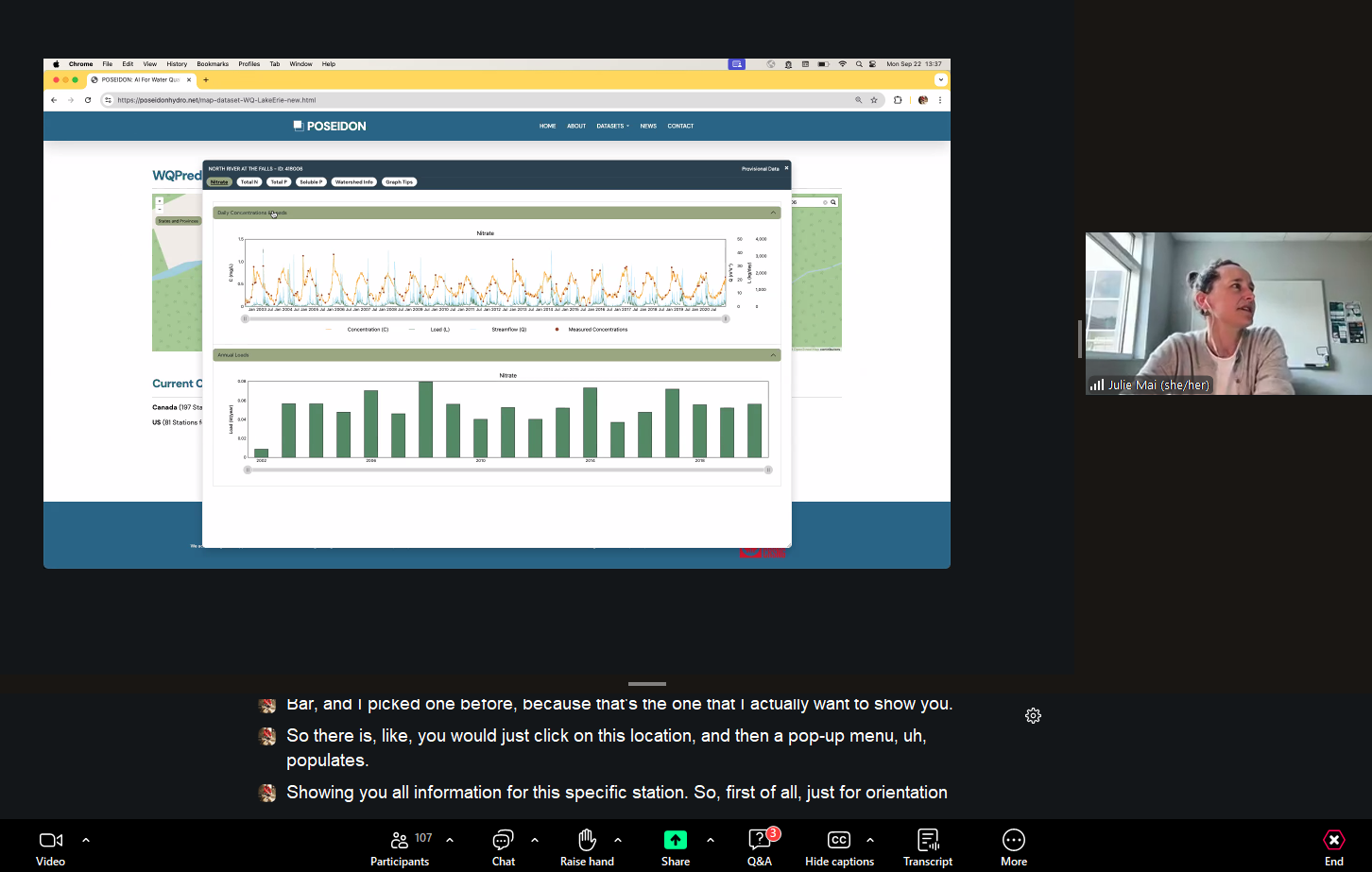
Webinar moments demonstrating the functionalities of the POSEIDON Portal.