Powering smart irrigation with second life batteries: Waterloo’s breakthrough approach for Yucatán farmers
Carter McCrae, a master’s student in Climate Change, and Aidan Iapicco, an MSc candidate in Biogeochemistry and a student in the Collaborative Water Program (CWP), are developing a solution that links water, energy, and circular economy thinking. It is the first project to combine solar panel pumps and repurposed electric vehicle batteries in a system that could enable millions of small farms and billions of people to access water for irrigation. The solution aims to reduce costs and improve reliability for farmers facing growing water and energy constraints.
The project grew out of the researchers’ initial work investigating circular practices for recovering metals from electronics. While exploring this area, they were approached by a parts manager from BMW, who asked whether they could help solve the company’s problem of recycling batteries. McCrae and Iapicco pivoted to EV battery recycling, developing a strategy backed by academic research and their industry connection. Their proposal was submitted to the Jack Rosen Memorial Competition for Environmental Innovation, where it received funding, marking a turning point that allowed them to scale the idea and begin exploring second life applications.
During a recent field visit to the Yucatán Peninsula in Mexico, the team saw firsthand how tightly water access, energy use, and farm viability are connected. They travelled across the northern part of the region to speak directly with farmers about irrigation challenges and to explore where second life battery systems could meaningfully support agricultural operations.
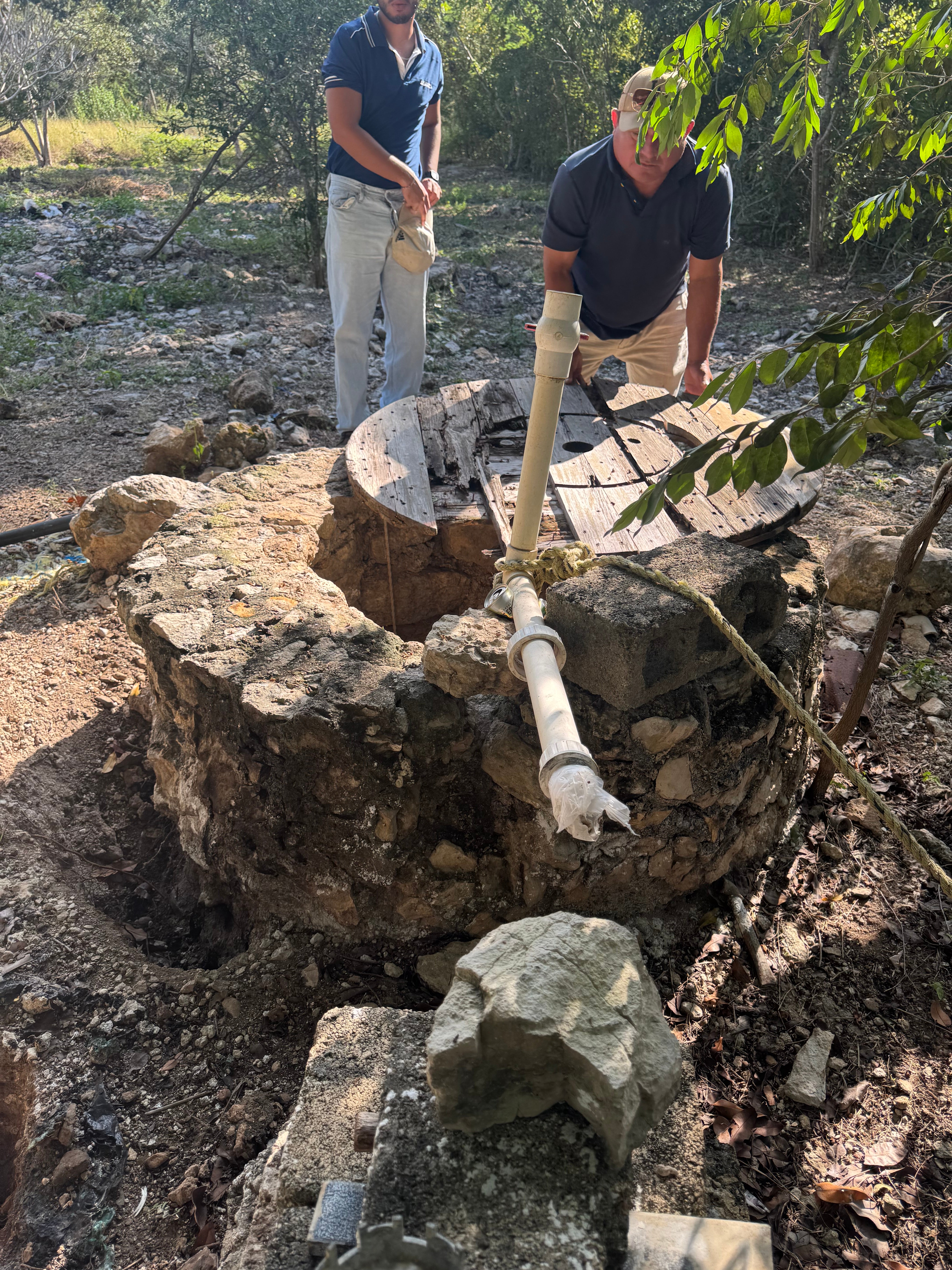
The northern Yucatán Peninsula is defined by a shallow soil layer over porous limestone, a geological feature that shapes how water moves through the landscape and how farmers irrigate their crops. Groundwater drains quickly, contamination risks are high, and soils retain little moisture. Together, these conditions create persistent challenges for agricultural production and long-term water management.
Photo: Current irrigation pump system and well.
As a result, crop choices are limited, with tree crops such as citrus dominating the region because many other crops struggle to take root. Even these crops require frequent irrigation, and inefficient pumping systems increase both water use and energy demand. Many farmers rely on diesel or gas-powered generators to pump water, often refuelling every other day. With fuel prices near 25 pesos (almost $2 CAD) per litre, the cost quickly adds up. For farmers whose land is difficult to access, transporting fuel adds further time and financial pressure.
Iapicco and McCrae’s approach uses a machine learning-driven decision model that evaluates battery health in minutes rather than relying on traditional hour‑long diagnostic tests. By combining electrochemical performance metrics with environmental conditions, and economic factors, each retired electric vehicle battery will be matched with its most effective second life application, such as irrigation. Rather than recycling batteries prematurely at a net capital loss for automotive companies and a net loss overall for resource management efficiency, the system identifies opportunities where remaining storage capacity can support applications such as solar-powered irrigation and much more.
For farmers, the usability of EV solar-powered pump system reduces the upfront cost of switching to renewable energy while improving energy reliability and reducing greenhouse gas emissions. The seamless usability and transition for farmers allows for 24/7 bankable electricity and makes smart irrigation possible in regions never thought possible.
The technical feasibility of battery-supported irrigation systems is supported by recent peer-reviewed research showing that battery storage can be a financially viable and optimized energy source for irrigation. In the Yucatán context, this approach offers a pathway to reduce dependence on fuel price volatility, improve water management efficiency, and strengthen farm resilience under increasingly hot and dry conditions.
To ensure the solution is grounded in local realities, the team is working closely with David Henry, a Canadian economist with many years’ experience in Asia and Africa working with World Bank economists and engineers. Moises Fragoso a local in the area, was another key collaborator to the trip's success by organizing farm visits and furthering connections in the region.David's experience leading irrigation efforts in Mexico and India and Moises regional connections have been critical to the development of this new breakthrough project. They also hope to collaborate further with Professor Sanjeev Bedi in the Department of Mechanical and Mechatronics Engineering at the University of Waterloo to integrate more water efficient jet pump technology, further reducing water and energy demands.
Conversations with farmers underscored the urgency of the work. One local farmer described land being abandoned due to the effort required to maintain generator-powered irrigation. “Electricity is something we have wanted and considered for quite some time now,” he said. “This sounds like a great opportunity for us.”
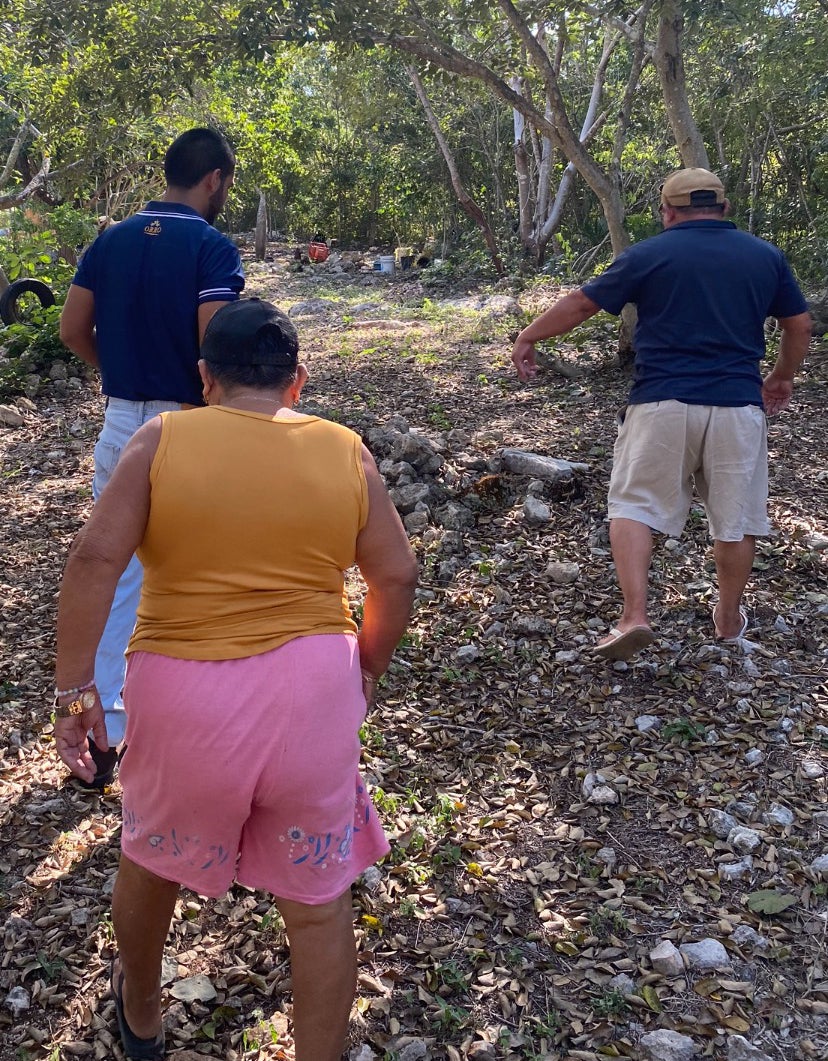
Local farmers showcasing their farm.
For McCrae and Iapicco, the trip clarified the value of sharing information directly with farmers and learning from how irrigation systems operate in practice. They plan to return results and observations to local farmers in the Yucatán, allowing lessons from one site to inform decisions at others and helping build a stronger, more connected farming community. This exchange also helps the team refine their approach by grounding technical development in real operating constraints, with the goal of reducing costs and improving water and energy efficiency as the work moves forward.
Looking ahead, the researchers hope to apply lessons from the Yucatán to other water-stressed regions globally. By combining sustainable energy systems, efficient irrigation technologies, and community collaboration, their work points to scalable solutions that can help farmers manage water more reliably and affordably in a changing climate.

Photo: Carter McCrae, a master’s student in Climate Change, and Aidan Iapicco, an MSc candidate in Biogeochemistry and a student in the Collaborative Water Program (CWP) in Mexico.