Rethinking how we protect freshwater: Waterloo researcher helps identify global biomonitoring challenges
Freshwater ecosystems are critical to human and environmental well-being, providing drinking water, habitat, food, and climate regulation. Yet despite decades of efforts to monitor the health of rivers, lakes and wetlands, many freshwater ecosystems around the world remain unmonitored and increasingly at risk from pollution, habitat loss and climate change.
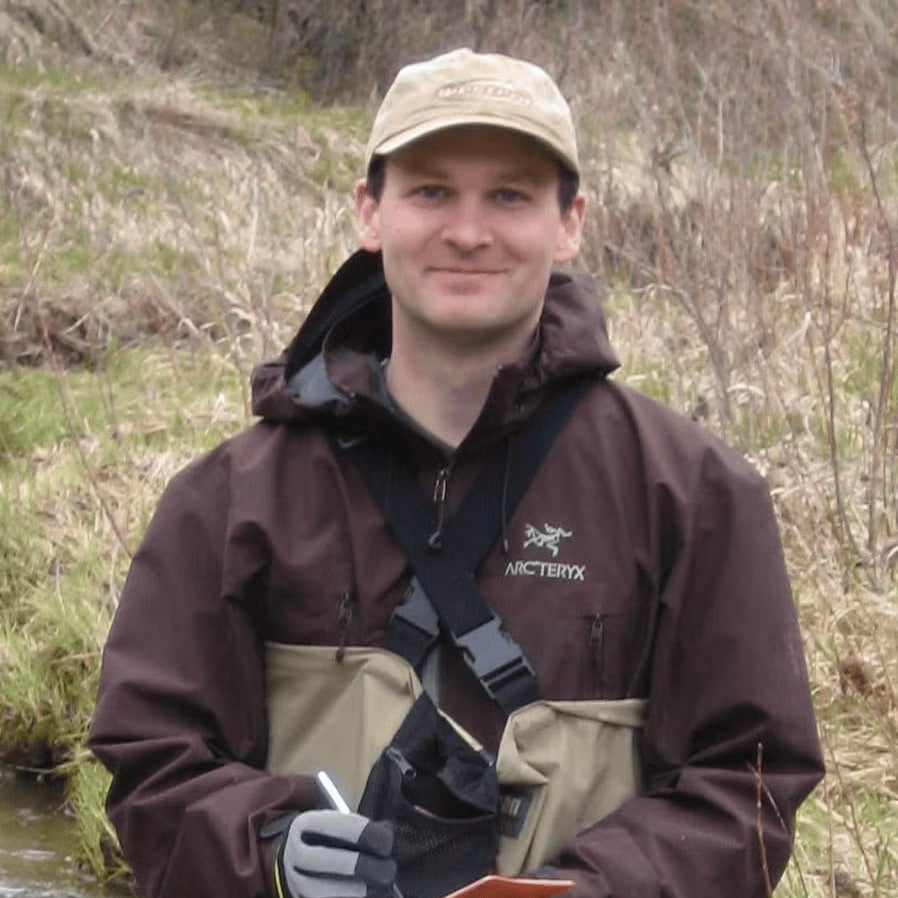
A new global study, led by Water Institute member Dr. Adam Yates, identifies five Grand Challenges facing freshwater biomonitoring — the practice of using living organisms, such as fish, algae, aquatic insects or the functions these organisms perform, such as decomposition, to assess the health of ecosystems. By observing how these organisms respond to pollution, habitat changes, or climate stressors, scientists can gain insight into the overall condition of rivers, lakes and wetlands. The study lays out a roadmap to help the scientific community improve biomonitoring to help protect these vulnerable systems in the coming decades.
Dr. Adam Yates, Professor, Department of Biology, University of Waterloo.
“Our freshwater ecosystems are changing rapidly, but the ways we assess their health haven’t kept pace,” says Yates, a professor in Waterloo’s Biology Department. “We need to think more holistically how we monitor these systems, who is involved, and what technologies we can leverage.”
The two-year study, published in the journal Ecological Indicators, reflects input from 256 freshwater scientists, managers and practitioners across 40 countries. Using a snowball sampling approach, where participants recommended additional contributors, the study gathered diverse perspectives from around the world. Contributors identified a wide range of pressing issues, including the need for updated and expanded monitoring protocols, improved access to tools in under-resourced regions, and better integration of cutting-edge technologies such as eDNA-based metabarcoding, Omics, sensor networks and remote sensing.
The five Grand Challenges identified in the study include:
- Protocol Development: Adapt and develop techniques and protocols that can assess both existing and emerging stressors in a rapidly changing global environment.
- Construct Infrastructure: Build and maintain globally interoperable freshwater biomonitoring infrastructure.
- Holistic Ecological Context: Expand biomonitoring frameworks to holistically represent ecological systems, including overlooked habitats.
- Empower Communities: Support inclusive participation in all facets of biomonitoring, especially for Indigenous and local communities.
- FAIR Data: Ensure biomonitoring data are findable, accessible, interoperable and reusable (FAIR).
Expanding what and where we monitor
One of the most urgent challenges, Yates explains, is expanding biomonitoring efforts to include freshwater types that are often overlooked, such as small wetlands, intermittent streams, and groundwater-fed springs, despite their vital role in supporting biodiversity and water supply.
“To build a complete picture of freshwater health, we need to monitor the full range of water systems, not just rivers and lakes,” Yates says. “Neglecting smaller or seasonal systems means missing critical signals of ecosystem change.”
The study also highlights social and economic barriers that prevent many regions and communities from fully participating in monitoring efforts. These include gaps in policy, a lack of long-term funding, and limited access to training and technology.
Connecting communities and countries
The study emphasizes that empowering communities, particularly Indigenous and local knowledge holders, is key to building more responsive and inclusive monitoring systems. One successful example comes from New Zealand, where Māori communities have developed Indigenous monitoring indicators based on traditional ecological knowledge. These indicators have been formally integrated into the country’s National Monitoring System, improving the relevance of assessments and building stronger relationships between government agencies and communities.
International collaboration also plays a pivotal role. In the European Union, freshwater biomonitoring infrastructure is designed to operate across political boundaries, allowing water quality and ecological health to be monitored continuously across transboundary basins from one country to the next. This cross-border approach helps create consistent datasets and ensures accountability between upstream and downstream neighbours.
“The cooperation and coordination among EU countries is a model for what we hope to see adopted in other parts of the world. There has to be some sort of global system or agreement that allows monitoring to extend beyond borders,” explained Yates.
Canada is falling behind on legislation
Despite Canada’s vast freshwater resources, it lacks national legislation requiring biomonitoring. In contrast, countries such as the United States, those in the European Union, Australia, Japan and China mandate monitoring and use the data to guide water policy and environmental decision-making.
“Without a legislative driver, it’s difficult to secure the long-term funding and coordination needed to track ecosystem change,” says Yates. “If Canada wants to keep pace with the rest of the world, we need to embed biomonitoring into our legal and policy frameworks.”
In these countries, biomonitoring results are often directly integrated into national policy, shaping decisions on conservation, land use, and climate adaptation. Strong feedback loops between monitoring and governance help governments respond more effectively to environmental threats and ensure decisions are grounded in scientific evidence.
Building a global monitoring system for the future
The first step, the study notes, is developing a coordinated global framework to prioritize and address these challenges. Building and sustaining this system will require an inclusive, cross-disciplinary approach that brings together scientists, governments and communities worldwide.
By harnessing innovations like artificial intelligence, remote sensing, eDNA metabarcoding and Omics technologies, and strengthening partnerships across regions and sectors — the researchers believe we can build a more resilient and responsive freshwater biomonitoring network.
The study reflects a growing global movement to transform freshwater monitoring into a science-driven, community-empowered practice, one that’s better equipped to meet the complex challenges facing freshwater systems worldwide.
Read the full study Charting a course for freshwater biomonitoring: The grand challenges identified by the global scientific community here.