SSHRC-funded project reimagining water and tourism: Healing landscapes marked by ruination
Reimagining tourism in troubled places
Tourism often invites us to witness disappearing worlds, melting glaciers, dying coral reefs, vanishing cultures before they’re gone. But what if instead of simply observing loss, we stayed to listen, repair, and regenerate?
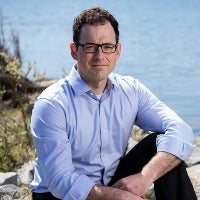
Dr. Bryan Grimwood, Professor in the Department of Recreation and Leisure Studies (RLS) in the Faculty of Health, has been awarded approximately $380,000 in funding from the Social Sciences and Humanities Research Council of Canada (SSHRC) to lead a new research initiative entitled Tourism, ruination, and regenerative futures that rethinks tourism’s role in landscapes marked by environmental and cultural ruination.
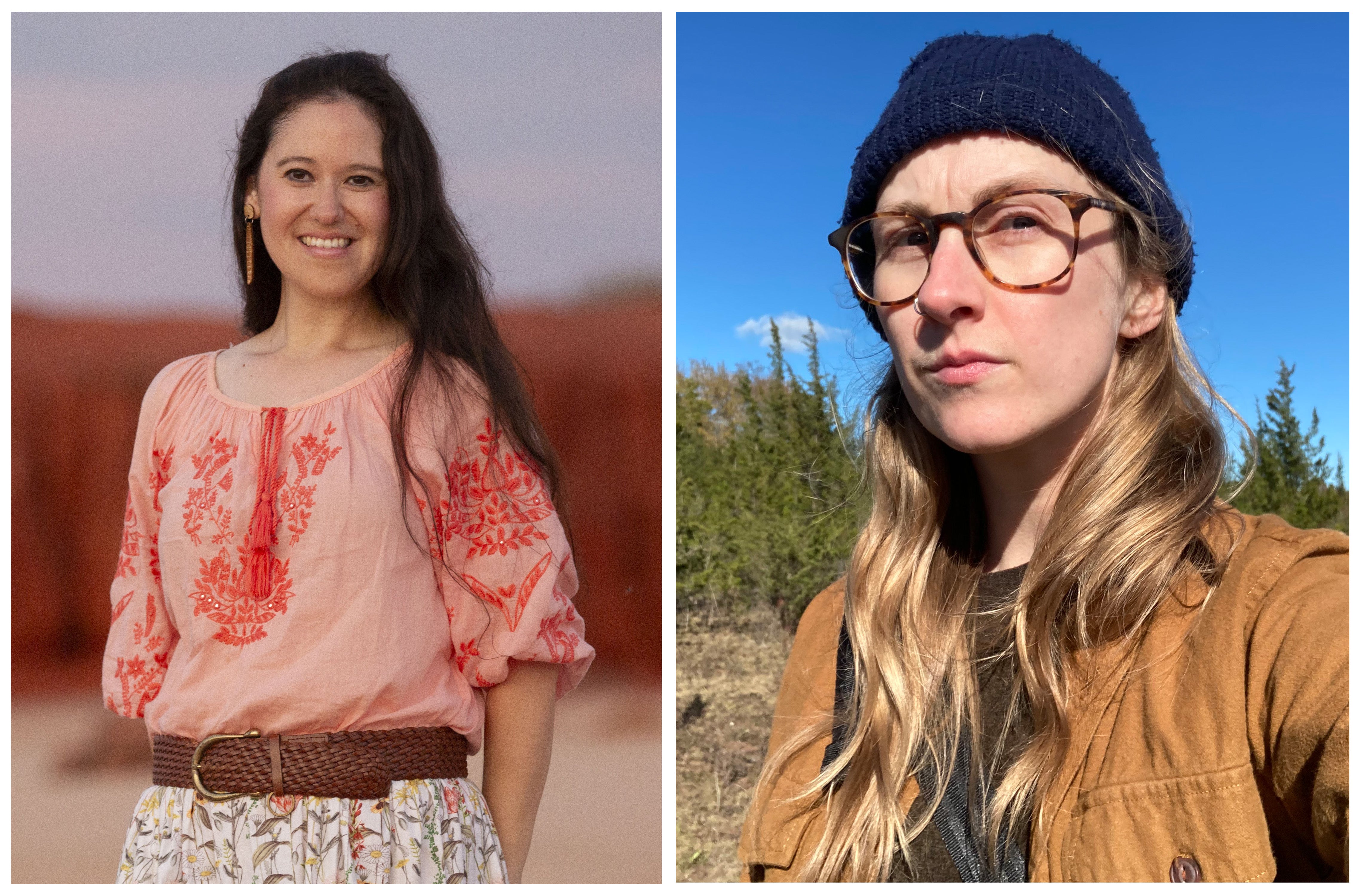
A member of the Water Institute, Grimwood’s interdisciplinary team includes Dr. Bobbie Chew Bigby, 2024 Provost’s Indigenous Postdoctoral Scholar and Dr. Michela Stinson, RLS Adjunct Professor and SSHRC Postdoctoral Fellow at UQAM. Together they will study how tourism both contributes to and responds to environmental degradation and social disruption, while also supporting community-led efforts to repair and reimagine relationships with land, water, and culture.
Photo: (L) Dr. Bobbie Chew Bigby, 2024 Provost’s Indigenous Postdoctoral Scholar and (R) Dr. Michela Stinson, RLS Adjunct Professor and SSHRC Postdoctoral Fellow at UQAM.
“This project brings together an incredible team of critical tourism scholars who are committed to working with communities to understand and envision how damaged and troubled places are cared for,” said Grimwood.
“Tourism can certainly lead to negative impacts on people and environments, but we’re curious about how it can be imagined and practiced as part of healthier, sustainable and inclusive futures.”
Regenerative tourism
Over the next six years, the team will investigate six case studies, each offering a unique lens on how tourism intersects with histories of colonization, pollution, neglect, and resistance:
- Muskoka River Watershed (Ontario) – Examines “cottage country” in Anishinaabeg and Haudenosaunee territory, where second homes and short-term rentals threaten water quality, Indigenous stewardship, and socio-cultural meanings of nature.
- Niagara Falls (Ontario) – Explores the contradictions of a world-famous site framed by both natural wonder and long-standing ruination narratives, with a focus on community renewal.
- Route 66 and Tar Creek (Oklahoma) – Investigates tourism commemorations on contaminated Indigenous lands, focusing on resurgent actions by Tribal Nations confronting legacies of toxic mining.
- Grand River (Ontario) – Follows The Grand River Community Play Project, a creative collaboration with Six Nations Tourism to foster regenerative reconciliation and deepen relationships along the 310-kilometre river.
- Lake Osisko (Quebec) – Studies citizen mobilization in the wake of decades of mining pollution and how community-led tourism efforts are challenging narratives of abandonment.
- Salton Sea (California) – Analyzes an ecologically devastated desert lake shaped by agricultural runoff and historical flooding, exploring how its apocalyptic ruination has transformed tourism imaginaries into sites of care and possibility.
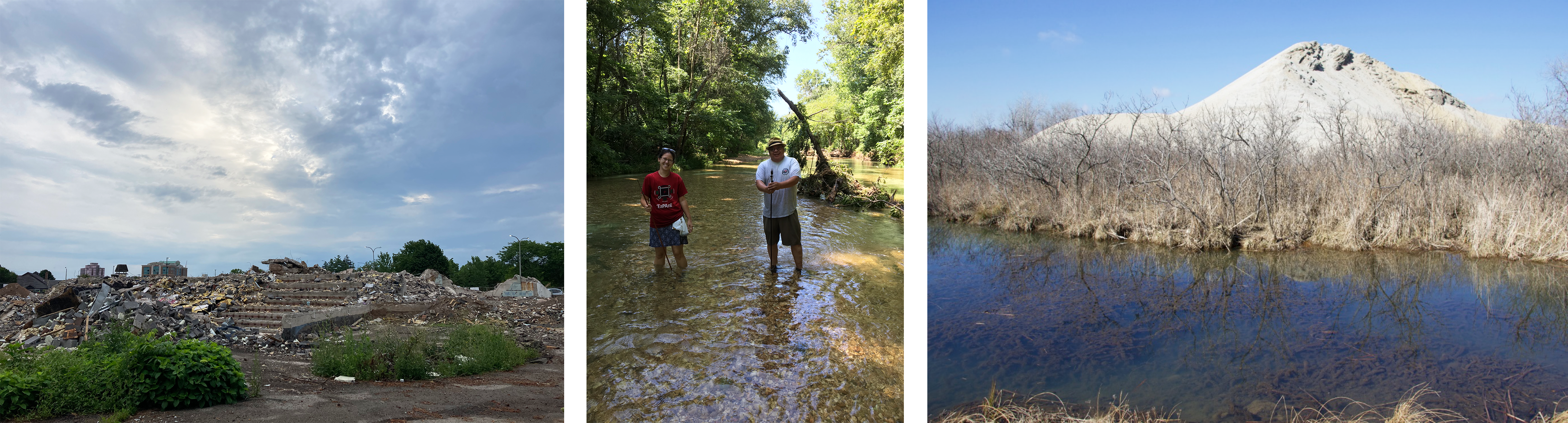
Photos L to R: Demolished former attraction, Niagara Falls, ON, Bobbie Chew Bigby with Cherokee elder Woody Hansen gigging crawdads, mining chat pile next to Tar Creek by Clifton Adcock.
Research guided by relationality and care
Drawing on Indigenous, feminist, and critical theories, the project is rooted in a methodology of geo-kinshipping, a practice conceptualized by co-applicant, Dr. Kellee Caton at Thompson Rivers University, to emphasize the responsibility, kinship, and care in human-environment relationships. Central to the work is amplifying the knowledge and leadership of Indigenous and local communities who have long lived with, and responded to, environmental ruination.
The project’s four core objectives are to:
- Understand how tourism facilitates and adapts to states of ruination
- Identify regenerative and resurgent community practices within tourism contexts
- Advance theoretical and methodological approaches for relational, place-based research
- Mobilize knowledge through innovative and accessible formats
Mobilizing knowledge through art, sound, and story
In addition to academic outputs, the project will share insights through a variety of public-facing activities: an alternative tourism guidebook, immersive audio tours, visual storytelling, and a summer course for undergraduate and graduate students. Community consultations, infographics, and accessible materials will also ensure that the research remains accountable and relevant to the places and people it engages.
As climate change, extractive capitalism, and colonial legacies continue to shape both ecosystems and economies, this project challenges dominant narratives of decline and disappearance, and invites us instead to imagine tourism as a force for connection, care, and regeneration.