From vulnerability to viability: How coastal ecosystems can save small-scale fisheries

A WaterLeadership Snapshot
WaterLeadership Snapshots feature articles written by graduate students participating in the Water Institute’s WaterLeadership training program, which focuses on skills development in knowledge mobilization, leadership, and research communication. Here, students describe the value of their research and its potential for ‘real world’ impact.
By Navya Vikraman Nair
What happens to communities when the fish disappear? For millions of small-scale fishers (SSFs) worldwide, this isn’t just a question—it’s a daily reality. SSFs support the livelihoods of 120 million people globally, yet these vital ecosystems are on the brink of collapse due to declining water quality, pollution, and climate change.
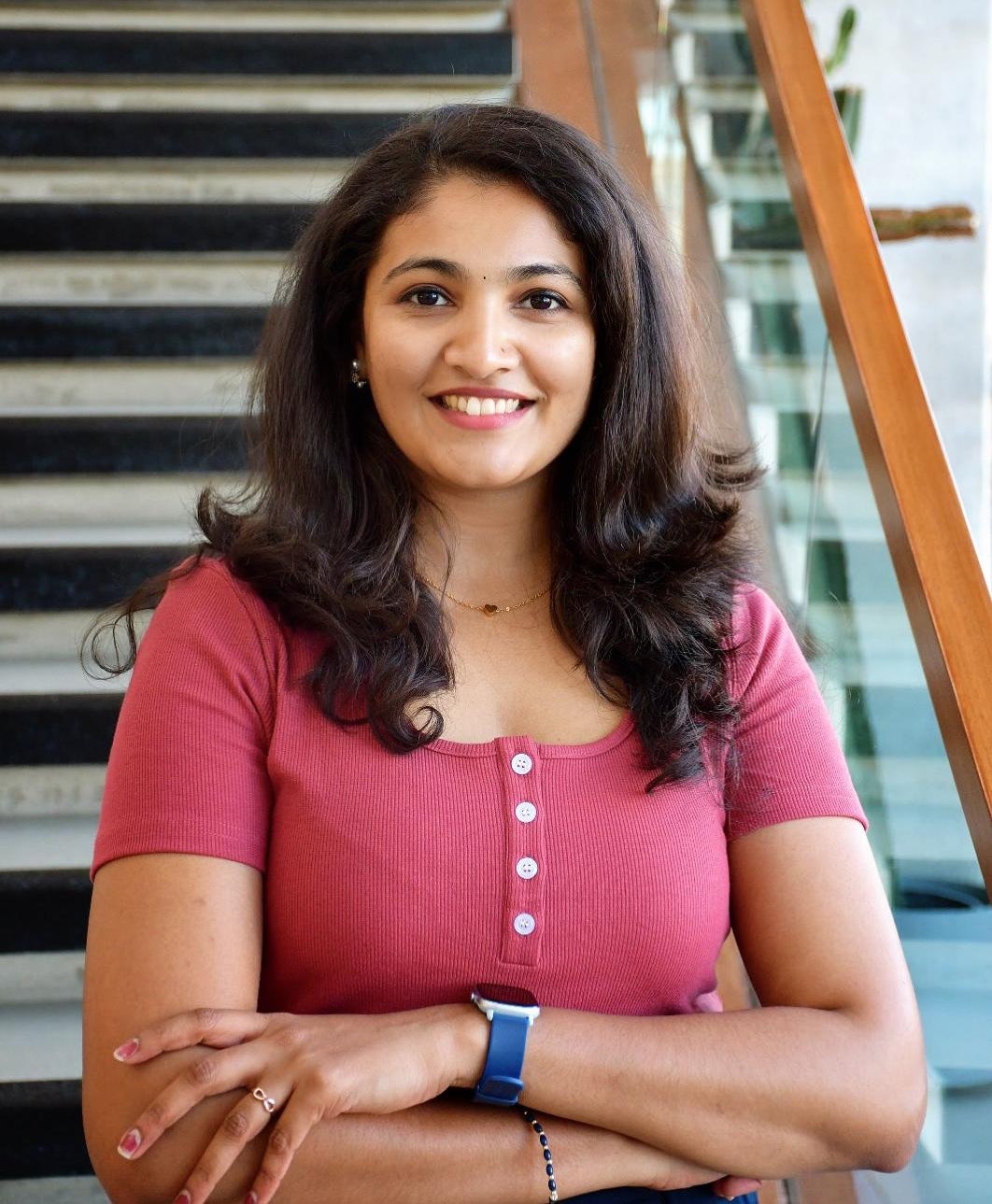
Working as part of the Vulnerability to Viability (V2V) Global Partnership, Navya Vikraman Nair’s research aims to address these pressing challenges by linking blue carbon ecosystems (BCEs) to sustainable fisheries. Navya’s work contributes to the V2V initiative—a transdisciplinary global partnership and knowledge network led by Dr. Prateep Nayak and supported by members from Africa, Asia, Canada, and beyond through a seven-year, $2.5 million Partnership Grant from Canada’s Social Sciences and Humanities Research Council (SSHRC).
Navya’s interest in the issue began during her master’s research, where she explored the intricate relationship between water quality and small-scale fisheries in Chilika Lagoon, India—a UNESCO-recognized Ramsar site. Building on that foundation, her PhD research now dives deeper into how BCEs, such as mangroves and seagrasses can transform vulnerable fishing communities into viable, thriving systems.
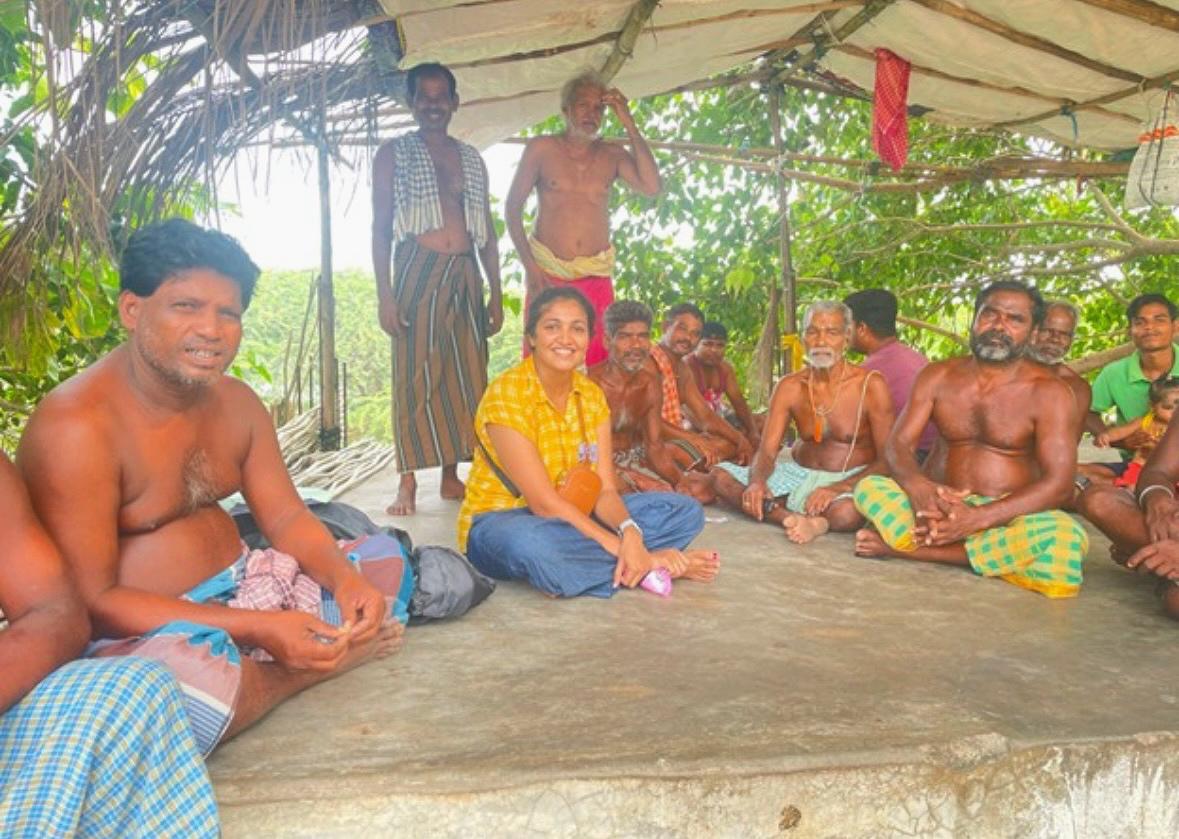
Conducting informal discussions with local fishers to understand their perspectives on water quality, fish catch, and the challenges they face in Chilika Lagoon.
Why should you care about blue carbon ecosystems?
BCEs are unsung heroes of our planet. They act as nature’s water filters, removing pollutants and providing essential habitats for marine life. Yet, these ecosystems are often overlooked in discussions about fisheries and water quality. This research focuses on the direct impact these ecosystems have on the livelihoods of Chilika’s fishers, who depend entirely on sustainable water resources for their survival. Without intervention, deterioration of these ecosystems may result in rippling consequences across the lagoon’s fishing communities, intensifying poverty, reducing catches, and destabilizing local economies. However, solutions rooted in science and community participation offer a way forward.
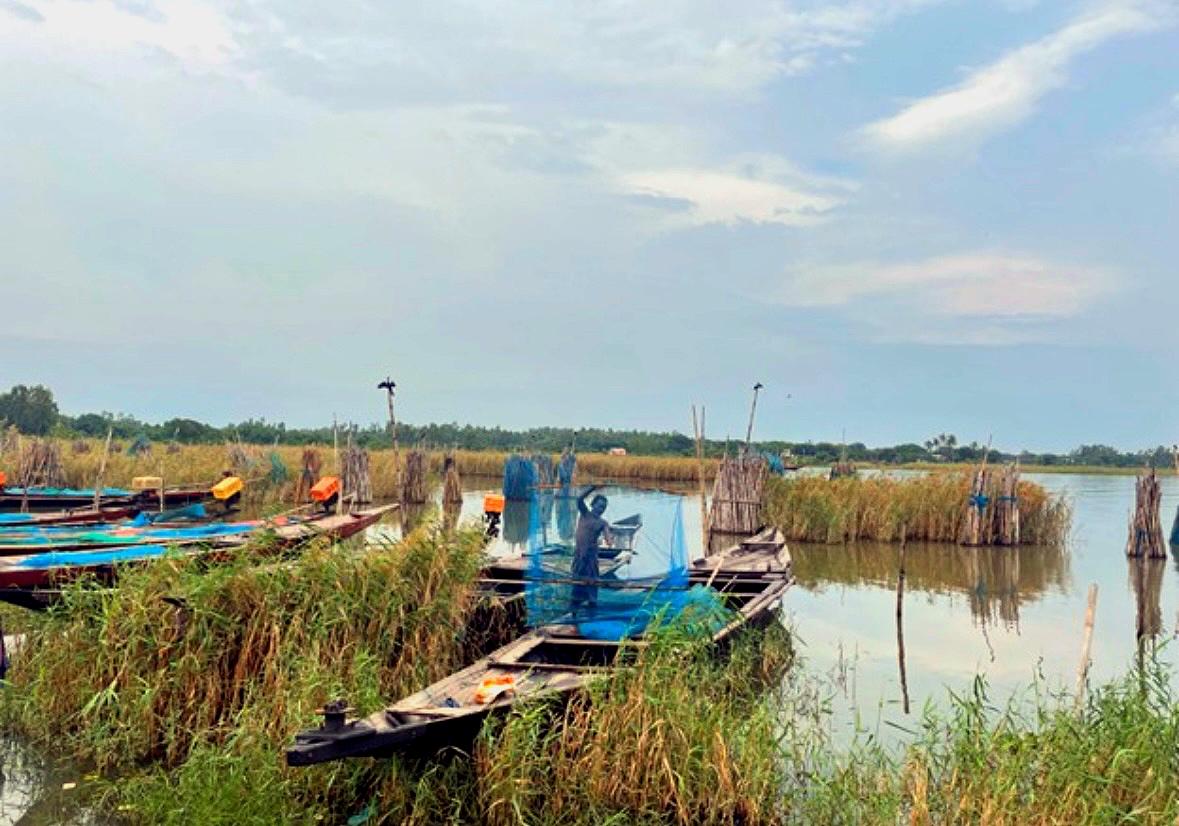
Traditional fishing boats docked in the serene but ecologically fragile waters amidst the invasive species of Chilika Lagoon.
A roadmap to resilience
Under the umbrella of the V2V Global Partnership, Navya’s work seeks to empower SSF communities by bridging the gap between science, policy, and practice. By highlighting the ecological, social and economic interdependence of water quality and fisheries, she hopes to create actionable strategies for:
- Developing targeted conservation strategies that prioritize BCEs.
- Ensuring fishers have access to reliable data and capacity-building tools to manage aquatic resources.
- Enhancing the resilience of SSFs while protecting biodiversity.
Through collaboration with organizations like the ICAR-Central Inland Fisheries Research Institute and local fisherfolk associations, this research expects to move beyond academia to create real-world solutions.
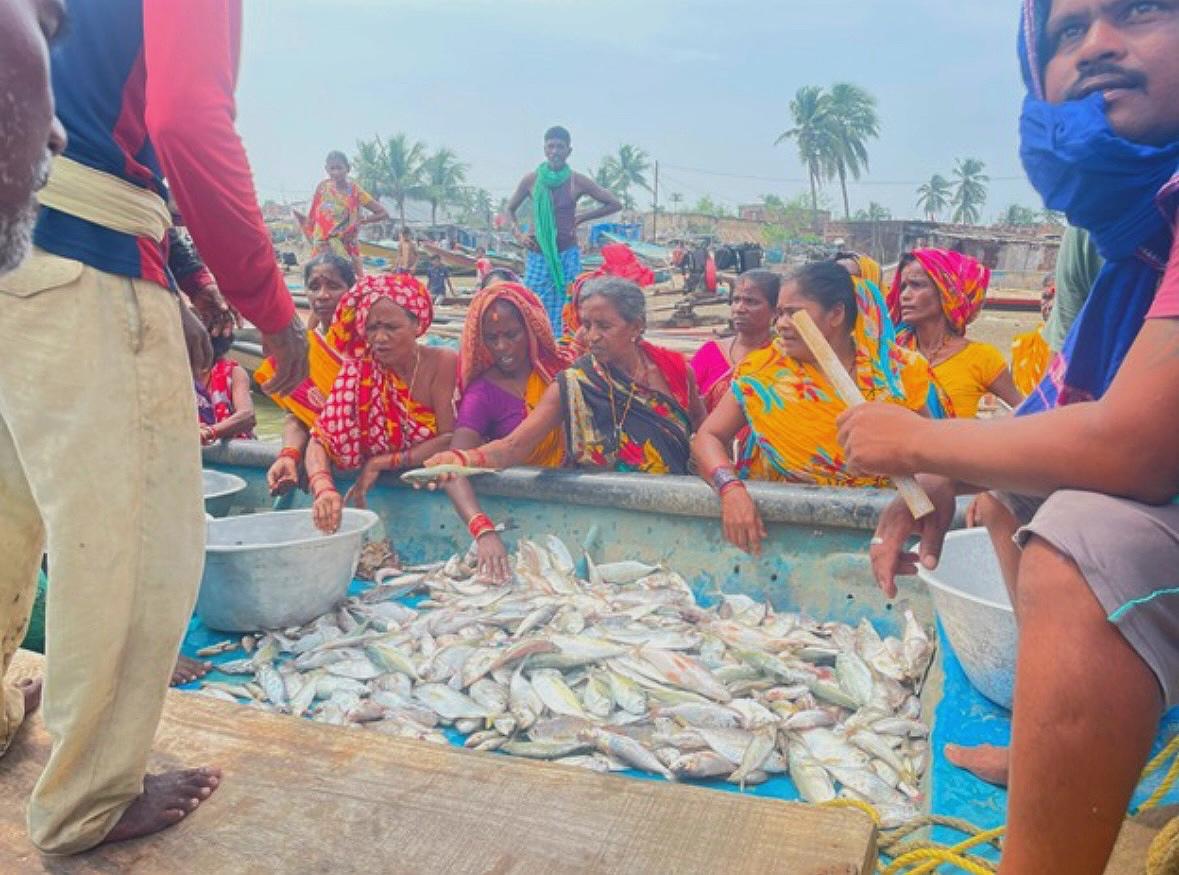
Women fishers sort and process the day's catch, highlighting the critical role women play in small-scale fisheries and the local economy.
What’s next for Chilika’s fishers?
The path from vulnerability to viability isn’t simple, but it is possible. Implementing pilot projects where local fisherfolk are trained to track water quality and marine life not only addresses immediate environmental challenges but also paves the way for long-term economic and ecological stability. Providing targeted training and tools for sustainable fishing practices ensures communities can adapt to environmental changes. Protecting BCEs is more than just an environmental issue—it’s about preserving livelihoods and safeguarding cultural heritage. With her research, Navya hopes to inspire a global movement where coastal communities and policymakers work together to save SSFs. Chilika Lagoon is more than a research site—it’s a blueprint for how we can tackle the intersecting challenges of environmental degradation and social vulnerability. Together, we can ensure that SSFs not only survive but thrive.
This research is supported by SSHRC V2V and the IDRC International Doctoral Research Awards for Navya, underscoring a strong commitment to transforming vulnerable coastal communities into thriving, sustainable systems.
Banner photo: Joining local fishers in repairing fishing nets, fostering collaboration, and bridging the gap between research and community.