Water Institute marks World Water Day 2026
On March 20, the Water Institute brought together researchers, students and industry leaders to mark World Water Day 2026, highlighting the United Nations global theme of Water and Gender. The event explored water inequality, infrastructure challenges and shared responsibility, emphasizing the importance of interdisciplinary research and collaboration in addressing complex water challenges and ensuring safe, reliable water for all.
Addressing water inequality in wealthy nations
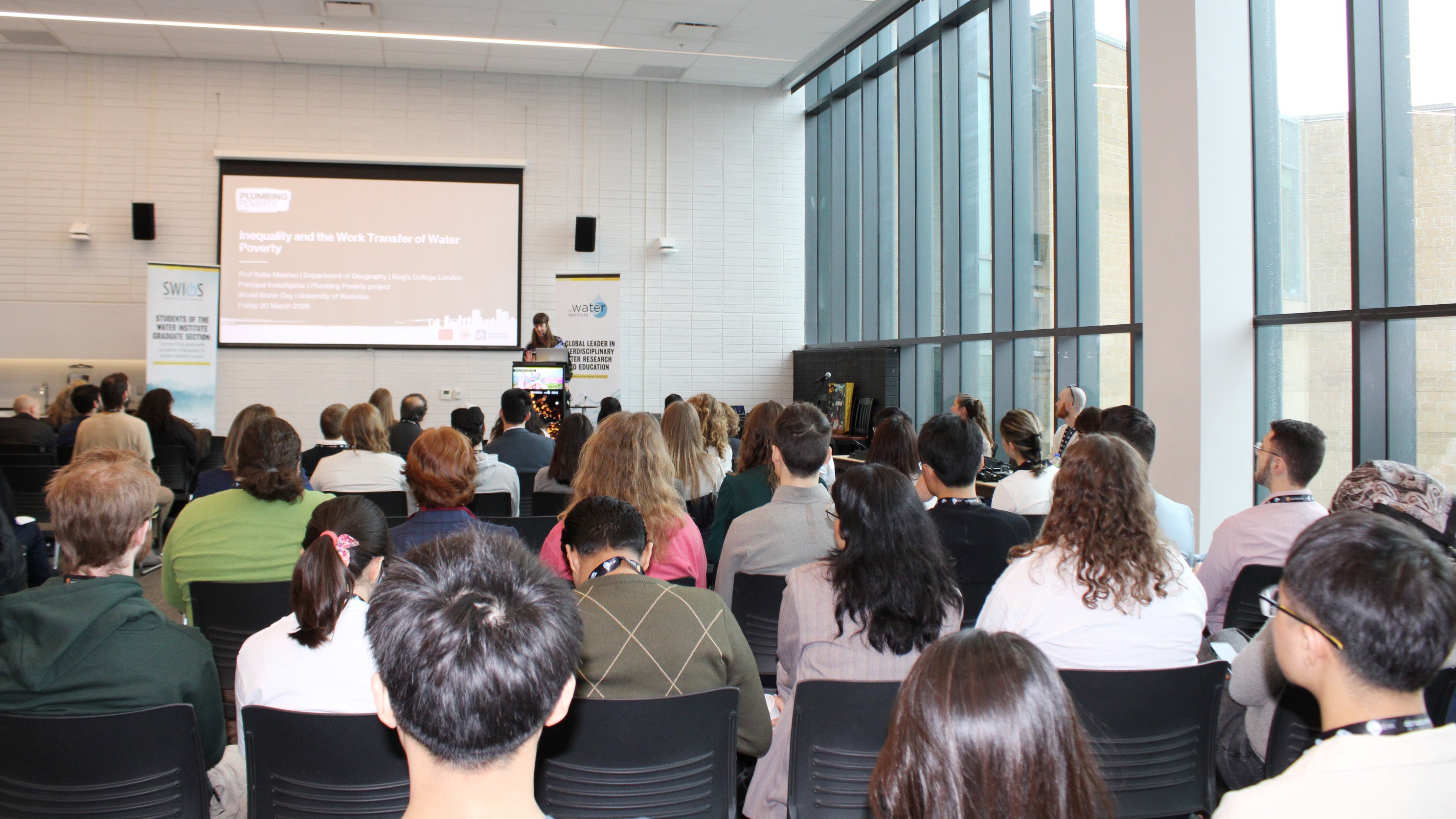
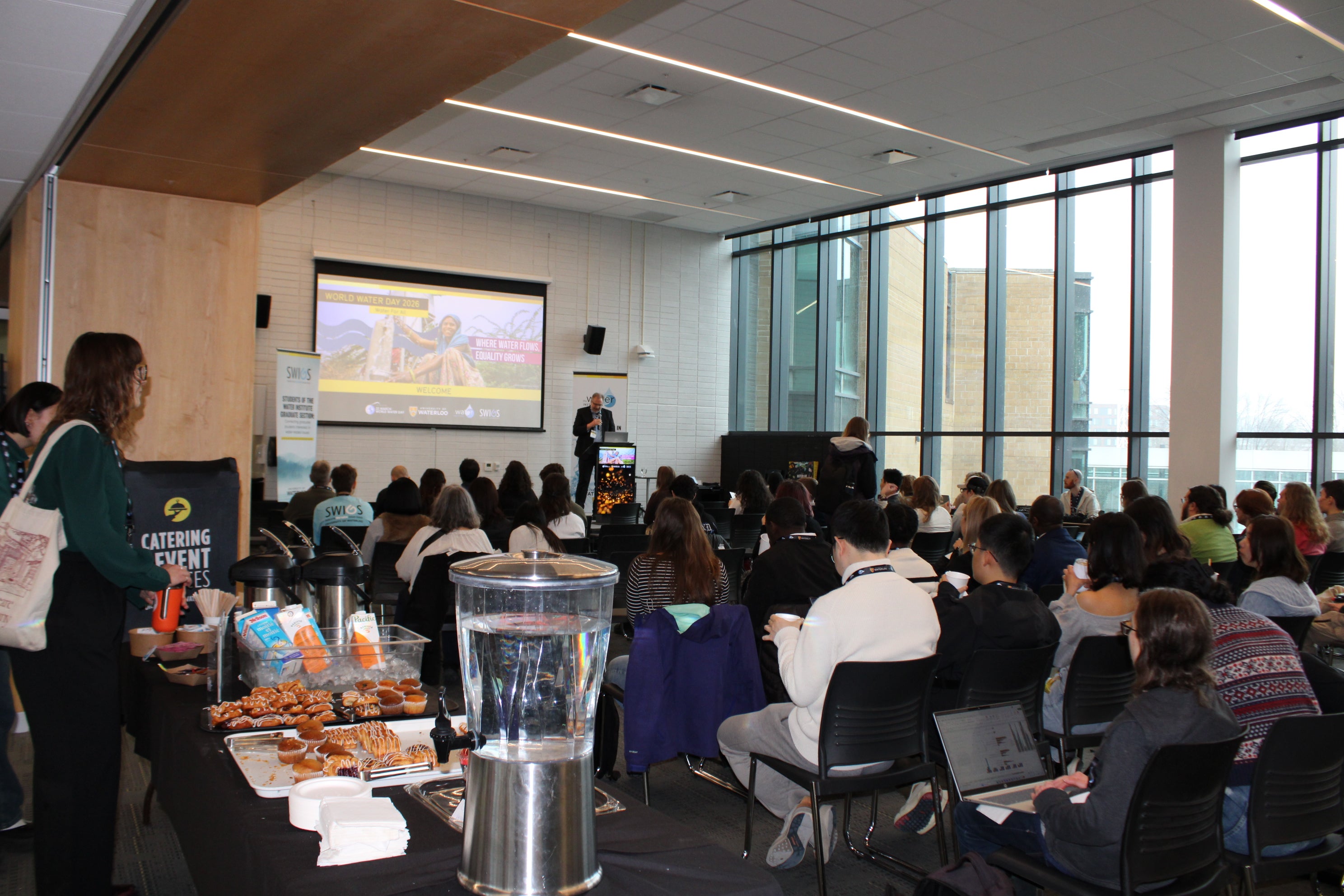
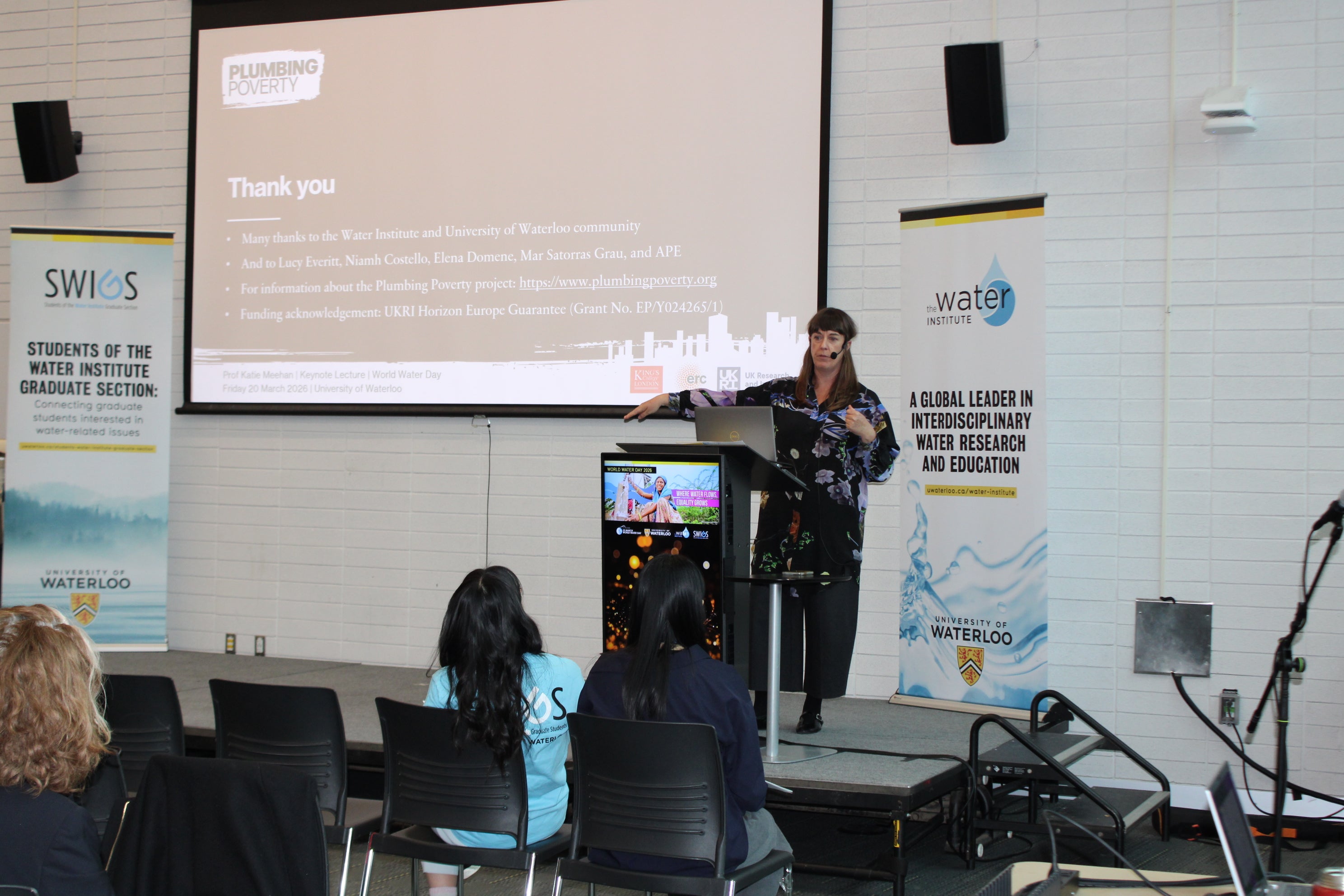
The keynote presentation by Katie Meehan, Professor of Environmental Justice at King's College London, challenged common assumptions about water access in developed countries. Her research examines water poverty and infrastructure inequality in the global North, showing how aging infrastructure, affordability challenges and governance gaps are creating unequal access to safe and reliable water services.
Meehan explained that when infrastructure systems fail or become unaffordable, the burden of water access shifts from institutions to households and communities, often affecting marginalized populations the most. Her talk highlighted the need for policy innovation, infrastructure investment and new approaches to water governance.
“Water poverty and inequality are not evidence of system breakdown or failure, but the system working as intended. Water poverty is not an accident, but a structural outcome of how water, labour and social reproduction are organized.” – Katie Meehan
The keynote set the stage for the day’s broader discussion about the role researchers, governments, utilities and communities must play in ensuring equitable water access.
Student research addressing real-world water challenges
A central part of the event was the Student Research Showcase, which featured undergraduate and graduate water research posters across disciplines. Students presented work on topics such as water quality, climate change, infrastructure, governance and ecosystem health.
The showcase highlighted the importance of training the next generation of water leaders and demonstrated how student research contributes to solving real-world water challenges faced by municipalities, industry and communities.
Congratulations to the Research Showcase winners:
- People’s Choice Poster Award: Fernanda Souto Barreto – A Century of Urban Nitrogen Pollution: Legacy of Subsurface Storage and Riverbank Attenuation
- Best Undergraduate Poster Award: Thenuja Vittanachchi – Whoops It Dried Again: A Paleolimnology Study of the Frequency of Desiccation Events in the Whooping Crane Nesting Region
- Graduate Poster Award Runner-Up: Rosa Maria Castillo Hernandez – Waste to Water Solution: Repurposing Seaweed for Environmental Remediation
- Best Graduate Poster Award: Sam Smith – Microplastics as Vectors of Co-Contaminant Transport
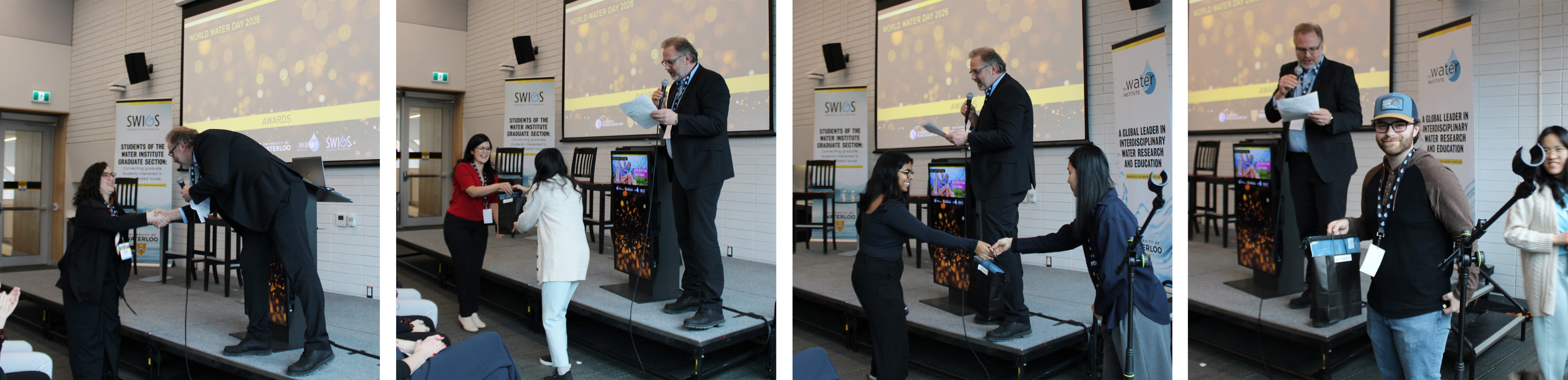
Photo L to R: Fernanda Souto Barreto, Rosa Maria Castillo Hernandez, Thenuja Vittanachchi, Sam Smith
Recognizing leadership of our CWP Alumni
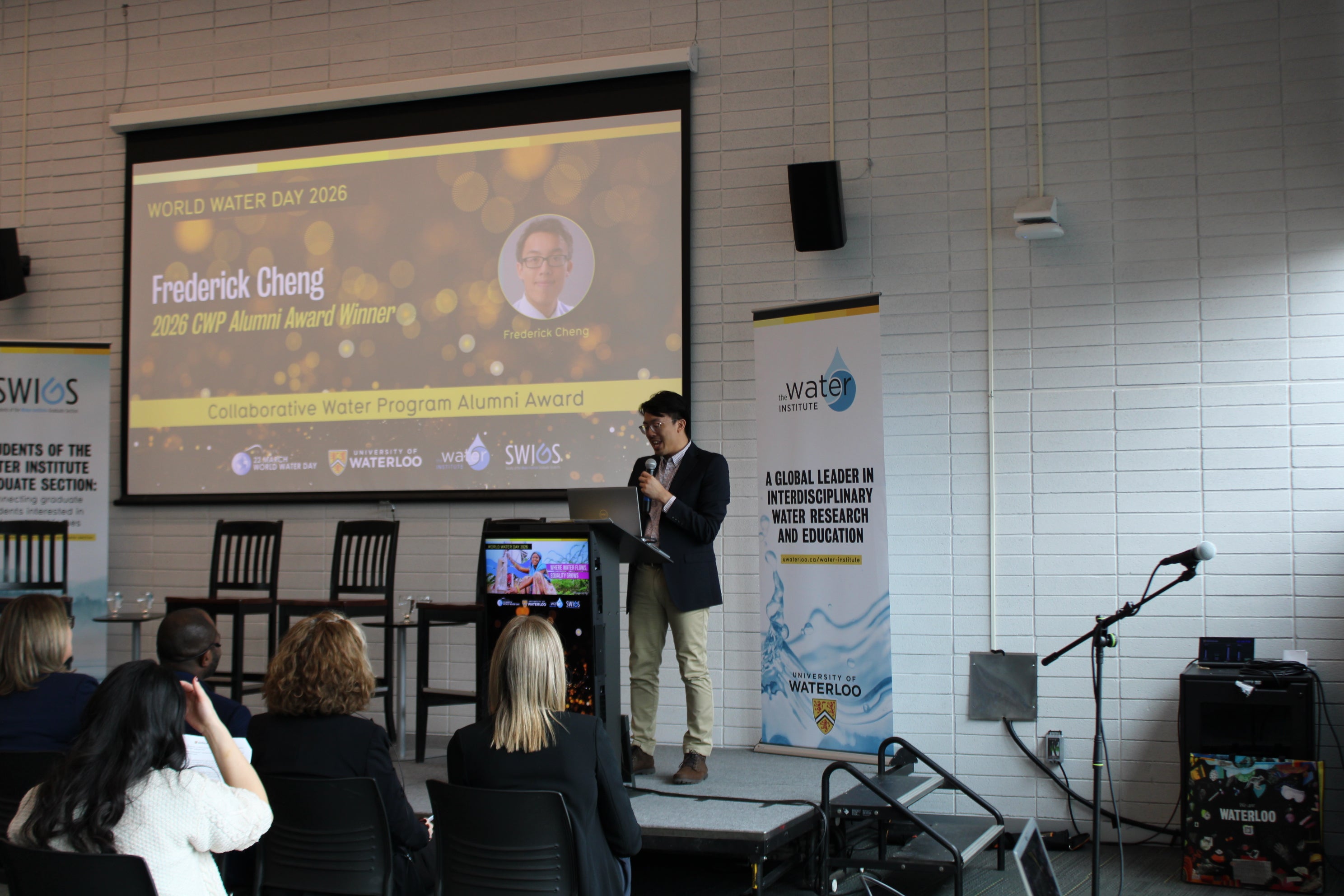
The 2026 Collaborative Water Program Alumni Award was presented to Frederick Cheng, Assistant Professor at the University of Virginia, in recognition of his leadership and contributions to his professional field and the community. The award celebrates alumni who are making significant impacts in water research, policy, engineering and community engagement.
“It’s not a matter of better models, data or technology that will solve the world’s water problems. It’s better integration, communication and collaboration across disciplines that will create impactful solutions.” – Frederick Cheng
Recognizing alumni achievements demonstrates the long-term impact of the Water Institute’s interdisciplinary water education and the important role graduates play in shaping water management in Canada and internationally.
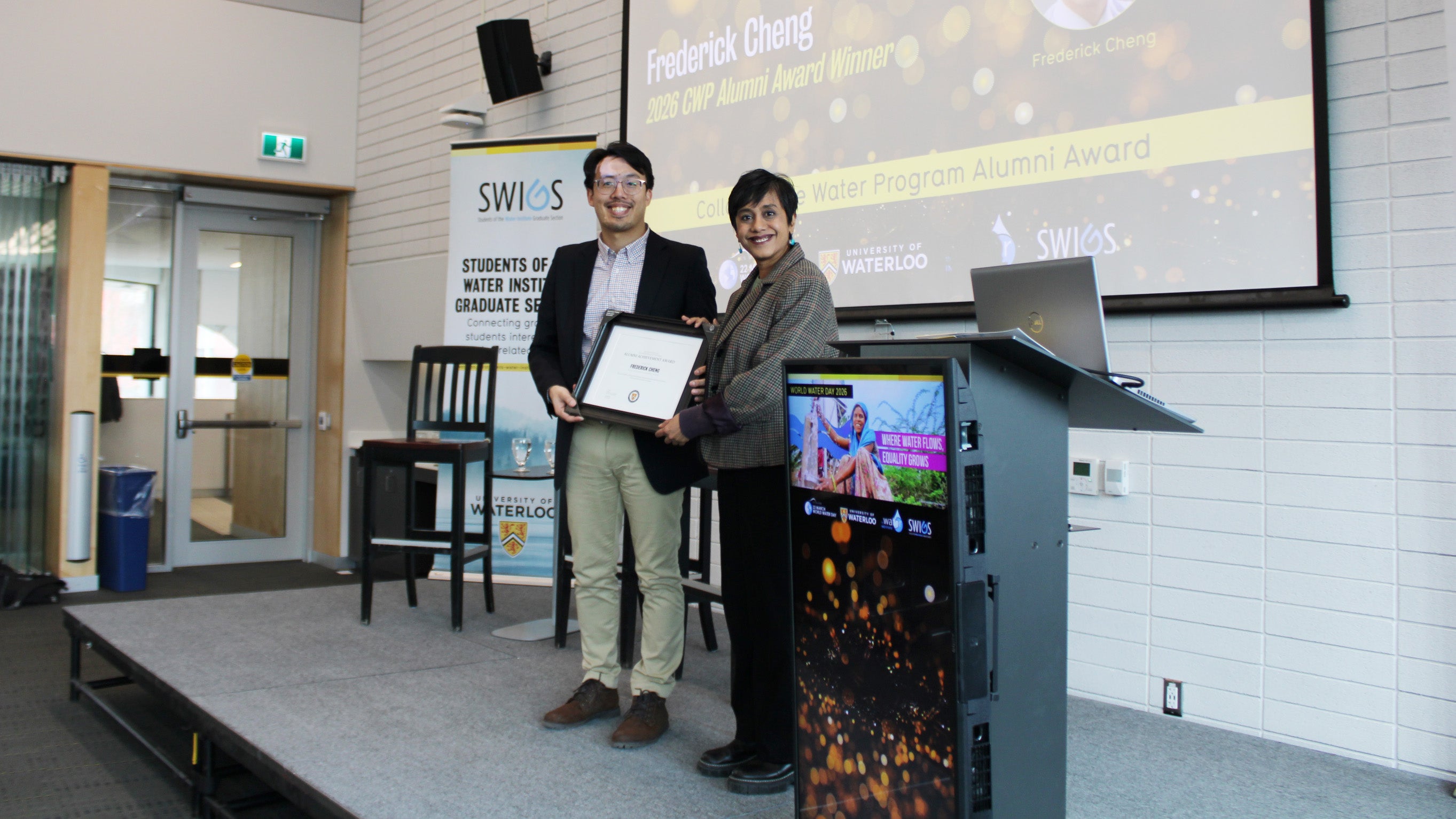
Photo: (L) Frederick Cheng, Assistant Professor at the University of Virginia and winner of the Collaborative Water Program Alumni Achievement Award. (R) Dr. Nandita Basu, Professor and Canada Research Chair in Global Water Sustainability and Ecohydrology
Water equity and shared responsibility
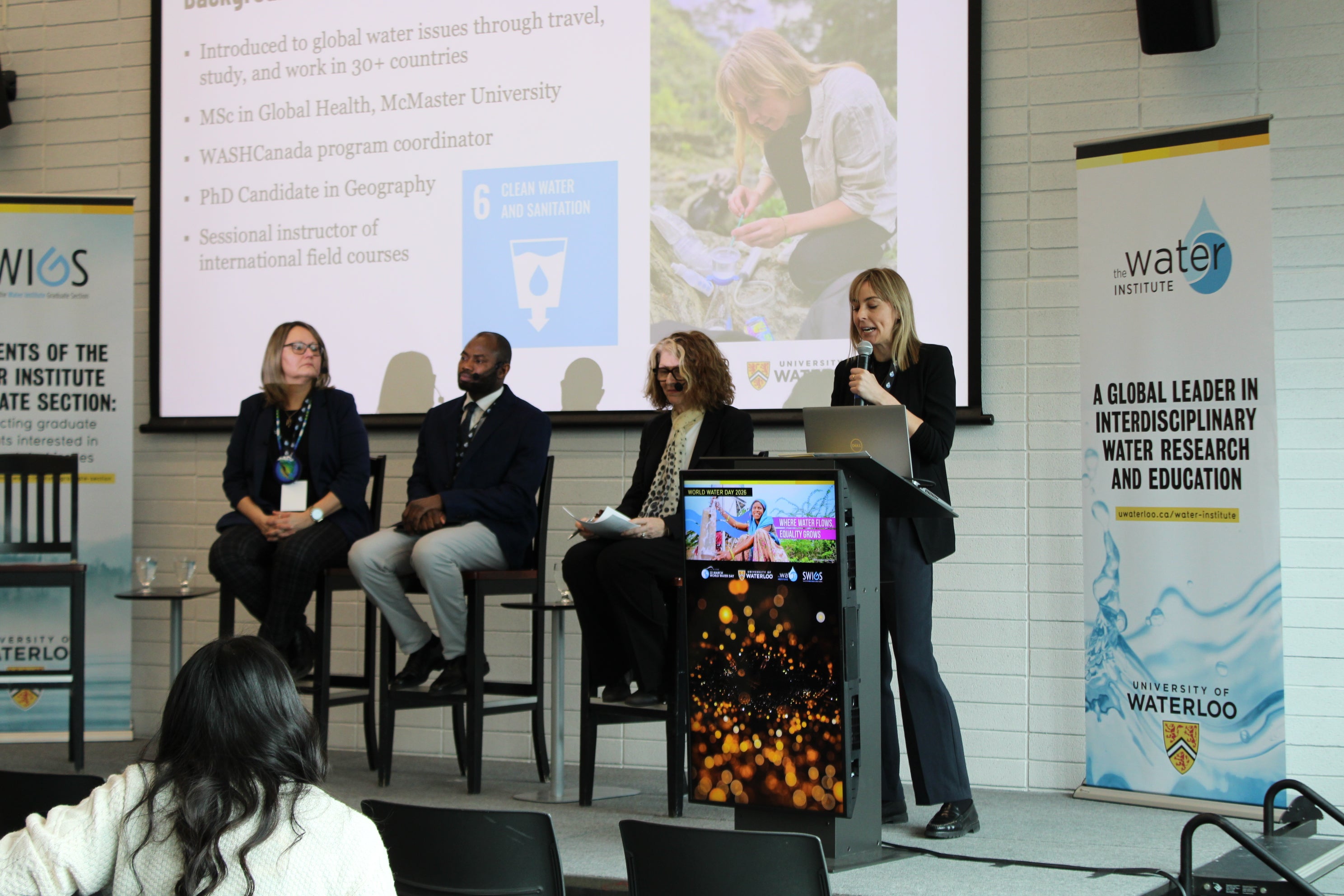
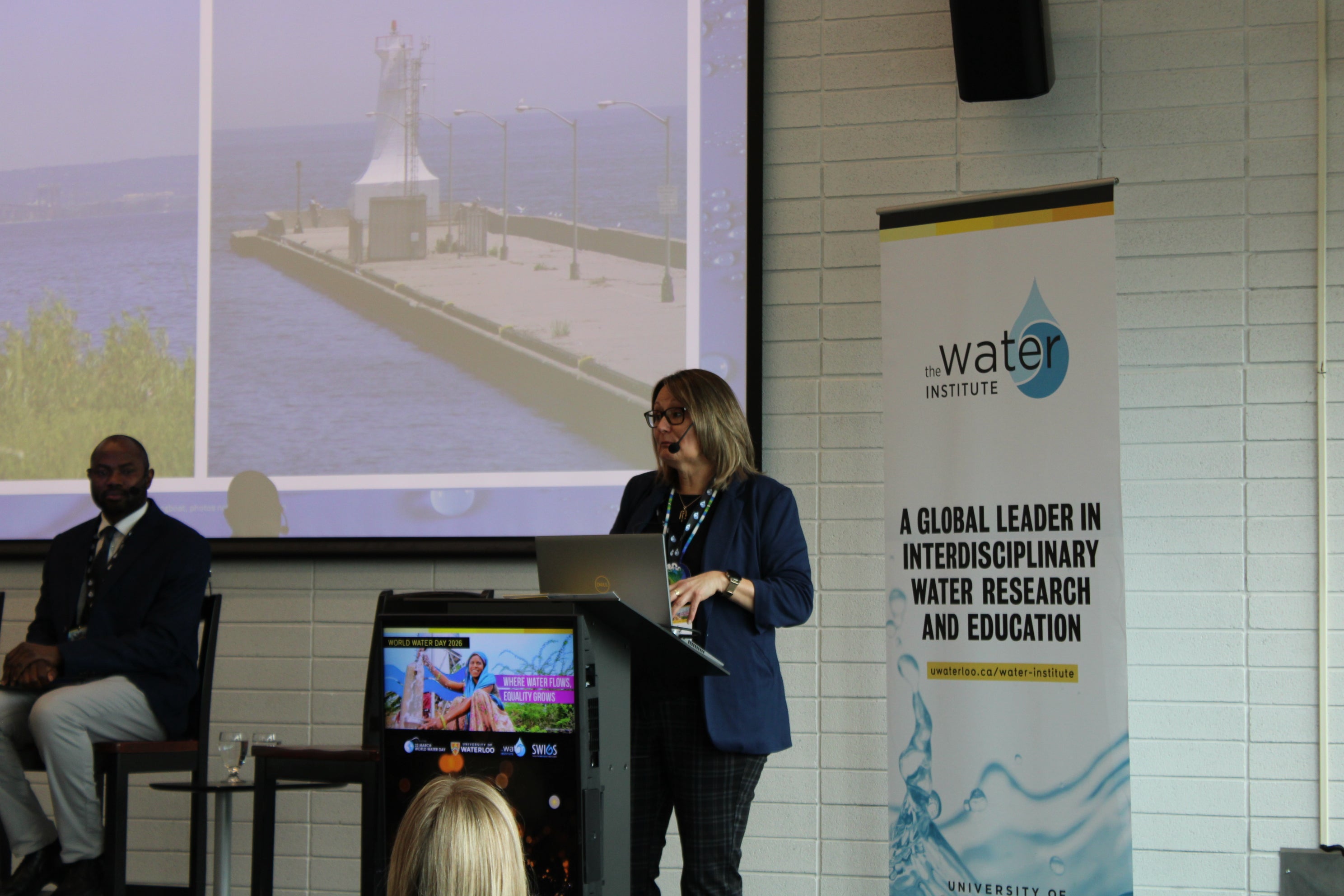
The afternoon panel discussion brought together researchers and practitioners to explore how water challenges affect communities differently and why equity must be part of water management and policy decisions. The panel emphasized that water issues are not only environmental or technical challenges, but also social, economic and governance challenges.
Panellists discussed the importance of community engagement, Indigenous knowledge, public health and inclusive policy development in addressing water challenges. The discussion reinforced the idea that achieving water security requires collaboration across disciplines, sectors and communities.
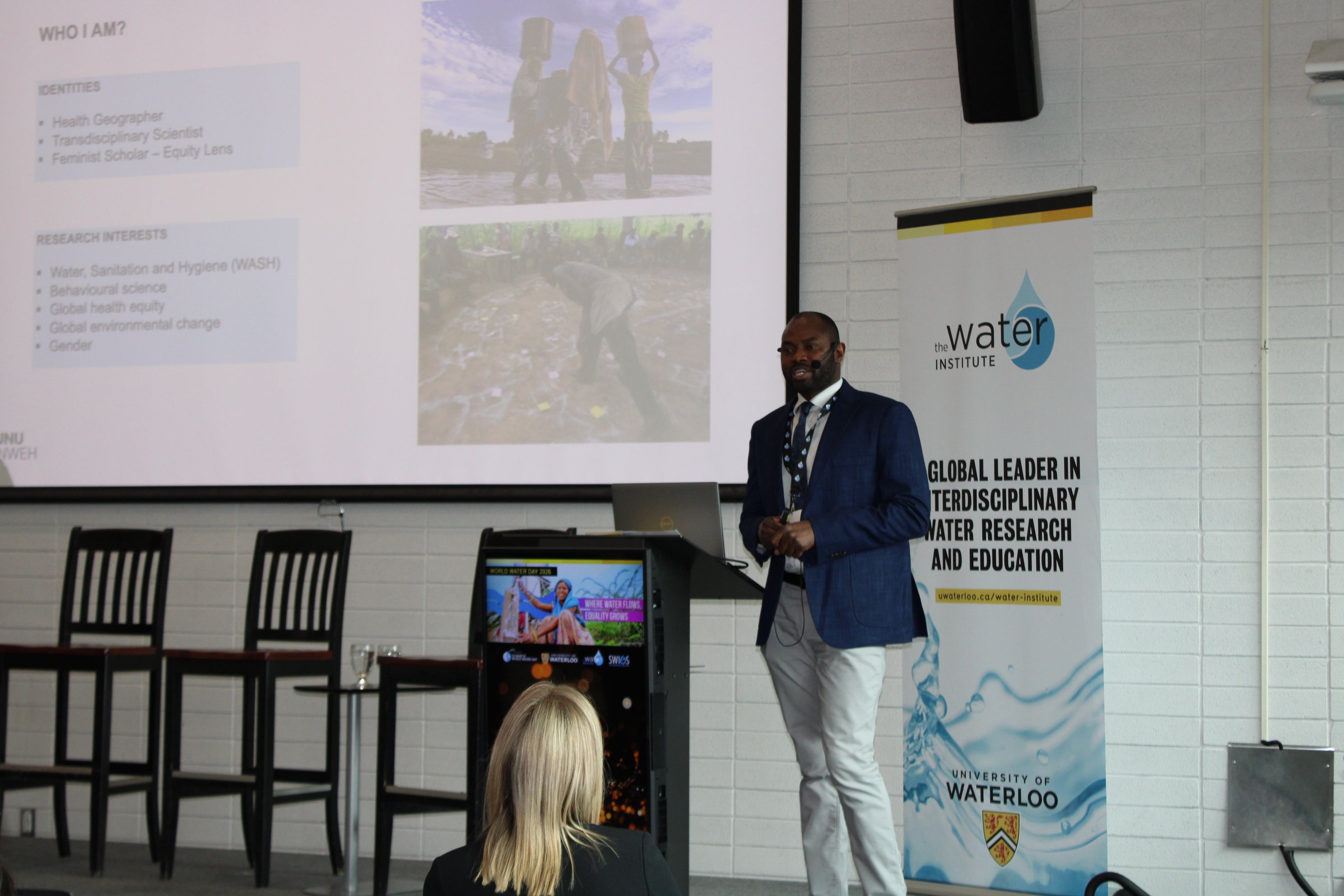
“We’re never going to have health and well-being for all until we have water and sanitation for all, and we won’t have that until we address gender equality.” – Susan Elliott
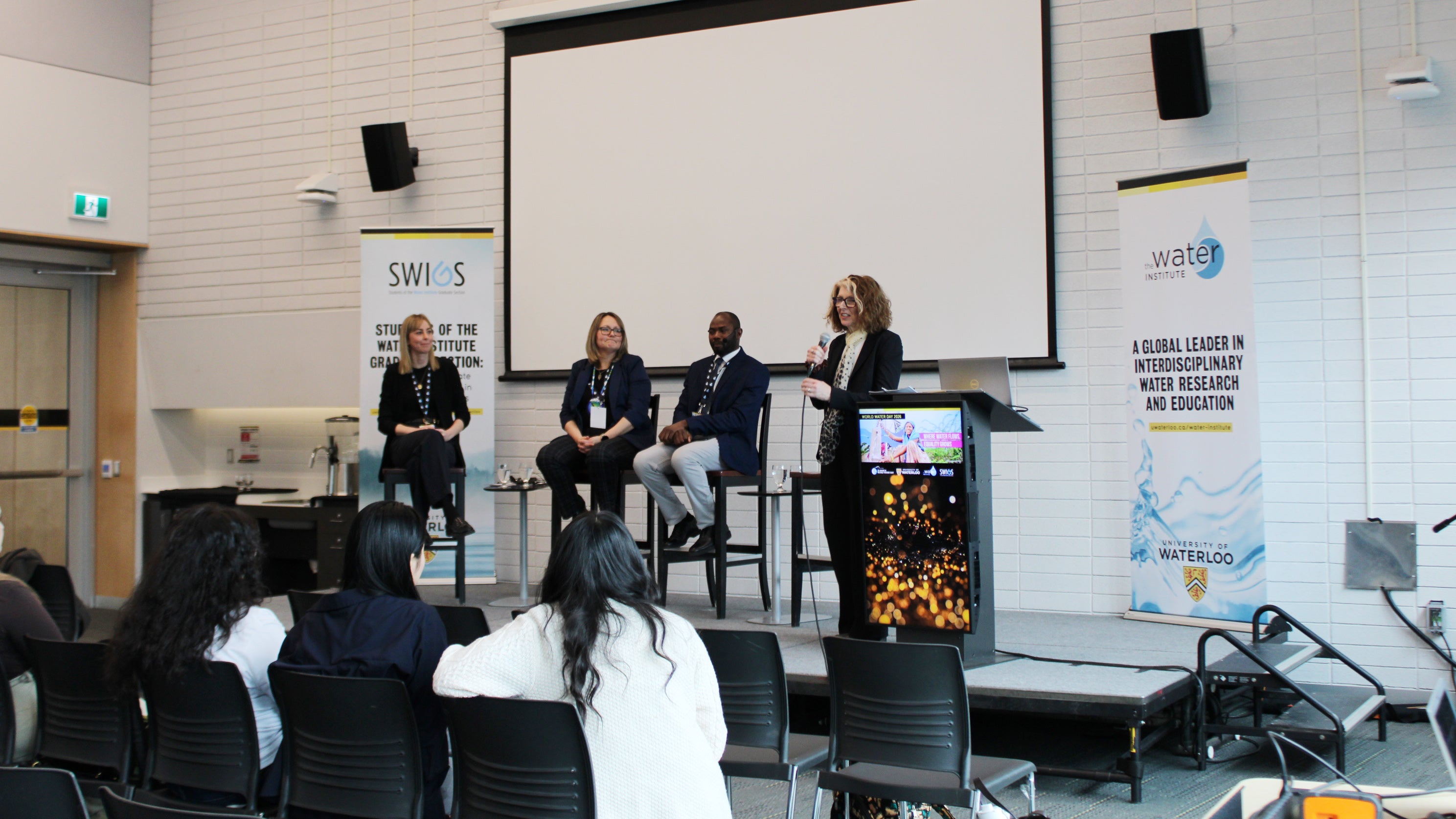
Panel Photo L to R: Alexa Bennett, PhD Candidate, Department of Geography and Environmental Management, University of Waterloo; Sheri Longboat, Professor, Geography and Environmental Studies, Wilfrid Laurier University; Abraham Nunbogu, WASH Researcher, United Nations University Institute for Water, Environment and Health; Susan Elliott, Professor in the Department of Geography and Environmental Management and University Research Chair in Medical Geography, University of Waterloo.
World Water Day 2026 highlighted the important role of collaboration between research, policy and practice in addressing complex water challenges and advancing solutions that support Water for All.
If you were unable to join us this year, please visit our YouTube channel to view recordings of the events.