Where water meets design: Malak Kamal’s vision for resilient communities
Collaborative Water Program student blends architecture and systems thinking to reimagine housing for flood-prone communities
When devastating floods swept through Pakistan in 2022, millions were displaced, and more than 1400 lives were lost. For Malak Kamal, a graduate architecture student from Quetta, Pakistan, it was a turning point.
“Both in 2022 and 2025, you’ll see horrifying videos of families waiting to be rescued for hours, while being swept away by the floods, one by one. Families of five or more forced to take shelter on wet ground, often on soaked wooden beds, with tarps as roofs, exposed to the elements,” she recalls. “In most villages where people largely build with mud, there was no possibility of rebuilding the fallen homes, as constant rain and flooding had turned the mud into sludge. And in the city, the concrete houses proved deadly due to material failure and collapse.” The floods exposed the structural inequalities in Pakistan’s disaster response and urban planning systems.
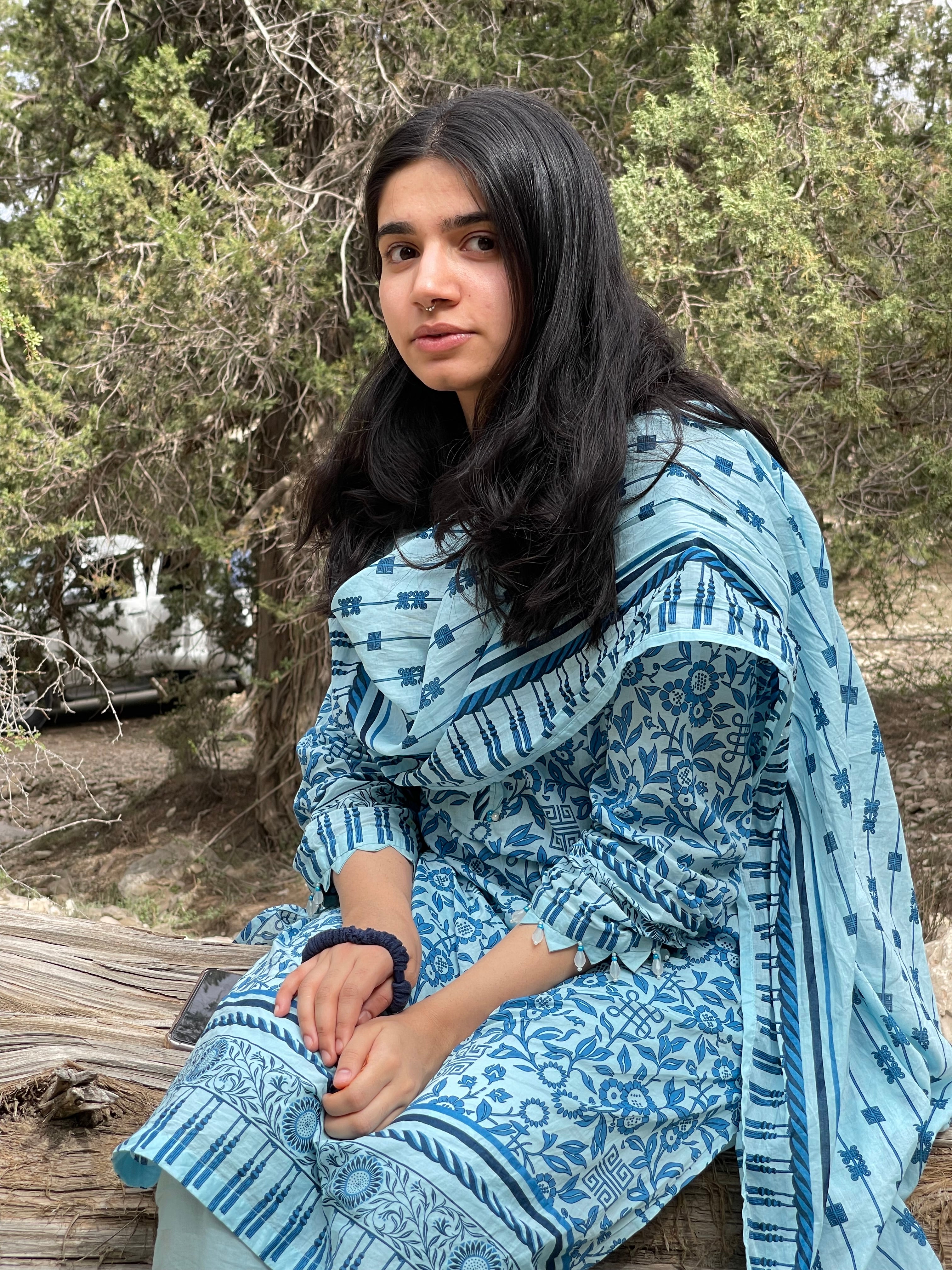
Collaborative Water Program and Master of Architecture student, Malak Kamal.
Although Malak was not directly affected by the floods, she witnessed the disaster’s toll on her broader community. The scale of loss and displacement felt by the low-income, rural, and Indigenous communities stirred in her a deep frustration. “The government's inability to help, and sole reliance on NGOs and grassroots initiatives to fill in crucial gaps like developing post-disaster emergency shelters, brought a deep sense of failure.”
But that initial helplessness gave way to inspiration. Watching grassroots organizations like Madat Balochistan provide bamboo-based emergency housing, which played a critical role in post-disaster recovery, opened her eyes to the possibility of flood-resilient design solutions as a pre-disaster measure.
From desertification to design
“I am from Quetta, a city nestled in the heart of a valley in Balochistan,” says Malak. “Due to climate change, Balochistan has experienced rising temperatures, reduced rainfall, and extended periods of drought.”
“There was a widely accepted assumption that Quetta was moving towards desertification,” she continues. “The younger me thought meant a city with its homes being swallowed by a sea of sand and its people being forced to leave their place of belonging behind. And as years went by, I saw this haunting vision take shape with trees disappearing by the sides of our roads, whole orchards cut down to make place for buildings, sandstorms, and air pollution due to the quarrying of our mountains to meet construction demands.”
Initially drawn to earthquake-safe alternatives to concrete, Malak had accepted an offer to pursue her Master of Architecture at the University of Waterloo. But her focus soon shifted from seismic risk to flooding—an evolution sparked by a timely opportunity.
A buoyant opportunity
Malak’s academic focus shifted after discovering the research of Dr. Elizabeth English, a Water Institute member and founder of the Buoyant Foundation Project. Her pioneering work on amphibious architecture, an innovative and low-cost flood resilience strategy that allows homes to float during high water and return to the ground as floodwaters recede, resonated deeply with Malak and inspired her to pursue this line of inquiry.
“Originally, my idea was to explore building materials as alternatives to concrete, since Quetta city is often hit by earthquakes and concrete failure can be fatal,” says Malak. “But the opportunity to work on amphibious architecture opened a new door where my interest in material performance stayed constant, but the context shifted from seismic to flood-resilient design. I could still investigate material alternatives, now with buoyancy and adaptability in mind, contributing to the growing field of research in amphibious architecture.”
“I found that my goals aligned with those of Professor English and her Buoyant Foundation Project. “We were both looking to create a solution where you don’t fight water but make way for it and also eliminate the possibility of being uprooted from your land and having the opportunity to come back to your home once the floods have passed.”
Dr. English says Malak’s work brings a fresh and necessary perspective: “Malak brings a rare combination of talent, lived experience, and determination to this work. Her commitment to her community is inspiring, and her design thinking is grounded in empathy and practicality.”
Joining the Collaborative Water Program
With her thesis direction clear, Malak joined the University’s Collaborative Water Program (CWP)—an interdisciplinary graduate specialization that brings together students to study complex water issues through scientific, engineering, social, and policy lenses.
“Since I had decided to do my thesis in amphibious architecture, it only made sense I join the Collaborative Water Program,” she says. “I found the CWP to be highly informative, and it made me think beyond physical architecture and more into systems thinking. The program emphasized how most problems don’t exist in isolation and require more than a single solution. I found it was much more impactful to deliver a strong and convincing argument if I backed it with an even stronger narrative. I also learned that change doesn’t have to come in the form of physical solutions, but often policies on paper carry more weight.”
Designing with place in mind
Looking ahead, Malak plans to work with the First Nations communities of Canada to develop flood-resilient strategies and apply the knowledge learned within the indigenous communities of Pakistan.
“An amphibious architecture solution doesn’t have to be high tech or expensive,” she says. “The Buoyant Foundation Project has some fundamental components that can be substituted for elements native to that place, which makes it applicable anywhere in the world. My focus would be to explore and experiment with materials local to Pakistan so I can take home an adaptable solution.”
For Malak, architecture is more than design—it’s a way to remain grounded through crisis and to imagine a future where communities can stay connected to the places they call home.
Baner photo: Flood in Pakistan 2022 by Ali Hyder Junejo Junejoalihyder https://www.flickr.com/photos/193804179@N08/52324916494