What is diabetic retinopathy?
Diabetic retinopathy is an eye disease in which high blood sugar damages small blood vessels in the retina, the light-sensitive layer at the back of the eye. These weakened vessels can leak fluid or blood, causing swelling in the central part of vision (macular edema). Without treatment, the condition can progress to vision loss or blindness. Though there are other diabetes-related eye diseases, it is the leading cause of vision loss among working-age adults.
What are the different stages?
There are two stages of diabetic retinopathy: proliferative and non-proliferative. Non-proliferative diabetic retinopathy (NPDR) is the early stage of diabetic retinopathy in which the blood vessels are compromised. Individuals may appear asymptomatic, yet internal signs such as bleeding at the back of the eye and reduced oxygen supply to the retina may be present. These changes result in microaneurysms, or tiny bulges in blood vessels in the retina. NPDR is managed through regular monitoring and careful control of blood sugar levels and other contributing risk factors to prevent disease progression.
Proliferative diabetic retinopathy (PDR) is the advanced stage of diabetic retinopathy, characterized by neovascularization, where new blood vessels begin to grow in response to a lack of oxygen. These blood vessels are prone to leakage and bleed into the vitreous fluid. Scar tissue resulting from neovascularization can lead to additional complications, potentially causing irreversible loss of both central and peripheral vision.
Who does it affect?
Diabetic retinopathy affects individuals with diabetes, especially those with longer duration of disease or poor glucose control. Additional risk factors include high blood pressure, high cholesterol, smoking, kidney disease and sleep apnea. It often appears earlier in people with type 1 diabetes and later in those with type 2 diabetes.

What are some signs and symptoms of diabetic retinopathy?
Symptoms are minimal or absent in early stages, but as diabetic retinopathy progresses individuals may notice:
-
Blurred or fluctuating vision
-
Difficulty seeing at night or driving in the dark
-
Dark floaters or spots in the vision
-
Flashes of light
-
Gradual or sudden worsening of vision
If you notice any of these symptoms, contact your eye care provider immediately. Annual eye exams are extremely important for people with diabetes since they are at a higher risk of developing eye diseases. The frequency of eye examinations depends on the stage of diabetic retinopathy.
How is diabetic retinopathy diagnosed?
There are several methods and tools used to diagnose diabetic retinoscopy.
-
Dilated fundus examination: This exam involves enlarging the pupil with eye drops to allow a clearer view of the retina and other internal structures of the eye. It helps detect early signs of diabetic retinopathy and other abnormalities and is recommended annually for individuals with diabetes.
-
Fundus photography: This medical test takes pictures of the back of the eye, including the macula and optic nerve.
-
Optical Coherence Tomography (OCT) scans: These are non-invasive imaging tests that take cross-sectional images of the retina and retinal lining. This scan can give us useful information such as whether diabetic macular edema is present. It can also track treatment progression.
-
Fluorescein angiography: This procedure is completed by an ophthalmologist and involves injecting a contrast dye called fluorescein into the bloodstream and a detailed photo is then taken to detect any leaks, blockages and neovascularization.
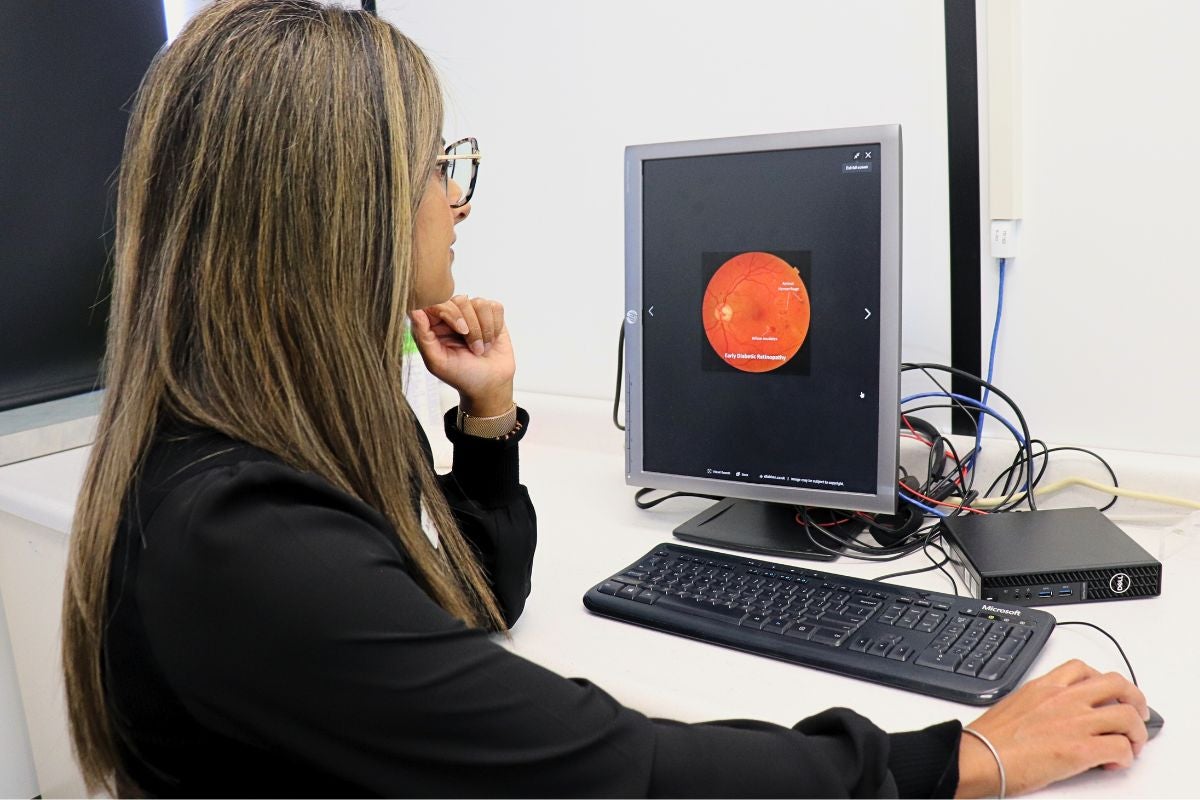
Dr. Sandip Randhawa examining a fundus photo.
What treatments are available for diabetic retinopathy?
Treatment for NPDR may or may not be necessary but will include close monitoring of endocrine health and prioritizing healthy blood sugar levels. Tight blood sugar management and control of other risk factors can slow progression and sometimes improve vision. Making dietary adjustments, exercising regularly and closely managing diabetes can keep diabetic retinopathy from developing rapidly. However, if the disease progresses to PDR or macular edema, ophthalmic treatment will be necessary.
Eye injections, known as anti-VEGF medications, are a common treatment option as they can help reduce blood vessel growth and leakage. An ophthalmologist will administer these injections and create an individualized treatment schedule. Sometimes the frequency can be reduced if the patient responds well to the treatment.
Laser treatment is used to seal off leaky blood vessels to reduce swelling. It can also be used to shrink blood vessels and prevent new growth.
Vitrectomy surgery may be necessary in advanced cases with persistent vitreous hemorrhage or retinal detachment. This procedure clears blood or scar tissue. As part of the process, the ophthalmologist will remove the eye’s natural vitreous humour, a gel-like substance, and replace it with a solution such as saline or silicone oil. As the eye heals, it will replace this solution with natural vitreous humour. These treatments are performed by ophthalmologists and the treatment choice and frequency depend on disease stage and individual response; your eye care provider will recommend the best plan.
How can diabetic retinopathy be prevented or managed?
If you have diabetes, it is crucial to work with your health-care team to control your blood sugar levels as best you can. Reducing large fluctuations in blood sugar levels can play a huge role. Additionally, managing other systemic conditions such as high blood pressure or cholesterol, and working along with a diabetic dietician, family doctor and/or endocrinologist are some of the best ways to prevent diabetic retinopathy. Ensuring you get your eyes checked regularly by your eye care provider is essential in helping to prevent diabetic retinopathy or other diabetes-related eye diseases.
If you have prediabetes, metabolic syndrome or a family history of diabetes, working with your physician to control factors such as your weight, cholesterol levels and blood pressure may prevent or delay the onset of diabetes. This is important because the longer you have diabetes, the greater your risk of diabetic retinopathy.
Waterloo Eye Institute patients
At the Waterloo Eye Institute, we offer specialized care for patients with diabetes and diabetic retinopathy, from early detection to advanced treatment coordination. Our team provides comprehensive eye exams, including dilated fundus examinations to identify signs of diabetic eye disease. For patients with diabetic retinopathy, we focus on staging the condition and working closely with your health-care providers to manage systemic factors like blood sugar, blood pressure and cholesterol. In more advanced cases, such as proliferative diabetic retinopathy, we may refer patients to an ophthalmologist for further treatment.
Appointments for diabetic retinopathy care can be made directly or through referral from our Primary Care Service, which offers full-scope eye exams. If you have diabetes, the Ontario Health Insurance Plan (OHIP) covers one comprehensive eye exam and two follow-ups a year. Your optometrist may recommend advanced tests, such as OCT scans, which carry an additional cost to the patient.
University of Waterloo students, employees and their dependents are eligible for discounts on eye exams and glasses. Speak to Waterloo Eye Institute staff for more details.
Research
The University of Waterloo School of Optometry and Vision Science ranks fifth worldwide in research output among optometry schools. Researchers at the University of Waterloo have contributed to several important studies on diabetic eye disease.
If you’re interested in volunteering as a research participant, consider joining one of our ongoing research studies currently seeking participants.
Article by Kavya Piraba
Reviewed by Dr. Jennifer Li, OD, FAAO
Contact
Comprehensive eye exams for people of all ages are offered by the Primary Care Service at our Waterloo and Kitchener locations. To make an appointment, call 519-888-4062 for the Waterloo Clinic or 519-888-4455 for the Kitchener Clinic. You can also book eye exams online.
Specialized services cannot be booked online. To contact the Advanced Contact Lens Service (Waterloo location only), call 519-888-4414.
Waterloo Clinic address: Unit C, 419 Phillip St., Waterloo
Kitchener Clinic address: 10B Victoria St. S., Kitchener