Professor Pascal Poupart has been awarded $170,000 through the NSERC Alliance Grant program. This funding is complemented by $85,000 from industry partner Manulife Financial, bringing the total project support to $255,000. Manulife is also providing significant in-kind contributions, including synthetic data, technical infrastructure for simulated business environments, and access to its technical experts.
Titled “Agentic Workflow Adaptation and Validation,” the two-year project will advance two research directions related to agentic ecosystems. First, it will develop continual learning methods that allow agents to adapt to evolving customer trends, changes to tool and large language models, and updates to application programming interfaces. Second, it will develop verification and validation methods to ensure that the actions taken by an ecosystem of agents meet desirable criteria and successfully accomplish target tasks.
The research will help Manulife automate knowledge-intensive workflows in insurance underwriting, freeing office professionals to focus on more creative aspects of their work. It will also position Canada at the forefront of agentic ecosystems, an emerging paradigm that leverages large language models to automate digital workflows.
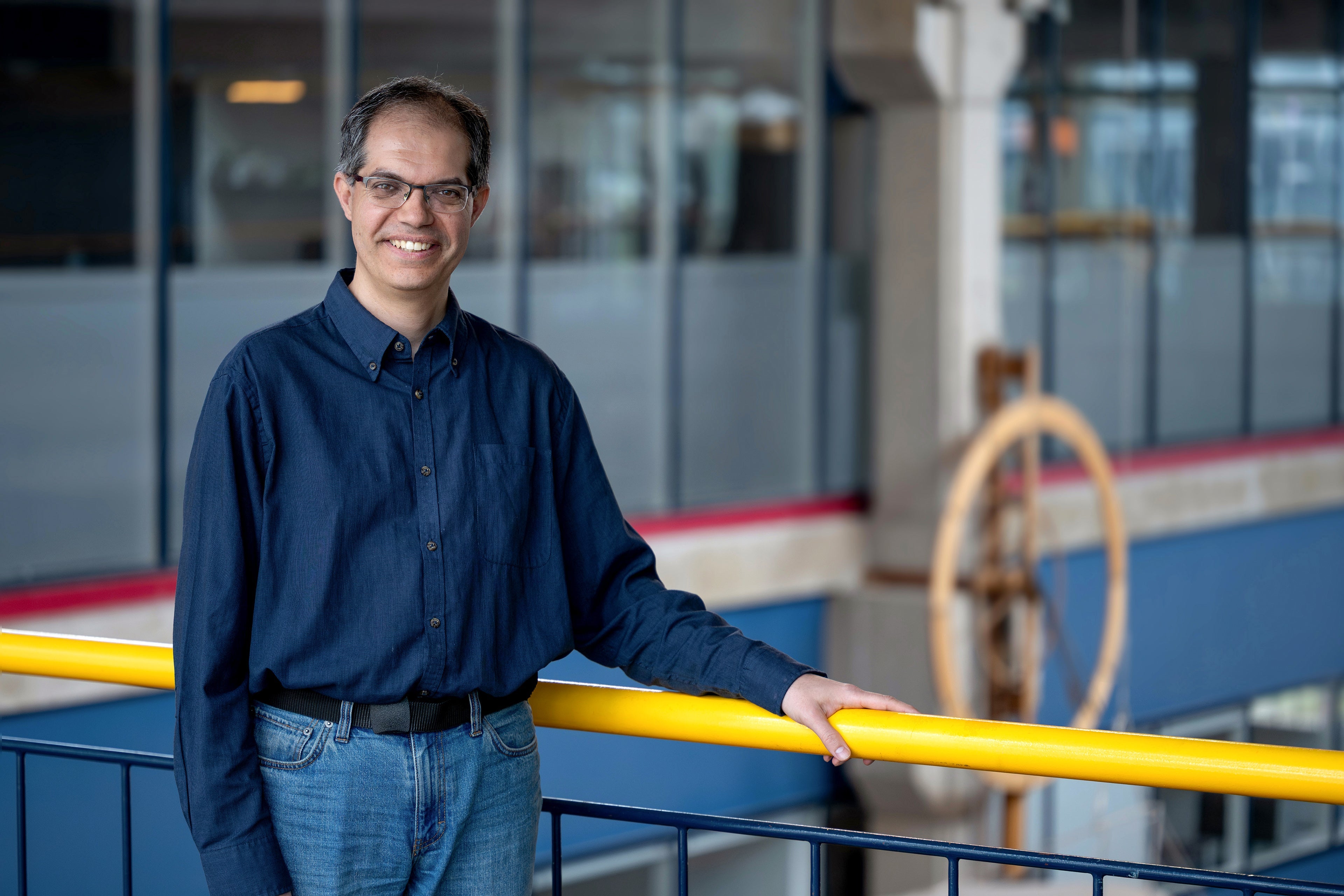
Pascal Poupart is a Professor at the Cheriton School of Computer Science, a Canada CIFAR AI Chair at the Vector Institute, the research director of the Vector Institute, and a member of the Waterloo Data and AI Institute. His research focuses on developing algorithms for machine learning with application to natural language processing and material design. He is best known for his contributions to the development of reinforcement learning algorithms.
His notable projects include Bayesian federated learning, probabilistic deep learning, data-efficient reinforcement learning, inverse constraint learning, reward-guided text generation, agentic workflow adaptation and validation, multi-agent coordination, multi-agent LLM orchestration safety and dynamic composition of image generation models.
Read the full article on the Cheriton School of Computer Science's website.