Chapman's Aster
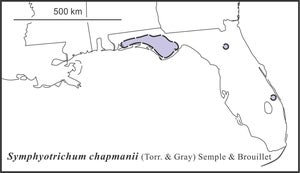
Symphyotrichum subg. Chapmaniani (Semple) Semple includes a single species Symphyotrichum chapmanii (Torr. & Gray) Semple and Brouillet (Semple et al. 2002). First describe as Aster chapmanii, the species was treated as Helastrum chapmanii by Shinners (1969) and then as Eurybia chapmanii by Nesom (1994). Brouillet et al. (2001) determined that it belong within Symphyotrichum based on DNA sequence data. The species is basal within the genus but has a derived chromosome number of 2n = 14 (Brouillet et al., 2006, FNA). It's cormoid rootstock was thought to indicate a relationship with the Heleastrum asters (Eurybia sect. Heleastrum), but this is not the case. It is native to wet savannas, pine flatwoods, bogs, and acid swamps of the Apalachicola drainage of Panhandle Florida and adjacent Alabama (where it may be extirpated), and two isolated collections from Peninsula Florida. The cypselae fruits have a triple pappus of fine mid length outer bristles, long tapering bristles, and long clavate inner bristles (Semple & Hood 2005).
Brouillet, L., J.C. Semple, G.A. Allen, K. Chambers and S. Sundberg. 2006. Symphyotrichum Nees. pp. 465-539. In Flora North America Editorial Committee, eds. Flora of North America. Vol. 20. Asteraceae, Part 2. Astereae and Senecioneae. Oxford University Press, New York.
Semple, J.C. and J.L.A. Hood. 2005. Pappus variation in North American Asters. I. Double, triple and quadruple pappus in Symphyotrichum and related aster genera (Asteraceae: Astereae). Sida 21: 2141-2159.
Last revised 16 May 2025 by J.C. Semple
© 2025 J.C. Semple, including all photographs unless otherwise indicated


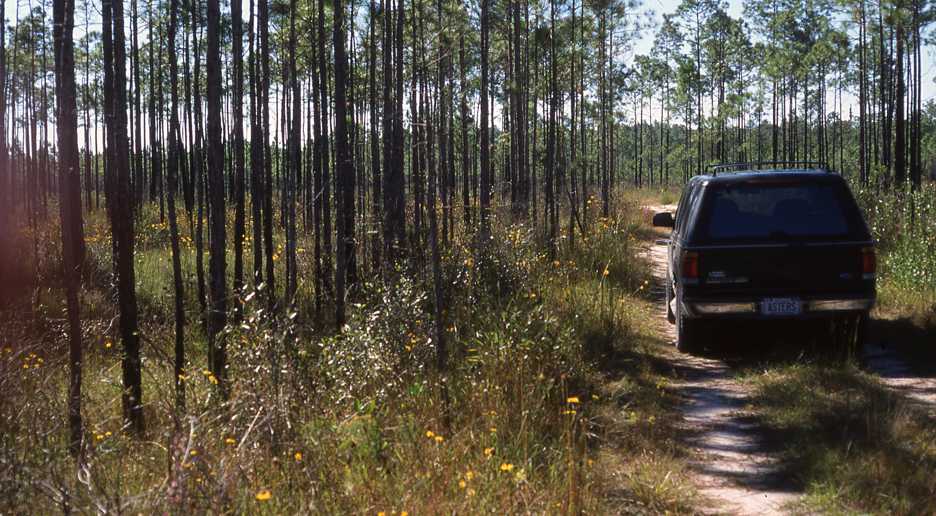
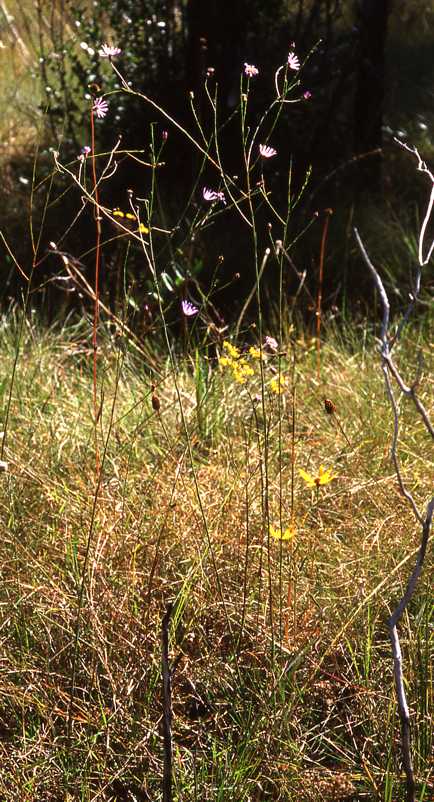
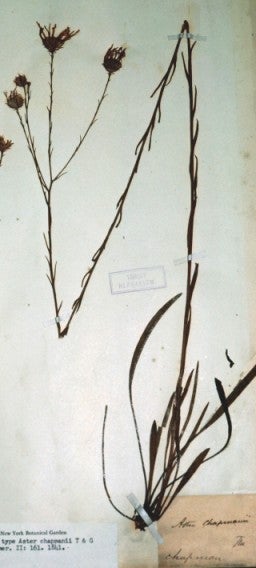
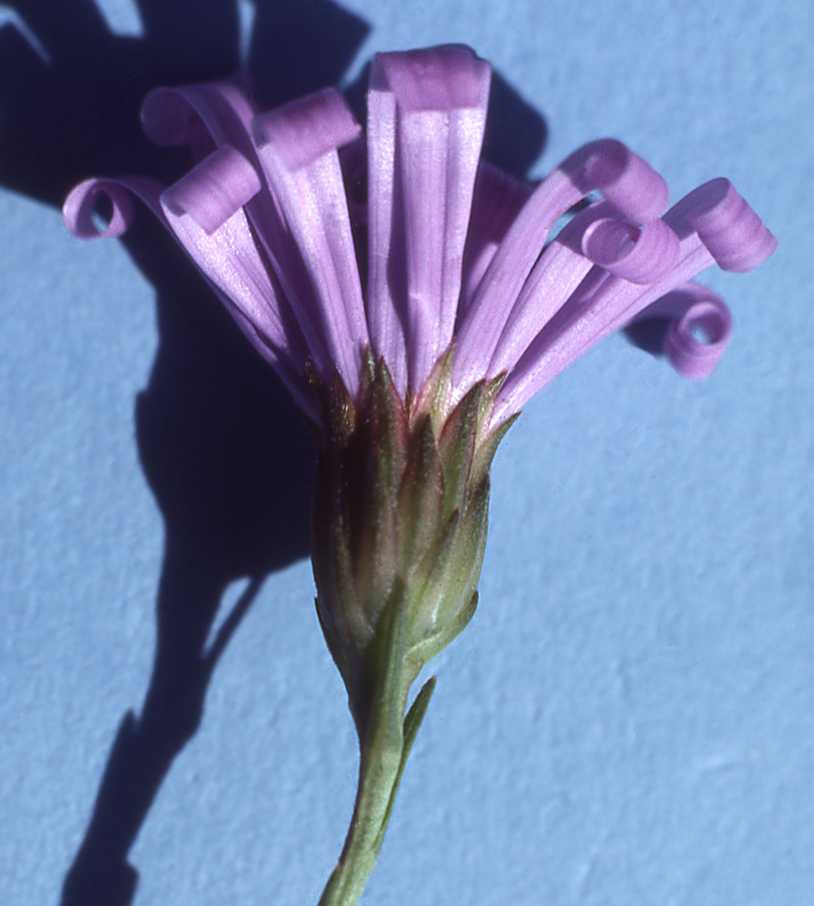
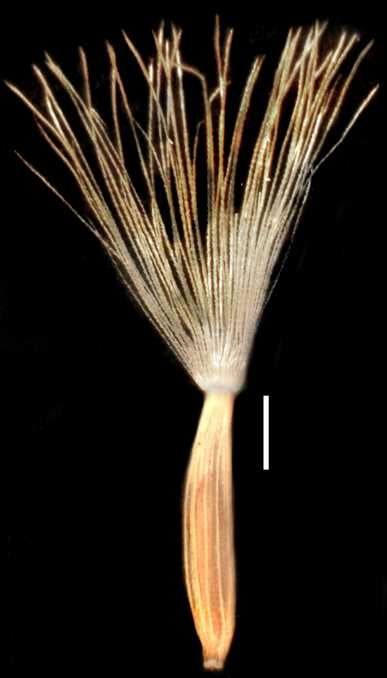
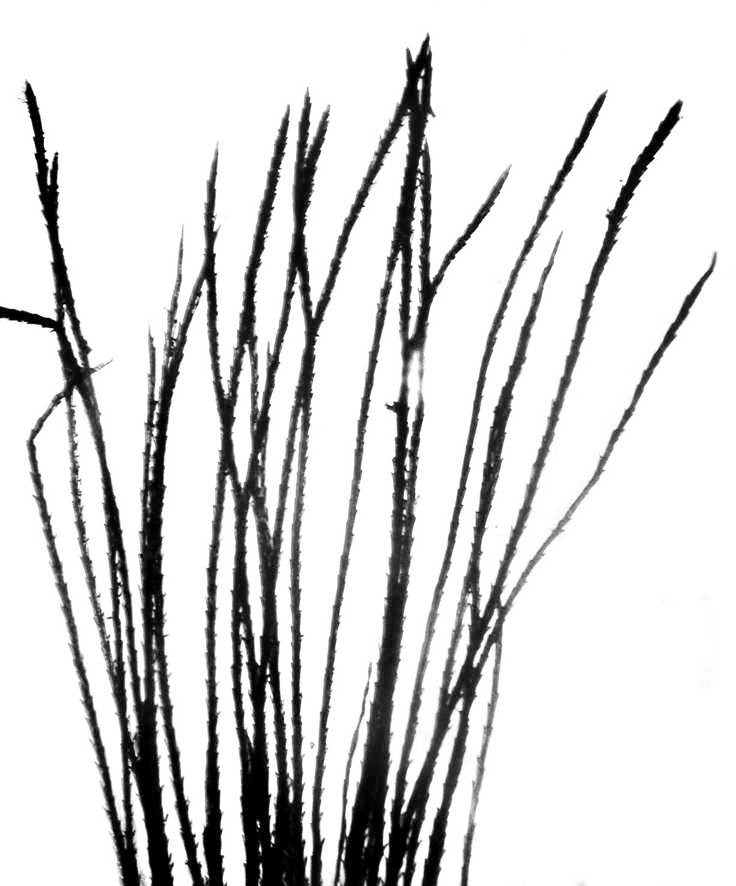
1-6. Symphyotrichum chapmanii. 1. Habitat, Semple 10924, Franklin Co, Florida. 2. Habit, S 10924. 3. Aster chapmanii syntype at NY. 4. Head, Semple & Chmielewski 6342, Walton Co., Florida 5-6. Fruit and distal portion of pappus bristles, Canne 2277 WAT.