Events

Filter by:

Limit to events where the title matches:
Limit to events where the first date of the event:
Date range
Limit to events where the type is one or more of:
Limit to events tagged with one or more of:
Limit to events where the audience is one or more of:
Wednesday, February 5, 2025 11:30 am - 12:30 pm EST (GMT -05:00)

Astroseminar - Eduardo Martin-Martinez

Eduardo Martín-Martínez is a Full Professor in the Department of Applied Mathematics at the University of Waterloo. He is also an Institute for Quantum Computing (IQC) Associate, a Perimeter Institute Affiliate and a member of the Waterloo Centre for Astrophysics. Since July 2022, he has served as the Chair of the International Society for Relativistic Quantum Information.
Wednesday, February 12, 2025 11:30 am - 12:30 pm EST (GMT -05:00)

Astroseminar - Steffani Grondin

Steffani Grondin is a final-year PhD candidate in the Department of Astronomy and Astrophysics at the University of Toronto. Her research focuses on the evolution of compact object binaries and the common envelope phase, using star clusters as laboratories to study binary evolution. Steffani is also the main developer of Corespray, a Python package that efficiently simulates dynamical interactions in star clusters. Her software has provided new insights into a variety of Milky Way science cases, including hypervelocity stars, stellar streams and the composition of the Galactic halo.

Wednesday, February 12, 2025 8:00 pm - 10:00 pm EST (GMT -05:00)

Astronomy on Tap (Marie-Joëlle Gingras and Kiana Salehi)

Join usat Astronomy on Tap as researchers Marie-Joëlle Gingras (University of Waterloo) explores how these cosmic titans influence the Milky Way. Then, Kiana Salehi (Perimeter Institute) will dive into a weird mystery of black holes and tackle a burning question: do black holes have hair? (No, not the kind you’re thinking of — but don’t worry if you have no idea what that means. Come find out!)

Wednesday, February 19, 2025 11:30 am - 12:30 pm EST (GMT -05:00)

Astroseminar - Tobias Geron

Tobias Geron finished his PhD in Astrophysics at the University of Oxford, UK, and he recently started as a Rubin fellow at the University of Toronto. Tobias spends his time between studying bars in galaxies and developing software to study transients with the upcoming Vera C. Rubin Observatory. 

Tuesday, February 25, 2025 6:00 pm - 8:00 pm EST (GMT -05:00)

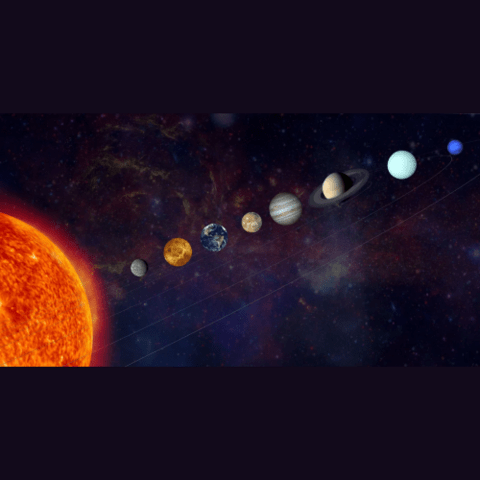
Observatory night: Parade of planets

An evening at the Gustav Bakos Observatory to see the parade of planets on February 25th, 2025.  All seven of the planets will be visible (weather permitting).

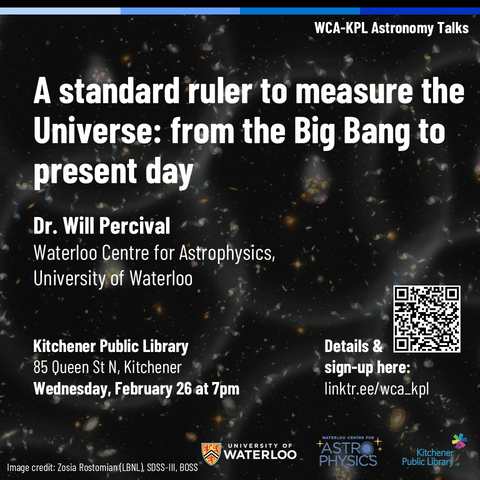
The Universe is big – so big that measuring its size is incredibly difficult. By mapping out the positions of galaxies, cosmologists can trace the structure of the Universe, observing patterns in this structure that can be used as a ruler. In this month’s KPL astronomy talk, Dr. Will Percival will talk about this technique, called Baryon Acoustic Oscillations, highlighting how we came to learn that the Universe is expanding at an accelerating rate.

Tuesday, March 4, 2025 12:30 pm - 1:30 pm EST (GMT -05:00)

Astroseminar - Guadalupe Canas Herrera

“Diving into the era of Large-Scale Structure data: going beyond the Standard Cosmological Model”

Guadalupe is a Theoretical Cosmologist investigating the Universe's origins, evolution, and ultimate fate by studying alternative cosmological models with cutting-edge astrophysical data and advanced statistical techniques, while also forecasting the potential of new experiments and observables, such as Gravitational Waves.

Wednesday, March 5, 2025 11:30 am - 12:30 pm EST (GMT -05:00)

Astroseminar - Erik Osinga

"Galaxy clusters as the Universe’s largest particle accelerators"

Dr. Erik Osinga is a postdoctoral fellow at the Dunlap Institute. He completed his PhD at Leiden University in 2023. Erik's work centres on understanding how magnetic fields and particle acceleration shape the environments within and around galaxy clusters.

Wednesday, March 12, 2025 11:30 am - 12:30 pm EDT (GMT -04:00)

Astroseminar - Nathan Carlson

Nathan J. Carlson is a PhD candidate at the University of Toronto and the Canadian Institute for Theoretical Astrophysics (CITA). Nathan’s work in theoretical cosmology focusses on linking early universe physics to large-scale structure of the universe as we see it today.